Work

Cape Town City must pay former employee over R319,000 for blocking promotion opportunity
The Labour Court in Cape Town ruled that the City of Cape Town unfairly denied a senior employee a proper opportunity to participate in a promotion competition due to an unacceptable candidate search process. As a result, the court awarded him compensation exceeding R319,000. Judge Susanna Josephine Harvey overturned and set aside an arbitration ruling that had dismissed Mahlatse Maebana's claim of labour rights violation. The court found that the municipality acted improperly during the hiring process for the Manager position. Challenging the Failed Promotion Maebana, who worked as a head of the operational programmes management unit in the City's Waste Management Directorate, unsuccessfully applied for this managerial position when it was first advertised in 2022. Despite meeting the minimum requirements, he was not included in the shortlist, and the appointment did not proceed. Subsequently, the municipality initiated a process he termed a candidate search, identifying three applicants, including colleague George Jonkers. After this process also failed to result in an appointment, the position was re-advertised in 2023. Maebana reapplied, made the shortlist, and scored the highest in the interview among candidates. However, the interview panel concluded that none of the candidates possessed sufficient competence for the appointment. Instead of restarting the recruitment process, the City reverted to the candidates identified during the previous search and ultimately appointed Jonkers. Illegal Candidate Search Process The Labour Court determined that the commissioner who initially dismissed Maebana's complaint made a significant legal error by concluding that the City's hiring policy permitted candidate searches under such circumstances. Judge Harvey ruled that Municipal Staff Regulations only allow for alternative hiring methods, such as candidate searches, if the position was classified as critical or requiring scarce skills after the primary recruitment process failed. The manager position in the collection department did not fall into this category. The court found that the City's internal hiring policy could not override subsequent Municipal Staff Regulations, meaning the municipality should have simply re-advertised the vacancy instead of reverting to candidates identified in the previous search. Employee Denied Fair Opportunity The court stated that Maebana did not need to prove he would have been appointed to win the case. Instead, the injustice lay in being denied another fair chance to compete for the position within a lawful hiring process. Judge Harvey found that with the correct application of regulations, the commissioner could have reached a different conclusion regarding the fairness of the City's actions. The court also criticized the commissioner's unexplained refusal to issue a summons to the municipal manager, labeling it procedural unfairness. Nevertheless, it dismissed Maebana's allegations of conflicts of interest involving high-ranking city officials and found no evidence of manipulation of interview scores. Payment for Three Months By the time the case was heard in the Labour Court, Maebana had left his employment with the City and no longer sought appointment or reversal of Jonkers' appointment. Instead, he requested compensation equivalent to 12 months' remuneration. The court refused to award the maximum amount, finding that while Maebana's right to a fair promotion process was violated, there was no proof he would necessarily have secured the position. Judge Harvey instead awarded compensation equivalent to three months' remuneration, amounting to R319,604.75, describing it as a fair remedy for the loss of a legitimate opportunity to compete, rather than compensation for the promotion itself.
September 2, 06:55New Personnel Management System Launched for Outsourced Employees in Uttar Pradesh
September 2, 05:52Karnataka State Minister Demands Banks Offer Services in Kannada and Prioritize Local Candidates
September 2, 24:05Iltija Mufti joins medical interns' strike over low scholarship compensation
September 1, 21:15Physical fitness stage begins for candidates for 41,424 vacancies in the police force in Uttar Pradesh
September 1, 20:39Trucker Women Recognized for Contribution to Freight Transport, Focus on Safety
September 1, 16:15Cabo Verde initiates study on labor shortage in the construction industry
September 1, 15:56Mumbai woman advises critics of work on the difficult job market situation
September 1, 15:12Explaining the difference between Cost to Company (CTC) and take-home monthly salary
September 1, 14:15Updates on the Eighth Pay Commission in Rajasthan: Factors and Salary Growth
September 1, 13:37TAAG cancels strike and resumes negotiations with unions
September 1, 13:11High competence in office culture can lead to additional workload, which is the subject of the debate
September 1, 13:09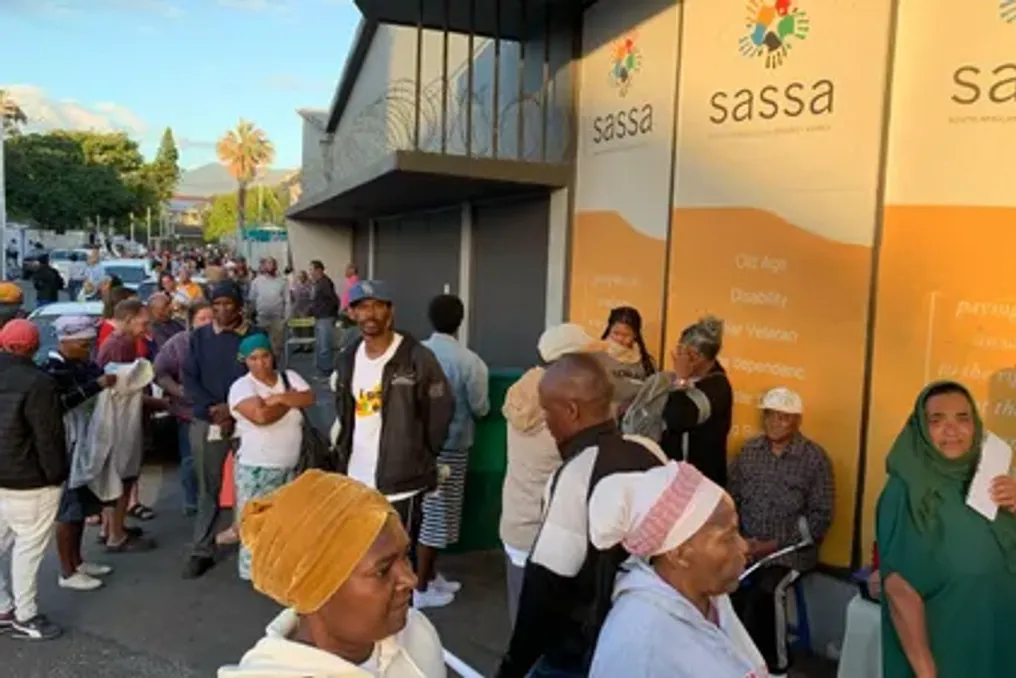
US Social Security Crisis Serves as Warning for South Africa
The US social security trust fund is projected to deplete its reserves in 2032, which could lead to significant benefit cuts if Congress does not take action. According to Armstrong Williams, this warning is relevant to South Africa due to aging populations, weak employment levels, and challenges in political reform. While the world's attention is focused on American elections, trade disputes, and geopolitical conflicts, a crisis concerning the federal social security program—which supports retirees, surviving spouses, and disabled individuals—is quietly developing in the country. Although this issue seems purely American, its underlying caution extends far beyond Washington. It concerns an aging population, a shrinking workforce, political evasion, and the dangerous assumption that current taxpayers can cover previously made promises. According to the 2026 Social Security Trust Fund Report, the reserve fund designated for pensions and survivor benefits is expected to run out by the end of 2032. If Congress does not intervene, incoming revenues will only cover about 78% of planned payments. Including both pension and disability funds, reserves are expected to last until 2034, after which approximately 83% of promised benefits can be paid. The social security system will not disappear entirely: American workers will continue to pay payroll taxes, and monthly payments will be maintained. However, the reserves currently compensating for the gap between income and obligations will be exhausted. As a result, there could be a sharp reduction in benefits by roughly one-fifth, upon which tens of millions of people depend. This is one of the most predictable crises in the modern governmental system. American leaders have known about this problem for decades. The retirement age of the baby boomer generation is inevitably approaching. People are living longer, birth rates have declined, and the ratio of workers to recipients has decreased. None of this happened suddenly. The failure was not a lack of information, but a lack of political courage. Successive Congresses avoided this issue because any solution entails political costs. Increasing payroll taxes affects both workers and employers. Raising the retirement age may seem logical for office workers, but it could be burdensome for laborers, nurses, police officers, and others whose bodies bear the burden of heavy physical labor. Cutting benefits threatens people who may have no other reliable source of income. Higher taxation on high-income groups faces opposition from influential groups. Thus, politicians postponed making a decision, hoping that the next Congress and president would take responsibility. Delay became unofficial policy. However, procrastination does not preserve options; it eliminates them. Adjustments that could have been introduced gradually must now be more sweeping and destructive. This is where South Africa must pay close attention. Although South Africa and the United States have very different pension and social support systems, both face the same fundamental question: how can a society uphold its promises when fewer people are stably employed, more citizens need assistance, and economic growth cannot keep pace with government obligations? South Africa's problems are exacerbated by unemployment, inequality, and a relatively narrow tax base. Millions of households rely directly or indirectly on social benefits, pensions, and public services. In many communities, the income of an elderly person supports not only themselves but also unemployed adult children and grandchildren. Pension payments can serve as the most reliable source of sustenance, transportation, and educational expenses for the entire household. This means that pension security is never solely an issue for retirees; it is part of the socio-economic infrastructure of entire communities. America's experience demonstrates that even a wealthy country with deep capital markets, a large economy, and a mature tax system cannot indefinitely evade demographic reality. South Africa has much less room for error. When economic growth is weak and unemployment remains high, the number of people stably contributing to the system does not expand quickly enough to meet the needs of those who depend on it. There is another lesson. Governments often present social promises as if their announcement equals their funding. Expanding benefits is politically advantageous. It is much harder to explain how these benefits will remain available for generations. Responsible governance requires more than present generosity. It requires mathematical honesty about the future. American debates also highlight the danger of waiting until a crisis becomes inevitable. Reforms adopted early can protect current retirees, gradually introduce changes for young workers, and fairly distribute the burden across generations. Reforms adopted at the last minute usually lead to sudden tax increases, undifferentiated cuts, and anger from citizens who have little time to adapt. South Africa should not wait for its own anxiety to turn into an emergency. It must strengthen economic growth, expand formal employment, improve the administration of social benefits, and protect pension savings from corruption and political interference. It must also encourage personal savings wherever possible, while acknowledging that millions of low-income workers cannot simply save up to overcome structural unemployment and poverty. Public trust is equally important. Citizens will accept difficult reforms only if they believe the burden is being shared and money is managed honestly. One cannot demand sacrifices from people while corruption consumes public resources or politically connected interests are protected. A deeper issue lies in the intergenerational contract. Today's workers support today's elderly in expectation that future workers will do the same for them. This contract exists only when each generation contributes responsibly, and political leaders refuse to buy present popularity with unsecured promises. America will likely save its social security system, as the political consequences of automatic benefit cuts will be enormous. But saving it now will be more expensive and painful because Washington waited too long. This is the hidden lesson for South Africa: national decline does not always begin with a dramatic collapse. Sometimes it begins quietly, with ignored warnings, accumulating liabilities, and the leader's choice of a comfortable year over the security of an entire generation. The future ultimately sends the bill. Wise nations prepare to pay it before it arrives.
September 1, 11:35SBI announces recruitment for Specialist Cadre Officer posts; basic salary up to 93,000 without examination
September 1, 11:30Oracle plans another staff reduction that could affect employees worldwide, including in India
September 1, 10:10Manager Fired for Insults During Conflict; Labour Court Rejects Appeal
September 1, 06:55Medical Interns in Jammu and Kashmir Start Strike Over Low Stipend Amount
August 31, 22:33What South African employees should do in case of an erroneous salary overpayment
August 31, 17:17Airbus Spain workers maintain indefinite strike after rejection of suspension
August 31, 15:16