Education
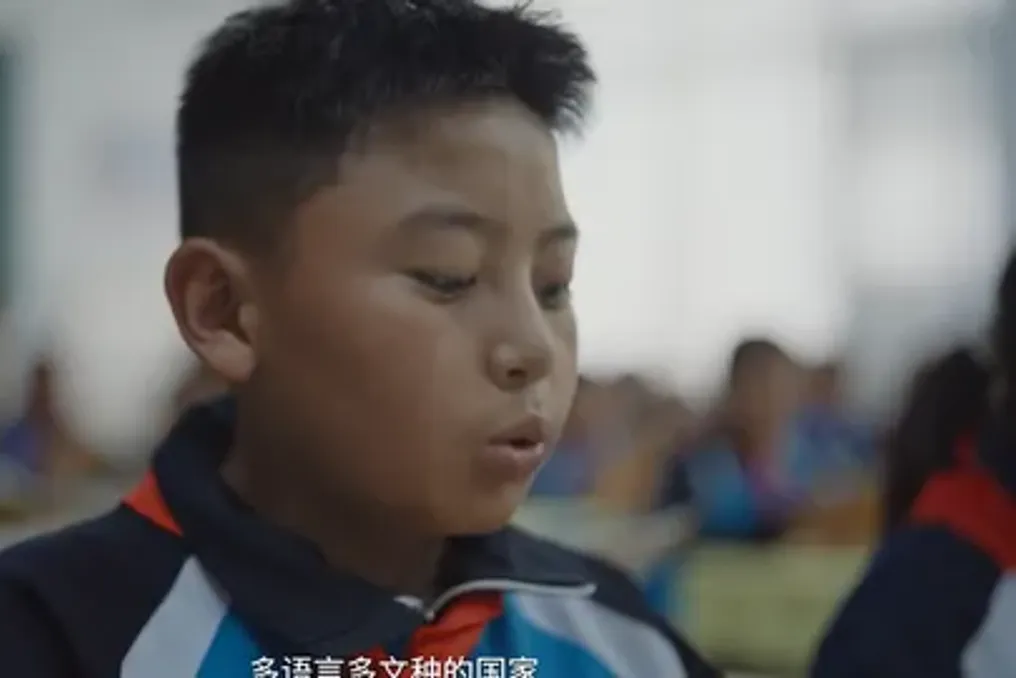
Education Gave New Life to a Former Serf in the Tibet Region
82-year-old Puciren always remembers the first Chinese character he learned—'ren,' which means 'people.' Under the feudal serf system of old Xizang, he was nothing more than an object tied to his master, subject to his arbitrary will. After the peaceful liberation of Xizang, he enrolled in a school he had long dreamed of. There, he learned to read, studied English and computer skills, and later became a moral education consultant at an elementary school. Thanks to the transition from having no access to education to adopting a culture of learning, as well as the implementation of universal free education over 15 years, about one million former serfs have been able to gain dignity and become respected individuals. People's Daily Online
October 20, 14:32Union claims staff and training material shortages for police training are nationwide, not just in Philippi.
October 20, 09:00IIT Madras graduate transforms traditional Navratri decor into interactive robotics lesson for son
October 20, 08:30Tencent releases free educational version of WorkBuddy for teachers in China with a monthly credit of 2000 units
October 20, 04:50Ilaiabad High Court orders verification of employment for 10 teachers using one certificate
October 20, 01:26Irada Aliyeva defended doctoral dissertation in pedagogical sciences
October 19, 21:48Mohichehra Bahodir Qizi defends PhD dissertation in agricultural sciences
October 19, 20:48Firdavs Ortikniyoz received a PhD in economic sciences
October 19, 20:07Gulidakhon Ashkenova defended doctoral dissertation in medical sciences
October 19, 20:05Mahzuna Alibekova will defend her dissertation in pedagogical sciences as Doctor of Philosophy
October 19, 20:01Water pollution status determined in Shorzoq collector
October 19, 19:28Soneike High School Student Wins Community Chest Science Quest Competition
October 19, 18:17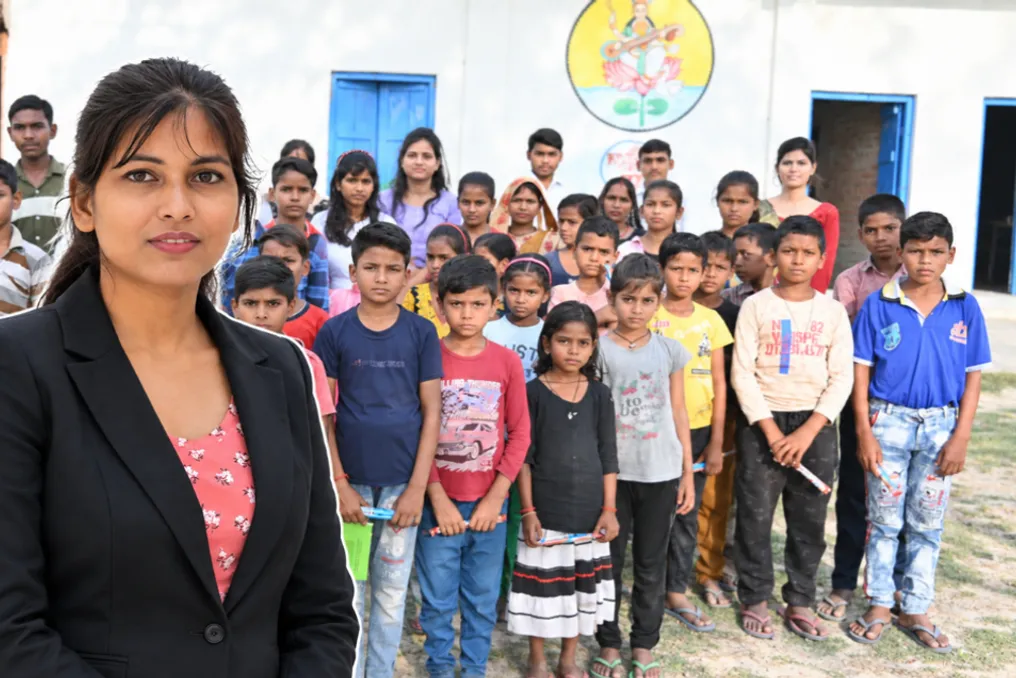
Education helped from rickshaw to railway: it provides affordable education to over 7000 rural children
In the rural areas of Uttar Pradesh, teacher Archana Jaisal conducts classes where children feel comfortable enough to ask questions. For Archana, every desire to learn near home is immensely important because she understands how circumstances affect access to education—be it family financial means, proximity to a good educator, or timely opportunity. She noticed that while children attended lessons, their knowledge did not bring them real benefit. This realization prompted her to establish a rural education and livelihood startup called Shiksha Saathi. Currently, this organization manages over 78 learning centers across six districts of Uttar Pradesh, reaching more than 7650 students with the participation of 67 teachers. However, the story began long before the opening of the first center, with her late father, Jagish Rama. From Rickshaw Puller to Railway Employee Archana grew up in Ghazipur, where her father's childhood was marked by hardship. After the grandfather's death when her father was young, the family fell into a difficult situation, and there was also pressure to marry off his sisters. Due to meager income, her father was forced to make a difficult decision and started working as a rickshaw puller at the age of 17 while continuing his education. Archana recalls that initially, he thought he would have to drop out of school for work, but gradually, he managed to balance work and studies. Eventually, he graduated from university. His daily routine consisted of driving a rickshaw and finding time for studying. One day, he had a casual conversation with another rickshaw puller who noticed his diligent studies over several months. This person advised him to apply for a job on the railway. Jagish took the advice seriously. He applied for railway work, got the job, and moved to Varanasi. In Varanasi, he also found various ways to support his family until his career stabilized: he painted posters and banners, made portraits, and even wrote names and numbers on T-shirts. Archana notes that this is how her father survived in the city. Perhaps the most important thing he brought from those difficult times was the conviction that his children should have a different life. She says her father did not want his children to grow up in the same conditions as he did. A couple of months later, he moved his children to the city. They studied, created a new life, and for a time, it seemed the family had finally overcome those hard years. When the Family Had to Face a New Challenge Archana was still young when her father passed away. His death left the family without the person who worked so diligently to provide a more secure future for the children. Her mother had to take over his job on the railway, but she was unable to do so. Without sufficient support and a stable income, the family of five sisters and one brother once again faced financial difficulties. They continued to live in railway quarters, but covering daily expenses became increasingly difficult. With lack of money, the continuation of education—which her father had tried so hard to make possible—became uncertain. The brothers and sisters had to find ways to support each other. It was during this difficult period that Archana's elder sister intervened. She added that a few months later, her elder sister started earning and helping to pay for food and education. This allowed them to continue studying and sometimes teaching. For Archana, this support meant she could continue her education despite domestic hardships. Ultimately, she earned Bachelor's and Master's degrees in Economics from Bhanaras Hindu University. She once hoped to become a professor, but without proper guidance and resources, this dream remained unattainable. Her own experience showed her how much education can change family circumstances and how difficult it is to realize ambitions without the necessary support. Years later, she began noticing another problem, this time among the children from her extended family in the rural areas of Uttar Pradesh. They went to school, but when Archana started asking them about their lessons, she discovered something alarming: the children struggled to recall the material they had covered. She notes that at that moment, she realized that the quality of their education did not meet standards. Upon closer examination of the problems the children faced, she noticed another issue in the same villages: girls often had few opportunities to earn, even after schooling. Supplementary education centers were limited, and travel to cities was unaffordable for many families. Archana realized that girls also faced difficulties finding ways to earn due to the lack of tutoring or courses in the villages, and they decided to do something about it. In 2022, she launched what was initially called Your Coaching. The organization was officially registered as Shiksha Saathi in 2023. The idea was simple: if children cannot travel to cities for better academic support, why not bring that support to their villages? Teachers Also Need Training Shiksha Saathi began offering affordable extracurricular education for children from grades 1 to 12. The cost remains low, starting at approximately 100 rupees for younger children and reaching 1100 rupees for 12th-grade students. Children who cannot afford the fee can still study alongside others. But as the centers grew, Archana encountered another problem. A class might have a teacher and students, but this does not automatically guarantee quality teaching. At one center, the team received a complaint about the English teacher. An investigation revealed that he himself had weak fundamentals. For Archana, this was an important lesson. She realized that simply teaching was not enough; it was also necessary to train the teachers themselves. This became the basis of Shiksha Saathi's Teacher Training Program. Every six months, new groups of rural girls and women undergo training to teach children according to their age and level of education. Over 740 rural girls and women have completed this program. The model simultaneously solved two problems: children received local academic support, and women gained a chance to earn in their communities. For young women like Nitu, this opportunity also meant a chance to continue their own education. At 19, Nitu became a teacher at Shiksha Saathi, a role she never planned. She said she did it for herself and for the children in the village. Coming from school with Hindi teaching, she was nervous at first. Shiksha Saathi provided educational resources and six-to-seven-month training, gradually helping her gain confidence. Today, Nitu earns about 6000–7000 rupees per month, which is enough to cover her own education and courses. She noted that she started paying for her own education independently, and she no longer needed to take money from home. For Nitu, income means independence. Now she hopes other girls can gain the same confidence. She wants all girls to be able to stand on their own feet, do something for themselves, and help the younger children around them. Her experience reflects the reason why Archana wants more rural girls to become educators. She emphasizes that priority is given to girls because they must have the opportunity to learn, work, and achieve financial independence. While women like Nitu find new opportunities through teaching, the children in these centers begin to perceive learning in a new way. Among the children attending the centers is 10-year-old Riya, who has been studying at Shiksha Saathi for three years. Mathematics, once her most difficult subject, has now become her favorite. She says she used to be afraid of math, but everything has changed now. She thanks her teachers for taking the time to explain concepts and allowing her to ask questions about what is unclear in school. Her parents also encourage her to continue studying. When asked what she wants to be, Riya gave a clear answer: a teacher. For Archana, moments like these show why this work is important. She strives for rural education to go beyond grades and school completion, helping children gain confidence in representing possibilities beyond their immediate surroundings. However, ensuring such opportunities in villages also required winning the trust of the communities themselves. Initially, gaining acceptance of the centers by the communities was not easy. People doubted the girls' travel, the feasibility of spending on education, and the possibility of women working outside the home. But attitudes are slowly changing. In one village, growing support came from a businessman living in Mumbai. Upon learning about Shiksha Saathi's work, he offered his house as a place for children's classes and organized water and other basic amenities for them. Archana notes that the villagers are now providing greater support, saying that their children are succeeding. For Archana, this support is important because it demonstrates that education is gradually becoming a concern of the entire community, not just the individual responsibility of the family. Today, Shiksha Saathi has expanded to Bhadohi, Varanasi, Mirzapur, Prayagraj, Mau, and Ghazipur. Spreading across six districts, Archana's vision goes beyond opening new learning centers. Her youth competitions have reached over 9000 children, and the 2025 initiative, Yuva Pratibha Parishad, encourages students to think about their ambitions, Plan A and Plan B, and how they want to contribute to society. Archana believes that talent exists among students in villages, but they do not always have opportunities. She wants to provide them with the desired chances. She hopes to cover more districts of Uttar Pradesh and make quality education accessible to families, which is closely related to her father's experience. Her father once worked as a rickshaw puller to support his family while continuing to study. The advice of a stranger eventually helped him get a job on the railway, move to the city, and give his children a different future. Archana hopes to help other children find opportunities that can shape their future, just as education shaped her family's future. And when the children call out, 'Archana ma'am!', she listens to their questions. For her, every question carries what her father strived so hard for his children: the chance to learn. And she wants this chance for more children.
October 19, 17:10Mauritius lifts curfew following positive assessment of the situation
October 19, 17:09Basic education completion rate in Cape Verde drops to 84.1% in 2023/2024
October 19, 15:58Brazilian students express concern about democracy after election results
October 19, 15:45The legacy of the Jadids continues to live in the minds of subsequent generations
October 19, 15:10UAE Child Protection Organization Urges Parents to Learn Internet Slang to Ensure Children's Safety
October 19, 14:18NSFAS received advance payments of 4 billion rands to ease financial pressure on universities
October 19, 13:10