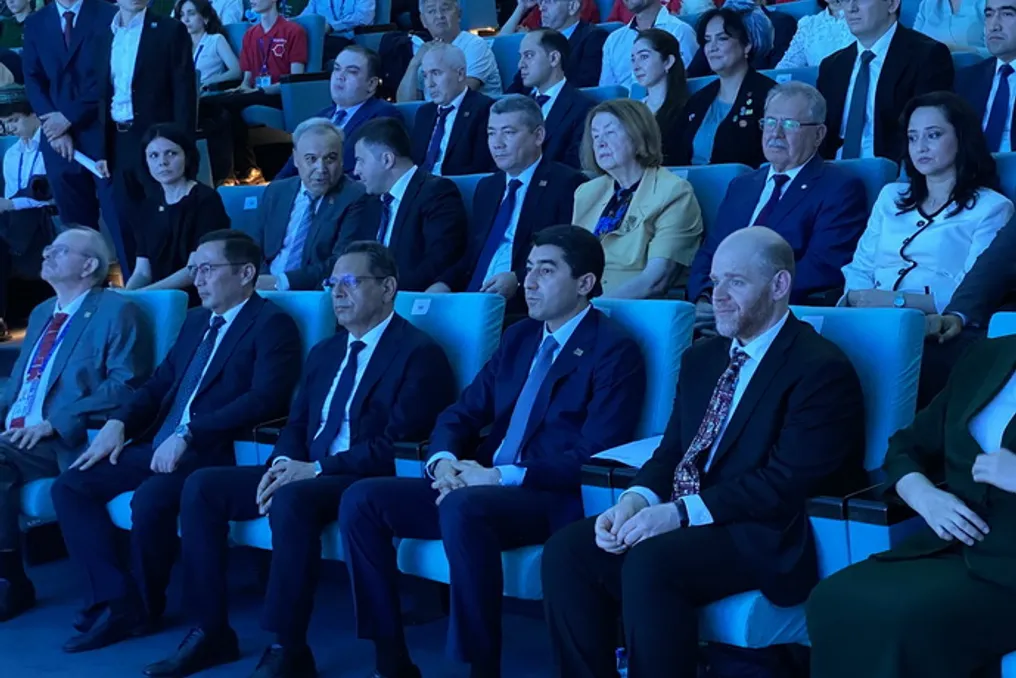
Participants, winners, and representatives of the International Committee of the 58th International Chemistry Olympiad (IChO-2026) summarized the competition, which was held for the first time in Uzbekistan. Many expressed surprise at how Uzbekistan was presented on the international stage, noting the high level of the event.
Scale and Significance of the Event
About a thousand people gathered in Tashkent, the capital: schoolchildren, team leaders, members of international committees, and guests from 94 countries. For Central Asia, this event is historically significant as the International Chemistry Olympiad is being held here for the first time in 58 years.
Uzbekistan's Minister of Preschool and School Education, E'zozhon Karimova, reported that foreign experts were positively surprised by what they saw. She noted that representatives of the governing and scientific committees stated: 'We imagined Uzbekistan very differently.' According to her, the world saw that the country is known not only for sporting achievements and rich history but also for successes in science and education.
Organization and Preparation for the Olympiad
Karimova also mentioned that 2026 will be a special year for the country's education system, as Uzbekistan will host another major intellectual competition—the International Informatics Olympiad—in August.
Turaboy Shermatov, Director of the Center for Subject Olympiads of the Republic of Uzbekistan and member of the International Governing Committee of IChO, highly praised the organization, emphasizing that despite the first experience of holding the Olympiad in the country, it was organized at the highest level. He stated that international experts consider it one of the best Olympiads in the history of IChO.
Preparation for the event took over two years, during which Uzbek specialists collaborated with foreign experts, studying new methodologies and exchanging experiences. During the Olympiad, students solved three practical and nine theoretical problems, all of which were original and created specifically for IChO-2026. Thanks to modern scientific infrastructure, a laboratory tour for 400 participants could be conducted simultaneously.
Results and Awards for Participants
Following the competition, 41 gold, 74 silver, and 112 bronze medals were awarded. Uzbekistan's team demonstrated one of the best results in its history, winning one gold and three silver awards.
The gold medal for the country was won by Tuumurodova Raykhona, a graduate of the Abu Ali ibn Sina school. She said that she initially expected only silver but achieved gold after three years of preparation and daily practice following the national selection. Raykhona also shared that the most stressful moment was the last hour of the theoretical round, which caused great anxiety.
International Olympiad winners are entitled to financial rewards: gold medalists receive over 1 billion soms, silver medalists receive over 600 million soms, and bronze medalists receive over 400 million soms. Rewards are also provided for mentors.
Impressions of Foreign Guests
Foreign participants also left vivid impressions. Liran Zhu, the absolute winner from the USA, thanked the organizers and volunteers for Uzbekistan's hospitality, noting that he had a wonderful time. He reported that after participating in the Olympiad, he made the final decision to link his future with chemistry.
Lilli Gustavsson, a participant from Sweden, called the Olympiad a very difficult but valuable experience. She noted the beauty of the country and meeting people from all over the world, and also stated her plans to pursue scientific research in the field of chemistry in the future.
Growth of Uzbek Youth Successes
The success of Uzbek schoolchildren on the international stage demonstrates steady growth: if they won 12 medals in 2019, this figure reached 210 in 2025. In the first six months of 2026 alone, students have already received over 180 awards, and it is expected that this number will exceed 250 by the end of the year.
Organizers emphasize that the main result of the Olympiad is not just the number of medals, but that current participants will become creators of scientific discoveries, founders of startups, and employees of leading global laboratories in a few years, and their journey into science began in Tashkent in the summer of 2026.