Iranian and Turkish Musicians to Hold Concert in Ankara in Memory of Minaab School Students
Read more
Tehran Times
www.tehrantimes.com

Iranian and Turkish Musicians to Hold Concert in Ankara in Memory of Minaab School Students

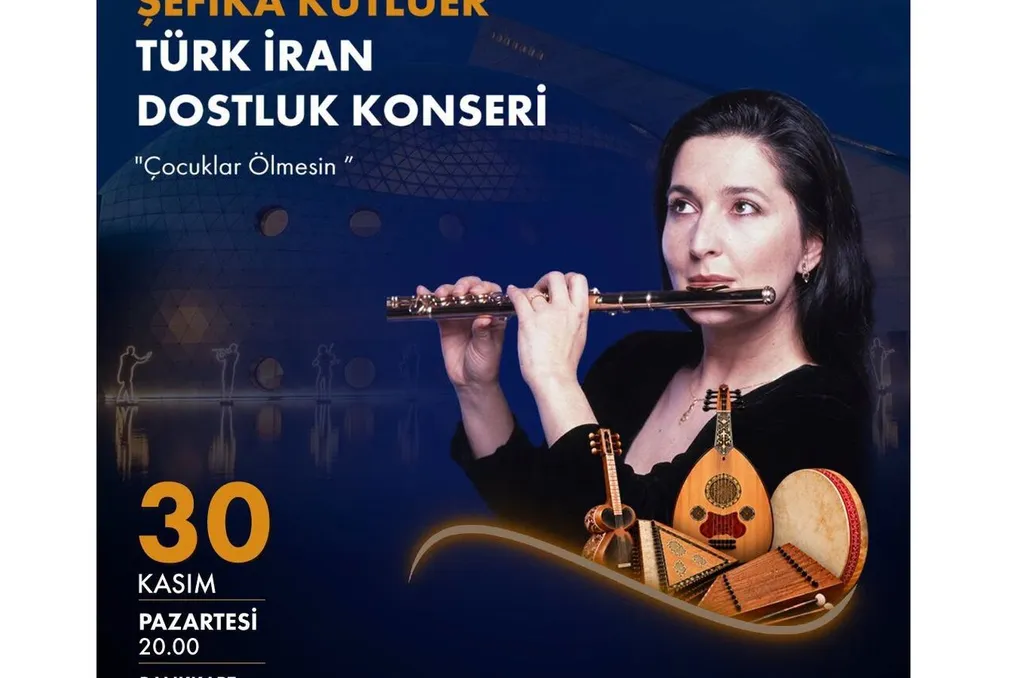
A joint concert featuring Iranian and Turkish musicians will take place on November 30 and December 1 at the Presidential Symphony Orchestra Concert Hall in Ankara, Turkey. This concert is dedicated to the memory of the deceased students of Minaab and is organized in coordination with the Iranian Cultural Attaché in Ankara.

During an online meeting to prepare for the joint event, Asgar Farsi, the Cultural Attaché of the Islamic Republic of Iran in Turkey, highly praised Shefik Kutluer's decision to dedicate the opening concert of the 17th Shefik Kutluer International Festival to countering war and expressing solidarity with the children killed in Minaab. According to ILNA, the tragedy occurred on February 28 when the US and Israel launched a military campaign against Iran, shelling the Shajareh Tayebe school located in the Hormozgan province of Minaab. In the attack, 168 children and members of the school community were killed.

This incident caused widespread resonance across Iran, and Iranian officials sharply condemned the targeted strike on the educational institution, calling it a grave crime. The tragedy has become a symbol of human losses due to military aggression, especially among children and their families, prompting memorial initiatives and cultural events to draw attention to the consequences of attacks on civilian objects.

For her part, Kutluer stated that artists must always speak as the voice of humanity's awakened conscience. She noted that as an artist and a citizen of Turkey, a neighboring country to Iran, she is deeply saddened by the war directed against Iran, and particularly by the death of children. As an international artist and UNICEF Goodwill Ambassador, she decided to dedicate the festival's opening to the students of Minaab. This concert is conceived as an artistic protest against violence against civilians and children, as well as a sign of solidarity with the children of Minaab.

Kutluer also emphasized the significance of Iranian music in world art history, noting that Iranian music possesses rich traditions and vast artistic potential. Considering the historical and musical ties between Iran and Turkey, as well as the ability of Iranian music to resonate on the international stage, she believes that a joint performance with Iranian artists will be a valuable and successful experience. She added: 'Our instruments and our emotions are our weapon. We will tell the world: let the children live.'

Seven musicians from the National Orchestra of Iran, advocating for peace through music, will participate in the upcoming concert. Titled 'Let the Children Live,' the concert aims to convey a universal message of peace. The Iranian delegation will perform traditional instruments such as tar, santur, oud, ney, and kamancheh. They will perform alongside Kutluer, merging traditional Iranian and Anatolian music in a program that includes works inspired by Turkish poets and thinkers such as Aşık Veysel and Yunus Emre, as well as the Persian poet Rumi. Additionally, migrant musicians will compose two new pieces specifically for Kutluer and this concert, which will receive their world premieres.

Kutluer, who has performed on five continents and released 17 albums, is one of Turkey's prominent cultural ambassadors. Among her international awards are state honors from Italy, Austria, Kazakhstan, and Slovakia. She has organized this festival for 17 consecutive years, inviting musicians, orchestras, and conductors from various countries to Turkey.
Similar stories

Mustafa Bafoyev marked his 80th anniversary with a monograph concert in Uzbekistan
Read more
nuz.uz

Mustafa Bafoyev marked his 80th anniversary with a monograph concert in Uzbekistan

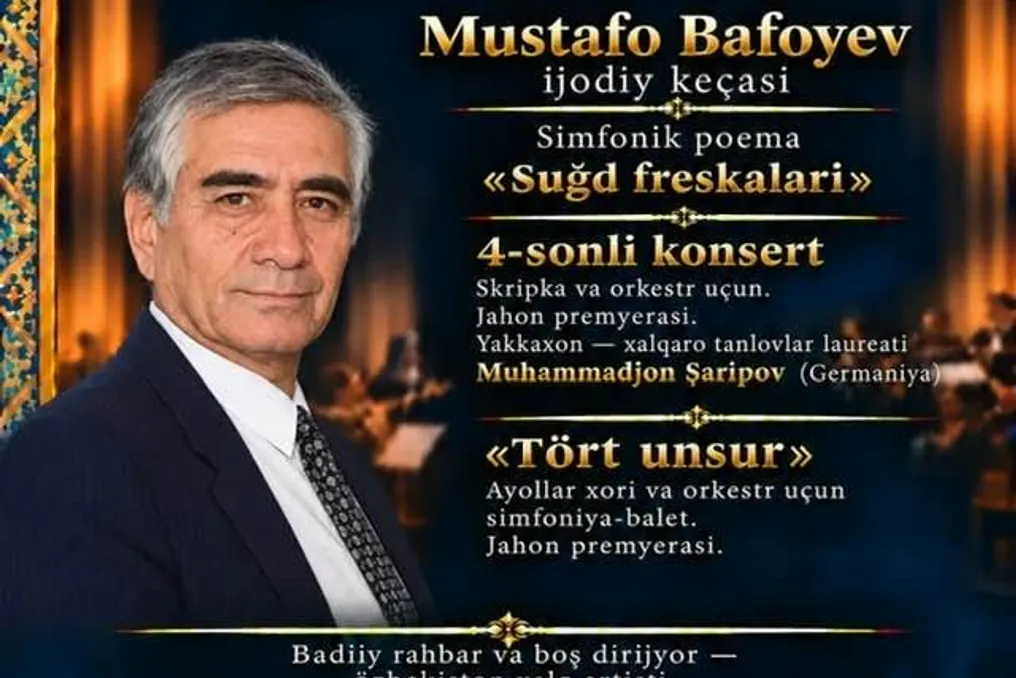
On November 24, 2026, a special monograph evening dedicated to the work of Mustafa Bafoyev, a composer celebrating his 80th anniversary, took place in the Great Hall of the State Conservatory of Uzbekistan. This concert was an important event for the musical life of the republic, presenting the public with works of various genres and directions, including two debut compositions.

The event was held as part of the 'Melodies of Uzbekistan' music festival. The festival was initiated by the Rector of the State Conservatory of Uzbekistan, Professor Kamoliddin Urinbaev, People's Artist of the Republic of Uzbekistan. The goal of the forum was to familiarize listeners with the diversity of Uzbekistan's musical heritage, and it will run until December 18. The festival was organized by the Creative Association of Orchestral and Choral Ensembles of Uzbekistan and the State Symphony Orchestra of the republic.

Creative evenings dedicated to Mustafa Bafoyev have long been a tradition, and this current meeting once again demonstrated high interest in his music. His work is characterized by bright individuality, breadth of vision, and boldness in artistic solutions. A Merited Figure of Arts of the Republic of Uzbekistan, laureate of the A. Kadiri State Prize, and knight of the orders 'For Faithful Service' and 'Labor Glory,' Bafoyev is a professor, composer, and conductor with an extensive creative path.

The composer once commented on music, stating: 'If you decide to link your destiny with music, do not forget that it is a huge universe where there is always room for the flight of imagination.' These words reflect his worldview. For five decades, Bafoyev has developed his recognizable style, harmoniously combining Eastern and Western musical traditions. His works are characterized by national originality, energy, dynamism, and temperament.

Bafoyev emphasized the importance of national musical color, saying: 'One just needs to feel the color of the land, the melody of ornamental Eastern music, which is very impulsive and emotional. The father of Eastern music is rhythm (usul), and the mother is melody. My music is based on rhythms. This is the specialty of my works, in which I use many percussion instruments that add dynamism and create climactic moments.' Reference to usuls and Eastern melodic ornamentation is a key feature of his style; rhythm serves not only an organizational but also an independent figurative and dramatic function in his work.

The composer's creative legacy is extremely vast and includes operas, ballets, oratorios, symphonies, chamber works, over thirty concertos for orchestra, as well as songs, romances, and film music. The scale of his creativity is determined by attention to historical and cultural heritage and the constant search for new expressive means. Collaboration with foreign theaters and musicians contributes to the dissemination of his music outside of Uzbekistan.

The program of the monograph evening featured three works demonstrating different facets of the composer's talent: the poem 'Sogdian Frescoes' for symphony orchestra, Concerto No. 4 for violin with orchestra, and the symphony-ballet 'Four Elements' for female choir and orchestra. The latter two compositions were presented to the world public for the first time.

'Sogdian Frescoes' opened the concert, referring the listener to the ancient heritage of Sogdia and the wall paintings of Central Asia. Bafoyev's interest in this topic is based on deep study of the Sogdian state, and in the work, he strives to recreate the artistic world of the ancient civilization using characteristic elements of Uzbek traditional music. The composition has a philosophical orientation, where polyphonic techniques, intertwining voices, and rhythm play a crucial role in developing the narrative.

Previously, the poem was performed in the 1990s under the direction of Zakhid Khaknazarov, and also at a festival in Baku under the direction of Ayrat Kashaev, and in 2022—by the State Symphony Orchestra of Uzbekistan under the direction of Kamoliddin Urinbaev. The return of 'Sogdian Frescoes' allowed for another encounter with a work that unites historical memory, national roots, and modern symphonic thought. The performance by the State Symphony Orchestra of Uzbekistan under Urinbaev was highly praised for its convincing artistic embodiment, relief, and structured dramaturgy.

Next followed Concerto No. 4 for violin with orchestra, which was also presented for the first time. The basis of the composition is the principle of monothematicism, where the main theme transforms throughout the piece. The first movement develops from a moderate tempo to a tense climax. The second movement is a solo cadenza for the violin without orchestra, allowing the virtuosity of the instrument to be revealed. The finale concludes the dialogue between the soloist and the orchestra, and the return of the initial theme gives the composition completeness.

The first performer of the new concerto was Mukhammadjon Sharipov, a violinist and laureate of international competitions. He is the grandson of Mustafa Bafoyev. Sharipov received musical education in Turkey and Austria, graduating from Bilkent University in Ankara and Mozarteum University in Salzburg. Among his awards are the first prize at the Rodger Ricci International Violin Competition in Austria (2017) and victory at the 'Remember Enescu' competition in Romania (2015). He has performed with orchestras from Turkey and shown his mastery at the Berlin Philharmonic and the Concert Hall in Berlin. Sharipov's performance demonstrated a high level of skill, a subtle understanding of the concept, and an organic combination of virtuosity with cantilena. Maestro Urinbaev provided the necessary balance between the soloist and the orchestra, which allowed the dramaturgy of the premiere to be convincingly revealed.

The evening concluded with another world premiere—the symphony-ballet 'Four Elements' for female choir and orchestra. This work is based on the ancient concept of the four primordial elements of the universe: fire, air, water, and earth.

Concert 'Journey into the World of Organ Music' Held at the State Conservatory of Uzbekistan
Read more
nuz.uz

Concert 'Journey into the World of Organ Music' Held at the State Conservatory of Uzbekistan

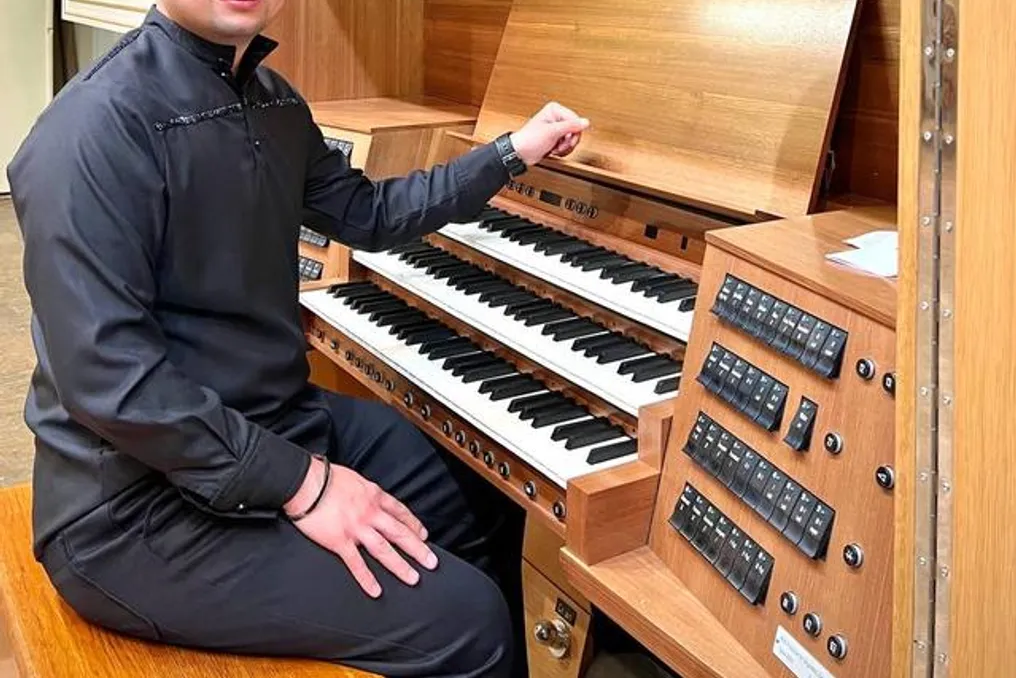
On November 21, 2026, an event titled 'Journey into the World of Organ Music: Eras and Styles' took place in the Organ Hall of the State Conservatory of Uzbekistan. The concert featured works by renowned composers from different centuries. The performance was given by Munira Aminova, a Merited Mentor of Youth of the Republic of Uzbekistan, Associate Professor at the Department of Special Piano and Organ, and the Head of the Department of Interfaculty Piano, as well as Bobir Mirsaidov, a laureate of international competitions and senior lecturer at the conservatory.

The organ is recognized as one of the most significant musical instruments due to its powerful sound, variety of timbres, and ability to convey the slightest emotional nuances. The evening's program allowed listeners to journey from strict polyphonic works of the Baroque era to grandiose Romantic pieces, to familiarize themselves with various national traditions of organ playing, and to feel the uniqueness of each composer's style.

Bobir Mirsaidov's creative path demonstrates how professional interest can influence a musician's destiny. He is from Tashkent and received his initial education at the Republican Specialized Music School named after V. A. Uspensky, where he studied in the special piano class of T. N. Sotnikova. He then continued his studies at the State Conservatory of Uzbekistan under the guidance of M. T. Aminova.

His interest in the organ arose through a teacher who specialized in organ performance. Alongside his piano practice, Mirsaidov began mastering the organ, gradually realizing its enormous artistic potential. Even as a pianist, he won the second prize at the 'Pro Piano Romania' competition in Bucharest in 2013 and the third prize at the International Alexander Rubinstein Piano Competition in Paris in 2014.

After obtaining a bachelor's degree, the musician consciously chose the organ as his specialization for his master's degree, continuing his studies with Munira Tursunkhodzhaeva Aminova. Soon, numerous successes followed: he won first prizes at the international competitions 'OrganArt' in Astana in 2018 and 'Primavera Romana' in Rome in 2019. A significant milestone was completing an assistantship/internship at the Moscow State Conservatory named after P. I. Tchaikovsky in the organ class under the guidance of People's Artist of Russia, Professor Rubin Kabirovich Abdullin. Furthermore, Mirsaidov participated in the VII International Organ Competition named after Gedicke in Moscow.

During his performance, Bobir Mirsaidov presented Fantasia in G major (BWV 572) and two choral preludes by Johann Sebastian Bach—'O Jesus, Descending from Heaven' and 'My Soul Glorifies the Lord,' as well as 'Introduction and Passacaglia' in D minor by Max Reger (Op. 63) and the finale of the First Organ Sonata in D minor (Op. 42) by Alexandre Guilmant.

The diversity of the repertoire allowed for the demonstration of various aspects of organ art. The architectural nature and spiritual depth of Bach's works, the monumentality and polyphonic richness of Reger's music, as well as the virtuosity and dynamism of Guilmant, required the performer not only perfect technique but also a deep understanding of the stylistic approach of each piece. Bobir Mirsaidov convincingly demonstrated his mastery of the instrument, musical erudition, and ability to reveal the rich timbral palette.

Munira Aminova is considered one of the leading figures in the development of organ performance in Uzbekistan. Her creative path is closely linked to this instrument, which she has dedicated many years to in both performing and pedagogical activities.

Aminova received a diploma at the Tashkent State Conservatory in two fields: piano in the class of Associate Professor Yu. A. Kenzer and organ in the class of Merited Artist of Uzbekistan, Associate Professor R. Sh. Karimova. For her achievements, she was awarded the gold medal 'For Success in Studies and Creativity.' The combination of these two specialties expanded her artistic horizons, but the organ became the central theme of her life.

Currently, Munira Aminova combines concert work with extensive pedagogical activity. She not only introduces the public to masterpieces of world organ repertoire but also engages in educating young musicians, imparting professional knowledge and a love for music. Bobir Mirsaidov's story, who began his organ journey in her class, serves as a bright example of the success of this work and the continuity of performance traditions.

The second part of the concert featured Suite IV in Tonality by Guillaume-Gabriel Nivelle, a well-known representative of the 17th-century French organ school. The elegance of the musical language, delicate ornamentation, and the characteristic Baroque timbral refinement allowed listeners to connect with the aesthetics of French organ art.

Particular attention was drawn to Antonio Vivaldi's Concerto in A minor arranged for organ by Johann Sebastian Bach (BWV 593). This three-movement composition, including Allegro, Adagio, and Allegro, demonstrates how Vivaldi's Italian melodic freedom and temperament acquire new dimensions through Bach's polyphonic depth and compositional structure. This work stands as a clear testament to the creative interaction of two great composers.

The main program concluded with 'Prelude and Fugue on the Theme of B–A–C–H' by Franz Liszt—one of the most monumental and virtuosic works of the Romantic organ repertoire. The reference to Bach's musical heritage, dramatic tension, and the monumentality of the sound lent the finale a special expressiveness.

Munira Aminova's performance was characterized by maturity of concept, subtle sense of style, and virtuosity in handling the instrument. In her interpretations, the organ unfolded across the entire spectrum of timbral colors—from exquisite transparency to powerful, rich sound.

The concert was a great success, and the audience warmly welcomed both performers, generously expressing their gratitude with applause. Munira Aminova was especially warmly received, and at numerous requests, she performed two more pieces: a choral prelude by Johann Sebastian Bach and a Toccata by Georgy Mushel.

The conclusion of the evening was a true triumph of organ music. As the last sounds faded under the hall's vaults, the audience stood up, greeting the musicians with a thunderous ovation. This sincere reaction confirmed the high level of performance skill and the strong emotional impact of the music.

The concert 'Journey into the World of Organ Music: Eras and Styles' once again proved that there are worthy successors to organ art in Uzbekistan. Thanks to the talent, dedication, and many years of work of musicians like Munira Aminova and Bobir Mirsaidov, the best traditions of world organ performance are preserved and developed, and interest in this majestic instrument is growing among an increasing number of people.

Monographic concert dedicated to the work of Johann Sebastian Bach held in Tashkent
Read more
nuz.uz

Monographic concert dedicated to the work of Johann Sebastian Bach held in Tashkent

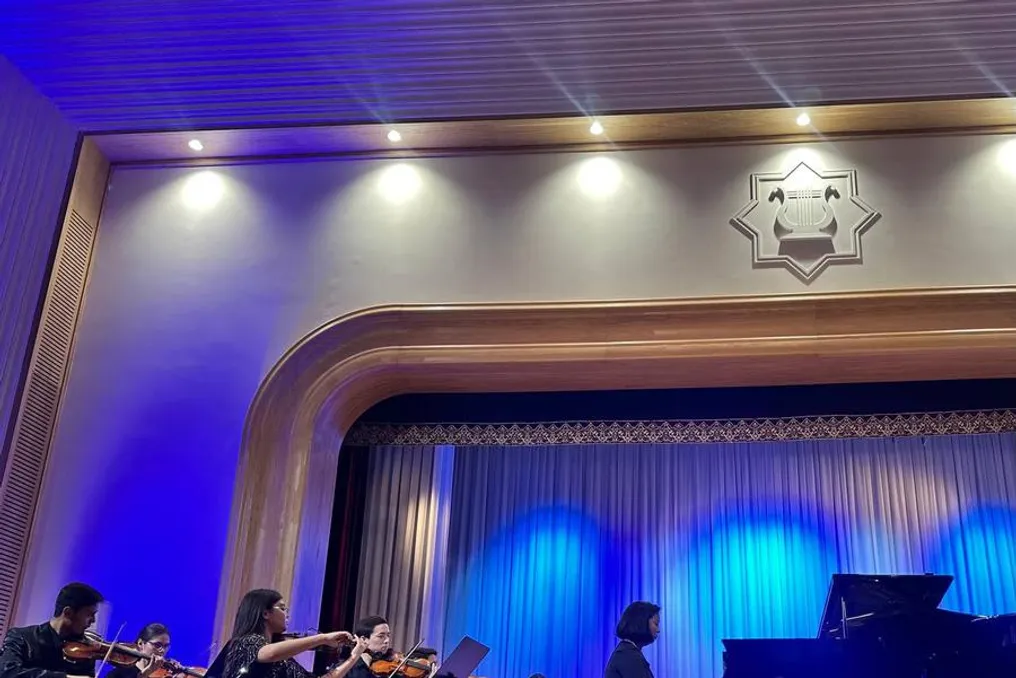
On November 17, 2026, a monographic concert dedicated to the works of Johann Sebastian Bach, one of the outstanding geniuses of world musical culture, took place in the Great Hall of the State Conservatory of Uzbekistan. This evening, organized by the Student Chamber Orchestra of the State Conservatory of Uzbekistan, led and conducted by Eldar Azimov, a Merited Art Figure of Uzbekistan and professor, became a solemn event in Baroque music, uniting the composer's masterpieces with the high performance skill of the musicians.

The concert featured a cohesive program consisting of four instrumental compositions: concertos for one, two, and three keyboards with orchestra. This structure allowed for tracing the evolution from the individual dialogue of a solo instrument with the orchestra to the complex polyphonic interaction of several performers, demonstrating the richness of Bach's ensemble thinking.

The name of Johann Sebastian Bach holds a unique place in music history due to the depth of the philosophical content, the perfection of composition, rich polyphonic thought, and the emotional expressiveness of his works. His music remains relevant to new generations of listeners, revealing new facets of artistic content.

Particular attention in the composer's legacy is paid to the keyboard concertos he created while in Leipzig, particularly in connection with his work with the Musical Students' Society at Leipzig University. These works became an important milestone in the development of the instrumental concerto genre, where Bach virtuously demonstrated the expressive capabilities of the keyboard, establishing it as a full participant in the orchestral dialogue.

The evening began with the performance of Concerto for Keyboard with Orchestra in F minor BWV 1056, performed by Elnur Mirzakamalova. This piece, characterized by the conciseness of its statements and the expressive contrast of its movements, allowed for the revelation of both the virtuosic and lyrical sides of the Bach style. A particularly subtle approach is required for the poignant middle movement, where the restraint of the language combines with deep emotional experiences.

Next, the Concerto for Two Keyboards with Orchestra in C minor BWV 1060 was performed, featuring Vasilya Umarova and Luiza Kabdurakhmanova as soloists. In this work, the interaction of the two solo instruments plays a key role, as the music is built on comparison, call-and-response, and mutual complementation of parts. The performers needed not only to show personal skill but also to achieve ensemble cohesion to embody the complex polyphonic structure.

The next two pieces presented a larger picture of collective musical performance. Concerto for Three Keyboards with Orchestra in D minor BWV 1063 was performed by Elnur Mirzakamalova, Vasilya Umarova, and Luiza Kabdurakhmanova. The three solo instruments formed a dynamic system of interaction, where each part retained its individuality while uniting into a single artistic whole.

The finale of the evening was the Concerto for Three Keyboards with Orchestra in D major BWV 1064, featuring Luiza Kabdurakhmanova, Vasilya Umarova, and Elnur Mirzakamalova as soloists. Thanks to the energetic development of themes, bright virtuosity, and festive character, the finale acquired great dynamism and scale, fully demonstrating the richness of Bach's ensemble writing, based on the equality of parts and the unity of the orchestra.

The performing side of the evening deserves special attention. The soloists—laureates of international competitions and associate professors of the Department of Special Piano/Organ at the State Conservatory of Uzbekistan—Elnur Mirzakamalova, Vasilya Umarova, and Luiza Kabdurakhmanova—demonstrated high professionalism, virtuosic freedom, a delicate sense of style, and a deep understanding of Bach's music. In their joint performances, they showed rare ensemble sensitivity, impeccable mutual understanding, and the ability to conduct a meaningful musical dialogue.

The Student Chamber Orchestra of the State Conservatory of Uzbekistan also performed convincingly. Its performance was characterized by coherence, expressiveness, stylistic accuracy, and sensitive interaction with the soloists. Under the direction of Professor Eldar Azimov, the ensemble successfully handled the complex tasks of the Bach score, ensuring conceptual unity, coordination of parts, and expressive overall sound.

The monographic concert served as a kind of immersion into the world of Bach's instrumental music, sequentially revealing the diversity of the composer's artistic solutions—from one to three keyboards. The program showcased his talent for creating complex musical structures filled with internal energy and harmonic completeness.

The audience reacted extremely positively to the success of the evening: after the program ended, the listeners lingered with the musicians, expressing gratitude with prolonged applause and ovations. This warm reception testified to how deeply the performers managed to touch the hearts of the spectators.

The evening proved to be an important event for the concert life of the State Conservatory of Uzbekistan, once again emphasizing the enduring value of Bach's heritage and the significance of studying it. Such events contribute to enriching cultural life, developing performance traditions, and strengthening the link between pedagogy and concert practice.

Popular