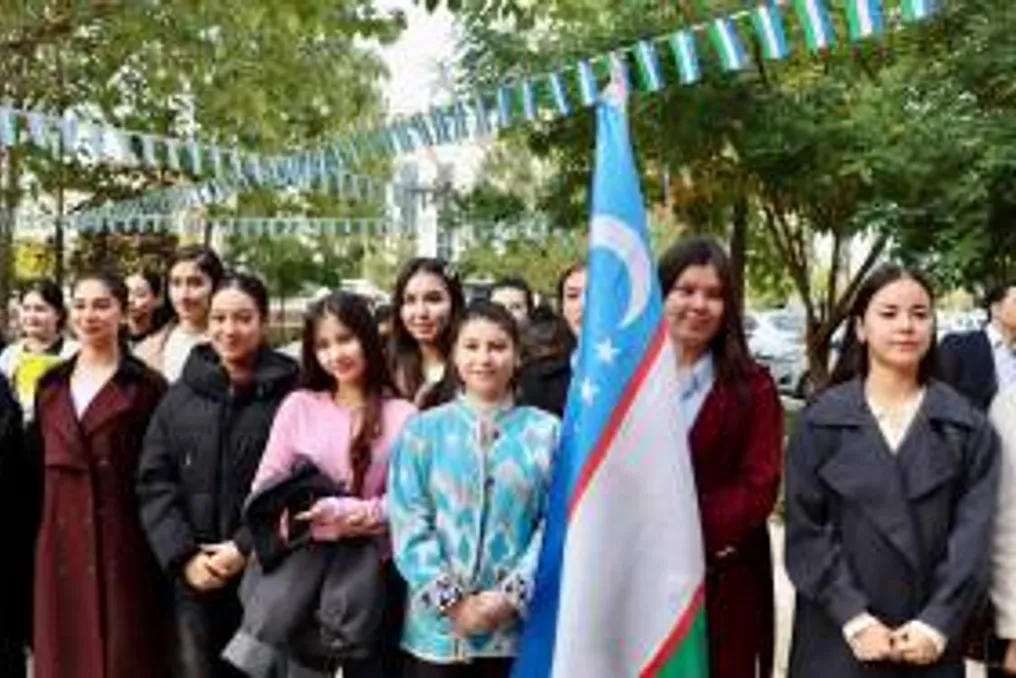
A creative evening dedicated to the centenary of Adil Yakubov, a prominent figure in 20th-century Uzbek literature, was held at the Alisher Navoi National Library. Readers are well acquainted with his works, including the novels 'Treasures of Ulugbek,' 'Conscience,' and 'Ancient World,' but the event focused on his lesser-known side—his work as a journalist.
Yakubov was viewed not merely as an author of quality articles, but as a journalist with a deep sense of justice. He possessed the ability to see real human suffering behind official data, hidden by statistical indicators and grand slogans.
Two periods in Yakubov's biography stand out for special attention: 1959–1963 and 1967–1970. During these times, he worked as a correspondent for the Moscow 'Literary Newspaper' covering Uzbekistan.
At that time, the 'Literary Newspaper' was a significant publication where acute social problems were discussed, feuilletons and sketches were published, and renowned scientists and figures participated. Despite censorship, which limited criticism of officials, the talented correspondent had the opportunity to raise uncomfortable questions and seek clarification from the leadership.
Yakubov actively mastered journalistic practice, visiting cotton fields in the Hungry Steppe, the villages of Kashkadarya and Surkhandarya, as well as construction sites and scientific institutions. By interacting with farmers, workers, and managers, he documented realities often ignored in official reports about labor victories and record harvests. Behind these successes often lay hard labor, peasant poverty, and official arbitrariness.
The author believes that he draws the social sharpness of many of his works precisely from this experience. For instance, in the short story 'The Story of a Feuilleton,' the central figure is a journalist confronting bureaucracy. Similar moral conflicts are reflected in the novel 'Conscience' ('Diyonat'), where the hero Normurod Shomurodov battles careerism and abuse of power.
Journalism has the capacity to shape critical thinking, and Adil Yakubov successfully passed this 'school.' He demonstrated that his experience of observation and analysis served as the foundation for his novelistic mastery.
In 1982, Adil Yakubov took charge of the newspaper 'Uzbekistan Literature and Art.' This period was characterized by the clear manifestation of internal contradictions within the seemingly prosperous Soviet reality.
Unspoken restrictions persisted in the editorial environment, and any sharp material required multiple approvals. The editor-in-chief was expected to prevent problems for the higher leadership rather than encourage authors' boldness. In this context, the publication could be turned into a platform for harmless materials, focusing on anniversaries and laudatory articles.
However, Yakubov aimed for a different course. Under his leadership, the newspaper paid close attention to the fate of the Uzbek language, the preservation of national culture, historical memory, and environmental issues, as well as the situation of the rural population. Thus, the newspaper transformed from a purely literary publication into a public tribune.
Acknowledging that even the boldest leader must consider party directives and censorship, the author emphasizes the importance of professional integrity—the ability to voice an unpopular opinion while risking one's career.
The culmination of Yakubov's civic and journalistic activity was his address to the I Congress of People's Deputies of the USSR, which began in Moscow on May 25, 1989. The author covered this congress as a parliamentary correspondent from the Uzbek SSR for Uzbek television and radio.
At that time, a country accustomed to pre-prepared speeches heard for the first time on the main political rostrum numerous questions that the authorities were unprepared to answer. Millions of viewers followed the broadcasts, and the deputies' speeches were discussed everywhere.
The Uzbek writer delivered a report on problems that were previously preferred to be concealed: on the cotton monoculture that turned Uzbekistan's agriculture into a raw material supplier, on the difficult situation of the peasants growing cotton but living in poverty, and on how cotton plantings displace orchards, pastures, and food crops, leading to an ecological catastrophe.
Statistics on purchase prices were presented: the state paid about 50 kopecks per kilogram of raw cotton, while the cost of finished products made from this raw material multiplied the farmer's earnings. Yakubov raised the politically sensitive issue of unfair compensation for the producer.
Beyond economics, his speech conveyed pain for human dignity. He spoke about how prioritizing the cotton plan jeopardizes people's health, children's well-being, and the future of the land. He also touched upon the issue of unjust accusations during the 'cotton case,' calling for a distinction between the guilty and the entire populace, which was particularly relevant during the escalation of interethnic relations.
The text of his speech, titled 'Muruvvatni unutmaylik!' ('Let us not forget mercy!'), was published on June 16, 1989, in the newspaper 'Uzbekistan Literature and Art.'
Today, decades later, it is easy to criticize the Soviet system, its dependence on cotton, or censorship. However, it is important to remember that Adil Yakubov voiced all these problems during the existence of the Soviet Union. Although the political situation changed by 1989 due to glasnost, not everyone was able to take advantage of the new opportunities.
Yakubov's key achievement was that he did not separate the writer's conscience from civic responsibility. For him, issues of justice extended beyond fictional works and required entering the political arena to defend real people.
He managed to combine the skill of a novelist with active journalism. His century reminds us of the importance of a civic stance. Today, journalism needs not so much beautiful formulations as honesty and the ability to ask questions, rather than blindly following official reports.
The writer is immortalized through books, and the journalist through the courage to speak the truth; Adil Yakubov gave readers both.