Global nuclear energy is undergoing changes. Three years ago, at the COP28 conference in Dubai, 22 countries supported a declaration calling for the tripling of global nuclear capacity by 2050; currently, the number of participants in this initiative has grown to 39. The focus of discussions has shifted from the number of signatories to actual construction sites. According to the World Nuclear Association (WNA), 82 power units are currently under construction, with a total capacity approaching 90 GW.
The development of the nuclear industry is occurring through various models: some countries are increasing the capacity of existing nuclear systems, while others are beginning their journey in this field by utilizing international partnerships, forming national programs, and cooperating with foreign companies.
How New Countries Enter the Nuclear Ranking
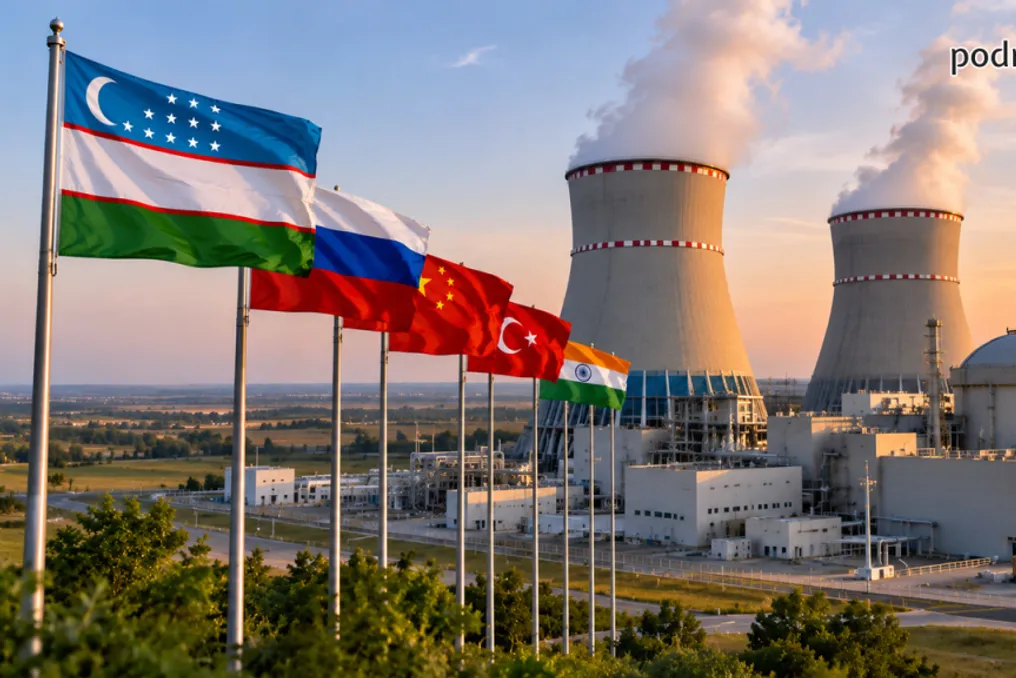
The largest volume of current international construction is associated with projects implemented by the Russian state corporation Rosatom. According to information from the Rosatom press service, the company is building 18 power units in Russia and 26 VVER type power units abroad. These foreign projects are distributed among China, India, Turkey, Egypt (4 units each), as well as Bangladesh, Iran, Hungary, Uzbekistan, and Kazakhstan (2 units each).
Furthermore, Rosatom is constructing two small-scale power units with the RITM-200N reactor unit in Uzbekistan. Other countries are also actively developing the export of nuclear technologies: South Korea signed a contract for two new reactors in the Czech Republic after completing work on four units in the UAE, and China continues its cooperation with Pakistan. Nevertheless, the Russian project portfolio currently includes the largest number of foreign initiatives.
In some cases, commissioning the first NPP allows a country to enter the global ranking for the first time. A striking example is Belarus: before 2020, the country had no commercial nuclear power generation. The first BelAES power unit was commissioned in 2020, and the second in 2023. After the launch of the second unit, the total installed capacity of BelAES reached 2.22 GW, which raised the country to approximately 20th place in the world ranking of operating nuclear power units. By the end of 2025, the plant provided about 40% of all electricity generation in the country.
Achieving such a result required the country to create its own regulatory framework, train personnel, develop operational competencies, and establish the necessary infrastructure for working with nuclear and radioactive materials. This process is currently underway in Turkey, Egypt, and Bangladesh, which are building their first commercial NPPs and will enter the list of countries with functioning nuclear power generation for the first time after the launch of the first units.
Planning and Localization of Projects
Turkey has long declared plans to develop nuclear energy. At the World Atomic Days event in Antalya, Turkish Minister of Energy Alparslan Bayraktar announced that four power units with a total capacity of 4.8 GW are being built at the Akкую NPP, but the country plans to reach a nuclear capacity of 20 GW by 2050. He also noted that over 300 graduates from Russian universities are already working at the Akкую site.
According to Rosatom, the localization of this project has reached a volume of about $16.3 billion. This example illustrates the effect of the 'first NPP': in the initial stage, the country needs foreign technology, design experience, and personnel training, but as the project progresses, local specialists and suppliers emerge within the country capable of participating in subsequent construction.
Compared to export projects, China demonstrates a different scale, focused primarily on the domestic market. According to WNA, China operates 65 reactors with a total capacity of approximately 65.1 GW, and another 41 power units with a capacity of about 46.4 GW are under construction. France's operating fleet consists of 57 reactors and generates about 63 GW.
Prospects for the Development of Nuclear Energy
Uzbekistan, Kazakhstan, Poland, and Vietnam are included in the group of countries that WNA has listed as having first NPPs, as they already have approved projects and have made corresponding decisions. Uzbekistan's project includes two small RITM-200N reactors and two large VVER-1000 reactors, with a total capacity of 2.11 GW.
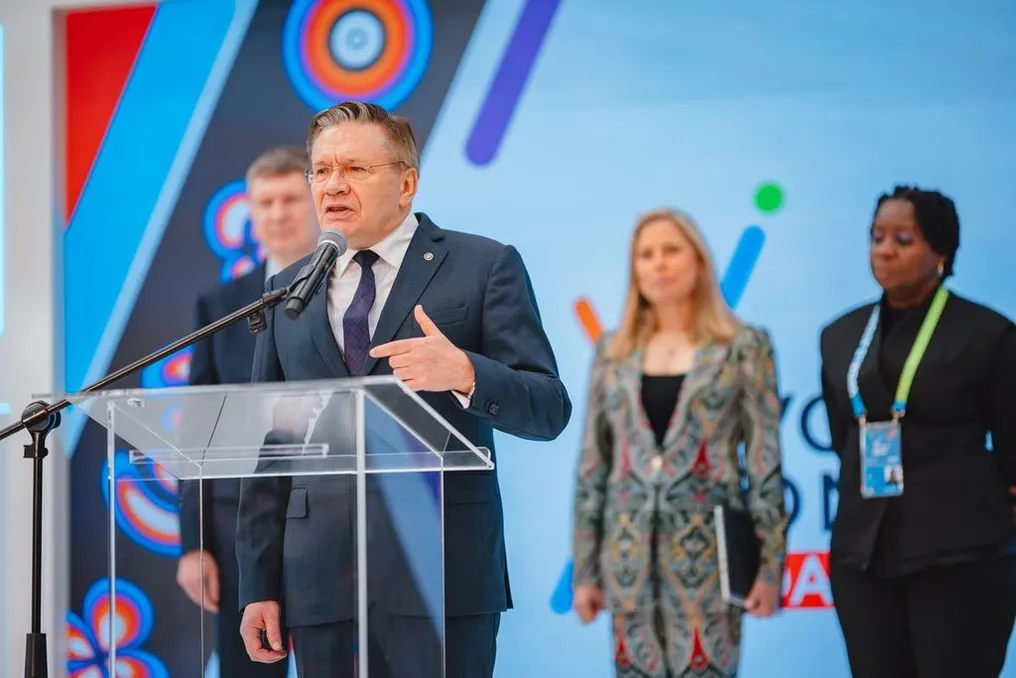
At the plenary session of World Atomic Days, Azim Akhmedkhadzhayev, head of Uzatom Agency, explained that the choice of combining small and large power units represents a phased strategy for program development. He emphasized that this approach is not only a response to energy needs but also a conscious long-term strategy that takes into account high responsibility to the population. Akhmedkhadzhayev specified that combining small modular reactors and large power units on one site offers several advantages, including economic viability.
According to Akhmedkhadzhayev, implementing the program with small reactors will allow the country to gain its own experience, train qualified specialists, and develop necessary competencies until the large power units are commissioned. The construction of NPPs is motivated by the rapid growth in electricity demand and the need to provide energy for a growing economy, especially against the backdrop of expanding renewable energy sources.
For Central Asia, an additional factor is the scarcity of water resources, so the Uzbek NPP project includes the use of dry cooling systems to reduce water consumption. After the commissioning of all four units, Uzbekistan will enter the global list of countries with commercial nuclear power generation for the first time.
Possibility of Achieving the Goal of Tripling Nuclear Capacity
Reports from international organizations indicate a positive trend: more power units have appeared in recent years, and the construction portfolio has increased. However, expanding geography alone does not guarantee the achievement of the COP28 goal. A significant portion of new reactors must compensate for the decommissioning of old power units, and the main growth in the future is expected in countries with already developed nuclear industries.
According to the World Nuclear Outlook Report 2026, the aggregate of government plans is theoretically sufficient. If these plans are fully implemented, global nuclear capacity could exceed 1,467 GW by 2050, which is above the target of tripling relative to 2020. However, about 548 GW of this figure are not yet tied to specific projects. The report itself indicates that to achieve the goal, construction rates must accelerate significantly in the future.
Three years after COP28 provided a clearer picture of the process of increasing and modernizing nuclear capacity. Russian projects contribute to expanding the industry's scope and help new countries form their own nuclear infrastructure. China provides a significant volume of new construction in the domestic market. International projects expand the industry's geography, leading to the emergence of new operators, among whom Uzbekistan is one that will undergo this transition. The next stage of development will depend on how many announced projects actually move to construction sites and are subsequently integrated into the power grids.