
New IT solutions for the financial sector were presented at the FINNEXT Asia 2026 startup competition
Read more
Nuz.uz
nuz.uz

New IT solutions for the financial sector were presented at the FINNEXT Asia 2026 startup competition

As part of the FINNEXT Asia 2026 event, a startup competition named 'New Wave' took place. Teams specializing in fintech and IT from Central Asian countries demonstrated their developments focused on the financial industry.

These projects are capable of helping banks solve current challenges and integrate modern technologies over the next three to five years. The selection of startups was conducted taking into account the specific needs of the banking sector. The jury included representatives from major regional banks, business angels, and venture fund employees.

The key themes highlighted by the participants were artificial intelligence and big data analysis. In particular, the application of these tools for improving borrower reliability, fraud detection, and enhancing the quality of banking services was discussed. Additionally, solutions were presented in areas such as open banking, digital ecosystems, customer service and loyalty programs, cybersecurity, digital identification, Islamic finance, payment systems, and digital assets.

When evaluating the projects, the jury considered the relevance of the proposed solution to real market demands, the quality of its development, and its applicability in Central Asian banks. The development prospects, business model, and experience of the development team were also analyzed.

The greatest preference was given to startups that already had a functioning prototype or a product ready for testing. An important requirement was the possibility of piloting the development in banks and payment structures, as well as subsequent introduction to markets in other countries of the region.

Participants had a unique opportunity to present their ideas to bank executives, regulatory body representatives, investors, and accelerators.

The chairman of the expert jury, Abboskhon Rasulev, director of the venture fund HUMO Ventures, noted the positive impression from all participants, expressing confidence that each one of them could find an investor. He added that despite selecting one winner, the other projects also deserve attention, and they plan to study the possibilities of their implementation, refinement, and additions. Rasulev emphasized that in entrepreneurship, a change of course often occurs, known as a pivot—a change in direction or business model in response to new experiences and opportunities. He stressed the importance of participating in accelerator programs for timely strategy correction.

In Rasulev's opinion, a strong team, a clear concept, a promising product, a well-thought-out economic model, and high-quality presentation are critically important for a successful presentation. The presentation must be both informative and engaging to convey the essence of the project in a short time. As a corporate venture fund, they are primarily interested in the product itself: its usefulness for the ecosystem and the value it creates. The second important aspect is the team, where the professional knowledge and experience of the founder are valued. The third factor is the economic side, including the valuation of the startup, as well as the founder's competence when presenting their product. To briefly summarize the project's essence, the elevator pitch method is used.

Today, in the opinion of the jury, the startup Mascot Studio best solved this problem.

Mascot Studio is a Tashkent-based startup that offers a platform for quickly and easily creating 3D characters in the company's brand style and managing the development process.

The venture fund HUMO Ventures awarded the winner of the 'New Wave' competition a certificate worth 50 million soums for further product development. Pavel Kim, the startup organizer, reported that the team has started working on the project but needs resources, primarily expert support, as they specialize in animation rather than startup launching. When choosing a partner, they will consider the potential for scaling and experience in entering international markets. Kim also mentioned that they have already pitched to several business angels and understand that attracting investment is a long process requiring many iterations.

The 'New Wave' competition at FINNEXT Asia 2026 demonstrated the high potential of new ideas in creating in-demand solutions capable of changing established approaches and making a significant contribution to the development of society and the economy.
Similar stories

FINNEXT Asia 2026 Forum Focuses on Transitioning from Strategies to Practical Application of Financial Solutions
Read more
nuz.uz

FINNEXT Asia 2026 Forum Focuses on Transitioning from Strategies to Practical Application of Financial Solutions

The FINNEXT Asia 2026 Forum gathered executives and top managers from the financial systems of Uzbekistan, Central Asian countries, and Russia. Among the participants were represented 36 banks, 15 payment organizations, five leading telecom operators, and two payment systems. Representatives from banks, fintech companies, startups, payment systems, telecom and IT companies, integrators, venture funds, business angels, consultants, IT parks, accelerators, and the international banking community were able to exchange best practices, discuss digital transformation challenges and new regulatory norms, as well as find common ground between regional and international participants.

Evgenia Yakunina, CEO of FINNEXT Asia, noted that the forum is being held for the third year, and the agenda is determined by the industry itself. Current topics include artificial intelligence and human resources issues. An HR session was organized jointly with the Higher School of Economics from Russia to discuss personnel management. The forum's program is constantly updated: last year, a separate track on insurance was launched, and this year, a startup competition is taking place. Yakunina emphasized the importance of human relations and plans to hold a round table with representatives of regulators and major banks next year to jointly promote solutions.

The financial sector in Central Asia is undergoing significant changes driven by new regulatory requirements, the implementation of AI, and the transition of banks to digital ecosystems. Speakers analyzed how these requirements affect the investment strategies and products of regional financial institutions. Special attention was paid to the development of venture capital, attracting global investments, as well as the human and infrastructural potential of Central Asia.

Gulnur Karasheva, Organizational Development Manager at the Union of Banks of Kyrgyzstan, shared her impressions of participating with an eight-person delegation. She highly praised the open exchange of expertise among experts and the Central Asian format, which allows for a broader view of the tasks. Karasheva believes that combining efforts at the regional level is effective because the goals and challenges in the financial sphere are similar across all countries. She also noted the successful organization of the forum and expressed hope for a larger delegation next year.

A key topic was the practical implementation of Artificial Intelligence and Big Data in the financial sector. Discussions covered the transition from pilot projects to full-scale use of AI in credit scoring, fraud prevention, and customer service improvement, as well as assessing the economic feasibility of such implementations.

The shortage of specialists with AI competencies and the need to revise approaches to personnel training was also a pressing issue. Business and educational circles discussed corporate training, changing professional roles, and adapting university curricula to current labor market needs.

Participants also focused on the digital modernization of banking infrastructure. Aspects such as the implementation of open banking, the use of APIs, mandatory biometric identification, and the creation of internal cybersecurity departments in Uzbek banks were reviewed. The readiness of financial organizations for new regulatory requirements and the associated technological and financial costs were also discussed.

The forum also addressed the development of digital currencies and payment instruments, the regulation of digital assets, strengthening the role of marketplaces in providing financial services, the launch of Islamic banking products, and the prospects of the digital sum considering the experience of neighboring countries and opportunities to accelerate cross-border transfers.

Dmitry Aksakov, Executive Director of VEB RF, called the forum an excellent platform for interaction, noting the constructive energy of the participants. He spoke about a recent visit to Tashkent, where he confirmed the high level of competence of specialists striving to create world-class products. Aksakov emphasized that established technological solutions and mechanisms exist between Uzbekistan and Russia, and both sides are interested in simplifying and making financial operations accessible to citizens. He added that convenient cross-border transfers are a sought-after area that could be a result of the forum.

In conclusion, it can be concluded that the financial institutions of Central Asia possess all the necessary means to adapt to new regulatory and technological conditions, strengthen their position in the global financial arena, and form competitive ecosystems.

FINNEXT Asia 2026 in Tashkent Discussed Growth of the Central Asian Fintech Market
Read more
uzdaily.uz

FINNEXT Asia 2026 in Tashkent Discussed Growth of the Central Asian Fintech Market

The third International Forum on Financial Innovations, FINNEXT Asia 2026, gathered about 700 participants, including representatives from banks, regulators, fintech companies, and investment funds, in Tashkent on November 19. The main theme of the forum was the transition of the Central Asian fintech market from pilot projects to economically sustainable and scalable solutions.

Discussions covered international integration, attracting investments, developing digital ecosystems, and the application of artificial intelligence. Participants analyzed changes in banking business models, prospects for cross-border payments, and ways to increase the profitability of technological investments.

The Reality of Central Asian Fintech: From Strategy to Results

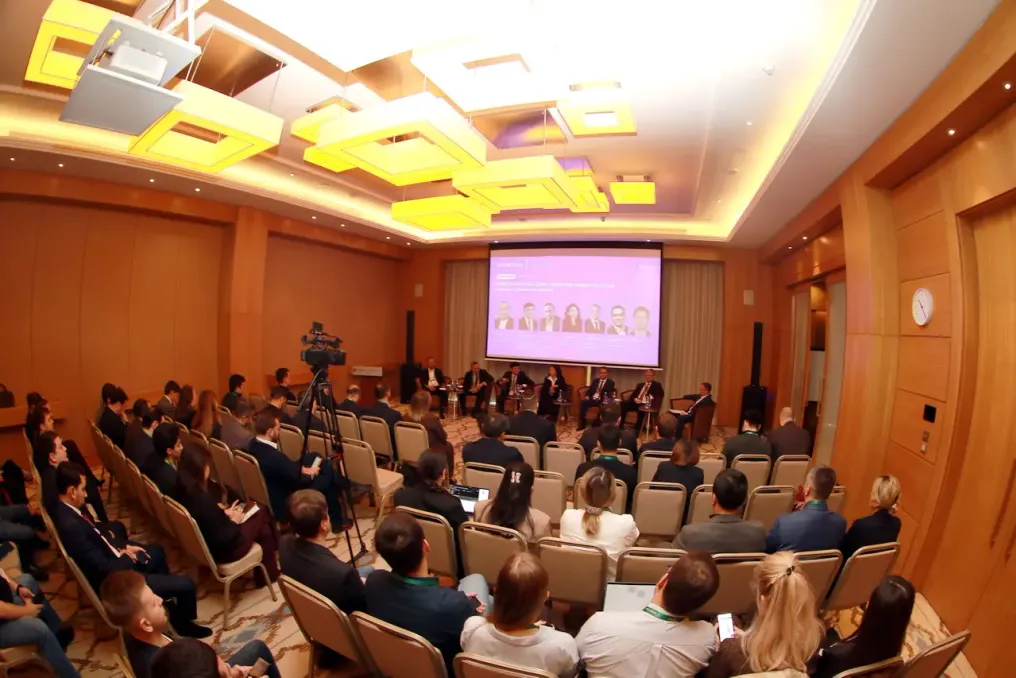
The plenary session titled 'The Reality of Central Asian Fintech: From Strategy to Results' examined structural transformations in the regional market. Alexey Maslov, advisor to the Chairman of the Board of HUMO, moderated the discussion. Representatives from IT Park Uzbekistan, the Center for Artificial Intelligence and Digital Economy under the Ministry of Digital Technologies of Uzbekistan, UzVC, the Central Asian Fintech Association, Uzum Bank, and VEB.RF took part in the discussion.

Experts discussed the impact of regulatory initiatives on financial institutions' strategies, the development of banking ecosystems, the role of artificial intelligence, and venture capital attraction models. Svetlana Khe, CEO of Uzum Bank, noted that competition among financial organizations is shifting from individual products to satisfying customers' daily needs. According to her, the key factor is the bank's ability to meet users' daily needs, rather than the number of services offered.

As a result, financial services are increasingly integrated into retail and technology platforms, with banks establishing partnerships with online marketplaces. Azamat Rakhmonzoda, Head of the IT Export Development Department at IT Park Uzbekistan, reported that international companies accounted for 23% of new ecosystem members at the time of the forum, compared to 5% in 2024. He linked this growth to the establishment of clear rules and national strategies, emphasizing that predictable regulation allows foreign companies to plan long-term activities and make decisions about establishing businesses in Uzbekistan.

Rakhmonzoda also highlighted the importance of providing startups with access to data and open banking infrastructure for developing and scaling solutions before entering foreign markets. Participants in the plenary discussion concluded that the overall financial space in Central Asia does not require complete legislative harmonization; instead, they identified the compatibility of technological solutions and standards as one possible way to promote cross-border cooperation between banks and payment systems.

Artificial Intelligence and Big Data: From Pilot to Profit

A separate session, titled 'Artificial Intelligence and Big Data: From Pilot to Profit,' was dedicated to assessing the economic return on technology implementation. It was moderated by Behzod Ismoilov from AICA. Representatives from Ipoteka Bank, Microcreditbank, SQB Bank, and the Higher School of Economics reviewed the use of language models, alternative credit scoring, automated debt collection, and chatbots to reduce customer service costs.

Participants also discussed methods for measuring the real impact of artificial intelligence, obstacles to scaling solutions, and the time required to create integrated AI platforms. One of the identified problems was the shortage of specialists, which underscored the need for banks to develop partnership programs with universities.

The Workforce That Doesn't Yet Exist

Human resource provision became the central theme of the session 'The Workforce That Doesn't Yet Exist.' Moderator Andrey Darkevich from the Higher School of Economics discussed alternative approaches to specialist training together with representatives from the Employers' Association of Uzbekistan, Inha University in Tashkent, AVO Bank, and Click. Proposed measures included corporate educational programs accessible not only to employees of individual companies but also a reassessment of the role of higher education with a greater emphasis on candidates' practical skills.

Participants also considered the prospects for young specialists. Since AI automates basic tasks, companies will need to find new ways to help novice employees develop into mid-level and senior specialists.

Open Banking and Next-Generation Digital Identity

The session 'Open Banking and Next-Generation Digital Identity' focused on integration between financial institutions and digital platforms. Participants noted that technological cooperation continues despite the delay in launching open banking. Topics discussed included the quality of customer service across online and offline channels, user protection during the digital sale of investment products, and preparing the data infrastructure necessary for implementing AI agents. Opportunities for monetizing services and developing partner ecosystems were also examined.

Money of the Next Generation: Digital Currencies, Payments, and Islamic Banking

The session 'Money of the Next Generation: Digital Currencies, Payments, and Islamic Banking' explored the integration of Islamic financial instruments into mobile banking applications. Experts discussed the prospects of the digital sum, drawing on the experience of the digital tenge and digital ruble, as well as the regulation of digital assets and the balance between data protection and financial monitoring requirements. Issues of cross-border settlements using instant payment systems and national digital currencies were also addressed.

The closing session, titled 'Central Asia 2027: Stakes on the Table,' focused on participants' forecasts regarding the development of key fintech market areas in the coming year. The forum also held the 'Startup Centre: New Wave' startup competition, won by MASCOT STUDIO—a Tashkent platform for creating branded 3D characters. The project received 50 million soms in investment from HUMO Ventures for further product development.

FINNEXT CEO Evgeniy Yakunin stated that the regional fintech is increasingly focusing on the economic results of technology implementation, rather than the number of launches. She added that banks and tech companies are beginning to view each other as partners in developing artificial intelligence, open APIs, and digital currencies. Yakunin also emphasized the potential of Central Asia in creating its own technological products for international markets. The forum's national payment system was the state payment mechanism of Uzbekistan, HUMO. Other partners included U-BSS, ratexa.ai, DECO SYSTEMS, aladdin, BTech, Creatio banza, bitmanager, and UPplatform. Conceptual partners were PERSON HUNTERS, International Beverages Tashkent, EMBRAS, Employers' Association of Uzbekistan, UZUMFERMER.UZ, and CONNEKT.

Popular