FAO holds InnoFarm event in Tehran to promote agricultural innovations in Iran
Read more
Tehran Times
www.tehrantimes.com

FAO holds InnoFarm event in Tehran to promote agricultural innovations in Iran

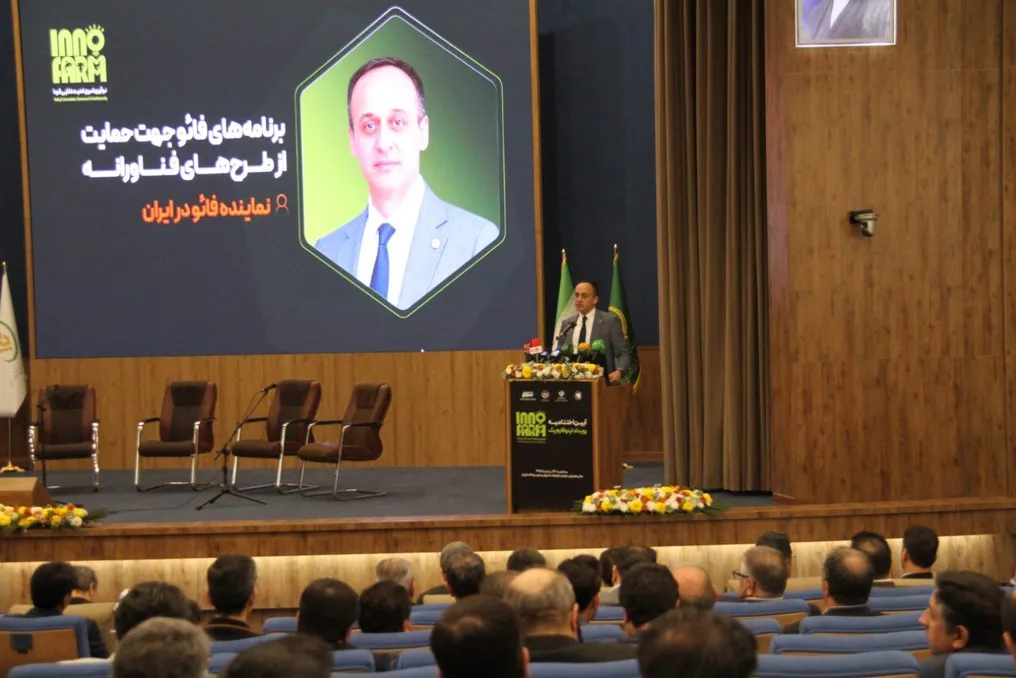
The Food and Agriculture Organization of the United Nations (FAO) held the InnoFarm event in Tehran on Tuesday. The goal of the event was to expand support for technology-oriented initiatives in the fields of education, development, and agricultural management. The event gathered representatives from government bodies as well as research and innovation sectors to facilitate the adoption of new technologies in the agricultural sector.

Participants in the organization included the Ministry of Agriculture, the Agricultural Research, Education and Extension Organization (AREEO), and the Vice-Presidency for Science, Technology and Knowledge-Based Economy.

Speaking at the event, the FAO representative in the Islamic Republic of Iran, Farrokh Toirov, noted that innovation is a key factor in transforming the agri-food system globally. This is because food production systems face growing demands for providing nutritious food while simultaneously addressing issues of water scarcity, climate risks, and rising production costs.

He emphasized that solutions to these challenges require innovations that are accessible, trustworthy, and applicable to producers. Toirov added that FAO places innovation at the center of its efforts to achieve improvements in production, nutrition, environment, and quality of life, ensuring that no one is left behind.

Farrokh Toirov explained that the FAO Strategic Framework defines technologies, innovations, and data, alongside conditions such as governance, human capital, and institutions, as four accelerators for progress toward these goals. He highlighted the organization's work in Iran, focusing on digital agriculture and precision resource management initiatives. Among these is the support for apple producers in the Lake Urmia basin.

These projects involve studying the use of smart irrigation systems and digital advisory applications that provide farmers with alerts and recommendations regarding irrigation, soil condition, and fertilizer management. Furthermore, the support for Farmer Schools and practical knowledge-sharing methods within this same initiative was noted. These platforms help deliver scientific knowledge directly to farming communities and contribute to the transition to more sustainable agricultural practices.

Speaking about the role of InnoFarm, the FAO representative stated that one of the most complex challenges in the field of agricultural innovation is transforming promising ideas into real practical applications. Researchers need opportunities to test their solutions under real production challenges, entrepreneurs require technical and business support, and investors need convincing evidence before allocating resources.

According to him, InnoFarm's efforts to bring these groups together can help bridge the gap between research and practical application, as well as introduce useful innovations into livestock, poultry, and aquaculture production. The combination of scientific assessment, mentorship, business training, and investor attraction reflects an approach that can bring promising technologies closer to the market.

Toirov also mentioned the FAO Agri-Food Systems Accelerator Program under the SDGs, which is implemented with technical support from the Social Entrepreneurship and Development Ecosystem (SEED). This program provides small and medium-sized enterprises with individualized mentorship on investment strategies, marketing, and financial planning, helping them assess their social and environmental impact. Among the supported enterprises were companies involved in processing local grains in Ghana and precision rice farming in Thailand. Their experience demonstrates how targeted support can meet the needs of various technologies and markets while maintaining a focus on sustainable development.

He insisted that support for selected innovators must continue after award ceremonies, allowing them to test business hypotheses, demonstrate the results of their solutions, and build long-term relationships with clients and investors. The FAO representative also highlighted the World Food Forum's Startup Innovation Awards as another model for supporting young agri-food entrepreneurs through providing mentorship opportunities, solution presentation platforms, and increasing international visibility.

Toirov noted that young entrepreneurs possess valuable ideas, but access to expertise, testing grounds, and professional networks often plays a decisive role in determining whether these ideas can be realized into practical solutions. He then presented the FAO's Agriculture, Forestry and Fisheries Technology and Innovation Outlook (ATIO) and its associated Knowledge Base as resources for tracking new technologies, understanding their application, and assessing the conditions influencing their adoption. These resources can help initiatives like InnoFarm compare available solutions, identify gaps in the evidence base, and evaluate the suitability of innovations for specific agricultural production systems. He also pointed to opportunities for sharing well-documented Iranian experience through international knowledge networks, emphasizing that evidence of effectiveness, accessibility, and adoption will make such exchanges particularly valuable.
Similar stories

International conference in Tashkent discussed agro-technologies to increase the efficiency of Uzbekistan's agriculture
Read more
nuz.uz

International conference in Tashkent discussed agro-technologies to increase the efficiency of Uzbekistan's agriculture

An international conference was held in Tashkent dedicated to introducing advanced agro-technologies and precision farming principles into Uzbekistan's agriculture. The event gathered scientists, experts, and representatives of relevant organizations from both within the country and abroad. The main topics of discussion included methods for increasing soil fertility, optimizing water resource use, and implementing sustainable agricultural practices.

Special attention was paid to the issue of efficient water use, which is critically important for Uzbekistan, where irrigated land reaches four million hectares. Participants reviewed innovative approaches such as soil moisture monitoring systems, evaporation and plant needs measurement, and new irrigation methods. Examples of drip and subsurface drip irrigation were demonstrated, including the application of artificial intelligence for accurately determining plant water deficit.

Experts also focused on methods for restoring and preserving soil fertility. Various approaches—biological, chemical, and mechanical—were discussed, including the use of compost, biochar, green manures, and biofertilizers, as well as the possibility of reducing tillage frequency. A significant area of research was the study of soil microbiome and the role of microorganisms in maintaining soil health and increasing yields.

Professor Gulnara Jumaniyazova, a specialist in soil microbiology, agricultural biotechnology, and biofertilizers, presented biotechnology based on the complex application of two types of biological fertilizers. She noted that with traditional mineral fertilizer application, up to 80% of phosphorus and potassium remains unabsorbed, leading to soil salinization and degradation. Her development uses bacteria that treat seeds and are capable of dissolving inaccessible compounds of phosphorus, potassium, and silicon, making them available to plants. These bacteria are also salt-tolerant and help reduce salinization.

The second part of the technology presented by Jumaniyazova is foliar fertilization with microalgae, which serves as a growth stimulant and an additional source of nutrition. This comprehensive biotechnology has already been implemented in the republic over an area of about fifty thousand hectares, positively affecting yield and product quality.

Within the framework of the conference, test results with various crops such as sorghum, millet, amaranth, sweet potato, and okra were presented. These crops are viewed as a way to increase the resilience of the agricultural sector to drought, improve soil condition, and diversify production. The need to adapt crop rotation and expand the range of cultivated crops was also discussed.

Lead researcher Yulia Shirokova from the Research Institute of Irrigation and Water Problems emphasized the necessity of flushing saline soils and developing reclamation technologies that account for water scarcity. Since reclamation consumes 25–30% of annual water intake in agriculture, water saving is extremely important. One solution, using a bioacid developed by the Institute of Bioorganic Chemistry of the Academy of Sciences, allows reducing the water consumption for flushing by approximately 40%, lowering the volume from 4–5 thousand to 2.5–3 thousand cubic meters per hectare. Furthermore, applying this preparation during vegetative irrigation increases the efficiency of salt leaching by 20–30% without increasing water consumption, which also increases yield.

The practical part of the conference included visits by participants to operational irrigation systems and research institutes. This allowed specialists to exchange experiences and study current research for subsequent implementation of modern technologies in practice. A seminar was organized to unite all interested parties with the goal of preparing recommendations for the government on improving cultivation conditions, preserving soil health, and saving water, while ensuring food security, ecology, and biodiversity.

Iran proposes creating Avicenna Consortium with Tajikistan and Afghanistan
Read more
www.tehrantimes.com

Iran proposes creating Avicenna Consortium with Tajikistan and Afghanistan

The Iranian headquarters dedicated to the development of traditional medicine and medicinal herbs has proposed establishing a trilateral consortium named Abu Ali Sina (Avicenna). This consortium will be created in cooperation with Tajikistan and Afghanistan to stimulate scientific, technical, and innovative interaction in the field of healthcare.

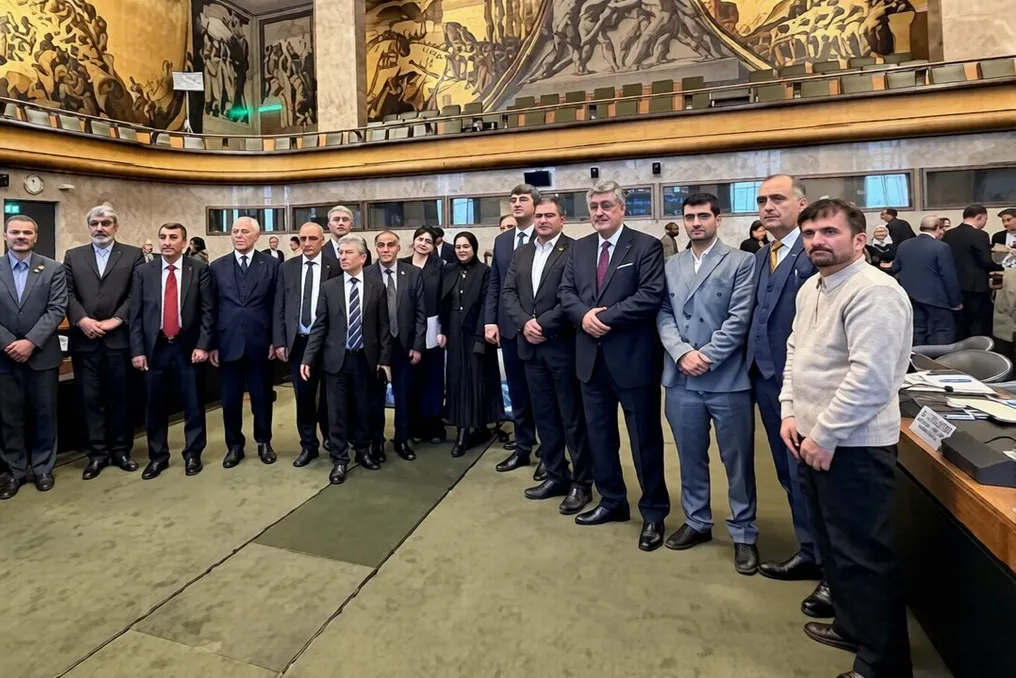
Hossein Rezaizadeh, head of this headquarters, emphasized the necessity of utilizing Avicenna's scientific and pharmacological heritage to expand regional scientific and technical cooperation, citing the common scientific, cultural, and historical opportunities of the three countries. He made these statements during the International Scientific Conference titled 'Abu Ali Sina and His Contribution to Shaping a New Scientific Worldview,' which took place in Geneva at the Palais des Nations on November 12.

The initiative aims to lay the foundation for targeted regional cooperation in healthcare, transforming shared scientific and historical ties into technological achievements. This will be achieved by leveraging the potential of universities, research centers, and knowledge-based companies in Iran, Tajikistan, and Afghanistan.

Key areas of the proposal include expanding joint research, documenting and re-examining medical and pharmacological sources, standardizing natural products, and strengthening cooperation in utilizing the potential of medicinal plants.

The proposed 'Avicenna Consortium for Science, Health, and Innovation' could serve as a common platform for organizing the scientific capabilities of the three nations, developing joint projects and programs in the healthcare sector, especially in traditional medicine, medicinal plants, and pharmacological heritage.

To implement this proposal, Rezaizadeh suggested forming a working group that would develop a three-year action plan to clarify priorities, the course of cooperation, and the implementation of a flagship joint project in the field of medicinal plants and pharmacological heritage.

The International Scientific Conference gathered representatives from diplomatic corps, international organizations, academic and research institutions, as well as distinguished scientists and researchers. Participants discussed Avicenna's significant contribution to the development of world science and philosophy, the importance of his scientific and intellectual legacy, and the role of his humanistic ideas in promoting dialogue between East and West.

Special attention was paid to preserving, studying, digitizing, and promoting Ibn Sina's scientific heritage, strengthening international scientific cooperation, and advancing the universal values of knowledge, enlightenment, rational inquiry, and intercultural understanding.

Addressing the event, the Iranian Ambassador and Permanent Representative to Geneva, Ali Bahreini, stated: 'Today the world is fighting against egocentrism, extremism, and division, and needs wisdom, scientific curiosity, and freedom from prejudice more than ever.' He noted that Avicenna, drawing upon Persian, Greek, and Indian intellectual traditions, opened new horizons in understanding humanity and the world. Bahreini added that his greatness lies not only in his scientific achievements but also in his open mind, intellectual humility, and commitment to truth and humanity. He concluded: 'Avicenna belongs to all ages. He is a bridge between East and West and a reminder that the highest form of power is the power of thought put into service of humanity.'

Persian Medicine

Persian medicine, one of the oldest systems of traditional medicine in the world, has a long history of scholarship associated with prominent physicians such as Razi and Avicenna. Its traditional structure places great emphasis on maintaining health, preventing diseases, and adopting appropriate lifestyles.

According to data previously published by the Ministry of Health, the country ranks third globally in the number of registered clinical trials in traditional medicine on the World Health Organization's International Clinical Trials Registry Platform (ICTRP), trailing China and India. The share of clinical trials in traditional and complementary medicine in Iran accounts for about three percent of all clinical trials registered in the country, while only about 0.3 percent of medical personnel are experts in this field. This report demonstrates the high potential of Iranian researchers in the direction of evidence-based medicine.

Persian traditional medicine strongly focuses on prioritizing health preservation and disease prevention over treatment. It is one of the most ancient forms of traditional medicine and is based on the concept of four humors: phlegm (Balgham), blood (Dam), yellow bile (Safrā’), and black bile (Sawda’). The concept of four humors is based on the teachings of Razi and Avicenna within a complex medical system.

Currently, approximately 30,000 plant species have been identified worldwide, of which Iran accounts for about 8,000 species, exceeding the total number of species found in Europe. About 500 experts provide medical and health services across the country, and over 1,000 general practitioners who have completed courses approved by the Ministry of Health also provide services.

Training experts in Persian medicine has always been a focus of the Ministry of Health. Therefore, various advanced training courses have been developed and conducted under its leadership.

Uzbekistan and FAO Discuss AI-Based Agricultural Digitalization Project
Read more
uzdaily.uz

Uzbekistan and FAO Discuss AI-Based Agricultural Digitalization Project

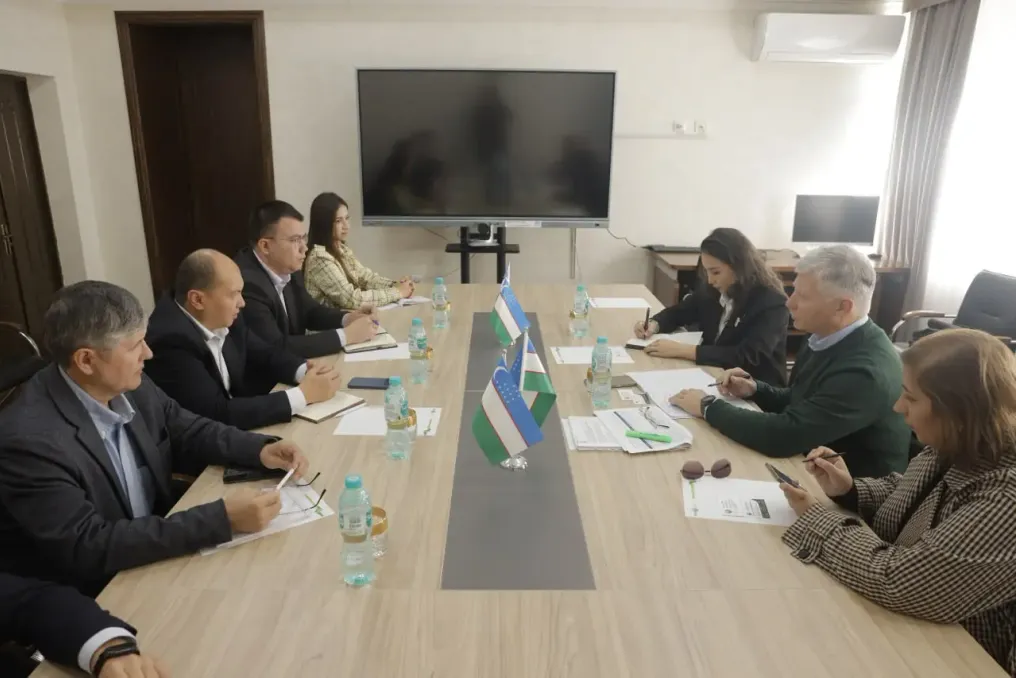
The Ministry of Agriculture of Uzbekistan reported that representatives from the country held discussions with a delegation from the Food and Agriculture Organization of the United Nations (FAO) regarding the development of a project to digitalize the agricultural sector using artificial intelligence.

The meeting was organized to discuss expanding cooperation in the field of agriculture, attracting foreign investment, and implementing joint projects. Opportunities for investment in priority areas of the agricultural sector were discussed, as well as support for current initiatives and the preparation of new projects with the participation of international partners.

The parties also focused on agricultural digitalization, including the implementation of modern information technologies in management processes and the application of artificial intelligence. During the meeting, the FAO proposed developing and launching a specialized project in these areas.

Participants emphasized that the proposed initiatives are aimed at strengthening mutually beneficial cooperation, increasing the practical effectiveness of investment projects, and promoting sustainable agricultural development in Uzbekistan. However, details of the project, such as timelines and financing, have not yet been disclosed.

Popular