Lenovo Opens New Office in Tashkent as Part of Lenovo Day 2026 Event
Read more
Podrobno.uz [uz]
podrobno.uz

Lenovo Opens New Office in Tashkent as Part of Lenovo Day 2026 Event

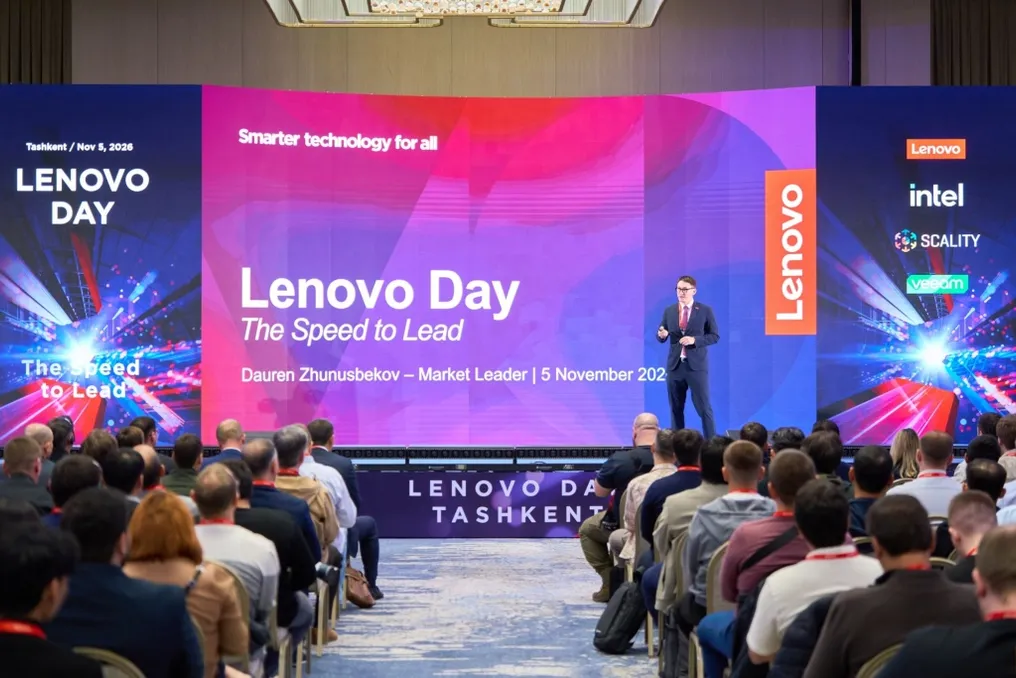
The Lenovo Day 2026 event took place in Tashkent, gathering over 250 participants, including IT leaders, partners, and business community experts. The central event was the official opening of Lenovo's local office in Uzbekistan. Global trends in artificial intelligence, prospects for AI-based business development, and practical examples of new technology applications were discussed at the venue.

The opening of this local office marks the next stage in Lenovo's expansion in Uzbekistan, where the company already has an established base. Lenovo's partner network in the country includes over one hundred organizations, and the number of clients exceeds three hundred. Seven authorized service centers operate to provide service support, and there is also a dedicated spare parts warehouse.

The event featured a local team of specialists, which includes employees working with corporate, SMB, and consumer segments, as well as business development managers, technical, and marketing departments. This composition of competencies will allow Lenovo to interact with customers and partners more promptly and closely.

The new Tashkent office is integrated into Lenovo's global network, which operates in 180 markets, and the company holds the position of the world's largest PC manufacturer while maintaining leadership in server reliability for twelve consecutive years.

Strategic Importance of Uzbekistan for Lenovo

Dauren Zhunusbekov, Director of the Local Office and Head of Business Development for Lenovo in Uzbekistan, emphasized that Lenovo is deliberately strengthening its presence in Uzbekistan, viewing the country as a strategically important market for further growth in Central Asia. He noted the significant potential of the region, pointing to the acceleration of digital transformation, growing demands for business efficiency, and the increasing role of artificial intelligence as a key factor in competitiveness.

According to Zhunusbekov, expanding the team and opening a local office are important steps for the company, as they will enable it to better understand the needs of partners and customers and offer appropriate market solutions.

Trends and Tools Discussed at Lenovo Day 2026

Lenovo Day brought together representatives from numerous economic sectors, including banking, government structures, telecommunications, retail, education, medicine, and transport. Intel, Scality, and Veeam served as strategic partners of the event. Speakers included both international experts and representatives of Uzbek entrepreneurship.

The main theme of the presentations was the Speed to Lead concept, which Lenovo interprets as the pursuit of finding optimal solutions for businesses in advance and achieving measurable results through them. The program covered the entire AI implementation cycle: from necessary infrastructure and intelligent devices to gaining practical experience and final impact. Experts analyzed which technologies truly benefit businesses in 2026, asserting that the AI-native approach has ceased to be just a prospect and has become a reality.

The relevance of this topic for Uzbekistan is due to the country having included the development of artificial intelligence in its state strategy until 2030. According to this strategy, Uzbekistan aims to enter the top 50 countries in AI readiness, and the volume of the market for AI-based products and services should reach $1.5 billion.

Andrey Beklemishev, Vice President of the International CIO Academy, shared data from the IDC study 'The Economic Impact of AI,' according to which the cumulative economic effect of AI between 2025 and 2031 will amount to $22.5 trillion, with an average annual increase of 35.6%. He added that the benefits of AI are gradually shifting from technology providers to their end-users, and although the impact of AI on labor productivity is only beginning to show, a noticeable effect is expected as early as 2027.

Hybrid AI: Effective Use of Artificial Intelligence

Parallel to the growing popularity of AI tools, expenses for their maintenance are also increasing. Token costs rise proportionally to the scale of use, and even a simple query to a model can be expensive for a business. Moreover, companies are increasingly interested in controlling their data and their own AI infrastructure. Consequently, the market focus is shifting: instead of simply implementing AI, the emphasis is placed on its most effective use, and some enterprises are beginning to migrate workloads from public clouds to their internal systems.

The Hybrid AI approach serves as the solution to both problems. This methodology combines ready-made and proprietary tools to deploy both public and corporate and personal models. The company independently decides where data processing will occur and which solutions will be applied, while maintaining control over financial costs. A properly designed hybrid model contributes to a significant increase in productivity and efficiency of business processes across various industries.

Technology Demonstrations from Lenovo

In the demonstration area, visitors could examine Lenovo products designed for various use cases. The exhibition included personal devices, Yoga solutions for creative tasks, Legion gaming devices, as well as products and services for the commercial sector, infrastructure systems, Motorola tablets and smartphones, and various accessories.

Products and services could be tested on three demonstration stands. Two of them were dedicated to local AI deployment. The Lenovo Private AI solution allows artificial intelligence to run directly on the client's infrastructure, eliminating dependence on cloud services. The Lenovo PGX system, built on the NVIDIA GB10 Grace Blackwell Superchip, enables autonomous operation of AI models and agents.

The third stand was prepared in collaboration with Veeam and Scality and demonstrated secure backup using Lenovo's S3-compatible storage. This solution supports the Object Lock feature to protect information from ransomware.

Another interactive part of the exhibition involved solutions related to Lenovo's global technological partnerships with Ducati and Formula 1®. Lenovo technologies are used to transform the world of racing and major sports. Discussions about the future of these technologies took place within discussions with professional football players.

Similar stories

Uzbekistan studies cooperation with Turkish companies to localize production of NPP equipment
Read more
podrobno.uz

Uzbekistan studies cooperation with Turkish companies to localize production of NPP equipment

Uzbekistan is showing interest in attracting Turkish companies that participated in the construction of the Akkuyu NPP in Turkey for the construction of its own first nuclear power plant. The republic aims to localize the production of necessary components and equipment within a special industrial zone named 'Atom-Sanat'.

A delegation from Uzbekistan visited several Turkish enterprises after participating in the World Atomic Days forum. At the AVAS Group office, possibilities for establishing production facilities and ensuring supplies within the 'Atom-Sanat' industrial zone were discussed. Representatives also visited the VASTAŞ Valve factory, where they familiarized themselves with the production of pipeline fittings and drives for NPPs, and ASOS Proses—with the manufacturing of technological and engineering equipment.

Furthermore, the Uzbek group toured the 'Ozaltyn Holding' facility, which is involved in constructing a residential complex for employees of the Akkuyu station. The delegation inspected the NPP site directly, where the first power unit is in the preparation stage for commissioning. The construction of this unit is complete, hydraulic tests of the circuits and checks of the protective casing have been conducted, and preparations are underway for cold and hot commissioning of the reactor.

The activities of İncetcom in Silifke, which is responsible for the design and installation of ventilation, cooling, and piping systems for Akkuyu, were also studied. Preliminary agreements regarding further cooperation and increasing the share of localization in Uzbekistan were reached as a result of the visit.

The Akkuyu NPP is the first nuclear power plant in Turkey located on the Mediterranean coast in Mersin province (Güllünar district). This project is being implemented by the state corporation Rosatom and has a planned capacity of 4800 MW, corresponding to four VVER-1200 Generation 3+ reactors with Russian technology, each with a capacity of 1200 MW.

Earlier, Azim Akhmedhajanov, director of Uzatom, spoke about plans to create a city for atomic industry workers in the Farish district of Jizzakh region. Within this project, it is planned to establish schools, sports complexes, cultural centers, and higher education branches. When developing the concept for this city, experience from foreign cities, including examples from Russia and Belarus, is being studied.

Two International Exhibitions Launched in Tashkent: 'Transport and Logistics' and 'Comprehensive Security'
Read more
nuz.uz

Two International Exhibitions Launched in Tashkent: 'Transport and Logistics' and 'Comprehensive Security'

Work has begun at the capital's complex, Uzexpocenter, for two significant industry events: the 22nd International Exhibition 'Transport and Logistics – TransLogistica Uzbekistan 2026' and the 17th International Exhibition 'Comprehensive Security – Securex Uzbekistan 2026'.

The combined venue attracted 120 companies and brands representing 16 countries. Participants included Uzbekistan, China, Germany, UAE, Turkey, South Korea, Russia, and the Baltic states.

The joint hosting of these exhibitions creates a unique professional environment that unites two crucial vectors of modern economic development: the development of transport and logistics infrastructure and ensuring comprehensive security.

TransLogistica Uzbekistan traditionally serves as a meeting place for representatives of transport, logistics, and forwarding companies, as well as infrastructure operators, government bodies, and the international business community. Fly Khiva is the general sponsor of this event.

For the first time, national stands from Georgia appeared at the event, where it showcased its port capabilities and status as a transit hub, as well as Estonia, which presented key seaports and rail carriers. Belarus and Latvia, known for their strong exhibitions, also participated.

Participants are demonstrating various multimodal solutions for the China—Central Asia—Europe routes, and showcasing the capabilities of ports and terminals. Among the solutions for road freight transport are products from DAF Trucks, while digital services from platforms such as ATI.SU, Flexobo, and SIGIS are used to optimize supply chains.

Securex Uzbekistan, which started concurrently, presented the most modern developments designed to protect businesses and facilities. The exhibition covers areas such as technical security means, fire automation systems, and protection of critical infrastructure.

Among the exhibited items are intelligent access control systems and IP intercoms from Akuvox and Bisen Smart Access (China). Security solutions from Russian developers 'Gefest' and 'IPRo' were also presented, along with domestic complex integration projects from Vinlad.

A special focus was placed on forensic and specialized technologies: equipment for analyzing fingerprints, documents, and traces from Foster + Freeman (UK), as well as 'Regula' (Belarus) solutions for verifying the authenticity of banknotes and documents. Additionally, secure communication systems from Rohde & Schwarz (Germany) were displayed.

Both exhibitions are scheduled until November 12. The innovative solutions, advanced developments, and modern technologies presented at the venues will allow specialists to study current trends in their industries, exchange experiences, find effective tools to improve operational efficiency and the level of security of business processes, as well as establish new business contacts and strengthen international cooperation.

Technical school for training rescuers to be opened at the Ministry of Emergency Situations Academy in Uzbekistan
Read more
podrobno.uz

Technical school for training rescuers to be opened at the Ministry of Emergency Situations Academy in Uzbekistan

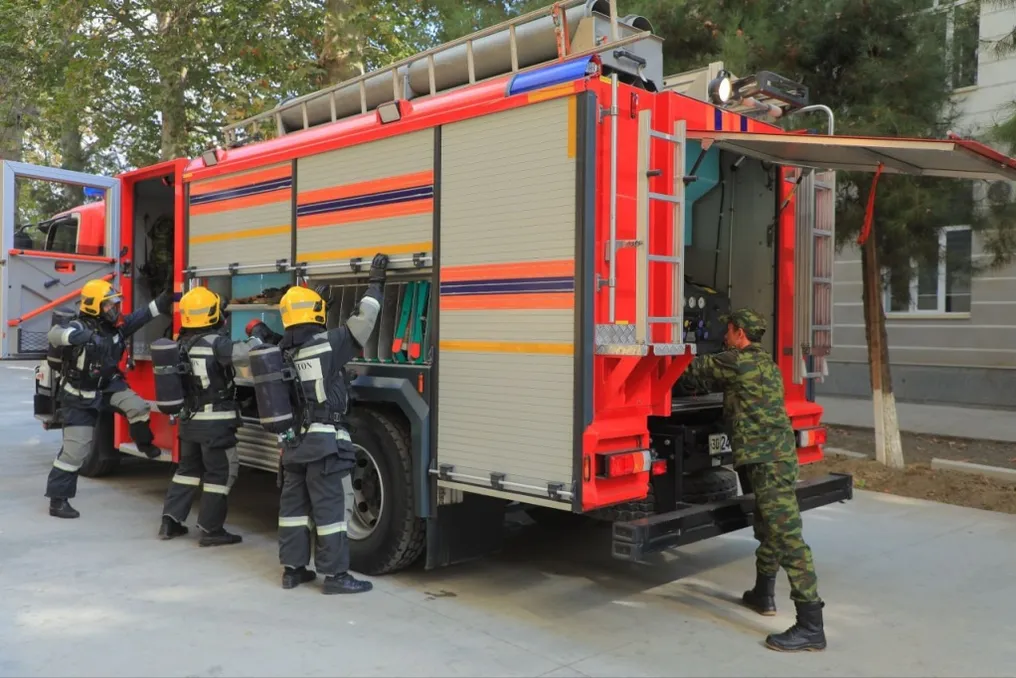
A new technical school is planned to be opened at the Ministry of Emergency Situations Academy in Uzbekistan, which will be responsible for training specialist rescuers. The first intake of students at this educational institution is scheduled for the 2027/2028 academic year.

The creation of this educational institution was approved by an official government decree. Graduates of secondary schools will be able to enroll in the technical school, and education will be available both under a state grant and via a paid contract. The training programs will comply with professional education standards.

Starting in 2029, graduates of this technical school will enter the personnel reserve of the Ministry of Emergency Situations system. The main goal of the new educational institution is to ensure the training of highly qualified rescuers who possess both deep theoretical knowledge and necessary practical skills.

To achieve this goal, the technical school will be equipped with special training grounds, as well as simulation and virtual laboratories that will allow students to hone their response skills in various emergency situations. Furthermore, the creation of funds is provided for in Uzbekistan intended to compensate those affected by man-made emergencies.

Popular