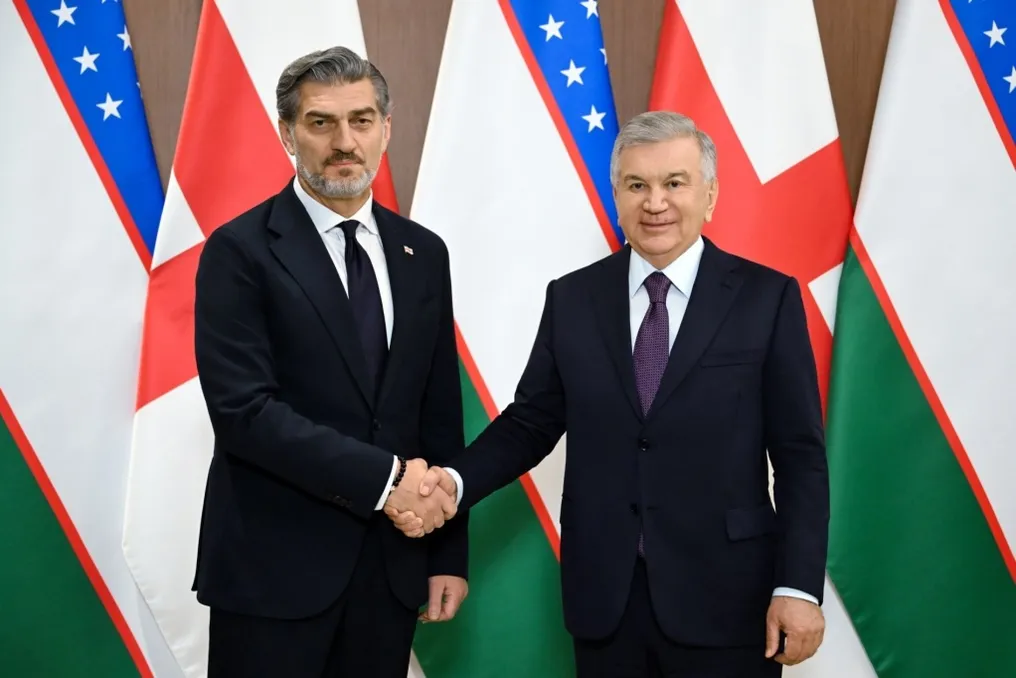
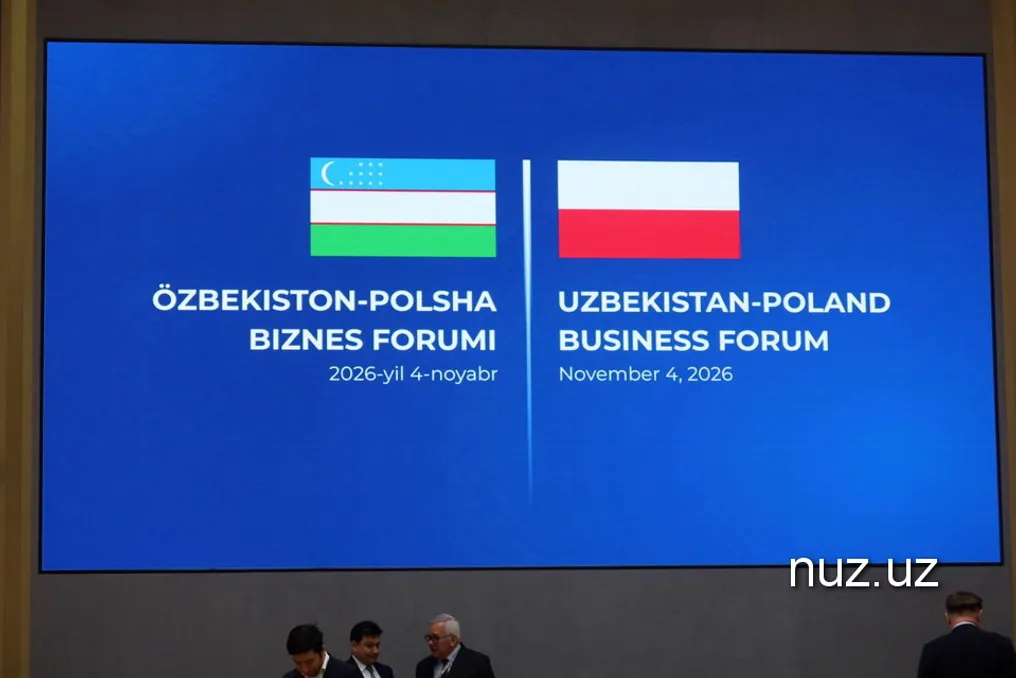
From November 4 to 6, a delegation from Poland, led by Andrzej Arendarski, President of the Polish Chamber of Commerce, visited Uzbekistan as part of an official and business trip. During this visit, an Uzbek-Polish business forum was held, bringing together representatives from business circles, diplomatic corps, and state structures of both countries.
Participants in the event included Akmaljon Mamajonov, Acting Deputy Chairman of the Chamber of Commerce of Uzbekistan; Marian Pszedzicki, Polish Ambassador to Uzbekistan; and Amirsaid Azamkhodjaev, Ambassador of Uzbekistan to Poland. The forum featured 12 Polish companies specializing in areas such as mechanical engineering, logistics, pharmaceuticals, agriculture, construction material production, electrical engineering, food industry, and 'green' technologies.
The events included presentations, direct negotiations, and B2B meetings aimed at assisting entrepreneurs in finding partners, discussing investment opportunities, and planning joint projects. This business activity takes place against the backdrop of growing economic ties between Uzbekistan and Poland, as both nations are interested not only in increasing trade but also in expanding investment presence, developing industrial cooperation, and strengthening ties with neighboring markets.
Marian Pszedzicki, the Polish Ambassador to Uzbekistan, commented on the current dynamics of bilateral relations, noting high levels of cooperation activity. He referred to regular exchanges of delegations, mentioning that four Polish ministers, including Vice Prime Minister and Minister of Digitalization Krzysztof Gawkowski, visited Uzbekistan since the beginning of the year. Furthermore, contacts at the parliamentary level have intensified, laying the foundation for further development of economic ties.
The diplomat emphasized mutual benefit: 'For Uzbekistan, Poland is a gateway to the European Union markets. Poland also currently views Uzbekistan as a gateway to Central Asia.' According to Pszedzicki, Uzbekistan is attractive to Polish businesses due to its economic potential and geographical location. The parties set a goal of achieving a bilateral trade turnover of one billion dollars in the near future, although the ambassador clarified that this is not the limit of possibilities.
Amirsaid Azamkhodjaev, the Ambassador of Uzbekistan to Poland, positively assessed the prospects for partnership, noting the constant growth in interest among entrepreneurs from both countries and the increase in business visits to dozens. He reported that Polish firms are studying the possibility of opening branches and representative offices in Uzbekistan, seeing particular potential in the energy and food sectors. Looking ahead, the ambassador predicts that relations will transition to a qualitatively different level within the next five years.
Nevertheless, Marian Pszedzicki pointed out several practical problems slowing down the development of economic interaction. He cited geographical distance and logistical difficulties as main barriers. Military actions complicate transportation along traditional rail and road routes, and using alternative corridors increases delivery costs. There are also language barriers and differences in business culture.
In the ambassador's opinion, improving business contacts can be achieved by developing direct air connections between the countries. He expressed confidence in a significant increase in the number of flights in the coming years, which will make entrepreneur interaction more convenient.