UNESCO Approves Establishment of Artificial Intelligence Department at Nordic International University in Tashkent
Read more
Podrobno.uz [uz]
podrobno.uz

UNESCO Approves Establishment of Artificial Intelligence Department at Nordic International University in Tashkent

Nordic International University in Tashkent will serve as the base for a new department approved by UNESCO, which will specialize in the use of artificial intelligence in education.

This department will be the ninth similar structure established with UNESCO's support in Uzbekistan. The main mission of the department is to research methods for integrating artificial intelligence into the educational process, as well as ensuring its responsible use considering the specific needs of Central Asian countries.

The department's staff will be involved in creating methodological recommendations and tools for applying AI in teaching activities, as well as examining aspects of its ethical regulation. Special attention will be paid to increasing digital literacy among heads of educational institutions and teachers themselves.

The department's activities will be carried out within the framework of the UNITWIN program, which promotes the integration of scientific centers and universities from various countries for joint research and experience exchange.

The creation of this platform will allow Uzbek universities to integrate more actively into international scientific projects, attracting foreign specialists and conducting joint scientific research.

Cooperation between Uzbekistan and UNESCO in the field of AI has been ongoing for several years. In October 2024, the president initiated the establishment of the UNESCO-Uzbekistan International Prize named after Abu Rayhan Beruni, which is awarded for research in the field of AI ethics. The first award ceremony took place in November 2025 in Samarkand, with works from France, Brazil, and China being laureates.

Previously, information concerned the opening of the UNESCO department at the 'Silk Road' International University of Tourism and Cultural Heritage, located in Samarkand.

Similar stories

UzLideP organized a youth development forum in Tashkent dedicated to IT and engineering
Read more
podrobno.uz

UzLideP organized a youth development forum in Tashkent dedicated to IT and engineering

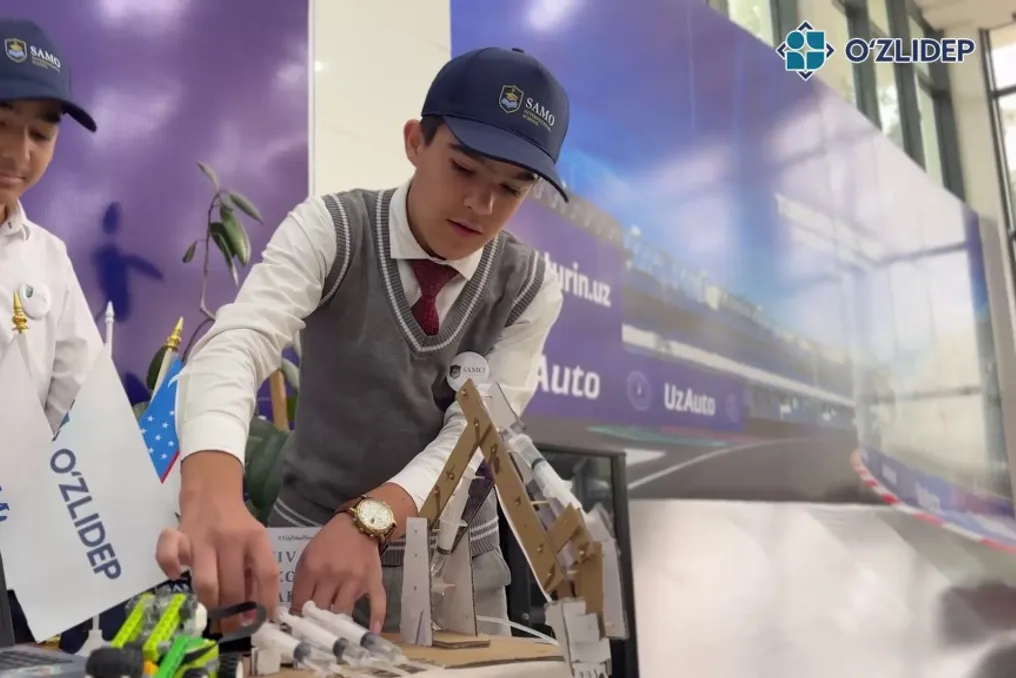
A forum titled 'Creative Entrepreneurial Youth' took place in Tashkent. Young inventors and entrepreneurs showcased their projects in the fields of IT, artificial intelligence, engineering, and related areas. The event was organized at the initiative of UzLideP and was held at the Turin Polytechnic University.

Various groups participated in the forum: deputies of the Legislative Chamber and local Kengashs, the head of the Aktam Khayit party faction, party activists, members of the youth entrepreneurial community, as well as winners of the international tournament FIRST Global Challenge – 2026.

Exhibition of Developments and Project Discussion

The central part of the event was an exhibition where 15 young innovators presented their work. Among the solutions presented was the Smart Railway Guard system, developed by students of the Tashkent State Transport University. This system is designed to prevent failures in railway automation and telemechanics systems. A mini-hyperbaric chamber intended for use in oxygen therapy was also presented.

Participants were not limited to just showing projects; they also discussed the prospects for further development of these ideas, ways to obtain support, and paths to turning promising concepts into functioning business projects. Representatives of the political party gave recommendations on how these developments can be integrated into production processes and service sectors.

At the end of the forum, active participants were presented with commemorative gifts and certificates. UzLideP emphasized that such meetings serve the goals of supporting youth initiatives, contribute to the development of entrepreneurial competencies, and create conditions for the practical application of innovative developments.

Intelligent nurseries commissioned in Piskent as part of the greening project
Read more
nuz.uz

Intelligent nurseries commissioned in Piskent as part of the greening project

A ceremony was held in the Piskent district of Tashkent region to launch new intelligent nurseries. This complex was created as part of a project called 'Greening of forest and urban territories of Tashkent region based on intelligent technologies.'

The implementation of this project is carried out by the Forestry Agency under the Committee for Ecology with the support of the Korean Agency for International Cooperation (KOICA) representative office in Uzbekistan.

Attendees at the event included Golibjon Kurbonov, Deputy Director of the Forestry Agency; Won Do Young, Extraordinary and Plenipotentiary Ambassador of the Republic of Korea to Uzbekistan; Abdushukur Khamzaev, head of the Environmental Party of Uzbekistan faction in the Legislative Chamber of the Oliy Majlis; as well as representatives from the Committee for Ecology and the Forestry Agency, KOICA experts, officials of the Piskent district hokimiyat, heads of local state forestry enterprises, and media representatives.

Golibjon Kurbonov, speaking at the opening, emphasized that in recent years, the head of state has initiated significant work to increase green zones and create new forest areas in the country.

He noted that a modern seedling production center capable of releasing millions of high-quality seedlings annually was previously launched in the Guzar district of Kashkadarya region. Furthermore, this year, a complex of intelligent nurseries covering an area of 5.5 hectares was established in Andijan region. These facilities are designed to advance the national program 'Yashil maqon' ('Green Space') to a new level.

The nurseries being commissioned in the Piskent district are seen as a natural development of these positive initiatives. Golibjon Kurbonov expressed gratitude to the government of the Republic of Korea, KOICA, and all partners for their contribution and support in creating this modern complex.

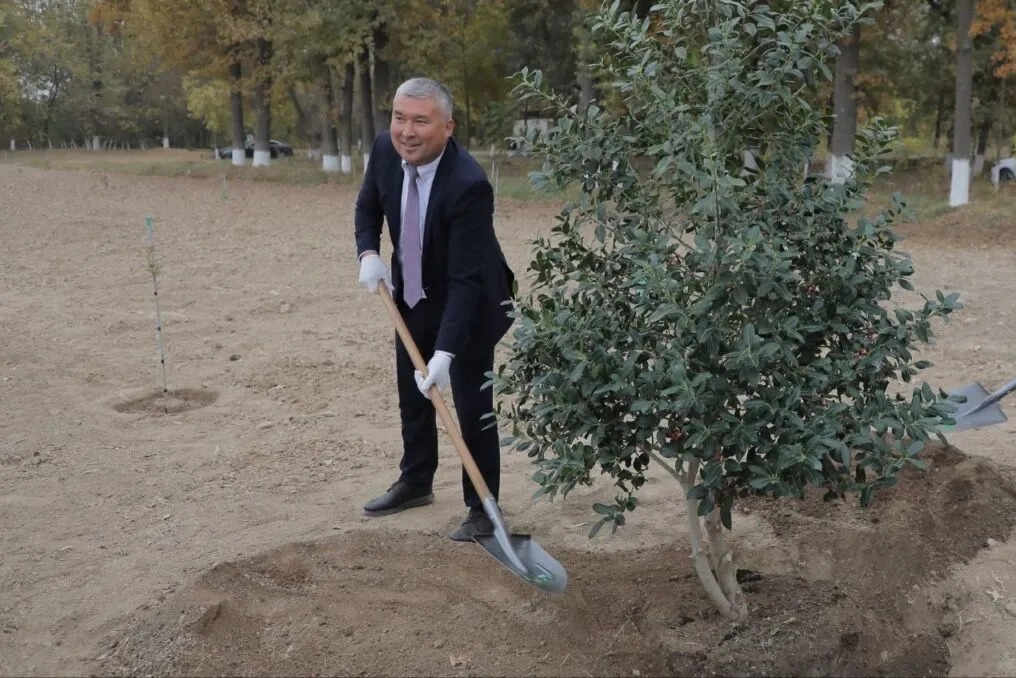
During the official part of the event, a memorial stone dedicated to the creation of the nurseries was unveiled, after which guests planted trees in memory of the event. Participants also inspected the infrastructure and operations of the nurseries.

The project, jointly with KOICA, is planned for the period from 2024 to 2028 and is valued at 7.7 million US dollars. The complex is located on the territory of the Dungkurgon site of the Tashkent State Forestry, which is engaged in growing planting material. It includes 14 intelligent greenhouses covering a total area of 7 hectares.

The greenhouses are equipped with automated systems for continuous monitoring of the internal environment, ensuring ideal conditions for cultivating high-quality planting material that meets the local climate. Growing seedlings using intelligent technologies is critical for improving forestry, increasing production efficiency, and fulfilling tasks related to climate change adaptation.

Within the framework of the project, training seminars are conducted on grafting and the introduction of modern agro-technologies for seedlings adapted to local conditions. The project's implementation will also help increase the use of existing forest infrastructure, create new jobs, and expand opportunities for propagating various species of trees and shrubs.

The modern complex will allow for the production of large volumes of planting material, supply forestry enterprises with quality seedlings, form new green zones in the republic, engage in reforestation, and prevent desertification of arid lands.

According to Korean experts, the greenhouses using modern technology have several advantages. One of the key ones is significant water saving due to the use of advanced equipment. Seedlings are grown in special containers rather than directly in the soil, allowing for the production of transplant-ready material in an average of one year. Automation reduces the need for manual labor, as all operations are managed by specialized software, guaranteeing the quality development of the seedlings.

Furthermore, seedlings grown in containers under these conditions are significantly easier to transport and plant in mountainous areas, which also leads to reduced costs.

For reference: in the first nine months of the current year, forestry enterprises under the Forestry Agency system collected 1,100 tons of seeds of trees and shrubs. 101.6 million seedlings and saplings adapted to local soil and climatic conditions are under care across an area of 1,035 hectares. The technologies implemented in the Piskent nursery allow for rational use of water resources, control of growing conditions, and improvement of planting material quality. It is planned to disseminate this advanced experience to other forestry enterprises in the republic.
Call center to be established in Uzbekistan to process complaints about the quality of education
Read more
podrobno.uz

Call center to be established in Uzbekistan to process complaints about the quality of education

The Ministry of Education and Science of Uzbekistan plans to launch a call center designed to receive appeals, suggestions, and complaints regarding the quality of education. The operation of this center will be outsourced, and incoming appeals are scheduled to be promptly verified and forwarded to the relevant structures.

In addition to launching the call center, the ministry will introduce a new feedback system aimed at both the population and workers in the field of education and science. This system will allow for the collection and analysis of data on the availability and level of educational services, as well as the identification of existing problems.

To strengthen public control, a Public Council on Education Issues will be established, which will function under the minister. This council will include representatives of parents, students, university students, teachers, and employers, ensuring that not only specialized experts but also direct consumers of educational services participate in discussions on educational matters.

The structure of the ministry itself will also undergo changes. The department's collegium will consist of fifteen people, including the minister, his deputies, heads of agencies under the ministry, rectors of leading universities, as well as scientists and educators.

Until February 1, 2027, the minister will have the option, in exceptional cases, to hire employees into the central apparatus of the department through personal interviews.

In parallel, a special working group is being formed under the Presidential Administration. Its task is to develop a national concept for the strategy of human capital development and lifelong learning, which will be chaired on a voluntary basis by entrepreneur Zafar Khashimov.

New structures will also appear under the ministry: the Human Capital Development Fund, as well as the Center for Strategic Research and Evaluation in Education and Science. The activities of the Agency for Knowledge and Qualification Assessment will be organized. Meanwhile, the Center for Educational Development under the Ministry of Preschool and School Education will cease its operations.

Popular