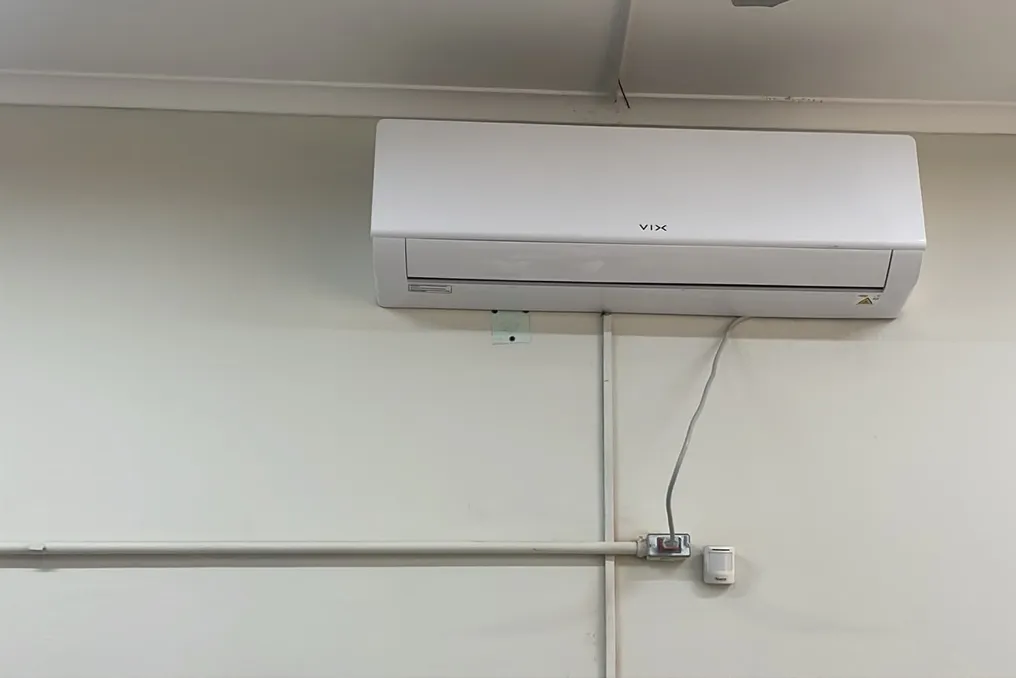
Due to the progressive increase in temperatures, the air conditioning plan for public institutions managed by the São Paulo government will no longer cover most units in the Piracicaba region (SP). Of the 63 establishments in the Piracicaba Regional Unit, 37 will not be equipped with air conditioners.
The State Secretariat of Education (Seduc) informed g1 that the plan's prioritization was directed towards hotter areas of the state, aiming to improve thermal comfort and learning conditions. However, the Secretariat did not provide justification for the exclusion of 59% of the units in the Piracicaba Regional Unit.
For most colleges that will not receive the equipment, and even for those that will only have it until early 2027, it is crucial that the school structures are modified. These adaptations must ensure that air conditioning functions as a complement, not as the sole defense against the heat.
Bioclimatic architecture approaches
Dr. Letícia Neves and Master Eduarda Chaga, both specialists in bioclimatic architecture from the State University of Campinas (Unicamp), advocate for this approach. Neves clarifies that effective climate control in any location must prioritize so-called passive strategies, which do not require energy consumption, before resorting to active systems, such as fans or air conditioning.
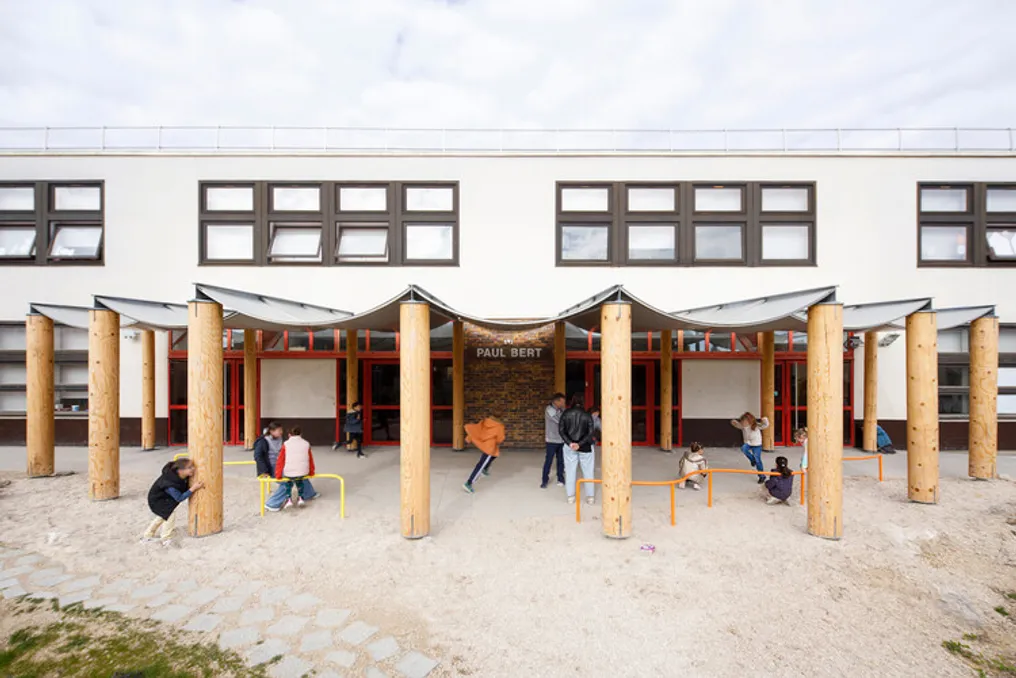
Passive solutions range from building thicker walls and using insulating roofs to ensuring cross-ventilation and correct alignment of buildings relative to the sun's path. Neves adds that, considering future challenges in energy supply, the resilience of buildings is vital, as structures with greater passive climate control can remain functional even in case of power outages.
Chaga, for her part, suggests that renovations in existing schools should focus on four main points: thermal insulation of roofs and coverings; application of light paints on facades to reduce solar radiation absorption; provision of shading through trees or external barriers; and optimization of natural ventilation, including utilizing night ventilation to cool internal spaces when the external temperature is lower.
Standardization of school projects
São Paulo state schools follow standards defined by the manuals of the Foundation for Educational Development (FDE), the governmental body responsible for construction. According to Neves, these manuals prioritize economy, modularity, and the construction system. Chaga complements that, despite facilitating construction, these manuals fail to consider the climatic particularities of each area of São Paulo, which compromises the bioclimatic comfort of users.
Chaga emphasizes that a school in a hot climate requires an architectural response distinct from that in milder regions, and this is the challenge of adapting architecture to local conditions. Neves details that the FDE standard provides for uniform classrooms, measuring 7.20 meters by 7.20 meters, and that constructions disregard ideal orientations to minimize solar incidence.
A frequently used model is that of double rows of classrooms with a central corridor. The architect considers that this arrangement hinders natural air circulation. Although the FDE generally designs a high window facing the corridor to promote cross-ventilation, teachers often close it for acoustic reasons, preventing the hearing of noise from neighboring classrooms. Neves reports that, in a field survey conducted by Eduarda Chaga, the school administration went so far as to seal such windows during a renovation. She warns that if an open window is not the ideal solution, closing it prevents the necessary air circulation in rooms with a large number of occupants.
g1 sought contact with the FDE but received no response as of the latest update of the story.
The risks of using air conditioning without planning
Letícia Neves warns that simply installing split-type units in enclosed environments only causes 'old' air to be recirculated, raising carbon dioxide (CO2) levels and deteriorating indoor air quality. She classifies this situation as 'totally unhealthy,' contributing to the spread of diseases and causing fatigue and drowsiness due to high CO2 concentration.
To solve this problem, Neves presents two ways: if a conventional split unit is chosen, it is mandatory to add a separate fan to renew the air. In more advanced and robust systems, such as multi-split or central, this renewal is managed by the equipment itself. In both scenarios, the specialist stresses the importance of hiring an air conditioning designer, as the concept of the environment requires standardized technical reasoning. Standard NBR 16401 defines a minimum air renewal rate based on various factors, such as occupancy density.
g1 questioned whether the entire installation network follows NBR 16401, but the responsible department did not respond by the time of publication.
List of schools with and without air conditioning
The Piracicaba Regional Education Unit covers municipalities such as Águas de São Pedro (SP), Charqueada (SP), Piracicaba (SP), Saltinho (SP), Santa Maria da Serra (SP), and São Pedro (SP). According to Seduc, this network serves 29,322 students and has 2,100 teachers.
Regarding the schools excluded from this phase of the project, Seduc-SP reported that these units have, on average, three fans per classroom. During periods of intense heat, the state government's recommendation is for schools to adjust their routines to protect students. Such guidelines include conducting Physical Education classes with lower intensity, scheduling frequent breaks for hydration, and avoiding student exposure to the sun, especially between 10 am and 4 pm, the hottest period. The secretariat also confirmed that school administrations have autonomy to implement these adaptations as needed.