Fondation Maeght: Modern art museum located on the Côte d’Azur, among pine trees and cypress trees
Read more
Viagem e Turismo
viagemeturismo.abril.com.br

Fondation Maeght: Modern art museum located on the Côte d’Azur, among pine trees and cypress trees

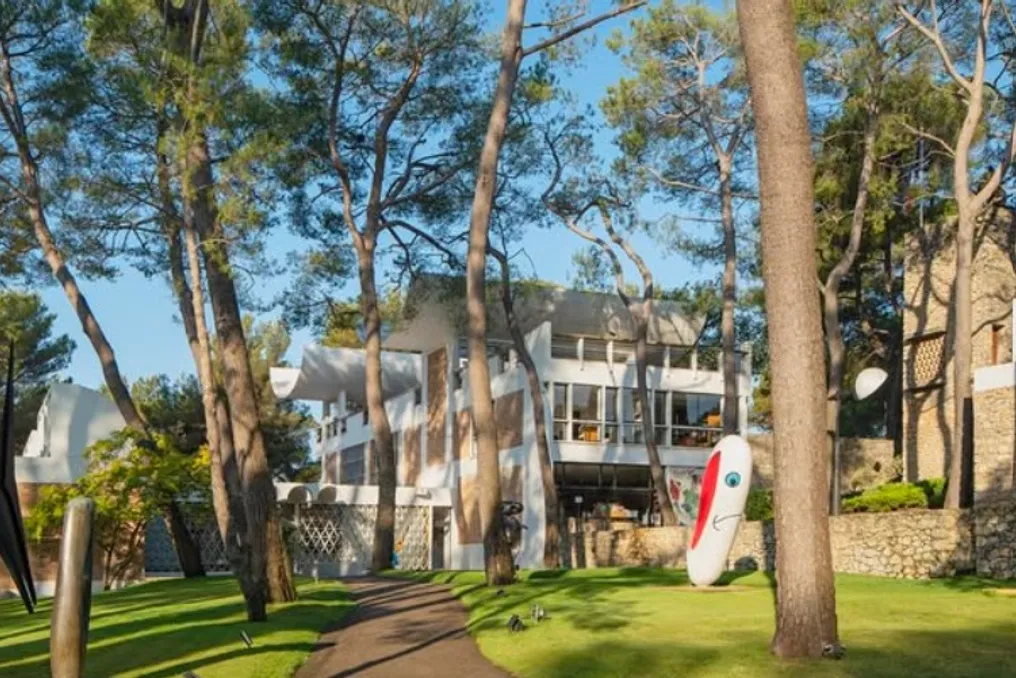
The Fondation Maeght, considered France's leading and first private art institution, is situated outside the country's most conventional tourist circuit. It is located on Chemin des Gardettes, a picturesque elevated area near the medieval village of Saint-Paul-de-Vence, in the Côte d’Azur, approximately 25 kilometers from Nice. This location harmonizes art, modernist architecture, and the rich landscape of the South of France, characterized by the presence of pine trees and cypress trees.

The complex offers more than just the original space; it includes underground galleries, inaugurated in 2024, a library with over 35 thousand books focused on modern art, the Sous les Pins restaurant-cafe, and the Chapel of Saint-Bernard, where an 11th-century Spanish crucifix is displayed.

The concept for the Fondation Maeght came from the couple Aimé and Marguerite Maeght, notable art dealers who owned galleries spread across France, from Paris to Cannes. However, the idea of creating the foundation stemmed from a tragic event: the death of the couple's youngest son, Bernard, who was a victim of leukemia, in 1953.

During the mourning period, the Cubist painter Georges Braque encouraged the Maeghts to transform their grief into a space dedicated exclusively to art exhibition, ensuring the best conditions and operating on a non-profit basis. Other institutions, such as the Guggenheim Foundation and the Barnes Collection, also inspired the creation of this cultural center.

The entire architectural complex was designed by the Catalan architect Josep Lluís Sert, following the concept of 'Mediterranean village architecture.' This traditional style is inspired by the coastal areas of Southern Europe and North Africa, recognized for its use of terracotta, white concrete, diffused natural lighting, courtyards, and a strong connection to nature. During the construction phase, several artists collaborated with Sert to produce custom works for the gardens, walls, and courtyards.

The Fondation Maeght was officially opened on July 28, 1964, by André Malraux, a renowned writer and then Minister of Cultural Affairs of France, who was also a close friend of the Maeght couple.

The foundation holds one of the largest collections of modern and contemporary art in Europe, featuring about 13 thousand pieces in its permanent collection. These works are presented in rooms, courtyards, and gardens, including the famous 'Miró Labyrinth.' This garden of sculptures and ceramics was conceived by the Spanish painter and sculptor Joan Miró, in partnership with ceramists Josep Llorens Artigas and Joan Gardy Artigas. Visitors can walk a path delimited by sculptures made of various materials—ceramics, bronze, iron, concrete, and marble. This route is guided by a white line painted on the walls, referencing the 'Ariadne's thread' from Greek mythology, and guides the public through surreal and mythological creatures and animals.

Another highlight is the 'Giacometti Courtyard,' an open courtyard that displays a set of bronze and plaster sculptures created by the Swiss artist Alberto Giacometti between 1959 and 1960. Among these works are emblematic pieces such as 'Man Walking,' 'Standing Woman,' and 'Large Head,' with Giacometti himself determining the placement of each piece on site.

The collection also features two important works by the modernist Marc Chagall. The mosaic of colored stones titled 'The Lovers' is installed on the bookstore facade. Furthermore, the monumental painting 'Life' (1964) is integrated into the institution's internal galleries. Both works demonstrate the lyrical and poetic characteristics marking Chagall's language, presenting floating figures and lyrical elements.

For those wishing to visit the Fondation Maeght, the adult ticket price starts at 18 euros, while children under 16 years old have free entry. The venue is open every day from 10 am to 6 pm, with extended hours until 7 pm during the months of July and August.
Similar stories

Zurab Tsereteli's exhibition 'More Than Life' is taking place in Tashkent
Read more
nuz.uz

Zurab Tsereteli's exhibition 'More Than Life' is taking place in Tashkent

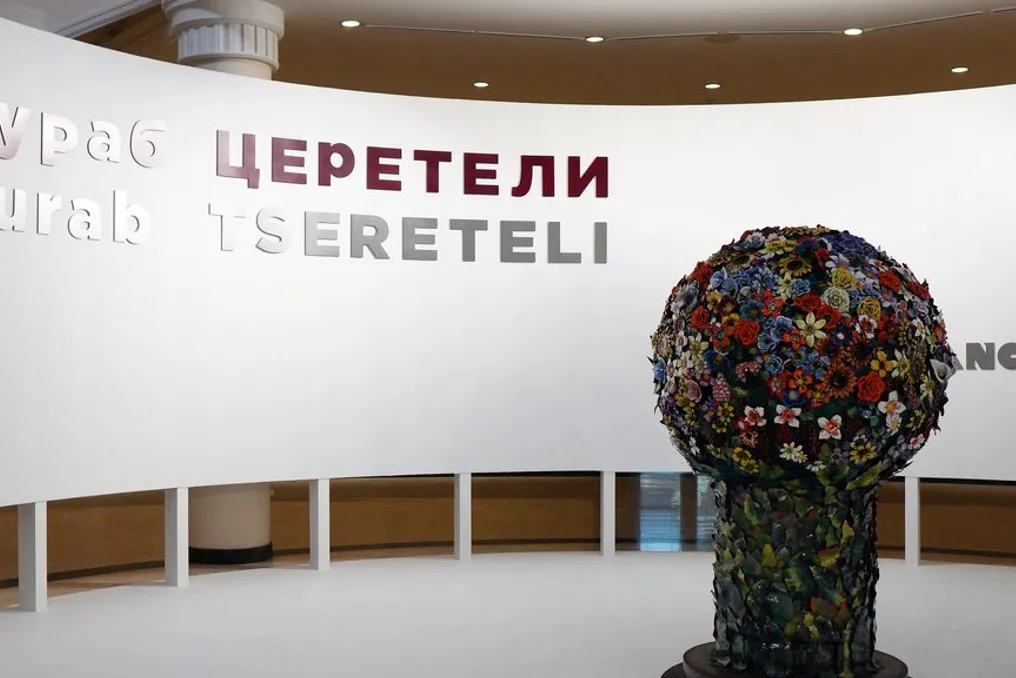
The personal exhibition of the world-renowned artist and sculptor Zurab Tsereteli, titled 'More Than Life,' is currently being displayed at the Uzbekistan Art Gallery. The exposition includes over eighty significant works by the master, among which are paintings, sculptures, and unique enamel pieces, offering an opportunity to view the diversity of the author's creative heritage in one place.

At the opening of the exhibition, the President of the Russian Academy of Arts, Vasily Tsereteli, noted that Zurab Konstantinovich has always shown a special interest in the culture of Uzbekistan and considers the realization of his idea to hold a major exhibition in Tashkent symbolic, as it supports the open dialogue of cultures that the master highly valued.

Zurab Tsereteli is recognized as a monumental figure in world art; he is a People's Artist of the Russian Federation and a long-time head of the Russian Academy of Arts, becoming a symbol of bold vision and creativity. His large-scale monuments are located all over the world, including Moscow, Tbilisi, Seville, and New York.

Nevertheless, this exhibition in Tashkent allows visitors to see Tsereteli not only as a creator of giant forms but also as a subtle, very temperamental painter. Visitors note the strong emotional charge emanating from the exhibition. One of the vernissage guests shared the impression that the project fully corresponds to its title, as an excess of simple, life-loving emotions is felt here, which makes the art 'more than life.'

Zurab Tsereteli's exhibition 'More Than Life' at the Uzbekistan Art Gallery will be available to the public until December 1st, allowing residents and guests of the capital to familiarize themselves with the works of the recognized classic.

Exhibition 'Levitation' held in Tashkent dedicated to the memory of sculptor Bayat Mukhtarov
Read more
gazeta.uz

Exhibition 'Levitation' held in Tashkent dedicated to the memory of sculptor Bayat Mukhtarov

The exhibition titled 'Levitation' was held at the Uzbekistan National Museum of Fine Arts (NBU) in memory of the Uzbek sculptor Bayat Mukhtarov, who lived from 1946 to 2015. The exposition showcases works created by the artist in the final years of his life, during which he sought to move away from traditional concepts of sculpture.

The exhibition features works from the collection of the National Bank of Uzbekistan, as well as from the artist's private collection, provided by his relatives. Bayat Mukhtarov was born in Andijan, but his personality developed in Tashkent. In 1979, he studied at the Tashkent Theatre and Art Institute, specializing in monumental and decorative plasticity.

Nevertheless, in his creative process, the sculptor consciously refused to adhere to academic standards. He was interested in non-standard forms and avant-garde approaches. As recalled by his classmate Ludvig Nesterovich, Bayat always possessed a spirit of freedom and disliked naturalistic copying, preferring to find new methods of expressing thoughts through composition, combining various materials, and using symbolic imagery.

After graduating from the institute, when the demands for realistic portraits lessened, Mukhtarov began working in his own unique style. Ludvig Nesterovich notes that the value of his work lies precisely in this individuality, in being unlike others.

One of the significant influences on Bayat Mukhtarov was the British sculptor Henry Moore, known for his monumental semi-abstract figures. Mukhtarov was attracted to the expressiveness of unusual forms, and according to Nesterovich, he saw energy and monumentality in Moore's works even where proportions might seem incorrect or the solution quite simple. However, Mukhtarov never copied others' methods, striving to create his own artistic language.

Literature and philosophy also played an important role in Mukhtarov's life. Among his favorite authors were Kant, Hegel, Hemingway, Vonnegut, Bradbury, Lao Tzu, and Confucius. Marina Borodina, a sculptor, emphasizes that, like many members of his generation, the artist was fascinated by science fiction, and this interest was reflected in his works. Fantastic and mythological plots served as a tool for discussing the real world and its potential.

Marina Borodina notes that in Mukhtarov's works, Eastern Islamic art, classical American literature, and philosophy are uniquely combined. Islamic art often features the fragmentation of large surfaces into numerous small details, which removes weight from the volume and creates a sense of dissolution in space. The artist achieved a similar effect by using details to impart a light feeling. He avoided precise anatomical depiction, allowing figures to be guessed at through silhouettes and motifs, which attests to the artist's broad scope in culture and history.

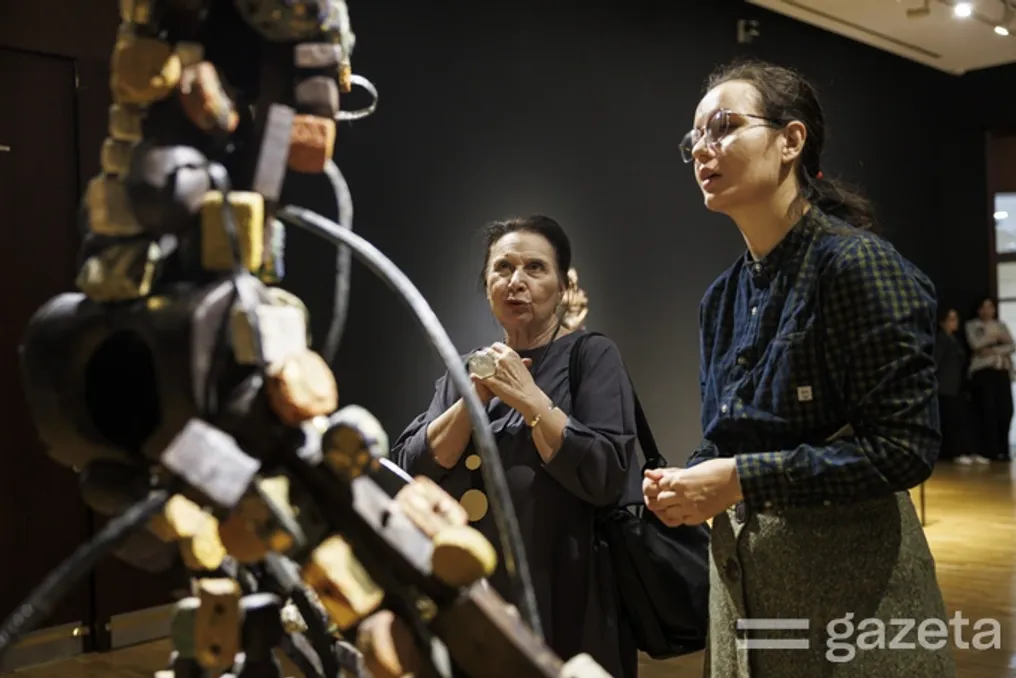
Mukhtarov worked with diverse materials, including metal, stone, ceramics, glass, enamel, and sand. In his layered compositions, rough textures are placed next to shiny metallic elements and colored inserts. Individual components retain their independence and are not mixed into a single mass.

Borodina explains that, unlike academic sculpture, which is based on power and monumentality, Mukhtarov dismantled these canons, striving to give the sculpture an almost weightless appearance. Even heavy metal in his works seems to 'float' in space due to his unconventional approach to materials, allowing him to create a multilayered synthesis that is relevant today.

The name of the exhibition is directly related to the central work—a sculpture from 2009 made of wood, metal, and enamel. This sculpture lacks a single solid volume. Its core consists of wooden beams and plates, metal details, and blue-and-white enamel fragments. The composition is framed by metal arches that freely curve around it and extend beyond its boundaries. The space between the elements allows the viewer to see through the sculpture, and the open structure creates a sense of movement and lightness.

Ludvig Nesterovich believes that the title reflects not only the visual impression of the work but also the inner state of the artist during its creation, comparing it to a state of 'floating.' He asserts that Mukhtarov's works evoke such otherworldly sensations.

In addition to sculptures, the exhibition also features relief canvases. Marina Borodina shares that the artist initially found the image in graphic works and only later transferred it to three-dimensional space. Over time, the drawing acquired independent value.

Borodina concludes that Mukhtarov's works require careful study. Initially, the viewer's attention is drawn to individual details—be it the curve of metal, a fragment of wood, a colored insert, or an image on a panel. Then, these details come together to form an image that can transform when viewed from different angles. Mukhtarov's example demonstrates that there is no need to follow established rules in art; one can find their own path and create something original.

The 'Levitation' exhibition will be available until November 14th. The gallery operates from Tuesday to Saturday from ten in the morning to six in the evening, and entry to the exhibition is paid.

Petroglyphs and Bronze Age Settlement Traces Discovered in Nurata Mountains
Read more
podrobno.uz

Petroglyphs and Bronze Age Settlement Traces Discovered in Nurata Mountains

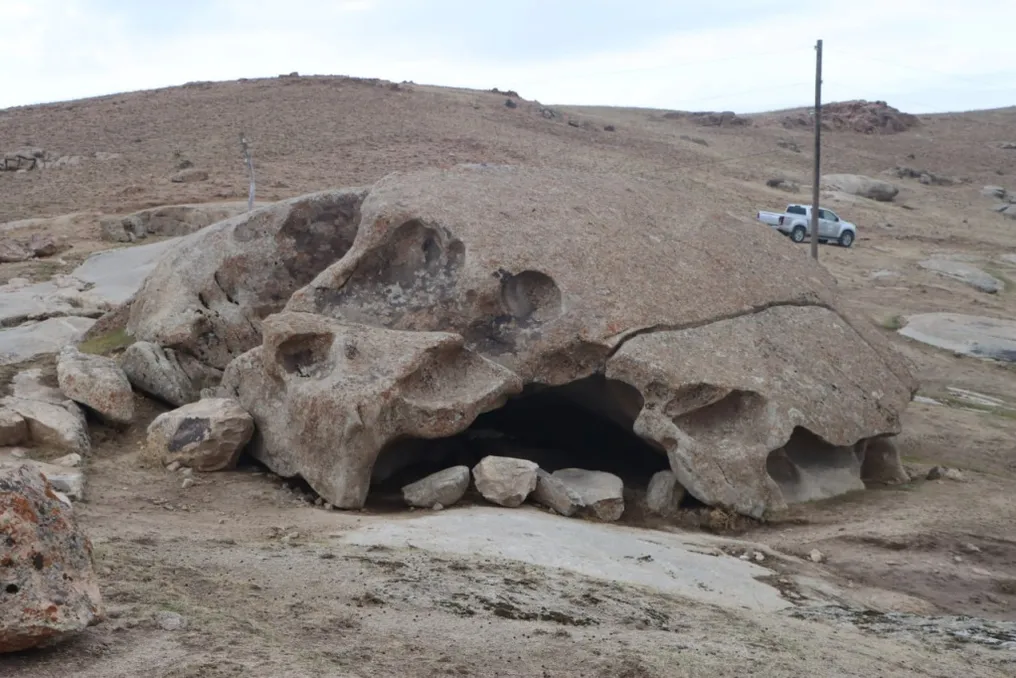
Archaeologists have discovered petroglyphs, presumably created during the Mesolithic and Neolithic periods, as well as traces of a Bronze Age settlement in the Nurata mountain range. These findings were made during fieldwork in the Koshrabad district of the Samarkand region and will allow for a deeper study of how ancient people settled this region and their contacts with neighboring tribes.

In October, researchers from the Yakhye Gulomov Samarkand Archaeological Institute conducted surveys of the mountainous and foothill areas of this district. On the walls and ceilings of stone shelters in the locations of Egrizarsay, Khodzhasay (Badimin), Galajinsay, and Sumbulsay, which are part of the Akchabsay mahalla, investigators identified images executed with natural ochre. According to preliminary data, these drawings date back to the Mesolithic and Neolithic eras.

Furthermore, another significant discovery was made in the Pangat mahalla area. Archaeologists found and studied fragments of Bronze Age pottery in three different locations. At one site, located approximately 700–800 meters east of the village Kumolokli, specialists began trial excavations measuring 2 by 1 meter.

A cultural layer about sixty centimeters thick was revealed beneath the ground surface, serving as evidence of a Bronze Age settlement. During the excavations, a large number of pottery shards and bone remains were found. The discovered artifacts require further excavation work, as they may provide new information about the lifestyle, occupations, and daily life of the ancient inhabitants of the Nurata mountains.

The scientists intend to compare these findings with archaeological data obtained from other regions to gain a more complete understanding of the history of Nurata's settlement. It is worth noting that traces of a presumed palace of 8th-century rulers have previously been discovered in the Samarkand region.

Popular