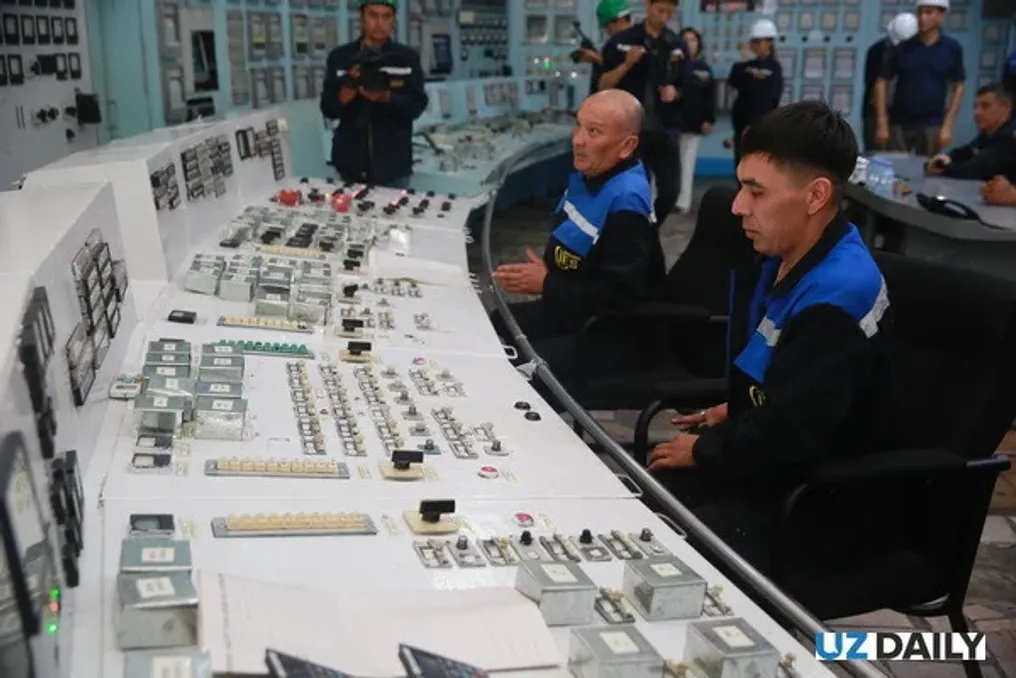
The hydropower sector of Uzbekistan continues to increase generating capacity, implement investment projects, and introduce modern technologies. Over the past years, the number of hydroelectric power plants in the country has increased from 36 to 106, reaching a total installed capacity of 2.5 GW.
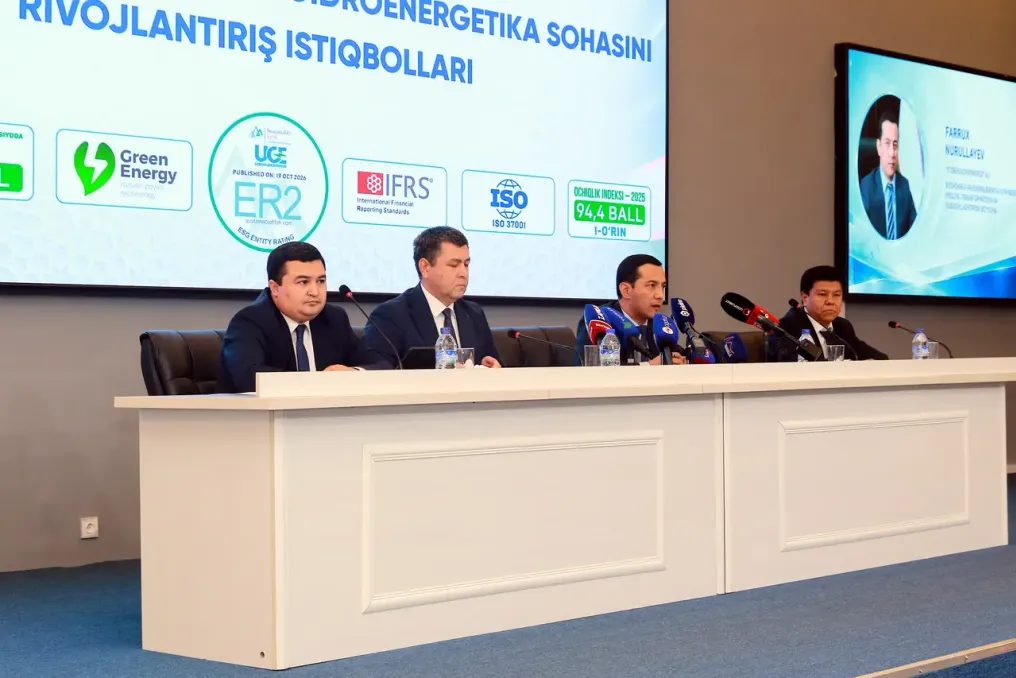
In the first nine months of 2026, Uzbekhydroenergo JSC generated 6.64 billion kWh of electricity, fulfilling its nine-month production plan by 120% for the first time. This data was presented at the press conference 'Uzbekhydroenergo JSC: Reforms in the Sector, Achievements, and Prospects for Hydropower Development,' held on November 3 at the Media Content Training Center under the President of Uzbekistan's Administration.
Record Electricity Generation
The development of hydropower is an integral part of Uzbekistan's state policy in the field of energy security and the transition to cleaner energy sources. The sector has undergone significant modernization, reflected in the increase in the number of HPPs from 36 to 106 and the increase in installed capacity to 2.5 GW. This growth is due to the construction of new HPPs, the development of the hydropotential of rivers and canals, as well as the expansion of small and micro-hydroelectric power plants.
According to information presented at the press conference, from January to September 2026, Uzbekhydroenergo generated 6,642.7 million kWh of electricity, exceeding the target by 120%, and the production volume grew by 24% compared to the same period last year. The cost of the generated electricity amounted to 3 trillion soms. One of the company's most important achievements was daily production exceeding 50 million kWh, which is a historical record.
Investment and Construction of New Energy Facilities
Attracting investments remains a key factor for the further development of the sector. In the first nine months of 2026, Uzbekhydroenergo invested $151.9 million, corresponding to 110% of the planned volume. Of this amount, $48.7 million came as foreign direct investment, exceeding the target by 141%, while the remaining $103.2 million was allocated from the company's own funds.
These funds are directed towards building new energy facilities, increasing generating capacity, and updating existing infrastructure. During the year, nine energy projects with a total capacity of 74.3 MW were commissioned. These include the Kugai-1, Kugai-2, and Beshkurgon HPPs on the Large Andijan Canal; the YUFK-3 HPP on the South Fergana Canal; and the Rabat, Chappasuy, and Tamshush HPPs on the Oxus River. Additionally, the Charvak wind power plant with a capacity of 20 MW, built with grant funding, and the Zarchob-3A micro-HPP were put into operation. These projects not only added new generation capacity but also created about 120 jobs, contributing to regional economic development.
Localization and Domestic Production
Another area of the company's activity is related to expanding industrial production, increasing the level of localization, and reducing dependence on imported equipment. In the first nine months of 2026, enterprises within the Uzbekhydroenergo system produced industrial goods worth 576.3 billion soms, achieving 108% of the plan, demonstrating a year-on-year growth of 13%. Within the localization program, eight projects provided products worth 177.2 billion soms, exceeding the planned indicator by 125%.
Through the optimization of administrative and production costs, the company managed to save 156.4 billion soms. The UzHydroPower enterprise, part of the company's structure, plays an important role in this area. Under the national brand 'Made in Uzbekistan,' it produces hydrogenerators with a capacity of up to 40 MW, as well as spare parts for hydraulic equipment. The enterprise operates in three shifts, supplying equipment and components for the construction of new HPPs and the modernization of existing ones.
Digitalization and Artificial Intelligence
Modern hydropower increasingly relies on digital solutions, automation, and efficient water resource management. Uzbekhydroenergo actively implements information and communication technologies, develops digital control systems, and applies artificial intelligence. The company is improving tools for forecasting water flows at HPPs, automating production processes, and supporting data-driven management decisions in real time. These technologies are expected to increase the accuracy of generation forecasts, allow for more efficient distribution of water resources, and help respond faster to changes in operating modes.
Cybersecurity and the protection of energy infrastructure information systems also remain a key priority.
International Recognition and Investment Attractiveness
The company's performance is reflected in the assessments of international rating agencies. Fitch Ratings confirmed Uzbekhydroenergo's long-term credit rating at BB with a stable outlook, assigning the company an individual credit profile of b+. Sustainable Fitch maintained the company's ESG rating at 2, while the overall score increased from 79 to 80 points. These ratings indicate the company's financial position, its approach to social and environmental responsibility, and the quality of corporate governance. International ratings are critically important for the hydropower sector as they strengthen investor confidence and expand access to long-term financing.
International Cooperation and Human Resource Development
The further development of the sector will include expanding international technological cooperation. Specialists and companies from Turkey, Iran, and the Russian Federation participate in the design of future hydropower facilities. The company is also strengthening partnerships with businesses from China and South Korea to develop modern hydrogenerators, implement innovative equipment, and automate production processes.
Cooperation with international financial institutions is also expanding: financial organizations from the USA, the United Arab Emirates, Turkey, and China have expressed interest in directly financing the company's projects. Parallel to technical modernization, great attention is paid to training qualified specialists. Scientific and practical interaction with higher educational institutions is developing, including elements of dual education that allow students to combine studies with work at production facilities. This strategy aims to form a skilled workforce capable of servicing modern hydropower technologies and maintaining new energy installations.
New Priorities for the Sector
As noted at the press conference, Uzbekhydroenergo continues to work on fulfilling the tasks outlined in Presidential Decrees No. PP-163 and No. PP-298, which provide for the further development of hydropower, the construction of new facilities, and the modernization of existing ones. The results for the first nine months of 2026 show that hydropower is becoming an increasingly important element of Uzbekistan's national energy system. Further progress will depend not only on commissioning additional capacity but also on the efficient use of water resources, technological modernization, financial stability, and quality of management.
Against the backdrop of growing electricity demand, hydropower is gaining importance as a renewable energy source that can complement other types of generation and increase the resilience of the energy system. At the conclusion of the press conference, representatives of Uzbekhydroenergo's management answered journalists' and bloggers' questions about the progress of current projects, key production indicators, and future priorities for the development of the hydropower sector in Uzbekistan.