Zurab Tsereteli's exhibition 'More Than Life' is taking place in Tashkent
Read more
Nuz.uz
nuz.uz

Zurab Tsereteli's exhibition 'More Than Life' is taking place in Tashkent

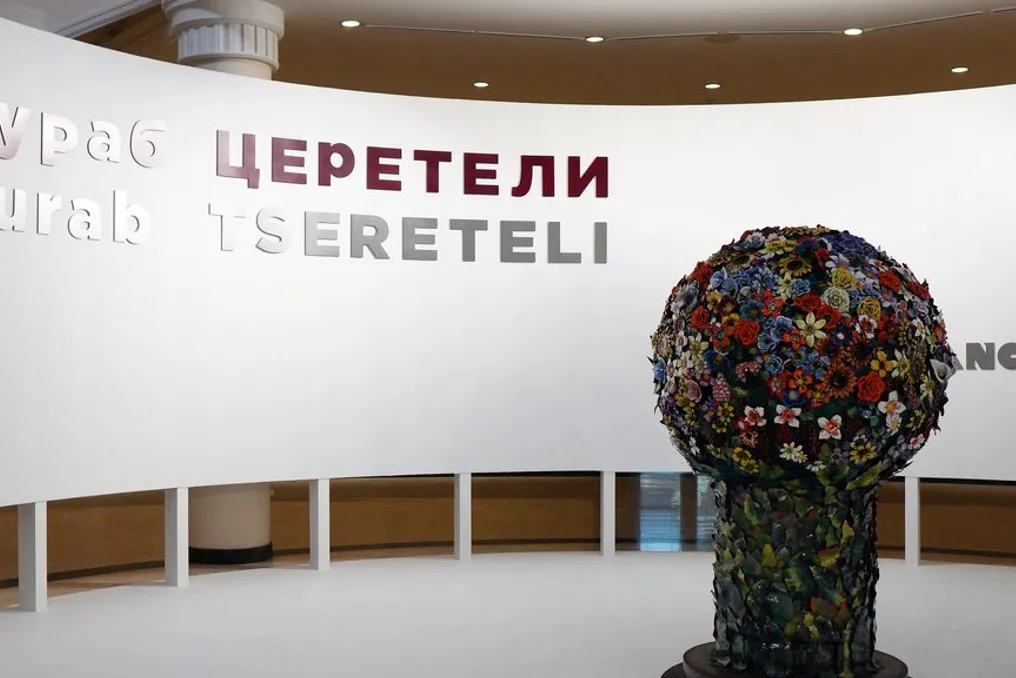
The personal exhibition of the world-renowned artist and sculptor Zurab Tsereteli, titled 'More Than Life,' is currently being displayed at the Uzbekistan Art Gallery. The exposition includes over eighty significant works by the master, among which are paintings, sculptures, and unique enamel pieces, offering an opportunity to view the diversity of the author's creative heritage in one place.

At the opening of the exhibition, the President of the Russian Academy of Arts, Vasily Tsereteli, noted that Zurab Konstantinovich has always shown a special interest in the culture of Uzbekistan and considers the realization of his idea to hold a major exhibition in Tashkent symbolic, as it supports the open dialogue of cultures that the master highly valued.

Zurab Tsereteli is recognized as a monumental figure in world art; he is a People's Artist of the Russian Federation and a long-time head of the Russian Academy of Arts, becoming a symbol of bold vision and creativity. His large-scale monuments are located all over the world, including Moscow, Tbilisi, Seville, and New York.

Nevertheless, this exhibition in Tashkent allows visitors to see Tsereteli not only as a creator of giant forms but also as a subtle, very temperamental painter. Visitors note the strong emotional charge emanating from the exhibition. One of the vernissage guests shared the impression that the project fully corresponds to its title, as an excess of simple, life-loving emotions is felt here, which makes the art 'more than life.'

Zurab Tsereteli's exhibition 'More Than Life' at the Uzbekistan Art Gallery will be available to the public until December 1st, allowing residents and guests of the capital to familiarize themselves with the works of the recognized classic.

Similar stories

Exhibition 'Levitation' held in Tashkent dedicated to the memory of sculptor Bayat Mukhtarov
Read more
gazeta.uz

Exhibition 'Levitation' held in Tashkent dedicated to the memory of sculptor Bayat Mukhtarov

The exhibition titled 'Levitation' was held at the Uzbekistan National Museum of Fine Arts (NBU) in memory of the Uzbek sculptor Bayat Mukhtarov, who lived from 1946 to 2015. The exposition showcases works created by the artist in the final years of his life, during which he sought to move away from traditional concepts of sculpture.

The exhibition features works from the collection of the National Bank of Uzbekistan, as well as from the artist's private collection, provided by his relatives. Bayat Mukhtarov was born in Andijan, but his personality developed in Tashkent. In 1979, he studied at the Tashkent Theatre and Art Institute, specializing in monumental and decorative plasticity.

Nevertheless, in his creative process, the sculptor consciously refused to adhere to academic standards. He was interested in non-standard forms and avant-garde approaches. As recalled by his classmate Ludvig Nesterovich, Bayat always possessed a spirit of freedom and disliked naturalistic copying, preferring to find new methods of expressing thoughts through composition, combining various materials, and using symbolic imagery.

After graduating from the institute, when the demands for realistic portraits lessened, Mukhtarov began working in his own unique style. Ludvig Nesterovich notes that the value of his work lies precisely in this individuality, in being unlike others.

One of the significant influences on Bayat Mukhtarov was the British sculptor Henry Moore, known for his monumental semi-abstract figures. Mukhtarov was attracted to the expressiveness of unusual forms, and according to Nesterovich, he saw energy and monumentality in Moore's works even where proportions might seem incorrect or the solution quite simple. However, Mukhtarov never copied others' methods, striving to create his own artistic language.

Literature and philosophy also played an important role in Mukhtarov's life. Among his favorite authors were Kant, Hegel, Hemingway, Vonnegut, Bradbury, Lao Tzu, and Confucius. Marina Borodina, a sculptor, emphasizes that, like many members of his generation, the artist was fascinated by science fiction, and this interest was reflected in his works. Fantastic and mythological plots served as a tool for discussing the real world and its potential.

Marina Borodina notes that in Mukhtarov's works, Eastern Islamic art, classical American literature, and philosophy are uniquely combined. Islamic art often features the fragmentation of large surfaces into numerous small details, which removes weight from the volume and creates a sense of dissolution in space. The artist achieved a similar effect by using details to impart a light feeling. He avoided precise anatomical depiction, allowing figures to be guessed at through silhouettes and motifs, which attests to the artist's broad scope in culture and history.

Mukhtarov worked with diverse materials, including metal, stone, ceramics, glass, enamel, and sand. In his layered compositions, rough textures are placed next to shiny metallic elements and colored inserts. Individual components retain their independence and are not mixed into a single mass.

Borodina explains that, unlike academic sculpture, which is based on power and monumentality, Mukhtarov dismantled these canons, striving to give the sculpture an almost weightless appearance. Even heavy metal in his works seems to 'float' in space due to his unconventional approach to materials, allowing him to create a multilayered synthesis that is relevant today.

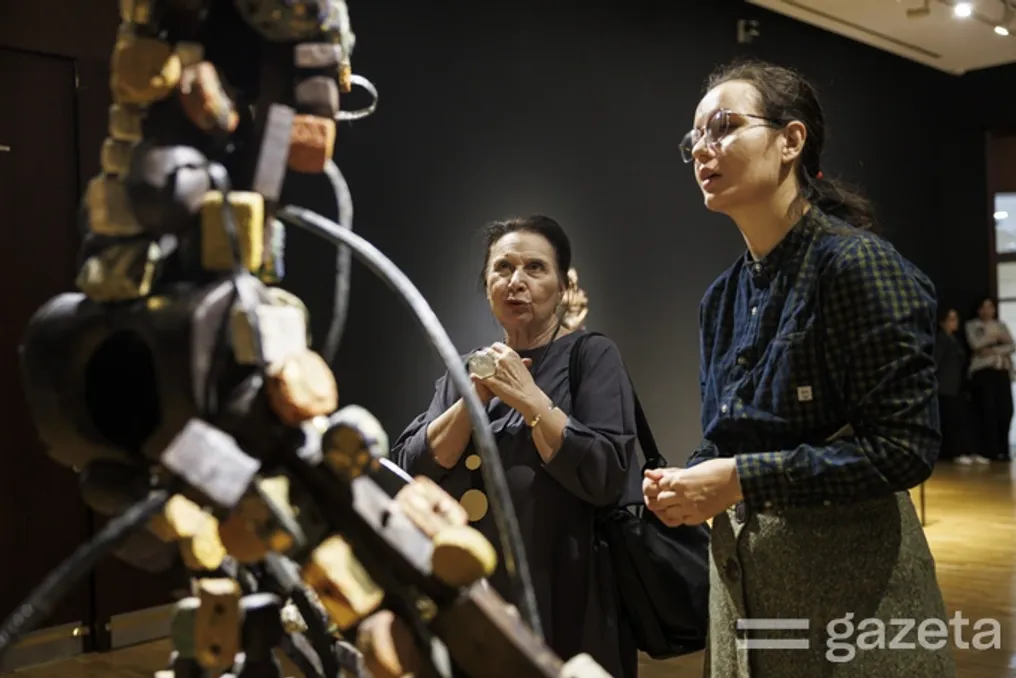
The name of the exhibition is directly related to the central work—a sculpture from 2009 made of wood, metal, and enamel. This sculpture lacks a single solid volume. Its core consists of wooden beams and plates, metal details, and blue-and-white enamel fragments. The composition is framed by metal arches that freely curve around it and extend beyond its boundaries. The space between the elements allows the viewer to see through the sculpture, and the open structure creates a sense of movement and lightness.

Ludvig Nesterovich believes that the title reflects not only the visual impression of the work but also the inner state of the artist during its creation, comparing it to a state of 'floating.' He asserts that Mukhtarov's works evoke such otherworldly sensations.

In addition to sculptures, the exhibition also features relief canvases. Marina Borodina shares that the artist initially found the image in graphic works and only later transferred it to three-dimensional space. Over time, the drawing acquired independent value.

Borodina concludes that Mukhtarov's works require careful study. Initially, the viewer's attention is drawn to individual details—be it the curve of metal, a fragment of wood, a colored insert, or an image on a panel. Then, these details come together to form an image that can transform when viewed from different angles. Mukhtarov's example demonstrates that there is no need to follow established rules in art; one can find their own path and create something original.

The 'Levitation' exhibition will be available until November 14th. The gallery operates from Tuesday to Saturday from ten in the morning to six in the evening, and entry to the exhibition is paid.

Anniversary concert held in Tashkent in memory of Tom Khomyakov, dedicated to his 95th birthday
Read more
nuz.uz

Anniversary concert held in Tashkent in memory of Tom Khomyakov, dedicated to his 95th birthday

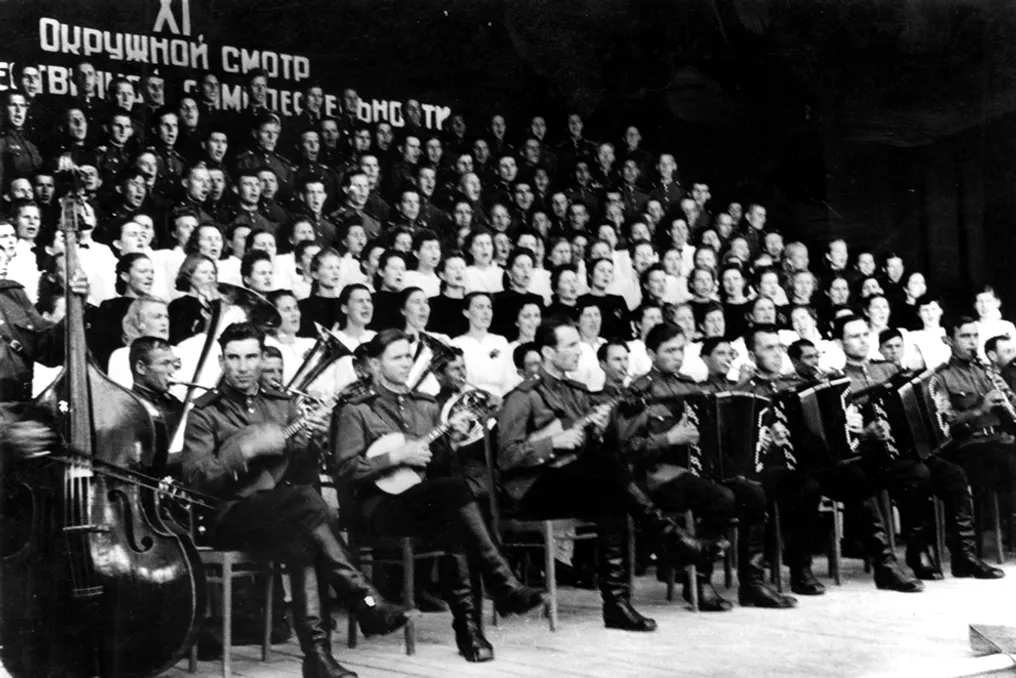
Last week, a solemn meeting was held at the State Institute of Arts and Culture of Uzbekistan dedicated to the 95th anniversary of the birth of Tom Alexandrovich Khomyakov. The memorial concert titled 'Life in Art' served as an acknowledgment of the merits of the musician, educator, and cultural worker of the Republic of Uzbekistan, whose life was closely connected with music and the orchestra of Russian folk instruments.

The event gathered Khomyakov's students and colleagues, who expressed their respect for him. The program was prepared by F. A. Khakimova, head of the 'Cholgu Ijrochiligi' department, and T. T. Sedikh, Doctor of Philosophy (PhD) in art history and holder of the badge 'Madaniyat va san’at fidokori'. The evening was filled with music, warm words, and sincere emotions, recalling the rich legacy of Tom Alexandrovich.

The audience was particularly drawn to the performances of young musicians, whose skill and love for art, which Khomyakov valued, evoked admiration. Colleagues also shared fond memories. Among the performers were Professor M. Atadjanov, holder of the 'Shuhrat' medal and laureate of international competitions, who presented his composition 'Okhangrabo', as well as A. Tikhonov, associate professor at the State Conservatory of Uzbekistan, who performed in an ensemble with a student. The soulful performance of Russian folk songs was demonstrated by the 'Nadezhda' choir of the 'Khimik' Palace of Culture from Chirchik under the direction of Z. R. Asanova.

The author recalls how Tom Alexandrovich performed with a group in her television 'Musical Living Room'. Thirty-five years ago, in Tashkent, his double jubilee was celebrated: 60 years since birth and 40 years of creative activity. Music accompanied every stage of his life—from working on stage and at the conductor's podium to pedagogical work at the Khamza Institute.

Tom Khomyakov was born on July 20, 1931, in Tokmak, Kyrgyzstan. At the age of fifteen, he began working in production, and later received education at an electrical engineering college. His musical journey began in 1945 when he joined the artistic self-activity circle under the guidance of N. A. Kasyanov. In the 1950s, he enrolled at the Khamza Tashkent Music School in the domra department, but a year later was called up for military service.

Military service in the Turkestan Military District orchestra, where he worked under A. F. Venegnev and A. V. Petrov, became an important period for honing his professional skills and style. After demobilization, he continued his studies at the institute and then entered the Tashkent State Conservatory in the faculty of Uzbek folk instruments. He graduated from the conservatory in 1962, receiving qualifications as a conductor and domra teacher. His mentors at various times were A. I. Petrosyants, F. V. Nazarov, and A. P. Evdokimov. Tom Alexandrovich dedicated decades of his life to his native institutes, teaching there starting in 1957, even while still a student.

Before this, he was actively involved in educational and organizational activities, leading the amateur orchestra of the T. Sadykov City Palace of Culture for 26 years. During this period, over a thousand people passed through his collective, many of whom became famous musicians, such as V. L. Medulyanov, who headed the Gosteleradiokompaniya orchestra, and O. S. Siloamsky, who led the TurkVO Song and Dance Ensemble. The orchestra under Khomyakov's direction held over 400 concerts, performed on radio and television, and visited VDNKh in Moscow twice, regularly receiving awards at exhibitions and competitions.

Later, Khomyakov taught at the M. Ashrafi Tashkent Conservatory, supervised pedagogical practice, organized trips for outstanding students to universities in Moscow and Leningrad, and participated in developing methodological courses and working in the laboratory for improving folk instruments. Nevertheless, from 1964, his main job again became the Khamza Institute, where he managed pedagogical and production practice for 20 years, sharing his experience at republican conferences in Tashkent, Bukhara, Namangan, and Jizzakh.

After the earthquake in Tashkent, he was gifted a set of folk instruments from Moscow, which allowed Tom Alexandrovich to realize a long-held dream—to take the conductor's podium of the orchestra, which was subsequently named 'Druzhba' (Friendship). This marked the beginning of a new phase of his life.

With this orchestra, Tom Alexandrovich developed extensive musical, educational, and concert activities, which received wide coverage in the press of Uzbekistan and abroad. Working with the school orchestra required a special approach: it was necessary not only to teach the boys but also to instill soul in them so that every graduate could begin a new cycle of study. Nevertheless, Tom Alexandrovich created a collective that sounded like a high-class philharmonic ensemble. The 'Druzhba' orchestra was indispensable at city holidays, toured throughout Uzbekistan, and helped amateur groups. The repertoire of the collective included over two hundred works, including music by Bach, Tchaikovsky, contemporary authors, and Uzbek melodies. A distinctive feature of 'Druzhba' was its freshness, temperament, and lively performance, which earned the collective the Youth of Uzbekistan award.

Under the direction of Tom Alexandrovich Khomyakov, the orchestra became a center of attraction for the leading stars of the republic's musical scene. His conducting united masters such as A. A. Adilov, Honored Artist of Culture and Professor at the M. Ashrafi Tashkent Conservatory; K. Mukhitdinov, People's Artist of Uzbekistan and soloist of the A. Navoi State Academic Grand Theatre; V. Baeva, People's Artist of the RSFSR and Associate Professor at the Sverdlovsk Conservatory (now Yekaterinburg); as well as L. Pinkhasov and Yu. Zhdanov, Honored Artists of Uzbekistan, among many other talented performers.

Looking back on the jubilee's life path, one cannot ignore his constant search, bold experiments, and striving for innovative musical forms. However, the most important aspect of his creativity was sincerity and deep dedication to the cause. The jubilee program, dedicated to his sixtieth birthday, and the sparkle in his students' eyes serve as proof that a life fully devoted to music was lived usefully, leaving behind a rich cultural heritage.

The recent concert was not just a musical event, but a deep tribute to a person whose destiny was inextricably linked to the service of art. It provided an opportunity to express immense respect for a master who not only created but also generously passed on his knowledge, educating a new generation of musicians. His contribution to culture is more than just notes and melodies; it is a living link between the past, present, and future of musical art.
Petroglyphs and Bronze Age Settlement Traces Discovered in Nurata Mountains
Read more
podrobno.uz

Petroglyphs and Bronze Age Settlement Traces Discovered in Nurata Mountains

Archaeologists have discovered petroglyphs, presumably created during the Mesolithic and Neolithic periods, as well as traces of a Bronze Age settlement in the Nurata mountain range. These findings were made during fieldwork in the Koshrabad district of the Samarkand region and will allow for a deeper study of how ancient people settled this region and their contacts with neighboring tribes.

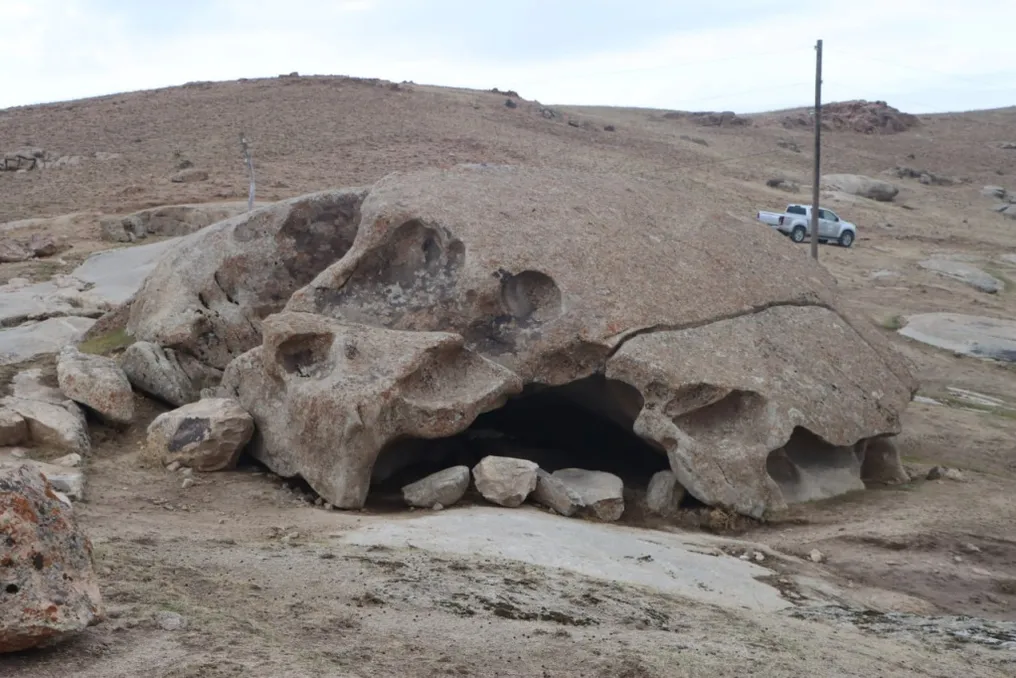
In October, researchers from the Yakhye Gulomov Samarkand Archaeological Institute conducted surveys of the mountainous and foothill areas of this district. On the walls and ceilings of stone shelters in the locations of Egrizarsay, Khodzhasay (Badimin), Galajinsay, and Sumbulsay, which are part of the Akchabsay mahalla, investigators identified images executed with natural ochre. According to preliminary data, these drawings date back to the Mesolithic and Neolithic eras.

Furthermore, another significant discovery was made in the Pangat mahalla area. Archaeologists found and studied fragments of Bronze Age pottery in three different locations. At one site, located approximately 700–800 meters east of the village Kumolokli, specialists began trial excavations measuring 2 by 1 meter.

A cultural layer about sixty centimeters thick was revealed beneath the ground surface, serving as evidence of a Bronze Age settlement. During the excavations, a large number of pottery shards and bone remains were found. The discovered artifacts require further excavation work, as they may provide new information about the lifestyle, occupations, and daily life of the ancient inhabitants of the Nurata mountains.

The scientists intend to compare these findings with archaeological data obtained from other regions to gain a more complete understanding of the history of Nurata's settlement. It is worth noting that traces of a presumed palace of 8th-century rulers have previously been discovered in the Samarkand region.

Popular