Kirstin Ferguson's book 'Blindspotting' released in Persian in Iran
Read more
Tehran Times
www.tehrantimes.com

Kirstin Ferguson's book 'Blindspotting' released in Persian in Iran

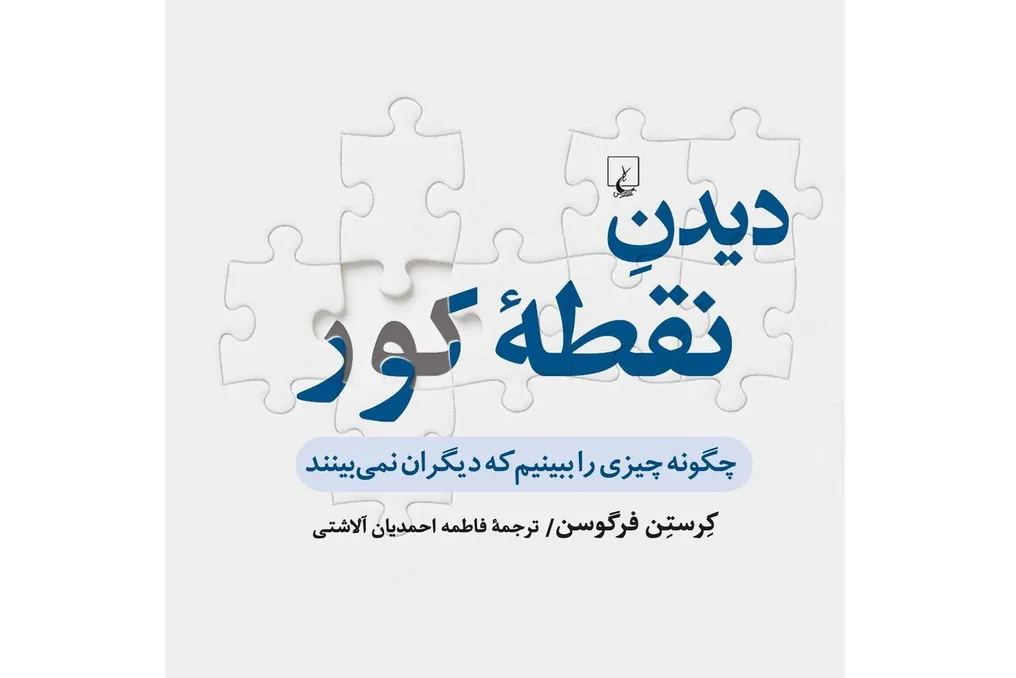
The Persian translation of Kirstin Ferguson's book, 'Blindspotting: How to See What Others Miss,' has been released in bookstores across Iran, according to the ILNA agency.

Fatemeh Ahmadian Alahshti served as the translator, and Qoqnoos Publishing House published the 287-page edition.

Dr. Kirstin Ferguson, an expert in leadership and award recipient, reveals in the book—originally published in 2025—that the best leaders are not those who know all the answers, but those capable of admitting: 'I don't know yet...'

In today's rapidly changing and polarized world, adaptability is key to success. Whether you manage a global company, a small team, or are simply striving for personal growth, 'Blindspotting' provides practical tools to overcome uncertainty, strengthen teams, and stimulate breakthrough innovations.

Through compelling stories and cutting-edge research, Ferguson uncovers hidden factors that influence our decisions, often without our awareness. This book goes beyond a simple leadership guide, offering every reader a new perspective on the world and themselves.

Kirstin Ferguson works as a director, colonist, keynote speaker, and business coach. Beginning her career as an officer in the Royal Australian Air Force, Kirstin held positions such as CEO of an international consulting firm and Acting Chair and Deputy Chair of the Australian Broadcasting Corporation. For over ten years, she served on the boards of both public and private companies.

She holds a PhD in Leadership and Culture, along with Bachelor's degrees in Law and History. Kirstin is a lecturer at the Queensland University of Technology Business School, where she was named Outstanding Graduate of the Year in 2020, and she is a member of the Sir Winston Churchill Foundation. In 2021, she was included in the Thinkers50 Radar List and shortlisted for the Thinkers50 award for outstanding achievements in leadership.

Kirstin regularly publishes a weekly column on leadership and work in the Sydney Morning Herald and The Age, and she is also a contributor to the Australian Financial Review and Forbes.
Similar stories

Bahram Beizai's play 'Arash' to be staged in Tehran
Read more
www.tehrantimes.com

Bahram Beizai's play 'Arash' to be staged in Tehran

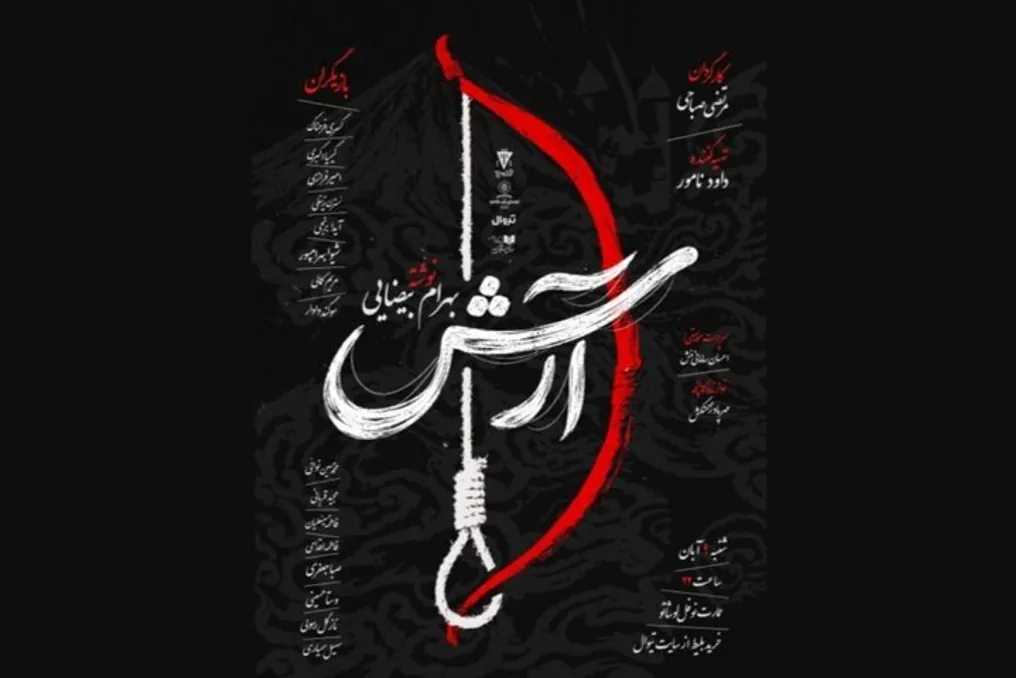
A theatrical reading of the play 'Arash' by the renowned Iranian playwright and film director Bahram Beizai is scheduled in Tehran. The event will take place at the Neauphle-le-Château theater hall on Saturday, October 31st.

The production is directed by Mortaza Sabahi and produced by Davoud Namvar. The organizing group is the Qalamro theater group. According to Mehr, the performance will feature actors accompanied by a live musical ensemble.

The work is based on Beizai's creative output, and its title is taken from Iranian mythology—Arash, the legendary archer whose sacrifice is linked to defending the homeland and the resolve of its people.

The cast of the reading includes Mohammad Hossein Navai, Kasra Farahnak, Soheil Semyari, Nastaran Zeynali, Kimia Akbari, Aida Berendji, Maryam Kamali, Shiva Bahrampour, Saba Jafari, Sogand Dadar, and Amir Farazi.

The musical collective will be led by Ehsan Samani-Manesh, who will also perform percussion and other musical instruments. The group will be joined by the kamancheh player Mehrapad Zahmatkesh, providing live musical accompaniment.

Arash, known in Persian mythology as Arash-e Kamangir, is one of the most revered heroic figures in Iranian cultural tradition. His story is preserved in various forms in Persian literature and mythology and has become a symbol of self-sacrifice, courage, and devotion to the homeland.

According to the most well-known version of the legend, Iran and Turan were engaged in a devastating war. After many years of conflict, both sides agreed to settle the dispute by defining a new border. The agreement stipulated that the Iranian archer must shoot an arrow, and where this arrow lands would become the border between the two lands. Arash was chosen to carry out this task.

The legend presents this challenge as something more than mere archery skill. Arash must pour all his strength into a single shot, knowing that this act will cost him his life. He climbs a high mountain and prepares to release the arrow. In one of the most famous depictions associated with this legend, it is said that all of Arash's strength and vital energy are channeled into the arrow as he releases it towards the horizon.

The arrow travels an extraordinary distance before finally landing, establishing the border and ending the conflict. However, Arash dies after fulfilling his mission, sacrificing himself for the survival and territorial integrity of his homeland.

This element of self-sacrifice lies at the heart of the legend. Arash fights not for personal glory or wealth. His heroism stems from accepting a responsibility that demands he give everything for others. As a result, the story has acquired symbolic meaning far beyond a simple arrow shot. Arash has become the embodiment of the idea that a nation's fate sometimes depends on the courage and sacrifice of one individual. His story also connects personal choice with collective responsibility, making the ancient legend relevant for subsequent generations.

The story of Arash has had a profound influence on Persian poetry and modern Iranian literature. Writers and poets have repeatedly referred to this character, interpreting his sacrifice in various historical and political contexts. The image of the arrow crossing the land has also become a powerful metaphor for hope, determination, and the possibility of shaping the future through individual actions.

Unlike some mythological heroes whose stories revolve around conquests, Arash's defining act is an act of giving. He wins not by defeating an enemy in battle, but by making the ultimate personal sacrifice to end the war and protect his people.

Beizai, widely recognized for incorporating Iranian mythology, history, and folklore into his dramatic works, often reinterprets traditional narratives to explore issues of identity, collective memory, and the connection between past and present. His work blends elements of ancient Iranian traditions with contemporary theatrical language, lending new dramatic and intellectual dimensions to familiar legends.

Persian translation of Virginia Woolf's play 'Fresh Water: A Comedy' released in Iran
Read more
www.tehrantimes.com

Persian translation of Virginia Woolf's play 'Fresh Water: A Comedy' released in Iran

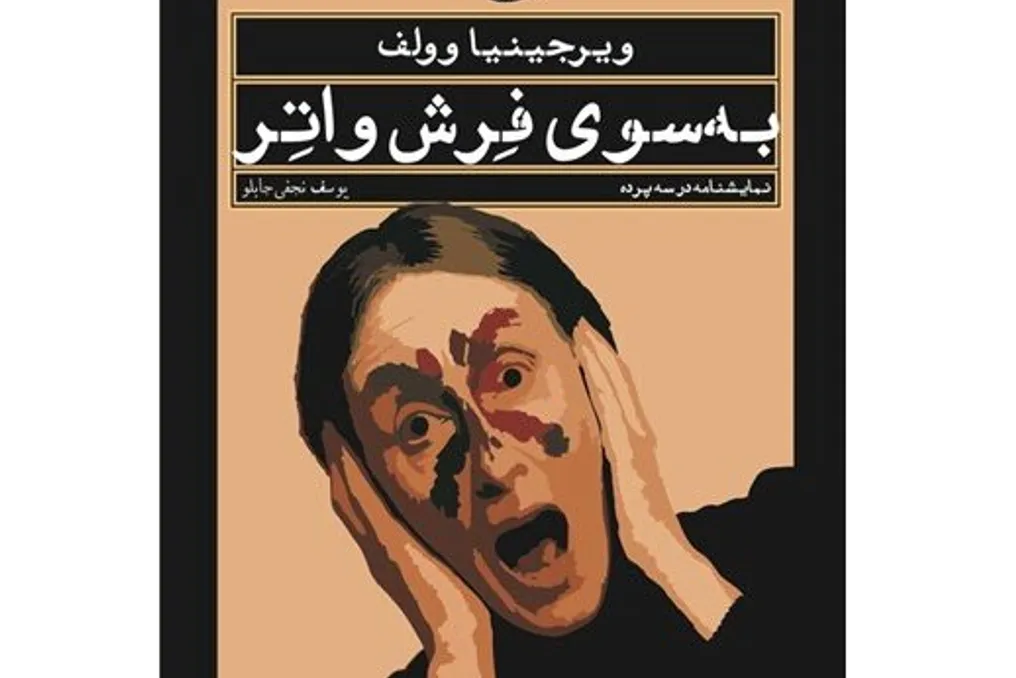
A Persian translation of the play 'Fresh Water: A Comedy,' written by Virginia Woolf, has appeared in bookstores across Iran. According to ISNA, the translator of this work is Yousef Najafi Jablou, and the publication is handled by Tagh Publication.

'Fresh Water: A Comedy' is the only play that Virginia Woolf wrote and staged in 1935. Although it was performed only once in the author's lifetime, the play has since been translated into numerous languages and staged in many countries. The character Alfred Lord Tennyson appears in this play.

Virginia Woolf researched the life of her cousin's grandmother, photographer Julia Margaret Cameron, presenting her findings in an essay titled 'Pattledom' in 1925, and later in the preface to her photographs in 1926.

The play is named after the island of Freshwater (Freshwater, Isle of Wight), where Julia Margaret Cameron lived in a rather bohemian setting at her home, Dimbola Lodge. Many artists and writers gathered around her in the 1860s, including George Frederic Watts and Tennyson.

Tennyson's nearby house, Farringdon, was also an artistic center. The plot revolves around the attempts of the young actress Ellen Terry to avoid marrying the much older Watts. This situation is partly related to family history and partly satirizes the Victorian norms that the Bloomsbury group sought to escape.

The Camerons are planning to travel to India, while Mrs. Cameron and Watts intend to portray Ellen in their respective media. Ellen, meanwhile, sees the young naval lieutenant as her chance for salvation, having received an offer to move to Bloomsbury. These events converge over the course of one day.

Despite being a small work, initially not intended for publication and easily dismissed as frivolous, it gained greater meaning within the broader context of Woolf's work and views. Beneath the comedic elements lies an exploration of both generational change and creative freedom. Both Cameron and Woolf fought against the class and gender imbalances of Victorianism, and the play demonstrates connections to later works such as 'To the Lighthouse' and 'Room for the Self.'

Virginia Woolf (1882–1941) was an English writer and one of the most influential modernist authors of the 20th century. She contributed to the development of stream of consciousness narration as a literary technique.

Woolf began publishing professionally in 1904 and achieved fame during the interwar period with novels such as 'Mrs. Dalloway' (1925), 'To the Lighthouse' (1927), and 'Orlando' (1928). She also wrote the influential feminist essay 'A Room of One's Own' (1929), followed by 'Three Guineas' (1938), which explores the roots of fascism in society. Her works became central to the feminist critique of the 1970s and remain significant worldwide, having been translated into over 50 languages.

Writer Kristina Kretova presented a children's book about a trip to Uzbekistan
Read more
nuz.uz

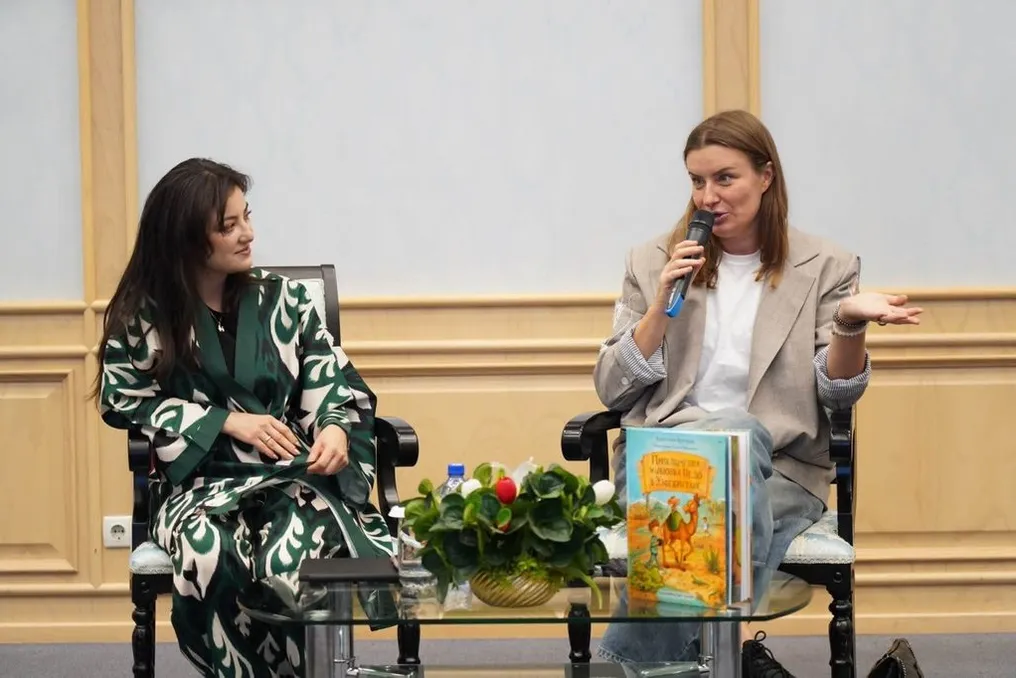
Writer Kristina Kretova presented a children's book about a trip to Uzbekistan

A presentation of the children's book titled 'Ned's Mouse Adventures in Uzbekistan' took place in Tashkent. This edition is the result of a joint effort by St. Petersburg writer Kristina Kretova and Tashkent artist Zilola Khamidova.

The book's release was initiated by the Consulate General of Uzbekistan. Previously, this fairy tale was shown to Russian audiences, and now it has returned to the country that served as the source of inspiration for the authors due to its ancient cities and rich cultural heritage.

The central character of the story is Ned, a cute and curious mouse who lives in a library, loves books, and longs to see the world. When Ned ends up in Uzbekistan, he begins an exciting journey through important sites of the Great Silk Road, including Samarkand, Bukhara, and Khiva.

Thanks to this book, young readers will learn about national traditions, features of local cuisine, and the magnificent architecture of the region. An important theme in the narrative is environmental: the author addresses issues of nature protection and the preservation of the Aral Sea in an accessible manner, fostering in children a careful attitude towards the environment.

The book is presented in an engaging interactive format: it includes an illustrated map, game tasks, and educational questions, allowing young readers to become active participants in this journey. Zilola Khamidova's detailed and warm illustrations bring the visual elements to life, conveying the spirit of the eastern cities, their hospitality, and light.

Kristina Kretova, the author of the work, is a decorated Russian children's writer, recognized with awards such as the 'For the Good of the World' award in 2019 and the Grand Children's Festival in 2021. The book's publication is viewed not only as a literary event but also as a demonstration of cultural exchange between the two states. Through a simple and kind fairy tale, children learn to value friendship, discover the diversity of neighboring cultures, and understand the importance of caring for the world.

Popular