
Study shows what Uzbekistan readers expect from the media: more investigations and open discussions
Read more
Gazeta.uz
gazeta.uz

Study shows what Uzbekistan readers expect from the media: more investigations and open discussions

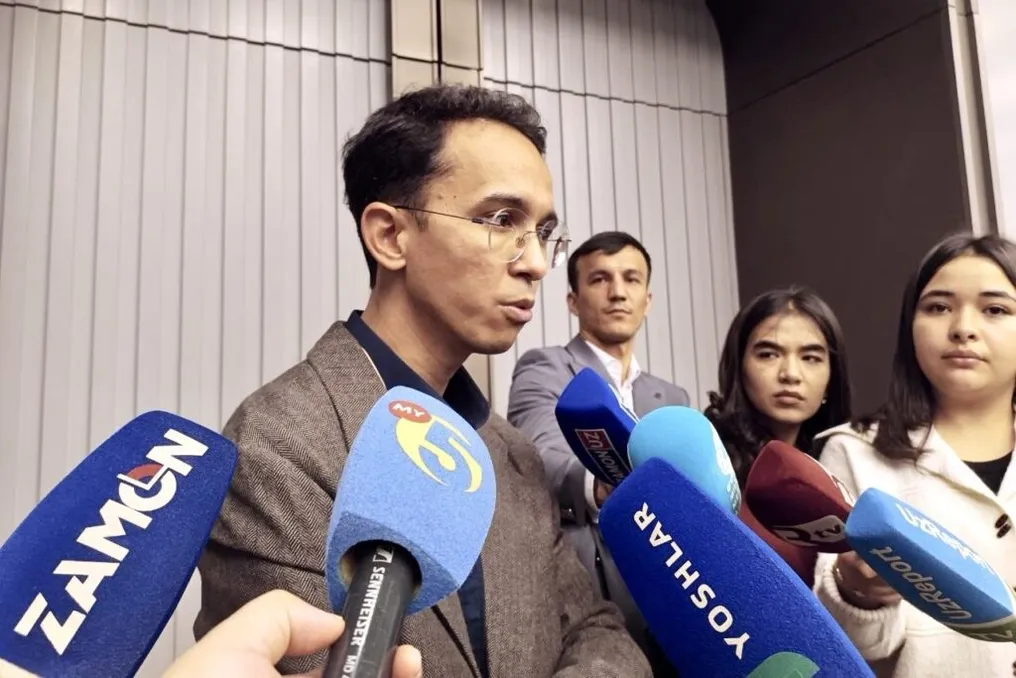
The Public Foundation for Support and Development of National Mass Media, funded by the European Union, presented the report 'National Study of Media Consumption in Uzbekistan.' This field study, conducted by the 'Ijtimoiy Fikr' center from September 8 to 19, included face-to-face surveys of 1,411 citizens across 14 different regions of the country.

This two-hundred-and-forty-page report, positioned as the first of its kind, covers information consumption through television, radio, print publications, social networks, and the messenger Telegram. According to key findings, despite digital platforms holding leading positions in news dissemination, audience trust remains with traditional mass media.

News is more often received from digital sources

Half of the surveyed respondents (50.4%) regularly follow national news, and another 30.4% do so occasionally. The main channel for receiving news for most is digital sources. Telegram channels were the leader among these sources, noted by 51.6% of respondents. They are followed by television (44.6%), social networks (41.6%), YouTube and video blogs (31.3%), and online publications (30%).

Radio, government websites, and print newspapers show lower representation: radio at 7.2%, government websites at 5.9%, and print newspapers at 5.2%. The share of those who use search engines and artificial intelligence to get news was 1.8%. Respondents could indicate multiple sources simultaneously.

Telegram users account for 86.1% of respondents, while 67.5% watch television. Social networks are used by 64.8% of respondents, press is read by 28.3%, and radio is listened to by 21.9%. The most important factor when choosing a source was timeliness, named by 48.6% of participants. Criteria for source trust (31.3%) and accessibility from any location (31%) were mentioned less frequently.

Despite Telegram's popularity, trust in it is low

When asked about the most reliable source, 44.3% replied that it was television. Official government websites ranked second in terms of trust (17.3%), although only 5.9% of respondents receive news from them. Online publications are rated at 7.4%, social networks at 6.7%, and YouTube and video blogs at 5.4%. In total, between 30% and 42% of respondents receive news from each of these sources.

Significant differences in trust appear between age groups. Television is trusted by 23.1% of people aged 18–24 and significantly more—70.6% of people over 55. The situation with Telegram is the opposite: it is trusted by 17.1% of young people and only 5.4% of older individuals. Furthermore, among young people, the proportion who trust government websites (22.8%) exceeds the proportion who trust Telegram channels. For people over 45, trust in official websites drops to 7.5–10.4%.

Overall, 44.5% of participants fully trust the media, 21.4% trust it more, and 30.9% trust it partially. Rural residents (50.1%) expressed a higher level of trust compared to city dwellers (39.7%).

Cyrillic or Latin?

Most respondents (71.7%) prefer to receive information from the media in Uzbek written in Cyrillic, while 49.8% prefer Latin script. Russian was chosen by 43.3%, and English by 11.3%; respondents could indicate multiple languages.

The figures show a sharp contrast between the preferences of young and older generations. Among people aged 18–24, 76.5% prefer Latin, and 47% prefer Cyrillic. In the 25–34 age group, Latin maintains an advantage—71.1% versus 56%. However, in the 35–44 age group, the situation changes: 75.5% choose Cyrillic, and 53.1% choose Latin. Among people aged 45–54, 86.1% prefer Cyrillic, and among those over 55, 94.3%, while the share of Latin lovers in this group is 27.4% and 20.4% respectively.

English language preference is shown by 23.1% of young people, whereas among people over 55, this figure is only 3.6%.

Confrontation with fakes

Respondents encounter unreliable or misleading information with varying frequency: very often—13.9%; quite often—13.7%; sometimes—33.7%; rarely—27.6%; and never—8.7%. False information is most often associated with YouTube and video blogs (50.1%), Telegram channels (44%), and social networks (38.4%), while television is considered a source of fakes only in 5.4% of cases.

25.1% of respondents always check information, while 13.3% never check it. Among people over 55, the proportion who do not check information reaches 23.3%. 17.7% of respondents admit to being unable to distinguish lies from truth independently. Among young people aged 18–24, this percentage is 9.6%, and among older people, it is 26.2%.

48.7% of social media users have encountered fake news, and 34% have encountered fraud and attempts at extortion. In Telegram, the prevalence of fraudulent messages (24.4%) and fake online stores (23.2%) is noted.

Freedom of speech and control

Nearly half of the respondents (49.7%) highly rated the level of freedom of speech and media independence, while 45.2% reported limitations in certain areas. Only 4.7% gave a low rating. The most pressing issues in media operation were cited as the spread of fake news (46.6%), lack of objectivity and impartiality (33.1%), insufficient transparency of government body activities (30.6%), and limited opportunities for journalists to obtain information (27.4%).

Moreover, 77.4% of respondents supported the idea of strengthening media responsibility for spreading false information. When the question was phrased as the necessity of strengthening responsibility, 75.9% of participants believe that the state should control the accuracy of information. The share of those who fear that stricter penalties may limit freedom of speech was 4.5%, and supporters of complete media independence were 5.3%.

To increase media independence, 56.5% of participants ranked strengthening legal guarantees of freedom of speech as the top priority. Young people support the development of private agencies and independent media (32.4%) twice as much as older generations (17.2%). It should also be noted that pressure on journalists (17.1%) was mentioned more often in the 18–24 age group than in other cohorts.

Audience expectations

Most often, respondents pointed to the lack of information in the media about prices, income, employment, and social support (41.3%). Second in line were population problems and needs (40.6%), followed by healthcare (23%) and laws and citizens' rights (22%).

Main complaints against print and online publications concern the insufficient depth of coverage of important social issues: respondents note a lack of open discussion of social problems (31.8%), in-depth analytical materials (29.1%), journalistic investigations (20.6%), and fact-checking (20.1%).

Television receives criticism regarding program monotony (36.8%), frequent repetitions (36.2%), a large amount of advertising (29.1%), and low quality of national series (27.5%). Regarding formats, most prefer traditional news broadcasts (48.8%) and short digests (41.7%), while Reels were chosen by 22%, and detailed analysis by 21.5% of participants.

Media leaders

Among online publications, Kun.uz is the most popular, read by 74.7% of respondents. Next are Daryo (43.5%), Qalampir (36.8%), and 'Gazeta' (20.4%). In the segment of print publications, the leaders are Xalq So‘zi (38.9%), Yangi O‘zbekiston (37.7%), and Mahalla (28.7%).

Among TV channels, Milliy TV is watched most often (44.5%), followed by O‘zbekiston 24 (41.7%), Zo‘r TV (34.9%), and Sevimli TV (33.8%). O‘zbekiston 24 leads in terms of trust, trusted by 52.8% of viewers. Among radio stations, Vodiy Sadosi leads (38.2%), followed by Yoshlar, Mahalla, and O‘zbekiston 24.

In social networks, Instagram is the undisputed leader, used by 92.7% of users. Facebook is used by 28.2%, and TikTok by 14.2%. Instagram leads regardless of gender, age, or region. TikTok is more popular among young people (21.2% in the 18–24 age group), and men use Facebook twice as often as women (38.1% versus 17.9%). The most active time for using social networks and Telegram is between 18:00 and 00:00.

Similar stories

Study shows how Uzbekistan residents consume news and which information sources they prefer
Read more
nuz.uz

Study shows how Uzbekistan residents consume news and which information sources they prefer

On November 2 in Tashkent, the official presentation of the first stage of the project 'National Study of Media Consumption in Uzbekistan' took place. This project was implemented with the participation of the Public Foundation for Support and Development of National Mass Media, the European Union Delegation to Uzbekistan, the Center for Content Preparation for Mass Media under the Presidential Administration, and the Republican Center for Public Opinion Research 'Ijtimoiy Fikr.'

The survey ran from September 8 to 19 and was conducted in the format of personal interviews at people's places of residence. A total of 1411 people from 14 regions of the country participated, all aged 18 or older.

The Director of the Mass Media Foundation, Zhakhongir Azimov, emphasized that the research results provide a general picture of the republic's media space, covering television, radio, print, and online media. He noted that analyzing indicators by age, gender, place of residence, and media consumption habits requires close attention, and expressed hope that the collected data will be an important step toward understanding public media habits, although he acknowledged the need for more detailed studies in each area.

The main conclusion of the monitoring is that the audience is not a passive group simply receiving information; on the contrary, it actively participates in media processes, independently chooses sources, compares the information received, and determines the topics that interest them.

The study demonstrated that both youth and the older generation show high interest in news and socio-political agendas. 50.4% of the population follows news about events in Uzbekistan, and another 30.4% is interested in them periodically. Furthermore, respondents do not limit themselves to a single source of information.

Telegram has become one of the key channels for receiving news, followed by television and social networks. However, in terms of trust, television leads, trusted by 44.3% of respondents. Telegram is trusted by 11.3%, and news websites by 7.4%. Among television channels, O’zbekiston 24 commands the highest trust.

Radio, printed newspapers, and official government websites showed significantly lower levels of trust.

An important finding was the absence of differences in information preferences between residents of the capital, regional centers, and rural areas. In some regions, interest in news was even higher than in Tashkent. Additionally, rural residents are more likely than urban residents to express doubts about the reliability of materials published by online publications.

People are concerned not only about world and domestic events but also about issues related to their daily lives, such as income levels, employment, social support, prices, health, and child-rearing.

The main threat identified by the respondents is fake news. In their opinion, false information is most often spread through YouTube, Telegram, and social networks. 70.4% of respondents supported the idea of tightening responsibility for spreading inaccurate information.

Renata Vrabel, Acting Chargé d'Affairs of the European Union Delegation to Uzbekistan, noted that the study's findings can help identify information gaps, strengthen society against disinformation, and improve interaction between citizens, media, and institutions. A series of trainings and events aimed at increasing audience understanding and more effective communication using reliable content are planned following this study.

The results of the first stage of the national study of media consumption in Uzbekistan form a comprehensive view of the country's modern media environment, showing how accounting for audience interests and habits affects the media's ability to adapt, counter disinformation, and maintain professional standards.

Study shows Telegram and television lead media consumption in Uzbekistan
Read more
uzdaily.uz

Study shows Telegram and television lead media consumption in Uzbekistan

The Charitable Foundation for the Support and Development of Mass Communication presented the results of a national survey on media consumption in Uzbekistan. According to the study, residents most often receive news through Telegram channels, while television remains the most trusted source of information. The foundation reported that the survey covered television, radio, print, and online media, social networks, and Telegram.

The survey was conducted from September 8 to 19, 2026. Interviewers personally communicated with respondents at their place of residence. 1,411 people aged 18 and over participated in the study from all 14 regions of the country. Among those surveyed, 53.9% lived in cities, and 46.1% lived in rural areas. The organizers emphasized that the multi-stage sampling ensures the representativeness of the results at the national level.

The study was implemented by the Charitable Foundation for the Support and Development of Mass Communication, the European Union Delegation to Uzbekistan, and the Media Content Training Center under the Presidential Administration. Fieldwork was carried out by the Republican Center for Public Opinion Research 'Ijtimoiy Fikr'.

Overall, 50.4% of respondents reported regularly following national news, and another 30.4% do so periodically. The most frequently used sources of news were Telegram channels (51.6%), television (44.6%), social networks (41.6%), YouTube and video blogs (31.3%), as well as online publications and news websites (30%).

Respondents chose these sources primarily due to the speed of information delivery (48.6%), trust in the source (31.3%), availability anytime and anywhere (31%), convenient format (30.9%), and free access (24.1%).

Events taking place in Uzbekistan generated the most interest (56%), followed by world events (40%), and then local and regional news (22%). Respondents noted that they lack information on prices, incomes, employment, and social support (41.3%), public needs (40.6%), healthcare (23%), and laws, as well as citizens' rights (22%).

Uzbek language remains the preferred language for receiving information. 71.7% of respondents preferred materials in Uzbek using Cyrillic, while 49.8% chose Uzbek in Latin script, and 43.3% chose Russian. The proportion preferring Cyrillic increased with age: among people aged 18–24, this figure was 47%, and among respondents over 55, it was 94.3%.

67.5% of survey participants watch television content, with the elderly being the largest audience. Television is trusted by 44.3% of respondents, which is less than official government websites (17.3%), Telegram channels (11.3%), news websites (7.4%), social networks (6.7%), and YouTube and video blogs (5.4%). Trust in television increases with age: among 18–24 year olds, it is 23.1%, and among those over 55, it is 70.6%.

The most popular TV channels named were Milliy TV (44.5%), O‘zbekiston 24 (41.7%), Zo‘r TV (34.9%), and Sevimli TV (33.8%), followed by Yoshlar (28.6%) and Mening Yurtim (26.1%). Men were more likely to choose sports channels, while women watched Milliy TV and Sevimli TV more often. O‘zbekiston 24 ranked first in terms of trust across all groups by gender, age, and region, being named the most reliable channel by 52.8% of viewers.

On weekdays, most respondents watched television for 30 minutes to two hours daily. On weekends, the average viewing time was usually one to two hours. Most people watched TV at home, although younger audiences more often used smartphones and tablets for viewing.

Main complaints concerned program repeats, excessive advertising, and the quality of domestic films and series. Rural residents demanded more educational programs and coverage of regional life.

Radio was listened to by 21.9% of respondents, while 78.1% stated they do not listen to it. Men listened to the radio more often than women. The largest share of listeners was among people aged 35–44 (26.9%), and the smallest among youth aged 18–24 (16.7%). Radio listening peaked in the morning, before noon, and a significant part of the audience included the evening time, between 18:00 and 21:00.

People mainly listened to the radio at home or in cars. Among men, 49.7% cited the car as the place of listening. The most frequently mentioned station was Vodiy Sadosi, chosen by 38.2% of respondents. Yoshlar and Mahalla were also popular among women and older listeners.

The main reasons for choosing a radio station were its music format (64.4%), current news (42.7%), and favorite songs (38.5%). Among respondents aged 18–24, 74.5% indicated music as the reason for their choice.

28.3% of respondents read newspapers and online publications. Of these readers, 38.8% used only digital versions, 32.6% read only print editions, and 28.6% used both formats. More than half of press readers (55.9%) received publications daily, usually at home and in the evening.

Print publications were mainly purchased at kiosks and stores (42.6%) or by subscription (32%). Online publications were viewed through mobile applications (58%), Telegram channels (37.2%), media sites (31.6%), and social networks (31.2%).

Among print publications, the most popular were Xalq so‘zi (38.9%), Yangi O‘zbekiston (37.7%), and Mahalla (28.7%). Leading online publications were Kun.uz (74.7%), Daryo.uz (43.5%), and Qalampir.uz (36.8%).

Readers primarily chose publications for their objectivity (50.4%) and reliability (50.1%). They expressed a desire to receive more open discussions on social issues (31.8%), objective news (30.1%), analytical coverage (29.1%), journalistic investigations (20.6%), and fact-checking (20.1%).

Social networks were used by 64.8% of respondents. The user share was 84% among youth aged 18–24 and 38.4% among those over 55. The highest level of social network usage was recorded in the Andijan region (88.1%), Khorezm region (82%), and Samarkand region (80.2%). Among social network users, 92.7% used Instagram, followed by Facebook (28.2%) and TikTok (14.2%).

A total of 81.3% of social media users accessed these platforms several times a day, most often in the evening between 21:00 and midnight. On weekends, the share of users spending three hours or more on social networks increased from 8.9% to 21.3%.

The main reasons for using social networks were getting news (62.5%) and communicating with family and friends (57.3%). Users cited the spread of false information (48.7%), fraud (34%), intrusive advertising (31.9%), suspicious links (24.9%), and account hacking attempts (24.2%) as major problems.

Telegram was used by 86.1% of survey participants, including 94.7% of respondents aged 18–24. In total, 85.3% of users opened the messenger several times a day, most often in the evening.

Approximately 55.2% of respondents subscribed to Telegram channels covering Uzbekistan's news, and 27.1% followed channels dedicated to international news. Educational institutions published their channels for 22.4%, and 21.2% subscribed to channels of local authorities and mahallas.

Telegram users reported problems related to unreliable information (35.1%), advertising and spam (31.6%), excessive notifications (26.9%), fraudulent messages (24.4%), and fake online stores (23.2%).

A total of 27.6% of respondents stated that they encountered unreliable information very or quite often. Most often, they associated this with YouTube and video blogs (50.1%), Telegram channels (44%), and social networks (38.4%).

Fake news was identified as the main media problem by 46.6% of respondents, while 33.1% pointed to insufficient objectivity. 77.4% supported stricter penalties for spreading false information, and 75.9% believed that the state should control the accuracy of information.

Overall, 65.3% of respondents are satisfied with the development of media in Uzbekistan. Nearly half (49.7%) believed that journalists could freely express their opinions and cover any topic.

To strengthen media independence, 56.5% proposed improving legal guarantees of freedom of speech, 30.7% called for better journalist training, and 27% supported expanding journalists' access to information held by state bodies.

Jakhongir Azimov, Director of the Charitable Foundation for the Support and Development of Mass Communication, noted that this survey, which he called a research study, is unique in its scale. He stated: 'The conducted study is of a research nature and unique in its kind. It provided an overall picture of the country's media environment, covering television, radio, print, and online media. For obtaining deeper and more objective information, more detailed studies in each area separately are necessary, and the Mass Media Foundation is ready to continue this work.'

Renata Vrubel, attaché of the EU Delegation to Uzbekistan, expressed hope that the results obtained will serve as a practical resource for all interested parties and support further cooperation in building a more informed, sustainable, and media-literate society. The second stage of the project will include training sessions for journalists, press service employees, and bloggers in six regions of the country.

Popular