Uzbekistan Airways presents updated in-flight menu developed by Ketring LLC
Read more
Nuz.uz
nuz.uz

Uzbekistan Airways presents updated in-flight menu developed by Ketring LLC

On October 31, Uzbekistan Airways held a presentation of its new in-flight menu, which was created by the team at Ketring LLC and will soon be available on the airline's flights.

The catering service of Ketring LLC has a long history, having started operations back in 1958 with a restaurant opened at Tashkent Airport. Today, the company utilizes accumulated experience, modern production facilities, and a staff of experienced specialists to ensure the full cycle of preparation and delivery of in-flight meals for Uzbekistan's aviation industry.

Recognizing the diversity and variability of people's taste preferences, airline catering services face greater complexity in meeting demands than ground food service establishments. Nevertheless, they strive to take passenger wishes into account as much as possible when developing the in-flight menu.

Zera Emirvelieva, Chief Technologist at Ketring LLC, explained that the menu change is related to its cyclical nature. The process includes collecting feedback from passengers left in questionnaires, which allows for studying consumer demand before the menu is compiled. The work is entirely passenger-oriented, starting from the development of the dish assortment by chefs.

Parallel to menu development, an audit according to international Skytrax standards is conducted, within which options regarding assortment, serving method, and even food reheating temperature are proposed. The menu is considered complete only after it is formalized as a technological card and then a cost calculation card, which determines the dish's price. This menu applies to both domestic and international flights, including control flights.

The approach to the menu and level of service varies depending on the class of service; for example, different standards for serving, tableware, portion sizes, and pricing are established for business class. This also applies to service in CIP and VIP lounges.

Chefs Abduvali Akhadov, Gennady Kim, and Abdusattar Somodov participated in the presentation, contributing to the development by proposing an extensive selection of salads and hot dishes. The new menu promises a level that can compete with premium restaurants.

Depending on the class of service, passengers will have access to beverages, including fresh juices, as well as meat dishes such as boiled kazy and poultry fillet (duck). Cold appetizers include poultry fillet (chicken), duck fillet, meat roulade with dried plums, and a wide selection of cheeses.

The fish assortment will include oily fish, domestically produced salmon, and eel prepared by grilling and smoking. A wide selection of vegetables, dried fruits, and salads with arugula, mozzarella, sun-dried tomatoes with chicken, stracciatella cheese, and smoked duck is also provided.

For breakfast, passengers can choose potato patties with mushrooms and broccoli, pancakes with meat and sour cream, chicken pancakes, as well as a classic omelet with sausage, spinach, caramelized onions, and sun-dried tomatoes.

Hot dishes include 'Minestrone', beef 'Shurpa', and 'Garbjur' with 'Confit' duck. In the meat section, the chefs offer delicate meat, country-style potatoes, beef medallions, festive beef pilaf, slow-cooked lamb in demi-glace sauce, and other items.

Fish lovers will have the opportunity to try grilled salmon, fried pikeperch, Bukhara-style pikeperch, and parchment-baked salmon. Poultry offerings include grilled chicken, Tabaka chicks, chicken roulade with side dishes, 'Confit' duck breast, and chicken cordon bleu.

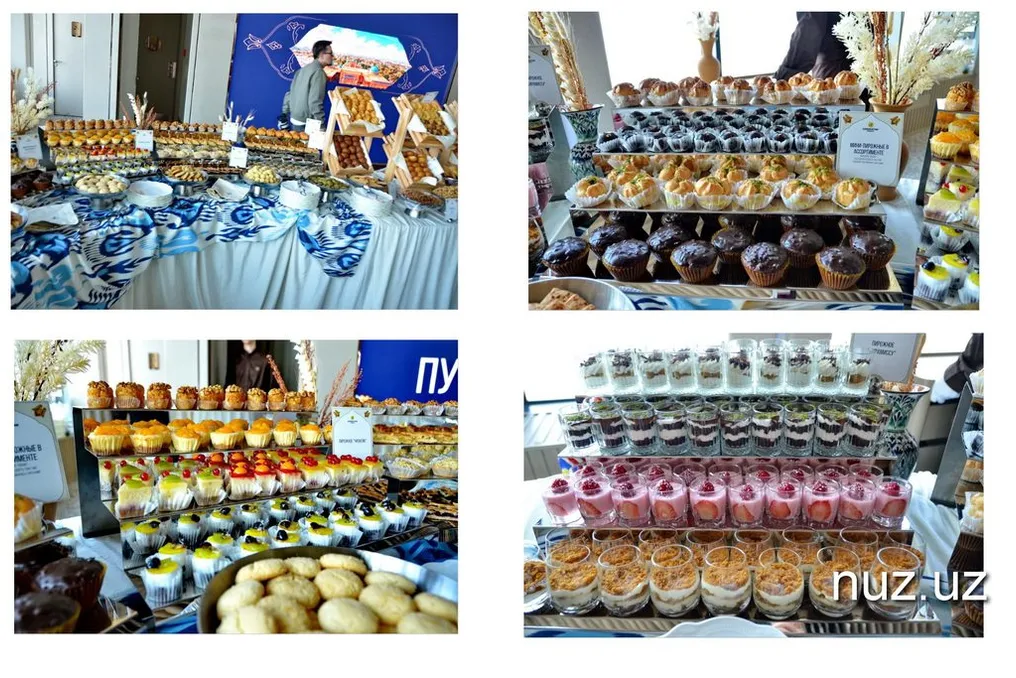
The dessert table will feature mini pastries in various variations, 'Nafis' cake, and a wide selection of Eastern sweets.

A high level of service is possible due to the availability of modern material and technical infrastructure and qualified personnel. Murod Trobow, Director of Ketring LLC, noted that the enterprise is equipped with modern means allowing it to produce over 5 million meal rations annually. Ketring LLC operates 22 departments that ensure uninterrupted catering not only for Uzbekistan Airways but also for other national and international companies flying to Russia, Europe, and Southeast Asia.

According to Trobow, more than 600 employees are involved in the production process, enabling the preparation of over 15 thousand portions daily while adhering to high quality standards and timely fulfilling orders for all airlines. The in-flight menu is updated twice a year, and for Uzbekistan Airways, each update is a step towards improving passenger service quality.

It is emphasized that every dish is part of the traveler's overall experience, as quality products, thoughtful flavor combinations, and aesthetic presentation contribute to making the time in flight more comfortable and pleasant, which is the key focus of the company's work.
Similar stories

Direct flights open from Istanbul to Bukhara, Andijan, and Termiz
Read more
uza.uz

Direct flights open from Istanbul to Bukhara, Andijan, and Termiz

Travel opportunities to Turkey in the country are expanding. An agreement has been reached between Uzbekistan Airports and the Turkish airline Pegasus Airlines to launch regular flights from Istanbul to Bukhara, Andijan, and Termiz.

Additionally, the issue of opening routes in the reverse direction, as well as to Nukus, is being discussed.

IAF Air Show in Kashi: Rafale and Sukhoi Fighters Demonstrate Spectacular Maneuvers Over the Ganges
Read more
www.aajtak.in

IAF Air Show in Kashi: Rafale and Sukhoi Fighters Demonstrate Spectacular Maneuvers Over the Ganges

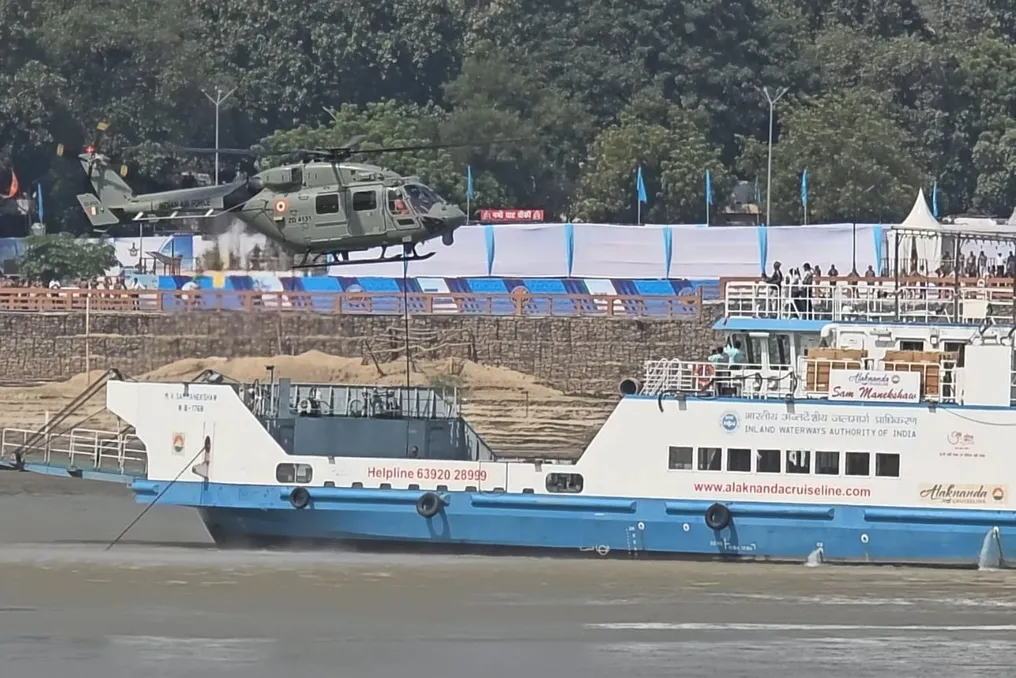
The Indian Air Force (IAF) commenced a three-day air show, 'Wings Over Ganga,' on October 22nd, which took place over the Ganges River from Namghat in Varanasi to Chandawli. This grand event was organized to commemorate the 94th anniversary of the Air Force. Approximately 100 aircraft and helicopters participated in the show, including Rafale, Tejas, Sukhoi, Surya Kiran, and Chinook. The main objective of the event is to showcase the country's military might and inspire youth to pursue aviation, science, and national service.

With the support of robust security measures and administrative preparations, thousands of spectators gathered to witness this thrilling spectacle. In the initial days of the show, which began in the city of Kashi, modern combat aircraft and helicopters such as Rafale, Tejas, Sukhoi, Surya Kiran, Sarang, and Chinook demonstrated their masterful flights. Spectators gathered on both sides of the Ganges—the Varanasi side and the Chandawli side—were amazed by the incredible maneuvers of the Indian air forces.

The excitement and enthusiasm among the youth and children were evident during this aerial performance. The roar of the aircraft and the colors of the tricolor in the sky attracted the attention of everyone present. People who visited the venue expressed their admiration, noting that such bold demonstrations motivate the younger generation to join the Indian air forces.

A total of 100 flying vehicles and helicopters are participating in this event: 52 fighters, 15 transport aircraft, 32 helicopters, and one historic aircraft. Rafale, Sukhoi-30 MKI, MiG-29, and the indigenous Tejas are showcasing their capabilities. Notably, various aircraft formations are named after the religious and cultural identity of Kashi, including names inspired by Kashi, Vishwanath, Kedarnath, and the Ganges.

The culmination of this large-scale event will be on October 25th, when Prime Minister Narendra Modi and Defence Minister Rajnath Singh are scheduled to arrive in Varanasi to participate in the show. There is also a possibility of the Defence Minister attending on October 24th. Furthermore, the presence of Chief Minister Yogi Adityanath and other high-ranking officials is expected. The administration has made special arrangements to ensure safety, traffic flow, and parking given the large number of expected visitors.

Evolution of flight games: from pastime to industry and pilot training tool
Read more
olhardigital.com.br

Evolution of flight games: from pastime to industry and pilot training tool

Flight games have always attracted public interest, just like aviation itself. These games have a long history, evolving from electromechanical arcade machines in the early 70s to current models, covering everything from aerial combat to flight simulators.

Before the release of Microsoft Flight Simulator, there were other notable titles. The first prominent one, released in 1975, was Taito's Interceptor, followed by Atari's Red Baron in 1980. However, these games were essentially focused on aiming and shooting at enemy aircraft, far removed from any flight simulation.

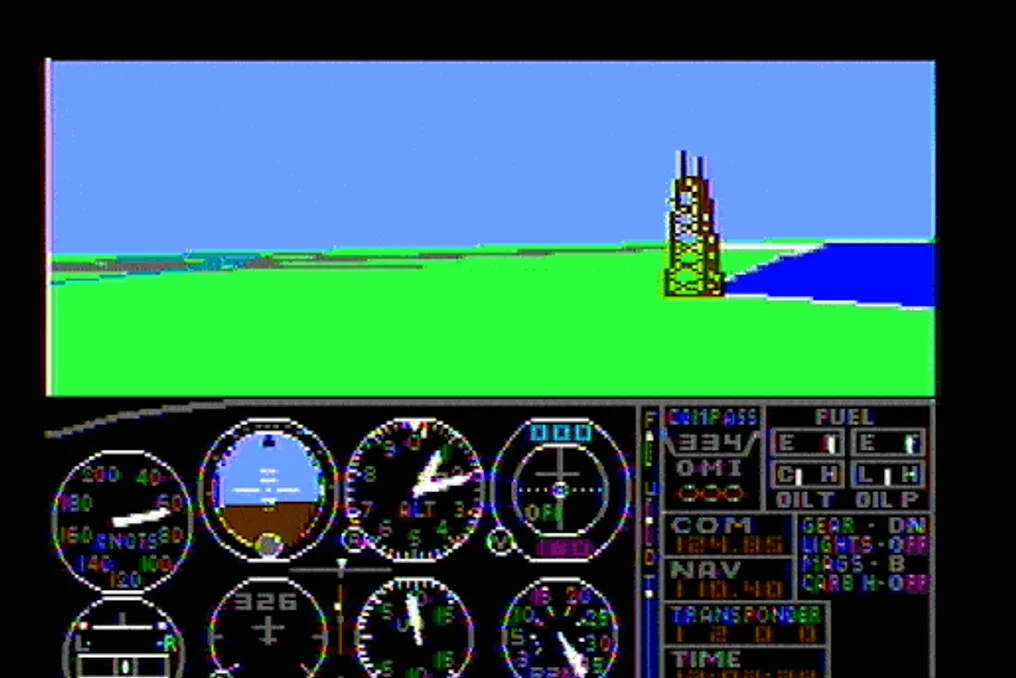
Microsoft Flight Simulator was only introduced in 1982, featuring basic graphics and elementary gameplay, but causing a great impact at the time. Its success prompted Microsoft to release Flight Simulator 2.0 in 1984, and subLOGIC launched Jet, focused on combat, in 1985.

By the late 1980s, a trend was observed in arcade cabinets incorporating motion simulation. These machines used hydraulic mechanisms to tilt in various directions, providing the sensation of being inside a craft. This technology was widely employed by Sega in its 'taikan' (body sensation) games, such as Hang-On, Space Harrier, After Burner, and G-LOC: Air Battle, the latter equipped with the R360 cabinet, capable of up to 360-degree rotations.

The close of the 1980s was marked by the rise of 3D games. Among these, flight games pioneered the use of this technology, exemplified by Midnight Landing (1987) and Top Landing (1988), both developed by Taito. Shortly thereafter, air combat simulators also adopted these graphics, such as Taito's Air Inferno and Atari's Steel Talons, released in 1990 and 1991, respectively.

In the subsequent years, 3D flight games migrated to PCs, including titles like Stunt Island (1992), Star Wars: X-Wing, and Strike Commander (both 1993). Thus, 3D established itself as the standard for the genre, both in terms of gameplay and achievable realism.

These games were not limited to computers, as titles began to be adapted for consoles during the 1990s, such as Pilotwings and Ace Combat – whose series remains active. In parallel, the Microsoft Flight Simulator series began having console versions starting in 2021.

With the decline in arcade popularity and the increase in the use of consoles and PCs, those seeking greater immersion and realism began looking for alternatives in home cockpits. These are structures designed to maximally replicate the experience of piloting an aircraft, including controls.

A notable example is that of air traffic controller James Price. He acquired the nose of a Boeing 737 from an aircraft graveyard for US$1,500. This amount is significantly less than the total project cost, which reached approximately US$150,000. However, most home cockpits do not reach such a price point, offering simpler kits costing up to US$3,000 in total.

The Virtual Air Traffic Simulation Network is a free online platform that unites flight simulation enthusiasts globally, allowing them to fly together or act as air traffic controllers. The entire operation takes place virtually, simulating a real aviation environment with authentic rules and voice or text communication between pilots and controllers.

This organization uses proprietary software compatible with various simulators, such as Microsoft Flight Simulator, X-Plane, Prepar3D, and FSX. Access to the tool is free on the website, provided the user completes an orientation course and passes a test with at least 80% accuracy.

VATSIM also maintains a Brazilian section, providing support, training, guidance in Portuguese, and promoting weekly events for enthusiasts in the country.

Although they are a niche within the gaming universe, flight simulators constitute a vast market generating billions of dollars annually. It is estimated that the market will reach US$6.22 billion in 2025, with a projection of US$6.65 billion for 2026, according to Markets and Markets data. Furthermore, the sector is predicted to reach US$9.77 billion by 2031, representing a Compound Annual Growth Rate (CAGR) of 8%, indicating the robustness and profitability of this market.

Beyond the recreational aspect, these simulators are used in the training of airline professionals, constituting a distinct but equally lucrative segment. According to Global Market Insights, the civil aviation training market was valued at US$5 billion in 2025, with an expectation of US$5.36 billion for the current year, a growth of 7.2%, and a projection of US$10.14 billion by 2035.

Despite lacking formal recognition, flight games have shown influence on pilot preparation, as pointed out by a study from the Flight Simulation Association involving over a thousand pilots. It was found that these pilots saved an average of 5.5 hours of flight time, corresponding to savings of over US$1,000. Additionally, 89% stated that simulators were useful or very useful in their training.

In the United States, a student can count up to 2.5 hours on a certified equipment with an instructor present. For instrument rating, ten hours are required on a BATD (Basic Aviation Training Device) and twenty on an AATD (Advanced Aviation Training Device), both approved by the Federal Aviation Administration (FAA). The agency also recognizes the X-Plane simulator, but only its professional version, requiring the computer and remaining hardware to undergo certification tests.

In Brazil, ANAC authorizes the registration of instrument flight instruction hours using flight simulation training devices, provided they are qualified or validated by the agency. The number of hours depends on the type of license, and they can be entered directly into the ANAC's digital system.

This entire trajectory illustrates a unique shift: from mere games to a consolidated market and a methodology for pilot training. However, despite the advancements, it remains a high-cost hobby and, regarding flight training, still presents limitations in the current moment.

Popular