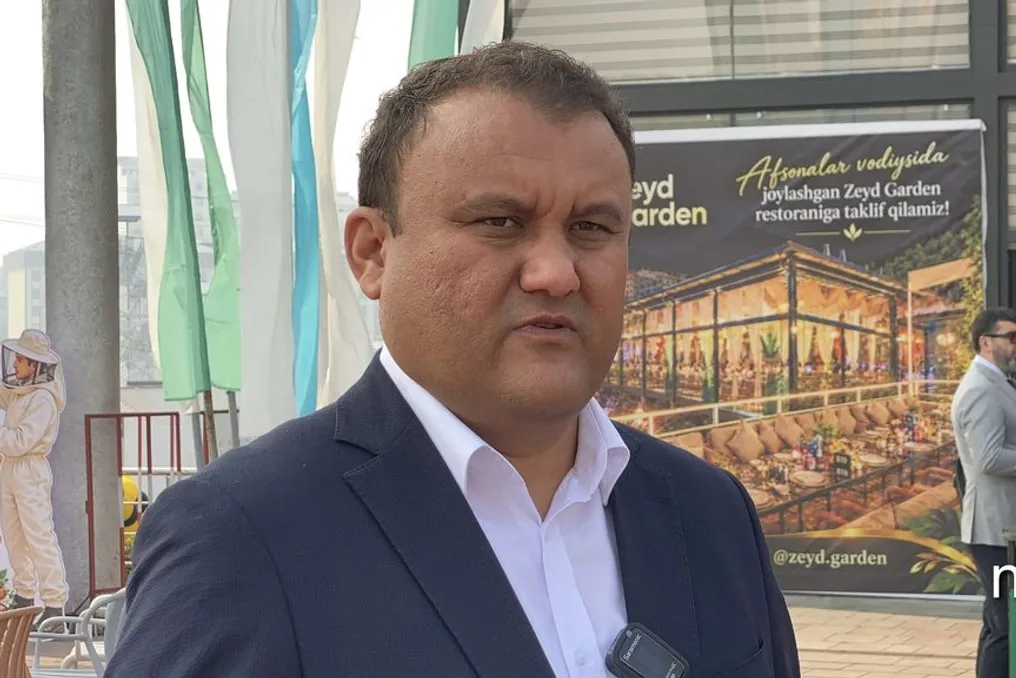
The V International Honey Festival took place in Namangan, gathering over 200 entrepreneurs from the beekeeping sector, including representatives from various countries. The event moved beyond the format of a typical fair by incorporating demonstrations of national crafts, gastronomy, and the region's tourist attractions.
The festival was held from October 23 to 25 in the themed park 'Afsonar Vadisi' ('Valley of Legends'). Participants included beekeepers from Uzbekistan, Kyrgyzstan, Azerbaijan, Russia, Bashkortostan, Altai Krai, and China.
Khondamir Akhunbaev, Deputy Hokim of Namangan Region for Tourism, Culture, Cultural Heritage, and Mass Communications, noted a significant increase in the number of participants. According to him, the number of entrepreneurs in beekeeping has roughly doubled compared to last year. He specified that while about 100 entrepreneurs participated last year, there are now over 200 this year, and the festival continues to expand.
For many participants, beekeeping is not only a source of income but also a long-standing family tradition. Saparbek Zhumagaliyev from Kyrgyzstan shared that his family has been engaged in this business for about fifty years, and his ancestors began developing beekeeping approximately eighty years ago. He emphasized that there are great prospects for developing beekeeping in Kyrgyzstan, especially in mountainous regions. Zhumagaliyev visits Namangan annually for the third time to present mountain honey and make it more accessible to buyers.
A similar tradition is preserved in the Namangan region. Local beekeeper Abdulvosit Sobirjonov reported that beekeeping has been practiced in his family for four generations, considering it a trade passed down from generation to generation. Khusniddin Abdulvaliev from Kosonsoy also participated, bringing honey collected mainly in the mountains, as well as products from cotton fields. According to him, the price of honey varies depending on the variety and ranges from 150 to 250 thousand soms, while producers try to offer favorable conditions to buyers.
Organizers decided to expand the concept of the event while maintaining the venue. Khondamir Akhunbaev explained that although the location remained the same, the scale of the festival was increased. Now, in addition to honey, separate pavilions dedicated to crafts and gastronomy have appeared on the territory, and the region's tourism potential is being demonstrated.
Special information zones were set up for visitors, where they could receive information about tourist destinations, investment opportunities, and the economic potential of the Namangan region. Thus, the festival has transformed into a comprehensive platform for trade, getting acquainted with local producers, their traditions, and the region's opportunities.
In Akhunbaev's opinion, the development of beekeeping plays an important role in the region's economy, as increasing production volumes contributes to creating new jobs, attracting qualified personnel, and expanding the activities of local entrepreneurs. The Deputy Hokim reported that the volume of honey production in the Namangan region exceeded 5.5 thousand tons this year. Furthermore, honey exports from the region reached approximately one million dollars since the beginning of the year.
Regional authorities are interested in the further development of the industry, attracting investments, and implementing modern technologies. Initiatives are being discussed to create an innovation center and laboratory to support production and expand the range of products. The festival is viewed as a tool for promoting local honey and presenting the region's products to foreign buyers.
Organizers plan to continue expanding the festival next year, one of the key areas of which may be the creation of a specialized exhibition. This exhibition will be dedicated not only to finished products but also to beekeeping equipment. Akhunbaev stated that they intend to demonstrate not only honey but also modern know-how, innovative solutions, and industry equipment, planning to create a kind of 'honey expo'. This format will allow attracting technology companies, specialists, and equipment manufacturers.
Furthermore, it is expected that the further expansion of the program will strengthen international ties between participants and open up new opportunities for local entrepreneurs.
The International Honey Festival is one of the events through which the Namangan region develops gastronomic and event tourism. The region is also known for the International Flower Festival, various district gastronomic holidays, and events dedicated to local products and folk traditions. Akhunbaev noted that the region continues to expand its calendar of festivals, which include the livestock festival, the national bread holiday 'Patyrfest', and 'Uzum Sayli', dedicated to grapes.
In the long term, organizers aim to develop the festival format by integrating the cultural traditions, entrepreneurship, and tourism potential of the Namangan region. The V International Honey Festival demonstrated how a traditional industry can become part of a broader economic and tourism program, and plans to create a 'honey expo' indicate a desire to expand the event from showcasing finished products to familiarizing with the technologies of their production.