Eleventh European Film Festival launches in Uzbekistan, to be held in Tashkent and Urgench
Read more
Nuz.uz
nuz.uz

Eleventh European Film Festival launches in Uzbekistan, to be held in Tashkent and Urgench

The grand opening of the XI European Film Festival took place in Tashkent, with the event scheduled to be held in both Tashkent and Urgench this year. This annual cultural event is organized by the Delegation of the European Union in Uzbekistan in collaboration with the Cinematography Agency under the Ministry of Culture of the Republic of Uzbekistan. The event is supported by the embassies of EU member states, as well as cultural institutions and other European countries.

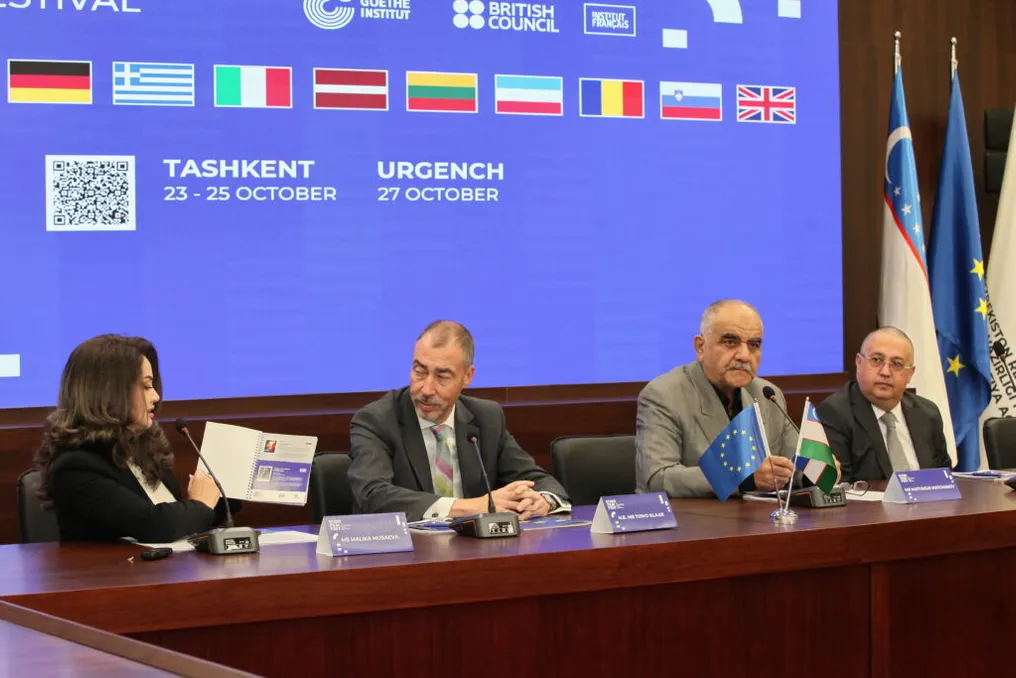
Traditionally, the festival began with a press conference attended by Toivo Klaar, the European Union Ambassador to Uzbekistan, and Matyakub Matchanov, Chairman of the Creative Union of Cinematographers of Uzbekistan.

The XI Festival will present 11 stories from directors from Cyprus, France, Germany, Greece, Italy, Latvia, Lithuania, Luxembourg, Romania, and Slovenia to the audience. The program will be diverse, including documentaries, psychological dramas, animation, biographical films, and romantic stories.

Since its establishment in 2013, the European Film Festival has established itself as one of the most significant cultural events in the country. Over the years, more than 120 films from most EU member states and other European countries have been shown in nine regions of Uzbekistan. Audiences in cities such as Navoi, Nukus, Shahrisabz, Fergana, Jizzakh, Bukhara, and others have shown constant interest in the rich diversity of European cinema.

The festival program will be screened in the Palace of National Cinema Arts (formerly known as 'Panorama') in Tashkent from October 23 to 25. In Urgench, the screening will take place on October 27 at the Khudobergan Devonov Cinema.

Toivo Klaar, the European Union Ambassador to Uzbekistan, noted that the festival provides an opportunity to get to know Europe through stories that reflect cultural diversity and common human values. He emphasized that expanding the event's geography beyond Tashkent is a good tradition that contributes to strengthening cultural exchange with the regions of Uzbekistan. Klaar expressed gratitude to the Cinematography Agency of Uzbekistan, the embassies of EU countries, and participating cultural organizations for their many years of cooperation, which makes the festival a vibrant event contributing to dialogue through cinema.

Matyakub Matchanov, Chairman of the Creative Union of Cinematographers of Uzbekistan, stated that the European film festival serves as an important platform for intercultural dialogue and creative exchange. He believes that cinema allows Uzbek audiences to learn more deeply about the unique artistic approaches, life, and heritage of different peoples. Matchanov added that developing cooperation between Uzbekistan and European countries in the film industry, including creating joint films and promoting domestic cinema, is a priority direction, which raises the professional level of cinematographers and strengthens international prestige.

The festival opened with the 2024 animated film 'Boat in the Garden' (Slocum et moi), a joint production of France and Luxembourg. The director of this cartoon is Jean-François Lagioni. The film was recognized at the Cartoons on the Bay festival and won the Pulcinella Awards, and was also nominated for the Lumière Award and the International Animation Film Festival in Annecy. The plot tells about the early 1950s in a coastal town, where young François, along with his family, builds a sailboat in the garden, inspiring him to dream of transitioning from childhood to youth.

Furthermore, within the framework of the festival, a series of short films provided by the British Council in Uzbekistan will be shown for students of the Uzbek State University of World Languages (UzGUMYA) and in the MOK HUB cultural space.

The European Film Festival in Uzbekistan serves as a platform for cultural initiatives that unite peoples through the art of cinema. The organizers expressed gratitude to the embassies of Cyprus, France, Germany, Greece, Italy, Latvia, Lithuania, Luxembourg, Romania, and Slovenia, as well as the French Institute and the Goethe-Institut, for their support under the 'Team Europe' initiative.

Detailed information about the program and schedule can be found on the official resources of the Delegation of the European Union in Uzbekistan. Attending the festival is free, and the films are shown in the original language with subtitles in Uzbek or Russian.
Similar stories

11th European Film Festival Officially Opens in Uzbekistan
Read more
uzdaily.uz

11th European Film Festival Officially Opens in Uzbekistan

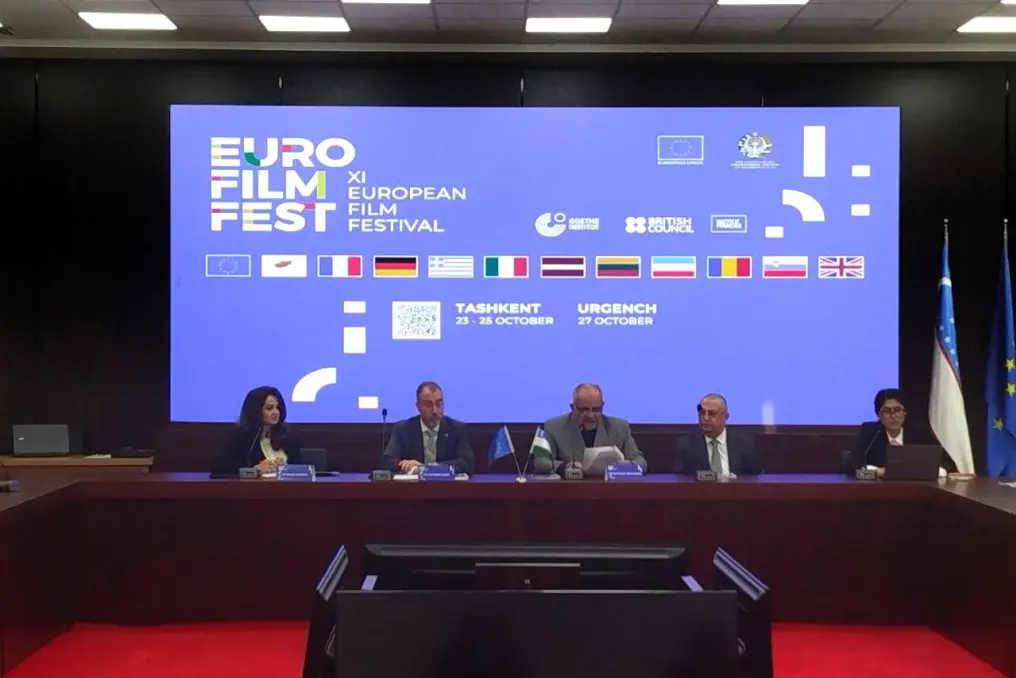
The 11th European Film Festival officially kicked off in Uzbekistan at the National Palace of Arts Cinema. Screenings during the festival will take place in Tashkent and Urgench.

The event is organized annually by the Delegation of the European Union (EU) in Uzbekistan together with the Cinematographic Agency under the Ministry of Culture of Uzbekistan, with the support of embassies of EU member states, cultural institutions, and other European countries.

As is customary, the festival began with a press conference attended by the EU Ambassador to Uzbekistan, Toivo Klaar, and Matyakub Machanov, Chairman of the Creative Union of Cinematographers of Uzbekistan.

The program includes 11 films directed by filmmakers from Cyprus, France, Germany, Greece, Italy, Latvia, Lithuania, Luxembourg, Romania, and Slovenia. The selection covers genres ranging from documentaries and psychological dramas to animation, biographical pictures, and romantic stories.

Screenings in Tashkent are scheduled from October 23 to 25 at the National Palace of Arts Cinema, formerly known as Panorama Cinema. On October 27, films will be shown in Urgench at the Khudoyargan Devonova Cinema.

During the festival, the British Council in Uzbekistan will also present a series of short films for students of the University of World Languages of Uzbekistan and in the MOK HUB cultural space.

Since its launch in 2013, the European Film Festival has become one of Uzbekistan's most anticipated cultural events. Over 120 films from almost all EU member states and other European countries have already been screened in nine regions of Uzbekistan, including Navoi, Nukus, Shahrisabz, Fergana, Jizzakh, and Bukhara.

EU Ambassador Toivo Klaar noted that the European Film Festival provides an opportunity to get to know Europe through stories reflecting the diversity of cultures and universal human values. He added that this year's expansion beyond Tashkent was a welcome tradition, contributing to cultural exchange with the regions of Uzbekistan. Klaar expressed gratitude to the Cinematographic Agency of Uzbekistan, the embassies of EU member states, and participating cultural organizations for their long-term partnership, which has made the festival a vibrant cultural event promoting dialogue between peoples through the universal language of cinema.

Matyakub Machanov emphasized that the European Film Festival is an important platform for intercultural dialogue and creative exchange. He stated that the festival gives Uzbek audiences a chance to better learn about the unique artistic approaches of European cinematography, as well as the life, values, and spiritual heritage of different peoples. Machanov is confident in the continuous development of cooperation between Uzbekistan and European countries in the field of cinematography, noting the importance of co-production, professional exchange, and promoting domestic films on the international stage. He invited everyone to participate in the 11th European Film Festival in Tashkent and Urgench.

The festival opened with the screening of the 2024 animated film 'Boat in the Garden' (Slocum et moi), a co-production from France and Luxembourg directed by Jean-François Lagionni. The film received the highest award at the Cartoons on the Bay festival and Pulcinella awards. It was also nominated for Best Animated Film at the International Animation Film Festival in Annecy and for the Lumière Award.

The film is set in the early 1950s in a coastal town where a young boy named François builds a sailboat in his family garden with his parents. This ambitious project inspires him to dream bigger, symbolizing the transition from childhood to youth.

Over the years, the European Film Festival has transformed into a platform for cultural initiatives aimed at uniting countries and people through cinema. The organizers thanked the embassies of Cyprus, France, Germany, Greece, Italy, Latvia, Lithuania, Luxembourg, Romania, and Slovenia, as well as the French Institute and Goethe-Institut, for supporting the festival within the Team Europe initiative.

Popular