Upon launch of iPhone Duo, dealers ordered 100 foldable devices, receiving 42 units worth 600,000 dirhams on the first day of sales
Read more
Khaleej Times
www.khaleejtimes.com

Upon launch of iPhone Duo, dealers ordered 100 foldable devices, receiving 42 units worth 600,000 dirhams on the first day of sales

On the first day of the iPhone Duo launch in the UAE, dealers placed an order for 100 foldable phones, and two buyers, Raihan and Mohammed Shabib, received 42 such devices, paying about 600,000 dirhams for the first batch that arrived on October 23rd.

Raihan and Mohammed Shabib had previously purchased Apple products wholesale since the release of the iPhone 11, accumulating over a thousand devices over the past years. This time, they sourced the phones from various locations, including Dubai Mall, Mall of the Emirates, and Al Ain.

Raihan noted the high demand, stating that people are already selling some devices almost twice as much, and even the 256GB version is selling in the market for approximately 25,000 dirhams. He added that these phones will be in demand not only in the UAE.

Beyond large orders and discussions about resale prices, the atmosphere in the store was shaped by people who had been waiting for years for Apple's foldable phones to be released.

For Artemiy Golovinov, a Russian software engineer residing in Dubai, this device became more than just a screen that folds in half. He saw potential for game developers and a completely new mobile experience. Golovinov believes that the new form factor brings many challenges but also interesting opportunities, especially for gaming startups. He posits that despite the current state of mobile gaming, this phone has the potential to create better games, and he views the Apple Duo as a good step in the right direction.

He mentioned that he had owned only one iPhone before but wanted to see what the new Apple device could offer.

Modin Attar Ghawai, a sales manager from Deira, managed to purchase two phones through persistence, starting the process shortly after 4:00 PM on Friday and succeeding at 4:03 PM. Ghawai reported that he also received an iPhone 18 Pro Max on the first day but emphasized that the iPhone Duo is something entirely new because it is Apple's first foldable phone. He expressed enthusiasm for using the device and exploring Apple's new features, also noting the good camera quality.

For Manoj Lakhiani and Nandini Hingorani, the wait turned into a family affair. They repeatedly tried to order the phones themselves but succeeded thanks to their 11-year-old son. He secured four Apple Duo devices for his parents. The couple shared that they had been waiting for an Apple foldable phone for about two years, constantly wondering when the company would release such a model. When the Apple Duo finally launched, they tried to order it themselves but couldn't until their son placed the order for four devices.

They plan to attend an event next week and feel it is the perfect time to get the phone to 'show off the new device,' as he joked.

At the checkout counter, Zakir Ali and his brother reported being the first customers to receive the phones in the store. The brothers bought six devices in total, including a white 256GB model. Ali stressed that this is something completely new from Apple, distinguished from other phones by being the company's first foldable phone. He also bought an iPhone 18 on launch day but noted that the iPhone Duo is different. He expressed gratitude and joy.

Faisal Rahman, a resident of the UAE originally from Multan, Pakistan, picked up five devices for himself and his family. His order included two 512GB models and three 256GB models in blue and white. Rahman had also purchased the iPhone 14, iPhone 16, and iPhone 18 Pro Max on their respective launch days. He expressed a feeling of immense luck in receiving these devices and great excitement about acquiring the Apple Duo, as it is something completely new from Apple.

From dealer orders of about 100 phones to an 11-year-old child securing four devices for his parents, the launch of the Apple Duo in Dubai brought together collectors, families, early adopters, and buyers determined to be among the first to own Apple's new foldable device.

Similar stories

Uzbekistan and Perm Krai Strengthen Business Ties Through Trade and Industrial Cooperation
Read more
nuz.uz

Uzbekistan and Perm Krai Strengthen Business Ties Through Trade and Industrial Cooperation

Cooperation between Uzbekistan and Perm Krai is reaching a new qualitative level, covering areas of trade, industrial cooperation, specialist training, and establishing new business contacts. This development is occurring not only at the state level but also at the regional level. The next major platform for establishing direct ties between entrepreneurs and producers is the AgroExpo Uzbekistan 2026 exhibition, which will take place in Tashkent from November 25 to 27.

The total trade turnover between the two countries has reached significant figures. According to data from the Ministry of Investment, Industry and Trade of Uzbekistan, in 2025, the volume of trade with Russia amounted to 13 billion dollars, an increase of 8.4%. Meanwhile, the export of Uzbek products increased by 12.2%, reaching 4.4 billion dollars. More recent data from the National Committee on Statistics of the republic shows that from January to August 2026, Uzbekistan's foreign trade turnover with Russia was 9.2 billion dollars.

Russia's First Deputy Prime Minister Denis Manturov reported that trade showed a growth of 20% for January-July 2026, reaching approximately 7.5 billion dollars, with increases observed in both directions.

On October 6, 2026, the 27th meeting of the Intergovernmental Commission took place in Fergana. During the meeting, plans were announced to launch 17 joint projects worth 350 million dollars in 2026, which will be implemented in the chemical, agro-processing, and metalworking sectors. Additionally, the parties approved the Scientific and Technological Development Strategy for the period from 2026 to 2040.

On the same days, the III Council of Regions of Russia and Uzbekistan was held in Fergana. Russian President Vladimir Putin emphasized that nearly 80 subjects of the Russian Federation are involved in trade, economic, scientific, technical, and humanitarian relations with Uzbekistan. At the St. Petersburg International Economic Forum on June 5, 2026, President Shavkat Mirziyoyev presented the scale of interaction, noting that mutual trade turnover has grown more than threefold over the last decade—from 4 to 13 billion dollars. He also pointed out that the portfolio of joint projects of the countries exceeds 50 billion dollars.

The Head of State particularly highlighted the role of regions in developing these economic relations, naming Perm Krai as one of Uzbekistan's Russian partners and emphasizing the importance of interregional initiatives in the fields of mechanical engineering, energy, agriculture, logistics, and other industries.

Joint work between Uzbekistan and Russian regions allows enterprises to directly discuss supply issues, find technological partners, and develop joint production plans. One area of interaction with Perm Krai is industrial cooperation. An agreement was previously reached on developing a roadmap for cooperation jointly with the Ministry of Energy of Uzbekistan. Prospective areas include the oil and gas and chemical industry, mechanical engineering, as well as the supply of high-tech equipment.

Uzbek companies are interested not only in purchasing finished products; they also see potential in joint production and technology localization, which contributes to the growth of local industry, job creation, and improvement of engineering qualifications. Regional interaction also includes business missions, participation in industry exhibitions, and direct negotiations between companies, helping to move from general agreements to discussing specific commercial terms.

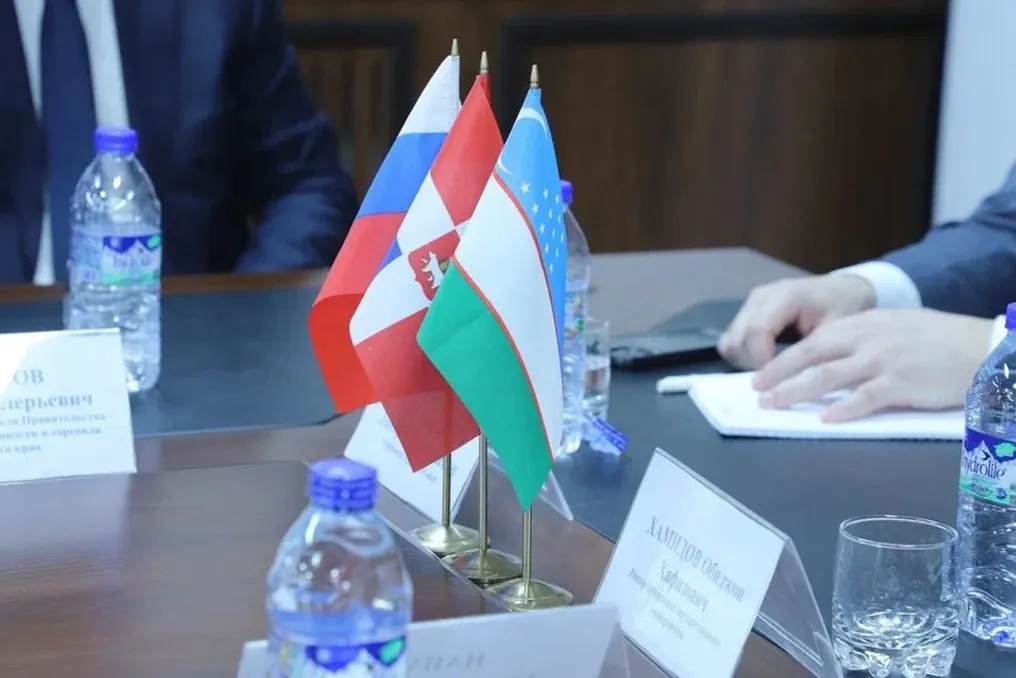
The Perm Regional Branch of 'Delovaya Rossiya' organized a business mission to Uzbekistan, which took place from October 19 to 23, 2026. The trip route included Perm, Tashkent, and Samarkand. Initial results have already appeared: a business dialogue 'Perm – Uzbekistan' took place in Tashkent over two days, during which a memorandum of cooperation was signed, and Uzbek representatives were invited on a reciprocal visit to Perm. This is reported by the Telegram channel of the Perm branch of 'Delovaya Rossiya.'

According to the organizers, after the official part, participants exchanged contact details, and some have already agreed on further negotiations. Requests from companies were considered at the Chamber of Commerce and Industry of Uzbekistan, and a decision was made to exchange commercial proposals. On the second day, the delegation visited a large Central Asia Technopark where various products are manufactured—from household appliances to elevators, escalators, and industrial equipment. Such trips open opportunities to familiarize oneself with the Uzbek market, negotiate with potential partners, and study prospects for business interaction.

The next opportunity for direct communication between producers and potential buyers will be presented at the international agro-industrial exhibition AgroExpo Uzbekistan 2026. The event is scheduled for November 25–27 at the Uzexpo Center National Exhibition Complex in Tashkent and is dedicated to animal husbandry, horticulture, crop cultivation, and agricultural machinery. Organizers have ensured visitor registration, the possibility of renting exhibition stands, and a business program.

The exhibition can be useful for Uzbek agricultural holdings, farmers, and processing enterprises, as they can study producer offers, compare equipment technical specifications, discuss supply and service conditions. According to the press service of the Russian Trade Representation in Uzbekistan, companies such as Rostselmash, Tenzo-M Weighing Company, and Yaroslavich PC, as well as a collective exhibition of Perm Krai, will be represented at the exhibition. The Perm stand will showcase agricultural machinery, loaders, attachments, and veterinary drugs. The program also includes the IX International Poultry Forum, the III National Farmers Forum, and a livestock auction.

Participation in such industry events helps companies find partners for long-term cooperation, whether it is the supply of finished products, equipment localization, or the creation of joint production facilities.

Cooperation between Uzbekistan and Russia goes beyond simple trade exchange, including industrial projects, technology exchange, personnel training, and the development of educational ties. Shavkat Mirziyoyev specifically emphasized the importance of forming industrial chains, localizing production, and expanding interregional ties at the PMI Forum, naming energy, chemistry, mechanical engineering, logistics, textile industry, and agriculture as priority areas.

For the Uzbek economy, this interaction opens up prospects for enterprise modernization, expansion of domestic production, and increase in export supplies. In turn, for Russian regions, Uzbekistan serves as a market with growing demand for engineering solutions, agrotechnologies, and industrial equipment. Nevertheless, developing ties with Russia remains part of Uzbekistan's multi-vector foreign economic policy, allowing businesses to choose partners based on needs, commercial terms, and technological capabilities.

The example of Perm Krai demonstrates how important regional ties are in this process. Exhibitions, business missions, and direct negotiations form the basis for future cooperation, and its actual results will depend on the successful implementation of specific agreements between enterprises of both countries.

Forecast: Indian Real Estate Market to Reach $1 Trillion by 2030; Analysis of Investment Opportunities
Read more
www.aajtak.in

Forecast: Indian Real Estate Market to Reach $1 Trillion by 2030; Analysis of Investment Opportunities

The Indian real estate market is poised for significant growth in the coming years. According to a new report by ANAROCK and FICCI titled 'The Changing Landscape of Real Estate Investment,' the value of the Indian real estate market was $600 billion in 2025. It is projected that this figure will increase to $1 trillion by 2030 and could reach $5.8 trillion by 2047.

The report also highlights shifts in investment models. The accelerating role of both foreign and domestic funds is noted. Furthermore, a significant portion of investments is now directed towards assets such as data centers, office buildings, logistics complexes, and other commercial properties.

Over the last two decades, Indian real estate has weathered several major economic and political upheavals. These include the global financial crisis of 2008–2009, a period of political stagnation from 2011 to 2013, the abolition of money printing (notti), changes in RERA and GST, the NBFC crisis in 2018–2019, the coronavirus pandemic, and rising interest rates in 2022–2023.

According to ANAROCK, private equity (PE) investments in real estate fell to $1.1 billion in 2009. Following this, they rose to $7.7 billion in 2017. In 2025, the volume of PE investments stood at $6.9 billion, and in the first nine months of 2026 alone, $6.1 billion in PE investments flowed into the sector, encompassing 55 deals. Of these, $2.5 billion was invested in data centers, and $1.7 billion in office real estate.

Growth in Domestic Fund Contribution

The most significant finding in the report is the increasing role of local investors. In 2020, Indian domestic funds channeled $0.4 billion in PE investments into real estate. By 2025, this amount grew to $1.8 billion. Moreover, in the first nine months of 2026, domestic fund investments reached $2.6 billion, representing an increase of approximately 6.4 times compared to 2020. During this period, the share of domestic funds in the total volume of PE investments was about 42 percent. It is noted that between 2021 and 2025, the average annual growth of foreign PE investments was around 19 percent, indicating that both foreign and domestic capital are vital sources of investment in Indian real estate.

Strong Position of Mumbai and Growth of Deals in Tier-2 Cities

According to the ANAROCK report, from 2021 to 2025, the Mumbai Metropolitan Region (MMR) accounted for 49 percent of the total value of PE investments, while Bangalore held 18 percent. Conversely, the number of deals in tier-2 cities has increased. If 11 PE deals were concluded in these cities from 2016 to 2020, the number rose to 20 from 2021 to 2025. The investment area expanded from 8 to 12 cities. Nevertheless, the share of tier-2 cities in the total value of PE investments remains small—only 3–4 percent, suggesting the dominance of major cities, although the growth potential in smaller towns is increasing. The report also shows that in the first half of 2026, 45 percent of new rooms allocated for branded hotels were located in tier-3 and tier-4 cities, indicating the growing importance of smaller towns in the hospitality and restaurant business.

Growing Investor Interest in Data Centers and Logistics

The investment focus in Indian real estate is also transforming. Investors are no longer limited to residential and office properties; institutional capital is actively being directed towards sectors such as data centers, warehouses, and logistics. According to the report, the share of industrial and logistics sectors in the total volume of PE investments from 2021 to September 2026 was 11.5 percent of the total $33.5 billion. The share of data centers was 9.2 percent. This is significantly higher than the combined share of these two sectors, which was 3.4 percent from 2013 to 2020. Meanwhile, the share of residential real estate decreased from 34 percent during the 2013–2020 period to 21 percent from 2021 to September 2026. However, the decline in the share of PE investments in the residential sector does not imply a drop in housing demand; rather, the sources of financing in the residential sector are changing, driven by the increased role of domestic funds and other financial mechanisms.

Total Value of Under-Construction Real Estate is $503 Billion

According to the ANAROCK report, the total value of under-construction real estate in India was estimated at $503 billion in 2025. Of this amount, $430 billion was allocated to residential real estate, accounting for about 85 percent of the total. The value of commercial real estate was $73 billion. It was noted that the total value of real estate under construction grew from $267 billion in 2019 to $503 billion in 2025. Furthermore, the report forecasts that the real estate sector's contribution to India's GDP may rise from approximately 6 percent in 2017 to 13 percent by 2030.

Future Investment Opportunities

The report's assessment suggests that in the coming years, the role of domestic capital in real estate investments will continue to grow, particularly in areas such as data centers, logistics, hotels, and other fields.

Reportage Group and Sabah Investment Group Present Sea Breeze Projects and Investment Opportunities in Azerbaijan
Read more
www.khaleejtimes.com

Reportage Group and Sabah Investment Group Present Sea Breeze Projects and Investment Opportunities in Azerbaijan

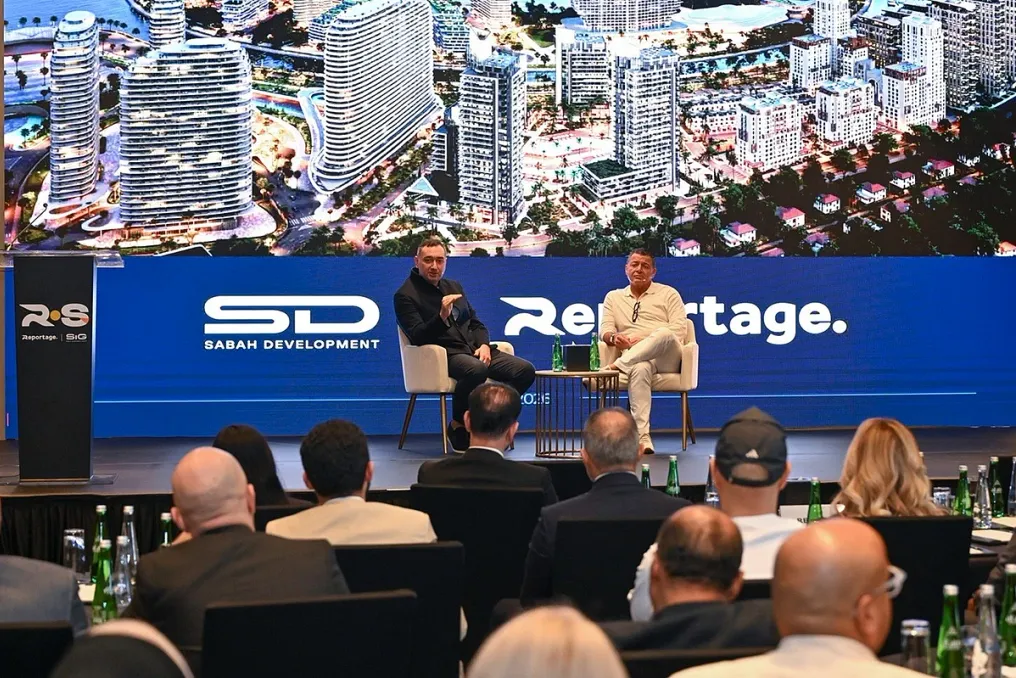
Reportage Group continued to expand its international presence through a strategic partnership with Sabah Investment Group. Both companies held an event in Abu Dhabi to showcase four projects within the Sea Breeze complex—an integrated residential and resort development on the Caspian coast near Baku, Azerbaijan.

The event gathered sales department representatives, media, and guests. It highlighted Azerbaijan's significance in Reportage Group's international growth strategy and demonstrated how these projects fit into the overall Sea Breeze concept.

During the event, the following projects were presented: Reportage Heights, Panorama by Elie Saab, Arabian Ranches Baku, and Brabus Island. Their master plans, key features, and positioning within the entire complex were detailed. Furthermore, participants gained deeper insight into the Azerbaijani real estate market and investment opportunities in Sea Breeze, including offerings in housing, tourism, and leisure.

Each of the four projects offers a unique residential concept within Sea Breeze, tailored to different buyer preferences and lifestyles. Reportage Heights features modern waterfront apartments with panoramic sea views, spacious terraces, and recreation areas. Panorama by ELIE SAAB presents branded residences with interiors designed by ELIE SAAB Maison, reflecting the fashion house's signature style.

Arabian Ranches Baku offers apartments and townhouses designed for family life and resort amenities, inspired by Eastern architecture. Meanwhile, BRABUS Island Baku will introduce the distinctive design of the German brand to the Caspian coast through a collection of villas and waterfront homes.

Andrea Nucera, Managing Director of Reportage Group, stated that the company's approach to international growth involves identifying markets where it can implement projects that meet local demand and create long-term value. She noted that Sea Breeze combines housing, tourism, and leisure in one place, offering a diverse portfolio to satisfy the needs of various buyers. Through collaboration with Sabah Investment Group, they are applying this approach in Azerbaijan, combining their development expertise with an understanding of the local market to create unique projects in Sea Breeze.

Orkhan Mustafaev, Founder and Chairman of Sabah Investment Group, emphasized that their joint work reflects a common goal: to contribute to the Azerbaijani real estate sector and enhance Sea Breeze's appeal as a place to live, visit, and invest. He added that by combining projects with different types of real estate, characteristics, and leisure offerings, they aim to provide buyers with a wide range of options within a single integrated development.

The Sea Breeze complex is located on the Caspian Sea coast, approximately a thirty-minute drive from downtown Baku, and spans an area of about 500 hectares. More than three million square meters of residential and commercial space have already been built within the development, housing over 20,000 people.

Sea Breeze, founded by businessman Emin Agalarov, is developing as an integrated community combining residential and tourist accommodation facilities with commercial and entertainment zones. The master plan, developed by the British firm Scott Brownrigg, covers an 18-kilometer stretch of coastline, with all phases scheduled for completion by 2035.

Popular