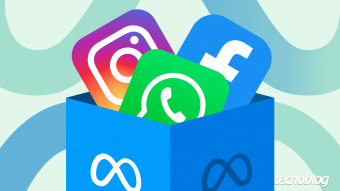
The Meta Account functions as a management hub that consolidates aspects of security, privacy, and preferences across the entire suite of products from the large technology company. This unification aims to facilitate information control and streamline the integrated login process between the various digital platforms.
Although it organizes tools, using this Meta Account is not mandatory to access Instagram or Facebook, as these maintain their autonomous access. WhatsApp operates separately, and deeper integration is directed towards specific devices, such as the Meta Quest and Meta AI.
The Meta Account is essentially an authentication point that unites access to the entire company ecosystem, covering networks like Instagram, Facebook, Threads, and Meta Quest. With this single login, the user manages security and privacy in a centralized panel, simplifying the experience across all interconnected services.
Meta has updated its Accounts Center to keep pace with the expansion of its ecosystem, which now includes platforms like Threads and Meta AI. This unification eliminates the need for fragmented access, allowing users to manage passwords, payments, and advertising preferences in one place.
This update incorporates features such as access keys to strengthen data protection and complies with European Union regulatory guidelines. Thus, Meta adheres to digital privacy laws, offering the user the freedom to integrate or keep their accounts separate.
It is important to note that using the Meta Account is not required for conventional social media; it is possible to access Instagram or Facebook accounts using individual credentials. The requirement for this unified environment is limited to specific services and devices, such as Meta Quest and Meta AI.
However, starting in 2026, accounts grouped in the same Accounts Center will automatically have cross-access by default. Therefore, linking remains optional, but attention to settings is required if the user wishes to keep their profiles completely isolated.
The Meta Account does not merge profiles into one, but rather reorganizes the administration of security and privacy for Facebook, Instagram, and WhatsApp. The system concentrates control in a digital panel, providing greater convenience without nullifying the identity of each social network.
The access key is a login mechanism that uses the device's own biometrics or PIN to validate access to Facebook or Instagram. This method creates encrypted keys that protect the user against phishing attacks, without biometric data being stored on Meta's servers.
This technology, which is entirely optional, speeds up secure access and allows traditional passwords to remain as a recovery alternative. Additionally, each credential is specific to the service, not a universal key shared across all Meta products.
Creating a unified Meta password does not automatically deactivate previously used login data. Old credentials remain valid on Facebook and Instagram until a manual change is made.
Furthermore, applications like WhatsApp maintain independent authentication and are outside this unified system. Thus, the previous password remains a security option, coexisting with more modern solutions, such as the access key.
It is possible to choose not to use the Meta Account to access social networks such as Facebook, Instagram, Messenger, and Threads, maintaining individual logins. The obligation of this unified Meta ecosystem applies only to specific services and devices of the brand, such as Meta Quest and Meta AI.
If accesses are already connected, the user has the option to add or update an account in the Meta Accounts Center at any time. This flexible management ensures autonomy to isolate each platform, preserving individual control over privacy.