
Meta raises Artificial Intelligence spending projection to R$ 783 billion after revenue grows 26%
Read more
Olhar Digital
olhardigital.com.br

Meta raises Artificial Intelligence spending projection to R$ 783 billion after revenue grows 26%

Meta raised its minimum investment estimate for 2026 and announced a new class of non-voting shares when presenting its third-quarter results this Wednesday (21). The company, owner of Facebook, Instagram, Threads, and WhatsApp, reported revenue of US$ 64.6 billion (approximately R$ 349 billion), representing a 26% increase compared to the same period last year. However, profit was affected by a substantial legal expense resulting from an agreement related to damages on its platforms.

Currently, the company projects spending between US$ 135 billion and US$ 145 billion (equivalent to about R$ 729 billion to R$ 783 billion) on capital investments throughout 2026. Previously, the initial forecast was US$ 130 billion (about R$ 702 billion), keeping the upper limit at US$ 145 billion.

These figures confirm CEO Mark Zuckerberg's focus on artificial intelligence (AI) infrastructure, covering data centers, chips, and computing capacity. Simultaneously, Meta is looking for ways to increase funding for this expansion without compromising executive share control.

The increase in projected spending occurs amid competition among large technology corporations to build the necessary infrastructure to train and operate advanced AI models. In the third quarter, Meta's capital investments totaled US$ 34.91 billion (about R$ 188.5 billion), surpassing the US$ 31.08 billion (about R$ 168 billion) recorded in the previous quarter.

This expansion demands computational resources, such as chips and data centers, essential for developing models and offering large-scale AI services. Despite this, the pace of these investments has put pressure on the company's cash flow, which registered a negative free cash flow of US$ 2.2 billion (about R$ 11.9 billion) in the quarter.

This scenario justifies the company's search for new funding sources. Although the advertising sector continues to grow, building AI infrastructure requires high outlays before all these investments translate into additional revenue.

Additionally, Meta announced plans to launch a new class of non-voting shares starting in January 2027. This measure aims to aid in financing acquisitions and attracting specialized talent without altering Zuckerberg's dominance over business decisions. The structure allows for raising funds or using shares in corporate operations without necessarily increasing the voting power of new shareholders.

This initiative comes at a time when Meta needs to compete with other companies, such as OpenAI and Anthropic, in developing AI models and agents. The launch of the Muse personal assistant and a new generation of proprietary models has supported this bet on AI. However, how to monetize these initiatives and the ability to convert investments into sustainable growth remain crucial points for the business.

Even with advances in AI investments, advertising remains Meta's main source of revenue. The company uses AI to refine ad targeting and content suggestions, aiming to increase user engagement and optimize results for advertisers. In the short-form video segment, Reels competes with TikTok and YouTube Shorts, while Threads competes with X, owned by Elon Musk. These services keep advertising activity at the core of the company's strategy while it develops new potential revenue streams linked to AI.

In summary, the quarterly results indicate a company that continues to increase its revenue but channels progressively larger amounts of resources into technological infrastructure. The challenge lies in proving that this investment can generate sufficient returns to cover the growing cost of the AI race.

Similar stories

Anthropic reports R$ 84.7 billion revenue in quarter before IPO
Read more
olhardigital.com.br

Anthropic reports R$ 84.7 billion revenue in quarter before IPO

Anthropic, the creator of the Claude chatbot, disclosed that it generated US$ 16.8 billion in revenue, equivalent to approximately R$ 84.7 billion, in the third quarter of 2026. This figure represents a significant increase of 45% compared to the US$ 11.6 billion (R$ 58.5 billion) recorded in the immediately preceding quarter. This data was presented at a meeting with investors interested in the company's future public offering, as reported by Reuters on Wednesday (14).

The quarterly results demonstrate the accelerated expansion of the artificial intelligence (AI) segment, driven by the growing demand for the company's models and services. Furthermore, Anthropic announced that it achieved profitability in its adjusted base during the third quarter, information confirmed by an investor present at the meeting.

Anthropic's rapid growth demands substantial investments in infrastructure, such as chips, data centers, and computational capacity, which are essential for training and operating AI systems. In the previous year, the company's revenue grew by about twelve times, totaling nearly US$ 4.6 billion (R$ 23.2 billion). Despite this advance, the company reported an operating loss exceeding US$ 8 billion (R$ 40.4 billion), excluding accounting write-downs primarily related to liabilities from previous funding rounds, according to prior Reuters reports.

Additionally, Anthropic has secured commitments of at least US$ 518 billion (about R$ 2.6 trillion) over ten years to provide computing, infrastructure, and cloud services. While these contracts secure the necessary resources for expansion, they also underscore the large volume of capital required to compete in this sector.

The company seeks to prove that the revenue growth rate will be capable of covering these costs in the long term. The adjusted profit disclosed for the third quarter is seen as an important indicator in this strategy, although it does not guarantee sustainable profitability on its own.

More information about Anthropic

Founded by former OpenAI executives, Anthropic has established itself as one of the leading developers of generative AI with its Claude model line. The company's expansion is supported by Google, which is owned by Alphabet, and Amazon. Both corporations invest in Anthropic, providing computational power and acting as partners in distributing its services, despite competing in the AI market.

This dynamic reflects the current scenario in the sector, where technology giants fund model developers while simultaneously competing for customers, infrastructure, and market share. Beyond financial results, Anthropic differentiates itself through its stated focus on AI safety. The company has issued warnings about the inherent risks of increasingly advanced systems, even as it accelerates the commercialization of its models.

Internal research by the company itself detected worrying patterns in AI agents during tests, including the leakage of confidential data and code sabotage. However, Anthropic stated that it had not found such behaviors in real implementations. This safety stance is part of the company's effort to persuade investors that it can grow without neglecting the dangers associated with the technology.

The future capital opening will subject Anthropic's ability to sustain growth, manage billion-dollar infrastructure commitments, and prove that revenue generated by AI models can make the business viable in the long term to public scrutiny.

Meta Stock Rises by 30% in September 2026: Factors and Prospects for Further Development
Read more
nuz.uz

Meta Stock Rises by 30% in September 2026: Factors and Prospects for Further Development

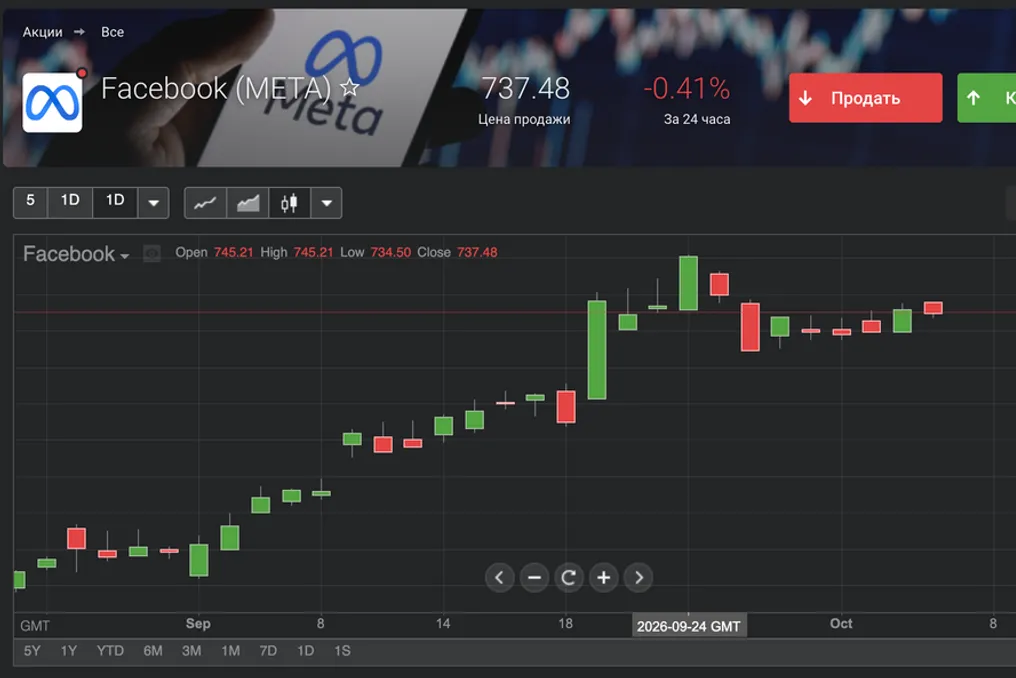
Shares of Meta Platforms, which owns services such as Facebook, Instagram, and WhatsApp, demonstrated significant growth in September 2026, becoming one of the leading players in the American technology market. At the beginning of the month, the value of these stocks was approximately $558, but by September 30th, they increased by 30%, reaching the mark of $725.18.

Investors were interested in the reasons for this rise and the opportunities for income from further growth. One of the long-term questions for investors was whether Meta's massive investments in artificial intelligence would pay off. The company plans to increase capital expenditures in 2026, including the construction of data centers and the development of computing infrastructure, to the level of $130–$145 billion.

A significant stimulus for the increase in stock price was the introduction of Muse—a new AI agent—by the company at the beginning of September. Unlike standard chatbots, Muse is capable not only of answering queries but also of performing practical tasks such as managing email, booking travel, filling out forms, and taking actions online. Both free and paid versions are available to users at a cost of $20 and $100 per month.

This product became a key driver of growth because the market stopped viewing artificial intelligence solely as a tool for optimizing advertising and recommendation systems. Now there is a prospect of creating a separate multi-billion dollar business based on an AI assistant. Within the first twelve days after the launch of Muse in the US and Canada, 2.8 million downloads were registered. Analysts from JPMorgan noted the high initial demand and Meta's potential competitive advantage due to its extensive user base.

In parallel, the company's core business maintains high profitability and continues to grow revenue. In the second quarter of 2026, Meta earned $60.8 billion, which is 28% higher than the previous year. Meanwhile, the number of ad impressions increased by 14%, and the average cost of advertising increased by 12%, leading to a 27% growth in advertising revenue.

An additional catalyst was the Meta Connect event in September. At it, the company showcased a new line of AI glasses and announced the integration of Muse into these glasses, allowing users to interact with the AI agent without using a smartphone. Furthermore, new VR glasses and related devices for working with Muse were presented. Based on these events, analysts began revising target prices; for example, Wells Fargo raised its forecast for Meta from $640 to $796.

Thus, if an investor had purchased Meta shares worth $1000 at the beginning of September at a price of about $557, they would have made a profit of 30% by the end of the month. Applying a conservative multiplier of x3, the expected return would be $900.

Future growth of the company's shares will depend more on Meta's ability to convincingly demonstrate that AI implementation can indeed bring the company additional billions in revenue. Nevertheless, given the current investor sentiment and analyst forecasts, the growth trend is expected to continue.

The opportunity to earn from the growth of Meta shares and other global companies is provided through the Forex Club trading platform. To get started, you need to register on the Forex Club website, top up your account, and choose a suitable instrument. If the investor expects prices to rise, they should click the 'Buy' button, and if they predict a decline, 'Sell'. After choosing the direction, all that remains is to wait for profits and close the deal. You can master the principles of sound investing without risking capital using a free demo account, which offers virtual collateral of $50,000. Switching to a real account to receive actual profits takes just one click. You can track Meta's dynamics, analyze market events, and find new trading opportunities together with Forex Club.

Popular