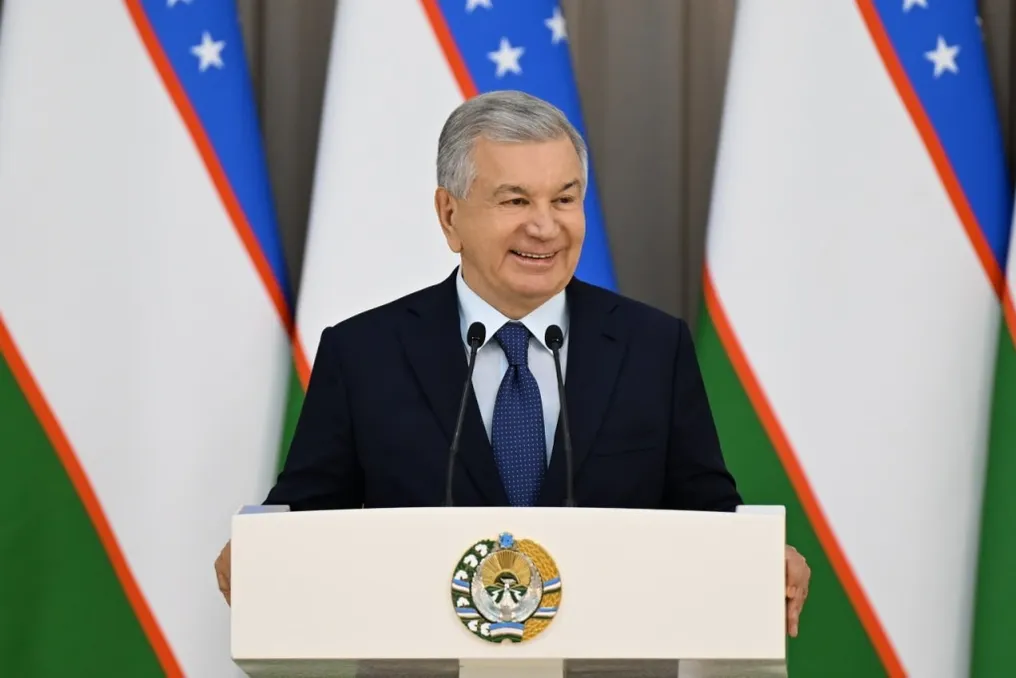
President Shavkat Mirziyoyev, in his congratulatory message on the Day of the Uzbek Language, observed on October 21, outlined a number of tasks related to the development of the language in the fields of education, science, and the digital environment.
He emphasized the need to improve the quality of educational materials, increase the availability of scientific literature in the Uzbek language, and perfect speech recognition and translation systems.
Approaches to Teaching and Literacy
In his address, the president stressed the importance of considering the differences between learning the language as a native tongue and as a state language when developing educational programs and textbooks. Among the priority areas, he highlighted the development of skills in correct writing, text comprehension, and reading among schoolchildren.
Furthermore, Mirziyoyev pointed to the need to increase the accessibility of the language in daily life. He noted that government documents, instructions, and responses to citizens' inquiries must be drafted clearly and correctly so that citizens can easily navigate their rights and obligations.
Development of Science and Digital Tools
In the field of science, it is proposed to expand access to high-quality sources and ensure their translation into the Uzbek language, including disciplines such as medicine, engineering, and economics. Achieving this goal requires the joint work of scientists, language specialists, and translators, as well as the development of terminology and the creation of specialized dictionaries.
The development of digital tools for the Uzbek language was also raised, such as editing programs, electronic dictionaries, translation systems, and text-to-speech and speech-to-text technologies. When creating such solutions, the president believes that copyright must be respected, personal data must be protected, and the needs of people with disabilities must be taken into account.
Mirziyoyev particularly emphasized the significance of supporting those who study Uzbek as a state language and called for increasing opportunities for its study outside the country. As an example of international cooperation, he cited the Uzbek Studies program implemented at Oxford University.