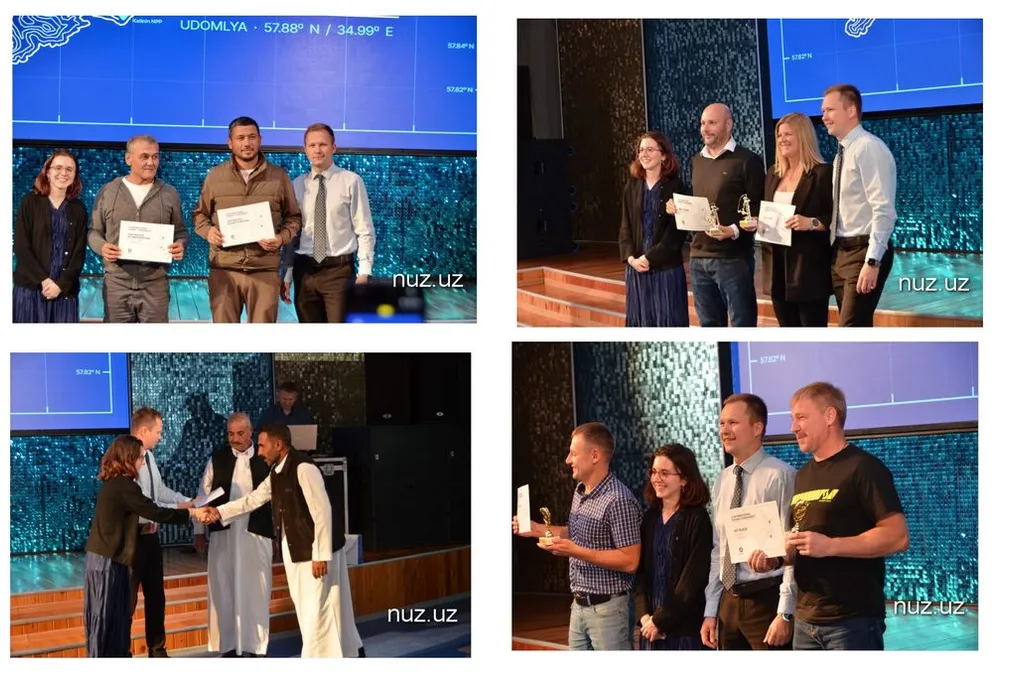
At the end of September, the fourth International Fishing Tournament took place on Lake Udomlya, located in the Udomlya municipal district of the Tver region. The event was organized by the state corporation Rosatom.
This tournament is rare for this region, and participants were able to experience the competitive spirit of amateur sportsmen from various countries. A distinctive feature of tournaments under the auspices of Rosatom is the absence of traditional prizes such as medals or cash payments; instead, the winning team is determined in the categories of 'Largest Fish,' 'Biggest Catch,' and 'Spirit of Victory.' An important aspect of the format is that the caught fish are always returned to the water body after weighing and measuring.
This approach is considered more democratic because attention is paid not only to the winner but also to the contribution of each team. This contributes to creating a trusting and friendly atmosphere, which ultimately leads to rapprochement and mutual understanding between countries, emphasizing an educational mission rather than the pursuit of records.
Alexandra Yustus, Deputy General Director for Communications of the private institution Rosatom International Network, emphasized that this tournament has become one of Rosatom's key educational events. According to her, it allows to demonstrate the ecological nature of nuclear energy, showing that nuclear power plants not only do not harm the environment but also contribute to regional development. Such events also help Rosatom build a trusting dialogue with residents of countries beginning to implement their own nuclear projects.
The idea of holding such competitions originated during the construction of a nuclear power plant in Bangladesh. Local residents, whose lives depended on fishing, feared that the NPP would damage nature and fish. People protested against the construction of the NPP. In such conditions, explanations about the station's safety were ineffective, so it was decided to organize a trip for representatives of the fishing community to an operating NPP in China.
During the trip, they saw that fish near the operating station were caught well, and the infrastructure development related to the NPP's operation improved the economic situation in the region by expanding trade and catering. After communicating with local fishermen, who expressed satisfaction with the appearance of the NPP, they returned and began advocating for the construction of the nuclear power plant. Thus, the concept of regular international tournaments arose, inviting representatives from countries where Rosatom builds, plans to build, or where an NPP is already operating, so that fishermen could personally verify the favorable conditions for fish life near the stations.
22 amateur fishermen started, and 28 journalists and experts from 11 Rosatom partner countries participated, including Bangladesh, Belarus, Hungary, Vietnam, Egypt, India, Indonesia, Malaysia, Turkey, Uzbekistan, and South Africa.
The organizers ensured comfortable conditions: a tent with coffee, tea, and hot food was set up on the lake shore, and a portable toilet was available. A generator was running, which eliminated problems with charging equipment for journalists.
The first day was dedicated to training. Teams went out in boats to study the lake, fishing conditions, and select suitable bait for four permitted species of fish: catfish, pike, perch, and zander. Local fishermen acted as guide-captains, taking teams to places known to them. At the beginning of the day, the teams went out onto open water, while journalists waited for the signal. Despite the cool weather, participants from warm countries were equipped with windproof and waterproof clothing.
When the signal was given, journalists began searching for the teams, but thick fog made the task difficult, even with navigation instruments. Journalists from Uzbekistan ended up in a group with colleagues from Vietnam, and the Vietnamese fishermen were found relatively quickly, while the Uzbek journalists failed to contact their fishermen. The judging panel showed leniency and allowed the crew to go out onto the lake again, which allowed them to be captured on camera, although this required violating the 50-meter distance regulation.
After the training, the first day concluded with a cultural program: an excursion around Udomlya and a visit to the local history museum.
The second, competitive day began early in the morning. Fishermen received identification signs and conducted a draw. Oybek Zukhurov from Bukhara and Aziz Razhabov from Samarkand represented the team from Uzbekistan. After the briefing, the teams lined up in formation and began fishing.
The weather was initially cool and overcast, but by noon the fog lifted, revealing the beauty of Lake Udomlya. In the distance, the cooling towers of the Kalinin NPP were visible, next to which were dacha settlements, recreation areas, and fish farms. The water temperature sensor showed +23 degrees. The guide-captain explained that the lake does not freeze, and the constant fog is related to its function as a cooling water body for the NPP, while the water does not come into contact with the first and second circuits of the station. One Turkish fisherman noted that the water was no colder than in Antalya.
Teams, including journalists from South Africa, went out to find their groups. The teams from Turkey, Malaysia, and Hungary were found. The team from South Africa was quickly located and boasted about its catch. At the end of the lake, in the shallows, the Uzbek fishermen were found, where the guide-captain slowly steered the boat using a mini-motor. After the fishing time ended, the teams returned to base, submitting protocols to the judging panel.
The final stage was the radiation control of part of the caught fish by specialists from the Kalinin NPP. Andrey Danilkin, Head of the Environmental Protection Department of the KNPP, commented that the ecological condition of the region where the Kalinin NPP is located is assessed as sound.