For the first time in Uzbekistan's history, the Aral Ultra race was held in Karakalpakstan over a distance of 100 kilometers. From October 1 to 3, participants traversed the territory of the Aral Sea region, and correspondents from Podrobno.uz covered the first ultra-marathon of the Samarkand Marathon series.
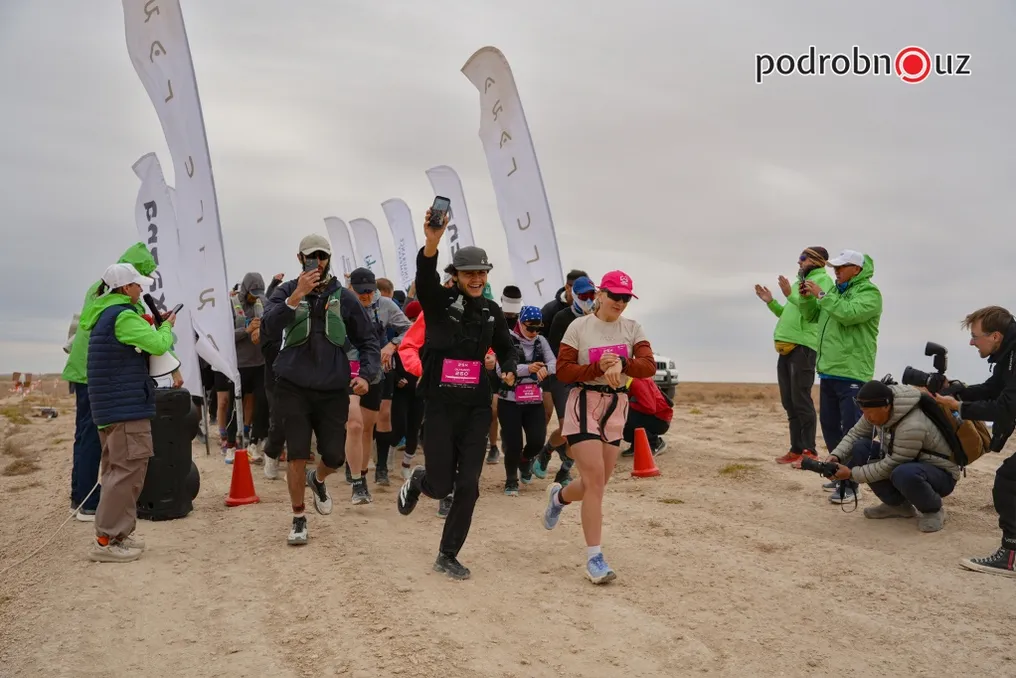
The main race started on October 3 at four in the morning, while darkness still lingered over the Ustyurt Plateau. Participants in the hundred-kilometer distance were scheduled to cross the plateau and reach the shore of the Aral Sea. Throughout the entire route, strong wind and cold were felt, and light rain fell in the middle and near the end of the race, but the runners continued moving.
Other distances started later that same day: the 50-kilometer race began at 11:00, the 25-kilometer race at 15:00, and the 15-kilometer race at 16:30. Despite the difference in start times, the finish line for all participants was unified—at the water's edge. This line constantly shifts with the receding sea, which is the basis of the event's concept, which organizers named the 'race to the disappearing sea.'
Qualification was required to participate in the hundred-kilometer distance; for example, finishing the 50-kilometer race at Zaamin Ultra 2026 within seven hours.
Results Among Participants
Among the men in the 100-kilometer distance, Nurziyad Begaliev won with a time of 09:54:19. Shokhrukh Karimov took second place (10:19:13), and Galym Chuashev came third (10:35:33). Among the women, Irina Masanova won (10:57:18), followed by Shirin Yusupova (11:56:44) and Valeria Mitrokhina (13:53:45).
Many of the prize winners had previously achieved good results in the June Zaamin Ultra, which took place in the Zaamin National Nature Park. For instance, Begaliev, who holds the record for the Zaamin course in 50 kilometers, won the hundred kilometers in the Aral, and Yusupova, the winner of the Zaamin 50 kilometers, took second place.
In the 15-kilometer distance, Nigora Tajibaeva and Alexander Zhiltsov repeated the results achieved on the Zaamin course, taking first and second place, respectively. Shokhrukh Khujamshukurov, the record holder for the Zaamin course in 5 kilometers, won the 15-kilometer race in the Aral.
In the 50-kilometer distance, the leaders were Alexey Kozlov (04:44:06) and Elena Dubinina (04:50:01). In the 25-kilometer race, Daniil Sorokin (02:10:20) and Valeria Korchashko (02:22:07) won. In the 15-kilometer race, Shokhrukh Khujamshukurov (01:00:31) and Nigora Tajibaeva (01:13:19) finished first.
In total, 757 people participated in the Aral Ultra program, of whom 36% were women. Participants came from 13 different countries, including Russia, Japan, Kazakhstan, Kyrgyzstan, and Great Britain. The average age of runners in the hundred-kilometer distance was 36 years old.
Events in Nukus
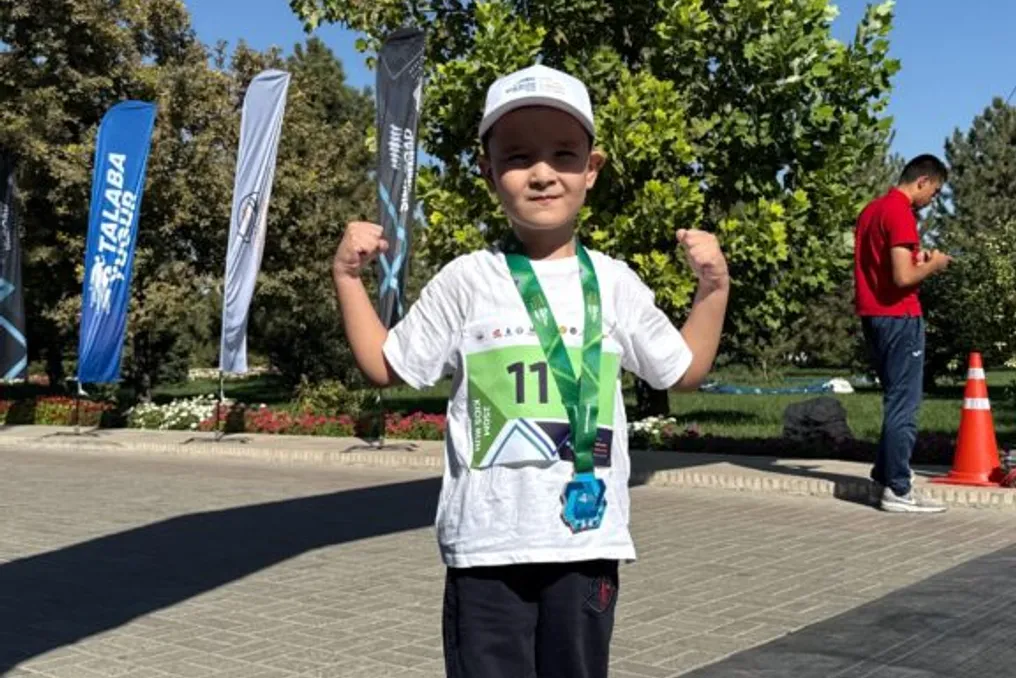
The activity was not limited to the desert. On October 1, an open program was organized in the city of Nukus, accessible to anyone regardless of fitness level. 333 people participated in the 2-kilometer race, and 94 children took part in the Kids Run races. Additionally, running tours of the city and a plogging event, which involved collecting trash while running, were held.
The program in Nukus was supplemented by the Aral Ultra lecture series, which took place at the I. V. Savitsky Museum.
Infrastructure and Prospects
Organizers have already announced the continuation of the series. Mirkhan Sagitov, curator of the Samarkand Marathon races, stated that Aral Ultra is planned to be held annually. Next year, the route will be slightly changed, and the finish location will be different.
A pier was built on the shore for the current race. Previously, tourists could visit the finish area but lacked a comfortable and safe way to approach the water. This pier will remain accessible to local residents and tourists, and organizers plan to improve the infrastructure around the new finish location before the next event.
Significance for the Region
Such events contribute not only to achieving sporting results but also draw public attention to the problems of the Aral Sea, increasing the international profile of Karakalpakstan and providing a reason for tourist travel.
The Fund for the Development of Culture and Arts of Uzbekistan, which organizes the series, has been actively working in the region for a long time. In 2025, the Aral Cultural Summit was held in Nukus, and Aral Ultra continues this trend by integrating sports into the cultural program.
The Samarkand Marathon series adheres to the sustainable development principles recommended by World Athletics, and all collected funds are directed towards building children's sports playgrounds in the host cities. Aral Ultra is included in the calendar of the International Trail Running Association (ITRA), confirming its professional recognition, as participants received points for the distances covered. The next stage of the Samarkand Marathon series is scheduled for November 7–8.