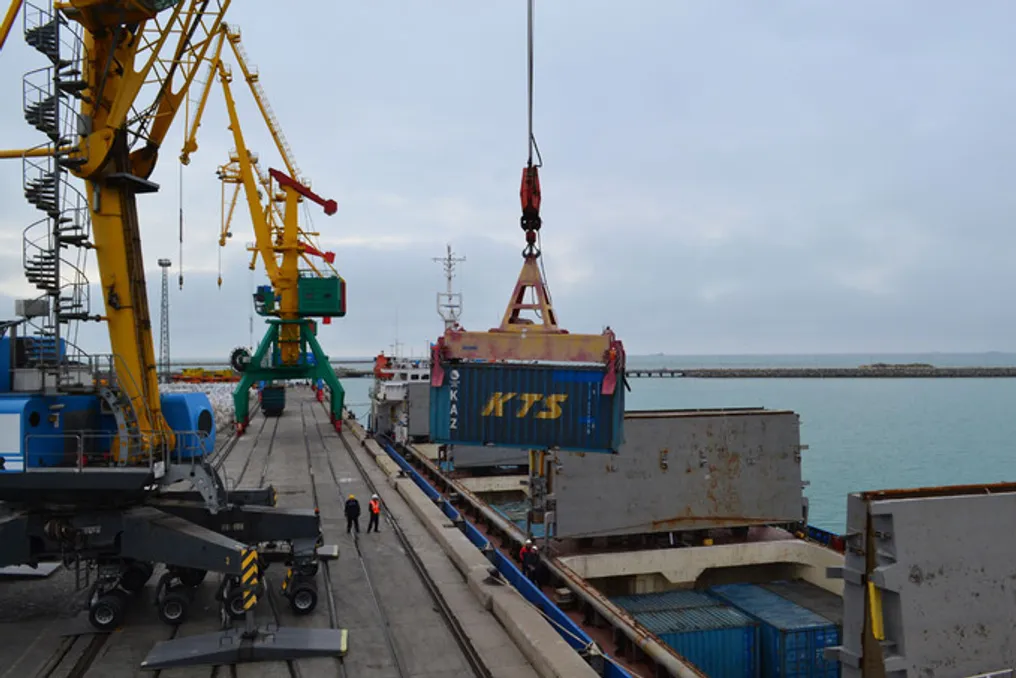
For the second time, the National Conference dedicated to the Trans-Caspian Transport Corridor (TCTC) was held in Tashkent. The event gathered delegates from the government of Uzbekistan, the European Commission, as well as national and international partners. The main goal of the meeting was to discuss infrastructure priorities, prepare projects, and define practical steps to increase the overall efficiency of the Corridor.
The conference took place within the framework of the TCTC Coordination Platform, which is financed by the European Union. This platform unites five Central Asian countries, the EU, international financial institutions, and other partners. Their joint work aims to coordinate investments and reforms, which will transform the Corridor into a reliable, fast, and safe transport link between Asia and Europe.
The Minister of Transport of Uzbekistan, Ilham Makhomov, emphasized the critical importance of international transit corridors for Uzbekistan, noting that his country is one of only two in the world without direct access to the open sea. He stated that since transport costs account for a significant portion of product cost, resolving logistical issues is a priority. Makhomov also mentioned that Uzbekistan is implementing major projects with the European Union to protect national interests.
The joint activities of Uzbekistan and the EU in this area have moved from the planning stage to practical implementation, facilitated by the formation of a specific project portfolio, improved intergovernmental coordination, and attracting funds. Special attention at the conference was paid to identifying key nodes in Uzbekistan's transport system and finding ways to improve them.
The possibility of receiving support from the EU and international financial institutions to mobilize investments, finance projects, and provide technical assistance was discussed. Key areas highlighted include the modernization of railway and road infrastructure, the development of logistics centers, and the creation of a unified digital transport system in both Uzbekistan and the region.
Peter Ustups, Director for Asia, Central Asia, and the Pacific Region of the EU, stressed the need to view the corridor as an integrated system covering not only Uzbekistan and Kazakhstan but also the states of the South Caucasus. He noted that it is vital to ensure the maximum efficiency of all procedures along the entire route.
To accelerate cargo movement and increase the Corridor's attractiveness to investors, documentation needs to be digitized and customs procedures standardized. Furthermore, Ustups emphasized the importance of ensuring the predictability of TCTC operations so that transport and logistics companies know how long transportation will take and how cargo movement will be organized. He added that further close cooperation with partners, the government, and financial institutions is necessary to implement remaining infrastructure projects.
Representatives of the private sector, state bodies, and international financial institutions participated in the event. The conference was co-chaired by the Ministry of Transport of the Republic of Uzbekistan and the Directorate-General of the European Commission for International Partnerships.