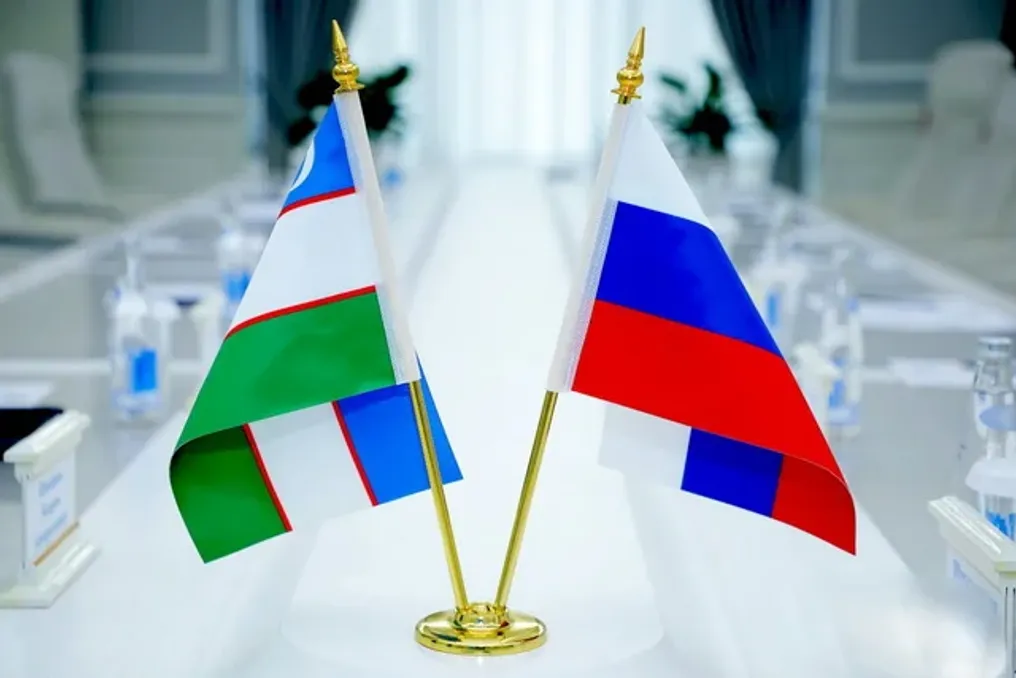
The second and third stages of the cultural and educational project 'Russian Language: Reading, Listening, Viewing' will take place in Tashkent and Bukhara from September 29 to October 8, 2026. This program will combine exhibitions, concerts, museum initiatives, and educational events implemented with the support of the Ministry of Culture of Russia.
The main goal of the project is to strengthen cultural and humanitarian cooperation between Russia and Uzbekistan. The program combines Russian language teaching classes with literary, musical, and museum events, allowing participants to familiarize themselves with Russian cultural heritage and common cultural themes of Central Asia and Russia.
The project is planned in three stages in 2026; previously, events were held in Dushanbe in April, and Tashkent and Bukhara are hosting the program in September and October.
The Uzbek part of the project is organized by the Center for Film Festivals and International Programs together with the All-Russian Museum of Decorative Arts, the State Central Museum of Modern History of Russia, and the company KinoFocus. State educational and cultural institutions of Uzbekistan also participate in the program. Events in Tashkent are held with the assistance of the Uzbekistan Fund for the Development of Culture and Arts.
On September 29 at 13:00 at the Russian House in Tashkent, managed by Rossotrudnichestvo at Yunus Rajabi Street, 63, a master class titled 'Psychology and Neurodidactics of Learning: How to Motivate Students to Study Russian and Use a Lesson as Effectively as Possible' will take place. This session will be led by Elizaveta Khamraeva, Head of the Department of Linguodidactics of Russian as a Foreign Language and Bilingualism at the Institute of Philology of Moscow State Pedagogical University, Doctor of Pedagogical Sciences and Professor.
On September 30 at 11:30 at the Tashkent branch of Herzen Russian State Pedagogical University at Bobur Street, 55, the master class 'Eastern Motifs in Russian Literature and Culture' will be held. The session will be conducted by Liliya Kovtun, Associate Professor at the Department of Linguodidactics of Russian as a Foreign Language and Bilingualism at the Institute of Philology of Moscow State Pedagogical University, Candidate of Cultural Studies and Associate Professor. Before this event, the university will open the exhibition 'Harmony of Knowledge' from the collection of the State Central Museum of Modern History of Russia.
Later that same day, at 16:00, the State Museum of Applied Arts and Crafts of Uzbekistan at Rakatboshi Street, 15, will present the exhibition 'Russian Literature in Lacquer Miniatures'. The exhibition is based on the collection of the All-Russian Museum of Decorative Arts and will be presented by the museum director Tatyana Rybkina. The opening also includes the signing of a 'Memorandum of Understanding and Cooperation' between Russian and Uzbek museums, which will serve as the basis for further professional exchange and joint cultural projects.
Russian participants will also free transfer a number of materials and exhibits to their Uzbek colleagues. The State Museum of Applied Arts and Crafts of Uzbekistan will receive a certificate confirming the donation of the exhibition. In addition, the All-Russian Museum of Decorative Arts will transfer the exhibits presented within the framework of the project to the museum.
The program in Tashkent will conclude with the musical and literary evening 'Breath of the East' on September 30. The concert will begin at 19:00 in the Organic Hall of the State Conservatory of Uzbekistan at Botir Zakirov Street, 1. Participants will include Olga Zhigmitova, soloist of the Buryat State Academic Opera and Ballet Theatre and People's Artist of Buryatia (mezzo-soprano); Ilya Khardikov, soloist of the State Academic People's Choir 'Russia' of Lyudmila Zykina (tenor); Sergey Semenov, soloist of Mosconcert, accompanist at the Gnesin Russian Academy of Music and lecturer at the Department of Special Piano at the Moscow State University of Culture and Arts (piano); as well as reader and actress Olga Sveshnikova.
The events will continue in Bukhara on October 7–8. The city was chosen due to its historical role as a center of interaction of various cultural, linguistic, and educational traditions.
On October 7, a master class 'Multimodal Tools for Teaching Russian Language' will take place at the Bukhara Innovation University at Alpomish Street, 1. It will be conducted by Anatoly Ustinov, Doctor of Pedagogical Sciences and Professor of the Moscow Pedagogical University.
At 11:30 AM at the university, the exhibition 'Harmony of Knowledge' from the collection of the State Central Museum of Modern History of Russia will also open. At noon, a concert 'Melodies of the East' will take place in the university auditorium. Performers will include Daria Klimenko (mezzo-soprano), Ekaterina Smolina (soprano), Olga Sveshnikova (vocal art), People's Artist of the Russian Federation Alexander Pokidchenko (piano), and Sergey Shitov (clarinet).
On October 8 at noon, the concert 'Melodies of the East' will take place at Music and Art School No. 1 in Bukhara. The same performers will participate in the concert.
Organizers emphasized that the project aims not only to present Russian educational and cultural initiatives in Uzbekistan but also to develop direct interaction between the institutions of the two countries. Master classes, exhibitions, and concerts will create opportunities for contact among teachers, specialists, students, artists, and the general public. Thus, the program in Tashkent and Bukhara supports Russian-Uzbek humanitarian cooperation in the fields of language, education, culture, and art.