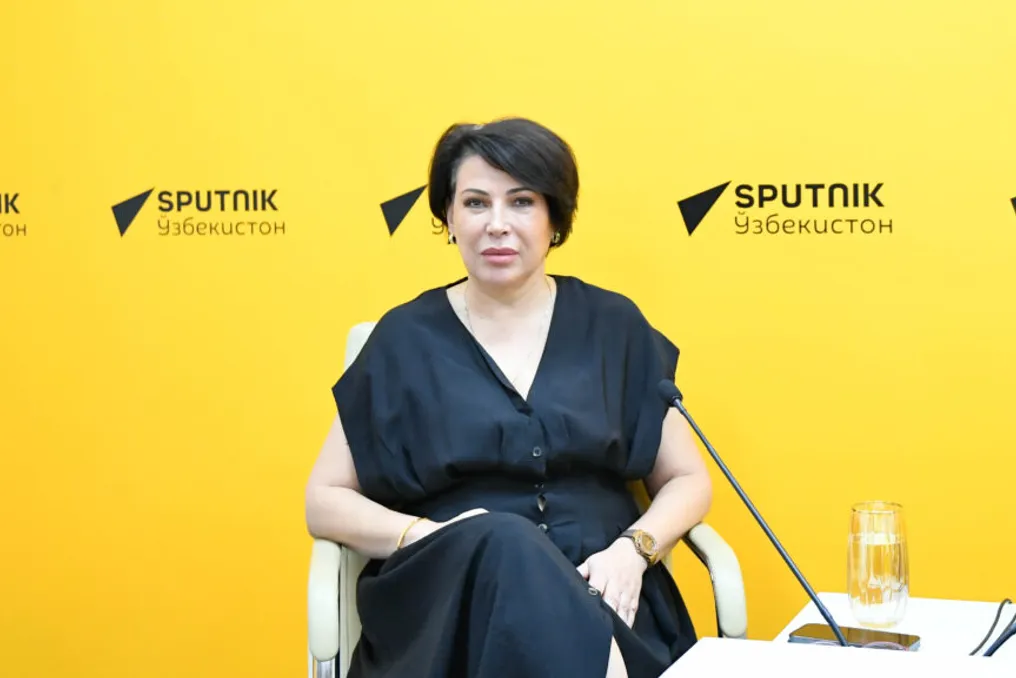
The International Exhibition and Fair titled 'Russian Education. Tashkent–2026' will take place at the MGIMO Tashkent branch on September 25 and 26. As part of the preparations for this major event, a press conference was held at the Sputnik Uzbekistan MPC with the participation of Irina Staroselskaya, head of the Rossotrudnichestvo representation in Uzbekistan.
This fair is being held in the capital for the sixth time. This year, the Moscow State Technical University named after N. E. Bauman and Grozny State Oil Technical University have appeared among the participants for the first time. In total, more than forty higher education institutions from various regions of Russia will present their curricula. The geography of participation demonstrates a growing interest that now extends beyond just Moscow, St. Petersburg, and Kazan; applicants are showing interest in universities in Irkutsk, Kursk, Nizhny Novgorod, Perm, Saratov, Sevastopol, Tyumen, Tolyatti, and other cities.
Russian universities offer an extensive range of fields of study, covering medicine, economics, engineering, IT, and creative spheres. Applicants have the opportunity to choose not only a specific specialty but also the region of study, as well as accommodation and educational program conditions.
Irina Staroselskaya emphasized the importance of parent meetings, as parents often make the decision. Universities were instructed to prepare presentations containing detailed information for parents regarding dormitory conditions (number of places, cost) and urban infrastructure. She noted that when sending a student to another country, it is necessary to ensure their well-being. Specifically, a parent meeting is scheduled for September 26 at 3:00 PM in the large hall of the MGIMO branch.
Applicants' preferences are also changing. While medicine, law, economics, and finance were previously considered the most in-demand fields, in 2024, humanities have risen to the top spot. This is followed by economic and financial specialties, as well as IT, engineering, and natural science disciplines, pedagogy, medicine, and agriculture. Interest in creative professions remains.
The topic of admission through the quota of the Russian Federation government was discussed in detail during the press conference. For the current academic year, the Russian side has allocated 810 quotas for citizens of Uzbekistan upon request from the Ministry of Higher Education, Science and Innovation of Uzbekistan. The goal of this program is to provide young people with the opportunity to receive high-quality education that can then be applied in their home country, while the final career path remains the personal choice of the graduate.
The quota campaign is primarily aimed at high school graduates. Irina Staroselskaya clarified that applicants applying for quotas are eleventh-grade students and will enroll only in the next academic year. They will be presented with a complete picture of all available universities, regions, and fields—technical, humanitarian, and medical. This year, a full transition to electronic document submission and exam taking is planned. For creative specialties, a preliminary visit to Rossotrudnichestvo is provided, where a commission composed of folk and distinguished artists of Uzbekistan and specialists from creative universities will be formed to conduct the selection.
Highlighting the complexity of choosing from hundreds of Russian universities, Staroselskaya advised applicants to determine their priorities in advance: desired specialty, city, living conditions, and future educational plans.
Rossotrudnichestvo actively supports youth initiatives, including the 'IT Navigator' project, which is implemented in collaboration with 'School 21'. Participants in this project visit regions to introduce schoolchildren to opportunities for studying in the field of information technology. The project has already started in Tashkent and Samarkand, with plans for Namangan and Nukus. It is important to ensure the accessibility of information about Russian educational programs and quotas for all young people in Uzbekistan.
The International Exhibition and Fair 'Russian Education. Tashkent–2026' serves not only as a tool for applicants and their families to familiarize themselves with Russian universities but also contributes to strengthening academic partnership, student exchange, and the creation of new joint projects, thereby expanding opportunities for interaction between the two countries.