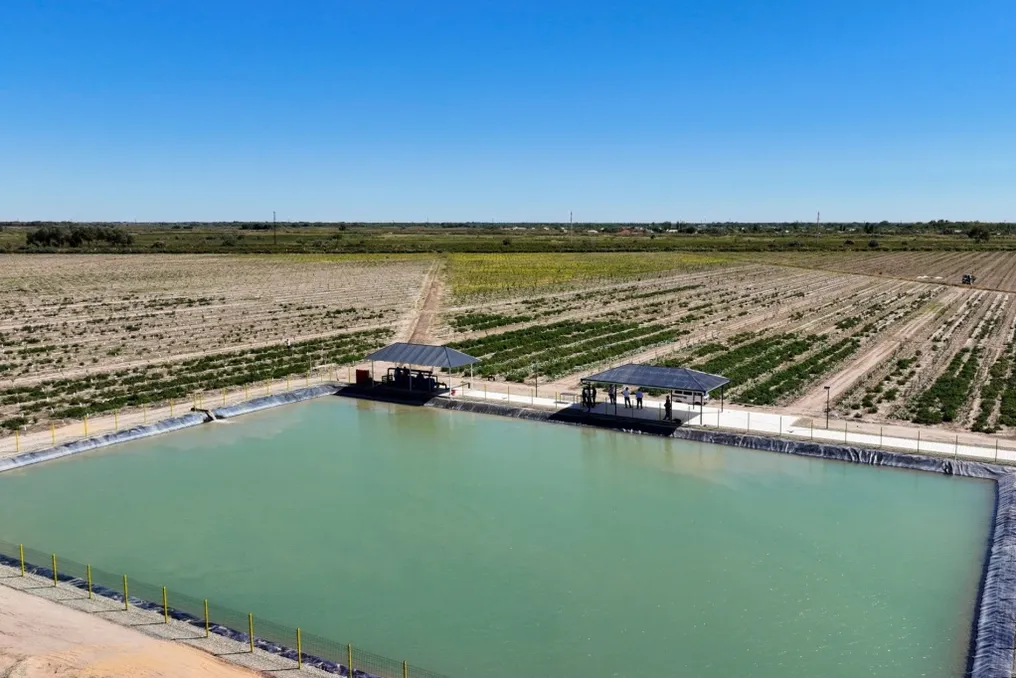
Measures are being carried out in the Kashkadarya region to develop conservation agriculture and strengthen the potential of specialists, as well as to practically implement resource-saving methods within the framework of the 'Food Systems Impact Program, Land Use and Restoration in Uzbekistan' (FOLUR-Uzbekistan).
A trainer training program was held at the Southern Research Institute of Agriculture in the city of Karshi. Twenty scientific employees and agricultural specialists participated in it. This training is part of the result of FOLUR project 2.1, which aims to promote sustainable and resource-saving approaches to agricultural production, as well as to improve the qualifications of farmers, specialists, and local institutions.
Participants in the seminar received practical information on the basic principles of conservation agriculture. These principles include no-tillage sowing (No-Till), retaining crop residues on the field surface, crop rotation practices, and methods for conserving and efficiently using soil moisture.
During discussions and presentations, various methods of interacting with farmers, ways to transform theoretical knowledge into actionable recommendations, and the application of field data and scientific results in educational activities were discussed.
The trained trainers will take on the task of transferring accumulated knowledge and experience to farmers, contributing to the formation of farmer field schools. This approach will allow for the gradual increase in the use of sustainable agricultural practices according to the 'from trainer to farmer, from farmer to practice' scheme.
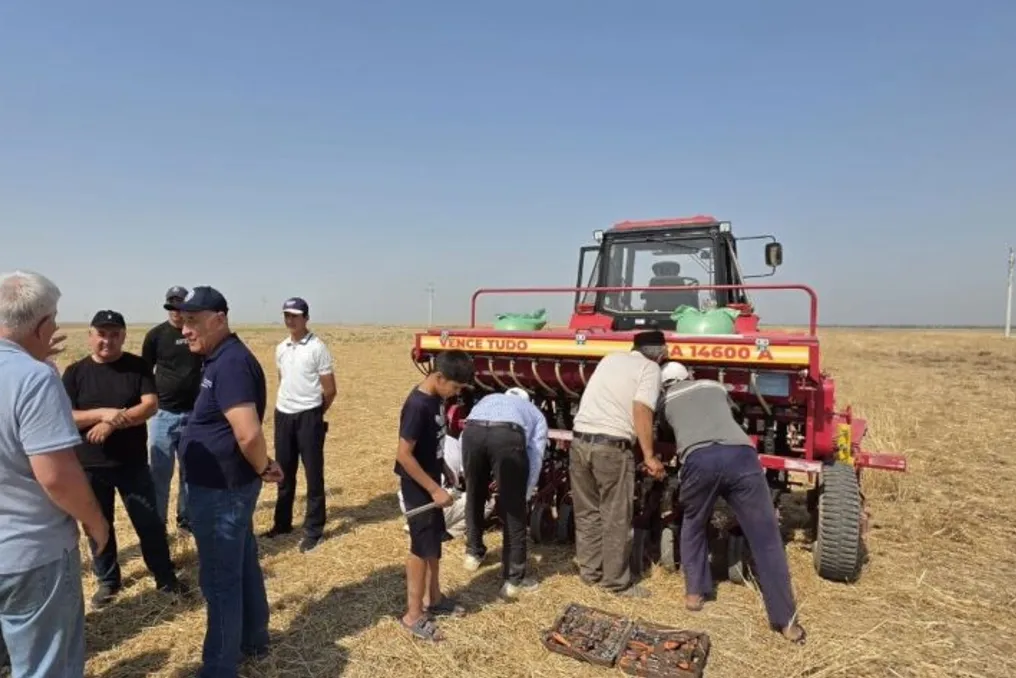
Another event under the project took place at the 'Jovli Bobo Oghli Bahtiyor' farm in the Savsan village of the Kamash district. There, farmers, agronomists, mechanizers, researchers, and project staff familiarized themselves with the process of sowing wheat using No-Till technology.
A demonstration was conducted on a 40-hectare field, during which 'Nushkent' variety wheat was sown using a special No-Till seeder. Wheat was previously grown on this same territory. Before the start of the new planting cycle, the field was not plowed, and straw and other residues from the previous harvest remained on the surface. Seeds were introduced directly through this protective layer.
Project specialists demonstrated how the No-Till seeder is prepared, calibrated, and operated. Special attention was paid to details such as sowing depth, row spacing, and ensuring uniform seed distribution. In addition, participants discussed practical aspects of implementing this technology in the specific soil and climatic conditions of the region.
The No-Till technology minimizes mechanical impact on the soil. Retaining crop residues on the surface helps retain moisture, reduces the risk of wind and water erosion, and creates a favorable environment for soil biological activity. Furthermore, reducing the number of land preparation operations can lead to lower costs for fuel, labor, and time required for field preparation.
The condition of the 40-hectare demonstration plot will be monitored throughout the entire growing season. Monitoring will include assessing germination and crop development, soil moisture retention, the effect of crop residues, resource use, and final grain yield. The collected data will allow for determining the effectiveness of No-Till technology in local conditions and outlining prospects for its application in other suitable areas.
The 'Program for Assessing Impacts on Food Systems, Land Use and Restoration in Uzbekistan (FOLUR)' project aims to develop sustainable agricultural production, comprehensive land resource management, restoration of degraded landscapes, and the introduction of resource-saving farming methods.
The implementation of this project is carried out with the participation of the National Committee of the Republic of Uzbekistan on Ecology and Climate Change, the Ministry of Agriculture of the Republic of Uzbekistan, and the Food and Agriculture Organization of the United Nations (FAO), with financial support from the Global Environment Facility (GEF).