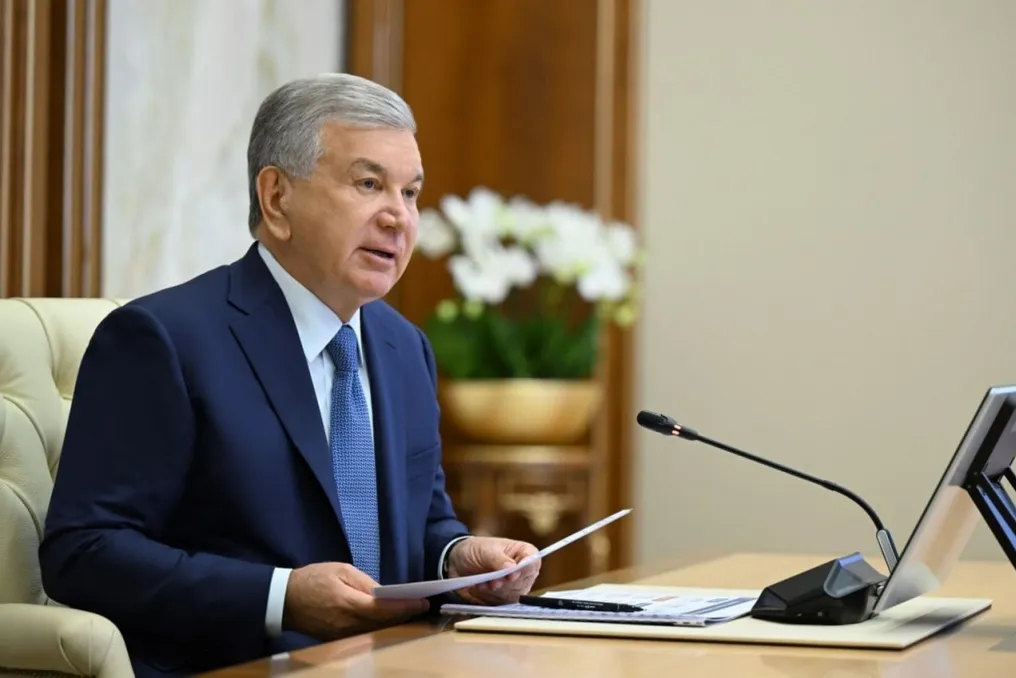
The process of improving transport and logistics infrastructure is actively underway in Uzbekistan. According to the plans, the volume of transport services should double by 2030, and $9.1 billion in investments will be attracted to the industry, allowing the export of transport services to reach $5.7 billion. President Shavkat Mirziyoyev reviewed the progress of major projects, among which are key the development of toll highways, modernization of railway communications, expansion of international transport corridors, and the formation of a modern logistics base.
Development of New Airports and Toll Roads
The construction of new airports in Tashkent and Bukhara will cost almost $3 billion. The first stage of the new international airport in Tashkent is designed to accommodate up to 20 million passengers annually; currently, preparation and relocation of engineering communications are underway at the site. In Bukhara, the necessary airfield infrastructure is being created, and an international tender is being held to attract a private partner who will be responsible for the construction and operation of the passenger terminal.
It is planned to modernize the airports in Urgench, Namangan, and Andijan, which should increase their capacity and bring service quality in line with global standards. Regarding road transport, the construction of a toll highway between Tashkent and Samarkand began in August, which will cost $2.2 billion. The country's first toll road, connecting Urgench and Khiva, is already operational. Currently, investors and funding sources are being determined for the Tashkent – Andijan and Tashkent – Bostanlyk toll road projects.
Modernization of the Railway Network
Significant attention was paid to the condition of the railway network. Since several sections on the main transit routes are already operating under high load, and an increase in industrial transport and the launch of high-speed trains are forecasted, there is a need to strengthen the infrastructure. Modernizing sections such as Maktaaral – Syrdarya, Angren – Pap, Tashguzar – Baysun – Kumkurgan, Tashkent – Samarkand, and Tukimachy – Angren will allow increasing their capacity by 25–30%. $200 million has been allocated for these works.
Furthermore, projects such as the construction of the China – Kyrgyzstan – Uzbekistan railway, the creation of a separate high-speed line Tashkent – Samarkand, as well as the electrification and expansion of regional networks and the renewal of the freight wagon fleet, were discussed.
Expanding Uzbekistan's Access to Seaports
To ensure the diversification of external cargo transportation, the country is working on developing logistics capacities in foreign ports. These ports include Aktau, Turkmenbashi, and Baku on the Caspian Sea, as well as Poti and Anaklia on the Black Sea. An agreement has already been signed to create a logistics hub in the port of Poti. The possibility of participating in the development of the Anaklia port and the construction of the Nakhchivan railway is being considered, which will provide access to the ports of Samsun and Istanbul in Turkey.
These new transport routes will allow for an increase in the export of textile, chemical, agricultural, and mining and metallurgical products. Within the country, it is planned to create 17 logistics centers and terminals in Tashkent, as well as in the Tashkent, Andijan, Surkhandarya, and Bukhara regions. There is also a task to transition transport to a unified digital system.
One of the problems in the industry is the significant share of the shadow economy, which reaches 42% in the cargo transportation sector. To solve this problem, it is proposed to introduce a unified digital transport system and carrier registry, integrate electronic orders and transport services, implement electronic waybills, expand the exchange of electronic permits, and ensure real-time tracking of international cargo. Previously, the Ministry of Transport provided clarifications regarding the procedure for issuing foreign permits for international road transport, the functioning of the rating system, and the transition to the electronic E-Permit format.


