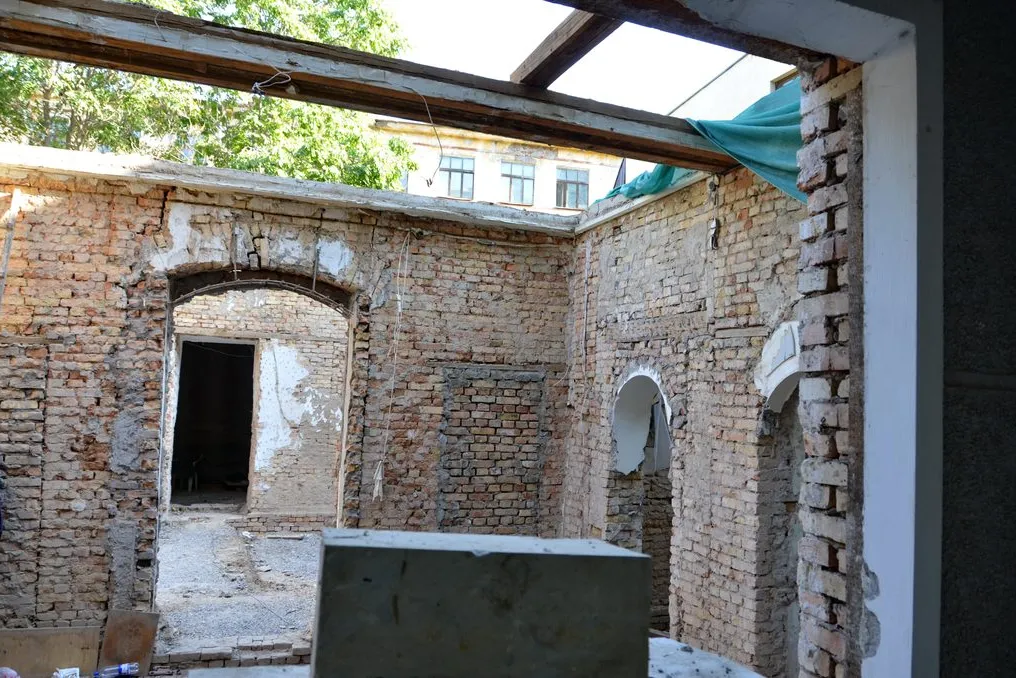
In September 2026, alarming reports emerged in Tashkent regarding the condition of the reconstructed Sergei Yesenin Museum. The initiators of the appeal described a situation causing serious concern: a removed roof, lack of plaster on the walls, and signs of mold. According to their observations, active repair work was not being conducted at the site, and approaching autumn rains threatened the building that was planned for preservation.
Initially, the museum was closed for major repairs in the autumn of 2025 with a promise to complete the work by December 31st. However, after winter, spring, and summer, visitors still could not access the halls in the new September. The public expressed concern not only about the repairs but also about the lack of a clear answer regarding the reasons for delays and who is responsible for the building's preservation.
Despite official assurances that the work was under control, much remained unclear between the official statements and the actual condition of the facility. Public anxiety quickly transformed from individual remarks into a unified demand, as people began discussing the same issue despite differing viewpoints.
The Significance of the Word 'Ours'
Andrey Dmitrievich Vdovin noted that the literary club 'Kristall' operated in the house-museum, and for him, the potential loss of the museum meant the loss of a meeting place for people interested in literature. Gulnara Aliyeva requested information on the possibility of an electronic petition signature, while Lyudmila stated that 'Sergei Yesenin Museum must be restored.' Lidiya Dumler also raised the question of how long the museum would stand without a roof.
It is emphasized that the key point is the feeling of belonging—the word 'ours.' The museum's significance for the residents goes beyond its departmental affiliation or accounting entry, as it is a place with which people are emotionally connected, where they visited with children and listened to poetry.
Among those concerned about the museum is Albina Markevich, one of the founders, who is 96 years old. Her story reflects the efforts of many people who created the museum, advocating for its right to exist, and now they have to watch it need protection again decades later.
In response to public activity, Tashkent residents initiated a signature collection and sent a collective appeal to the Head of the Administration of the President of the Republic of Uzbekistan, Saidavkhanovna Mirziyoyeva. They asked her to personally monitor the situation, conduct an objective inspection of the building's condition, and guarantee the completion of the restoration while adhering to cultural heritage preservation standards. This initiative, published in the publication on September 14, 2026, moved the issue from private conversations to the sphere of open public discussion.
The citizens were not against the restoration itself; on the contrary, they insisted on its actual implementation. Their demand was an understanding of how to preserve the house while it remains vulnerable to the weather, rather than just a dispute over wording.
Dialogue at Damaged Walls
Following the submission of the appeal, a meeting took place between representatives of the Agency for Cultural Heritage and the public and journalists directly on the museum grounds. Participants included Begzod Pulatov, Head of the Museum Activities Coordination Department; Akhadulla Akhmedov, Head of the Agency's Legal Department; Sanjar Aripov, Director of the Scientific Research Institute of Cultural Heritage, and other specialists. Residents had the opportunity to receive answers on site.
Agency representatives explained the delay was due to the need for additional surveys and the development of technical solutions. Sanjar Aripov reported that the initial inspection showed satisfactory condition, but hidden defects were discovered after the removal of the roof and old finishes, making it impossible to continue work in the previous mode.
Agency specialist Shakhzod Nazarov presented excerpts from the technical report, which mentioned critically low strength of the masonry mortar, which crumbled even with light impact. He also informed that foundation reinforcement had already been carried out and work on draining groundwater had begun.
Sanjar Aripov emphasized that the goal of the restoration is not to mask problems with new plaster, but to genuinely preserve the building. Nevertheless, the citizens asked how to protect the house during the search for the optimal solution.
The chronology was also clarified: Shakhzod Nazarov explained that the museum was closed for inventory at the end of 2025, and in January, the exhibits were moved to the Art Museum, which differed from the initial announcements of repairs starting in autumn 2025.
Deadlines That Require a Schedule
The most persistent question concerned the roof, bringing the discussion back to the immediate threat of precipitation. One participant expressed concern that any rescue efforts could be nullified by rain if the building was not protected.
Shakhzod Nazarov announced an estimated timeframe of twenty days for strengthening the walls parallel to roofing work, noting that this was only a forecast requiring further discussion. The overall deadline for completing the restoration work was set for the end of 2026, including plans for facade restoration, structural reinforcement, and improving exhibit storage conditions.
However, despite the overall deadline, it was not determined when the building would receive reliable protection from precipitation. The public insisted on having clear intermediate stages and responsible persons for each stage to avoid renewed anxiety.
As a result of the meeting, the Agency acknowledged shortcomings in informing the public and promised to publish weekly progress reports. This commitment is seen as the basis for building a trusting dialogue.
The history of the museum is not limited to construction work; it holds the memory of Sergei Yesenin's visit to Uzbekistan in May 1921. Among the exhibits are items donated by his daughter, Tashkent journalist Tatiana Yesenina, which makes the history of Russian poetry part of Tashkent's cultural history.