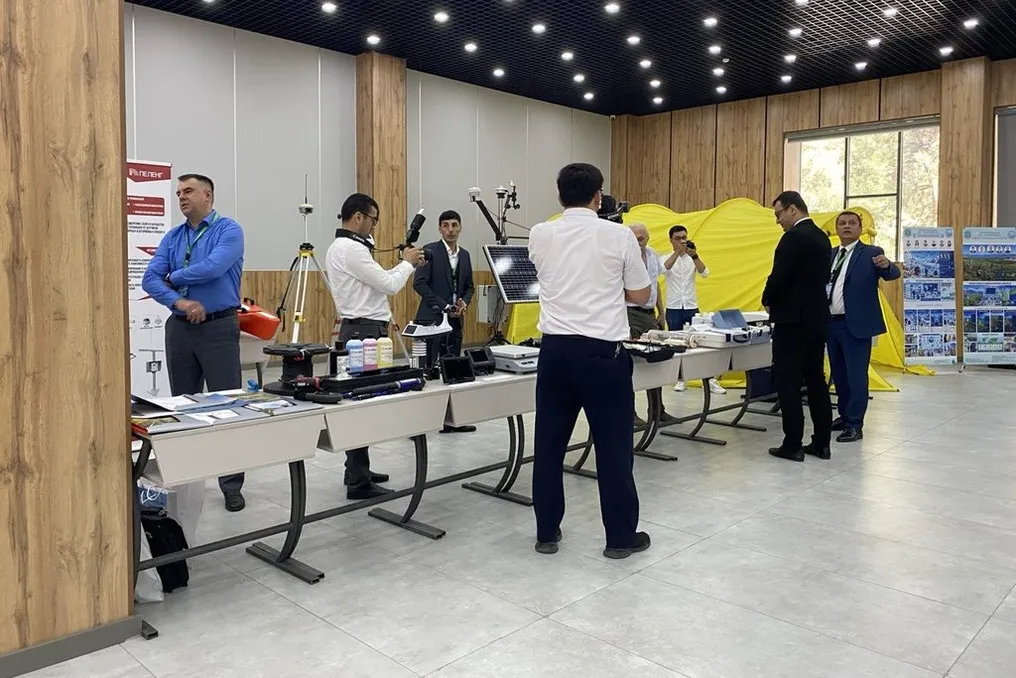
The International Scientific and Practical Conference titled 'Ways to Mitigate the Impact of Climate Change on Natural Resources in Central Asia for Sustainable Development' was held in Tashkent. The event was organized by the National Committee on Ecology and Climate Change of the Republic of Uzbekistan in collaboration with several international organizations, including UNESCO, the International Atomic Energy Agency (IAEA), the Food and Agriculture Organization of the United Nations (FAO), the International Organization for Migration (IOM), and with the participation of foreign universities, scientific institutions from neighboring countries, and other authoritative organizations.
Extreme natural phenomena, such as rising temperatures, droughts, floods, and glacial melting, pose a serious threat to the region. These events negatively affect water resources, agriculture, ecosystems, energy security, and the socio-economic development of Central Asian countries. To address these complex challenges, scientific research, the application of innovative technologies, and the establishment of international and scientifically sound cooperation are necessary.
The conference brought together scientists, researchers, representatives of state agencies, the private sector, and international organizations to discuss practical methods for reducing the impact of climate change on natural resources and to exchange accumulated experience. Strengthening regional and international cooperation, developing scientific potential, and creating a global platform for developing practical recommendations contribute to increasing climate resilience in the region.
Iskanzar Kutbiddinov, Deputy Minister of Ecology, Environmental Protection, and Climate Change, emphasized that climate change is one of the most significant obstacles to sustainable development in Central Asia. The region faces rising temperatures, changes in precipitation patterns, and an increase in drought frequency. Of particular concern is the reduction of snow cover and mountain glaciers. According to UNESCO, the volume of the Tian Shan and Pamir glaciers has decreased by 30% over the last six decades. Simultaneously, desertification and land degradation processes are intensifying, affecting more than 80 million hectares, which is more than a quarter of the region's territory. The Aral Sea region is considered the most vulnerable, where climate change and water scarcity exacerbate existing environmental problems. Kutbiddinov noted that the climate is directly linked to food security, energy security, and the well-being of the population.
Uzbekistan has set a goal to reduce specific greenhouse gas emissions by 50% by 2035 compared to 2010 levels. Furthermore, the country is actively developing and implementing long-term strategies aimed at modernizing agriculture, preserving biodiversity, introducing water-saving technologies, improving waste management systems, and developing other aspects of sustainable development. A key objective is to increase the share of renewable energy sources to 54% by 2030. Currently, five national ecological projects are being implemented, covering air quality improvement, environmental education, waste management, green economy development, and biodiversity conservation.
The scale of climate problems requires close interaction between scientific communities, government bodies, universities, the private sector, and international partners. UNDP, in cooperation with UNESCO, supports a project focused on the cryosphere and climate change, particularly on the state of glaciers affected by climate change. Within this project, a regional scientific and information database is being formed, and work is being done with Central Asian states to achieve consensus in cryosphere management. The goal is to move from simply accumulating knowledge to practically applying solutions in all five Central Asian countries, which is reflected at the current conference.
The conference included plenary sessions, scientific and technical, and special sessions with the participation of international organizations, panel discussions on climate policy and regional cooperation, and innovative sessions dedicated to GIS, remote sensing, artificial intelligence, and climate services. Special attention was paid to the sustainable use of natural resources, water resources, and the cryosphere under changing climatic conditions. Applied climatology, innovative solutions for energy, transport, construction, and agrometeorology, as well as methods for studying water and climate, including isotopic hydrology and meteorology, were also discussed. Topics such as geotourism and glaciotourism in the context of climate change were addressed.
Thomas Sachs, Senior Research Fellow at the University of Freiburg in Switzerland, spoke about the completion of one of the projects in partnership with the Scientific Research Hydrometeorological Institute (SRHMI). This project focuses on studying the cryosphere, including monitoring permafrost, snow cover, and glaciers, as well as developing corresponding tools and services. SRHMI acts as a key partner for the project in Uzbekistan. Sachs noted that after many years of joint monitoring, the current task is to make the collected data practically applicable for shaping state policy and decision-making by ministries. The second project will continue until mid-next year and also includes cryosphere monitoring. The conference provided a good opportunity to demonstrate the results of many years of work with partners in Uzbekistan and Central Asia, as well as to showcase accumulated scientific knowledge and developed services that help assess the future consequences of climate change for the region's water resources.