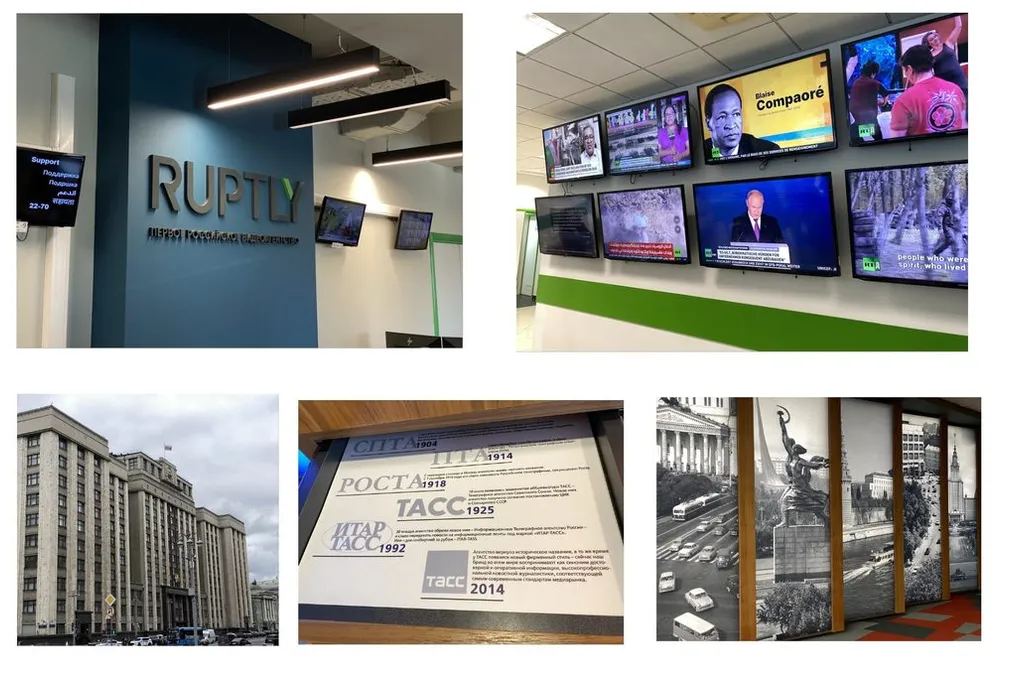
Young journalists from CIS countries participated in the 'Internovosti' internship in Moscow, where they gained insight into news creation processes, obtaining exclusive information, and the importance of thorough data verification before publication.
During one week, program participants visited the editorial offices of publications such as the newspaper 'Kommersant', the TASS news agency, as well as the RT channels and the State Duma. These visits allowed them not only to familiarize themselves with the inner workings of major Russian media but also to hold direct conversations with journalists, editors, and press service representatives.
At 'Kommersant', the group met with Editor-in-Chief Mikhail Gusev. He provided a detailed account of the specifics of this publication's work, which traditionally focuses on in-depth materials and analytical reviews. Gusev emphasized that modern mass media must balance the speed of information delivery with its quality. He stressed the principle: 'It is better to give a little later, but more intelligently,' reflecting the necessity of fact verification and contextual understanding.
The boundary between professional journalism and blogging was also discussed. Mikhail Gusev noted that while a journalist may transition to blogging, working in an editorial office demands continuous responsibility and discipline, regardless of the topic's interest or the author's mood.
At the TASS news agency, participants learned about news preparation methods and various forms of exclusive content. Anastasia Kirsanova, Deputy Head of the 'Culture' editorial department at TASS, explained that exclusivity is not limited to information appearing for the first time in the public domain. She particularly highlighted expert exclusives, where a journalist enriches the news with specialists' opinions, helping the audience comprehend the potential consequences of events.
Another important aspect examined at TASS was citation rate. For the agency, the measure of success is determined not only by the number of published materials but also by their frequency of use and citation by other media.
Participants also familiarized themselves with the activities of a Russian video agency, where they were shown the process of creating video reports and broadcasts for clients. This content covers a wide range of topics—from socially significant events and economics to international agendas and light visual material.
A separate stage of the internship was dedicated to visiting the State Duma. Press service employees of the parliament spoke about the mechanisms of interaction with journalists and ensuring coverage of the legislative body's activities. According to the press service, over a thousand journalists currently cover the work of 450 deputies.
Significant attention was paid to the issue of accuracy. Young specialists were reminded that although a catchy headline attracts readers' attention, the main mission of the media is to provide accurate information and help the audience understand the subject matter. Press service representatives emphasized: 'Even if something sounds very beautiful, first and foremost, you must convey the information.'
The internship participants shared their impressions. Correspondent Zhanna Kurmanbekova from Kazakhstan reported that the internship is going excellently, noting the visit to the State Duma, acquaintance with the press service and 'Duma TV', as well as visits to TASS, RT, and 'Kommersant'. Participant Anelya Temirkulova from Kyrgyzstan noted the benefit of visiting the National Center of Russia and other places, emphasizing that comparing the work of Russian television channels with television in Kyrgyzstan showed significant differences and became valuable experience.
In conclusion, the 'Internovosti' internship provided young journalists with a comprehensive view of the media landscape—from producing breaking news and exclusives to creating video content and interacting with parliamentary structures. The main takeaway was that modern journalism requires not only high speed but also the ability to verify sources and the skill to explain complex topics to a broad audience in accessible language.