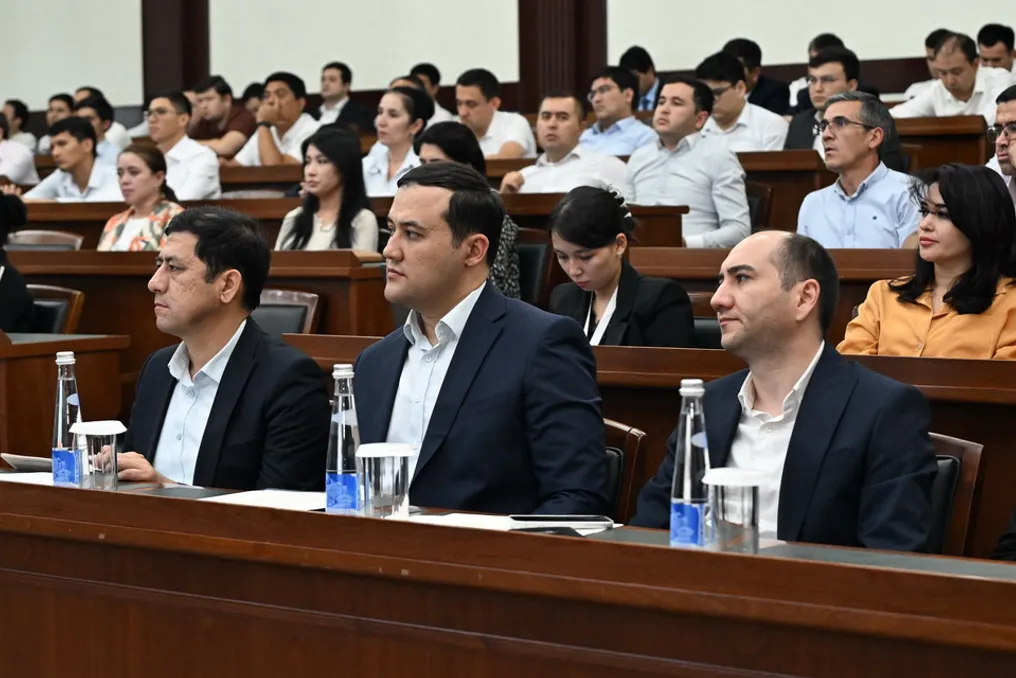
Uzbekistan is interested in studying the methods of managing state property used in Germany to increase the efficiency of using state buildings, prevent asset idleness, and attract private investment. On August 27, a meeting was held between representatives of both countries to discuss the functioning of the German state property management system and its potential application in Uzbekistan.
The online seminar gathered participants from the State Assets Management Agency of Uzbekistan, the Federal Institute for Real Estate of Germany (BImA), the Federal Ministry of Finance of Germany, GIZ, and Indecon Consulting. Cooperation between Uzbekistan and Germany in the field of state asset management has been ongoing for many years, based on an agreement concluded in 2009.
With the help of German specialists, work has been done in Uzbekistan on the legislative framework, privatization, and corporate governance. Draft laws concerning the management and privatization of state property have been created, and the first Code of Corporate Governance has been developed. Now, the focus of cooperation is shifting to the area of state real estate.
Uzbekistan pays special attention to the experience of the German Federal Institute for Real Estate—BImA, which is responsible for managing federal real estate in Germany. Representatives of BImA, Jörg Musial and Robert Erfen, provided detailed information on the mechanisms for organizing the management of state assets in Germany, including their valuation, leasing, disposal, and the use of previously unused property.
During the seminar, more practical aspects were also discussed, such as creating a digital register of state assets, ensuring building maintenance, and integrating unused property into economic circulation. According to Sohibjon Murodov, German experience can modernize, increase the transparency, and improve the efficiency of the state real estate management system in Uzbekistan.
Alisher Miraliyev, Deputy Director of the Agency, reported that in recent years, active work has been underway in the country to optimize the use of state real estate. State properties are leased to private entrepreneurs through online auctions, and requirements for tenants are being tightened to guarantee the intended use of the property and prevent idleness.
Nevertheless, Uzbekistan faces more global tasks: within the development strategy until 2030, it is planned to increase the share of the private sector to 85% and reduce the number of state-owned enterprises by sixfold. Miraliyev noted that German experts positively assessed the current reforms and expressed readiness to provide further support, including participation in the development of new regulatory acts.
Romi Strecker, a representative of the Federal Ministry of Finance of Germany, emphasized that Uzbekistan is an important partner for Germany in the Central Asian region. She specified that advisory assistance to Uzbekistan has been provided since 2009, and support for the State Assets Management Agency since 2019.
Currently, one of the priority areas of interaction has been attracting BImA experts to improve the functions of the Agency. Furthermore, Germany is ready to assist in developing a strategy for the reform and privatization of state-owned enterprises for the period 2026–2030, as well as improving the corporate governance rules of companies with state stakes.
It is planned that the interaction in the field of state real estate will proceed in three consecutive stages. The first stage will involve the participation of Agency specialists in online seminars with German experts. Next, a visit by BImA specialists to Uzbekistan is planned to discuss the next steps. The third stage involves a delegation trip to Germany, where Uzbek specialists can personally familiarize themselves with BImA's practical activities.
Sanjar Ubbadullaev, a representative of the Agency, stressed the importance of studying not only Germany's successful solutions but also the problems encountered in forming this system. He added that the main goal of the seminars is experience exchange, staff training, and understanding the paths for further work in this area. The Agency hopes that partnership with Germany will help find new methods for the effective use of state assets, reduce the volume of unused property, and implement modern management mechanisms.