New Trends in Uzbek Textile Production Presented at CAITME 2026 Exhibition
Read more
Nuz.uz
nuz.uz

New Trends in Uzbek Textile Production Presented at CAITME 2026 Exhibition

The 17th Central Asian International Exhibition 'Textile Machinery and Technologies – CAITME 2026' has concluded in Tashkent. The event was held under the slogan 'Technologies that Define the Future of the Region's Textile Industry' and showcased fresh directions for the development of Uzbekistan's textile sector.

CAITME has established itself as one of the largest exhibition events in Central Asia and the CIS countries, becoming a national brand of Uzbekistan in the textile industry. The exhibition provides local producers with the opportunity to familiarize themselves with the latest developments, receive technical support for operating machinery and equipment, and learn about offers directly from suppliers.

This is particularly important in the current situation when the global textile industry is undergoing a complex phase of transformation. Increased competition in external markets, changes in logistics chains, revision of international tariff policies and transport routes, as well as new requirements from international buyers regarding transparency, sustainability, and overall production efficiency are being observed.

Against the backdrop of these global changes, Uzbekistan continues to support and promote the development of the textile and sewing/knitting industry. This support is implemented through tax reductions, providing benefits for entering new export markets and marketing assistance, preferential lending, attracting investments, and supporting innovative projects. In 2025 alone, $2.1 billion in foreign investment was attracted to this industry. Simultaneously, active modernization of production capacities and the implementation of international standards and certifications are underway.

Although the domestic textile industry has long been a consumer of modern equipment, the exhibition demonstrated the emergence of a new trend: Uzbek specialists are now capable of exporting their own 'smart' solutions.

An example of this development is the company KESIM, founded by local entrepreneur Mansurbek Moydinov. Since 2011, this company has been a leading distributor of high-tech equipment for automating textile production in Central Asia and the CIS, representing the HANBOND brand, which is a major Chinese manufacturer of plotters. The company is not limited to the domestic market, successfully promoting its developments internationally under the name PROFCUT.

Humoyun Ergashov, director of the Tashkent branch of PROFCUT (Professional Cutting Equipment), shared information about modern cutting methods in textile production. He noted that over more than ten years of experience, the company has become a reliable partner for clients, as many large textile enterprises prefer its services even after interacting with well-known European brands. The company's service is recognized as the best in Central Asia, and they offer 'smart' solutions, serving clients across Uzbekistan and Kazakhstan through branches in Andijan, Tashkent, and Shymkent.

The plotters used feature high quality and durability, while every stage of production undergoes thorough control, distinguishing them from cheaper analogues that may fail and require additional repair costs. Ergashov also explained the basis of advanced solutions: the equipment is equipped with the Gemini CAD Systems software module, which covers the entire production cycle and is suitable for digitizing cardboard patterns in any industry. The Gemini Spread & Cut Planner (PE) software is designed for planning the fabric laying and cutting process, helping to manage time, materials, and financial resources in a unified system.

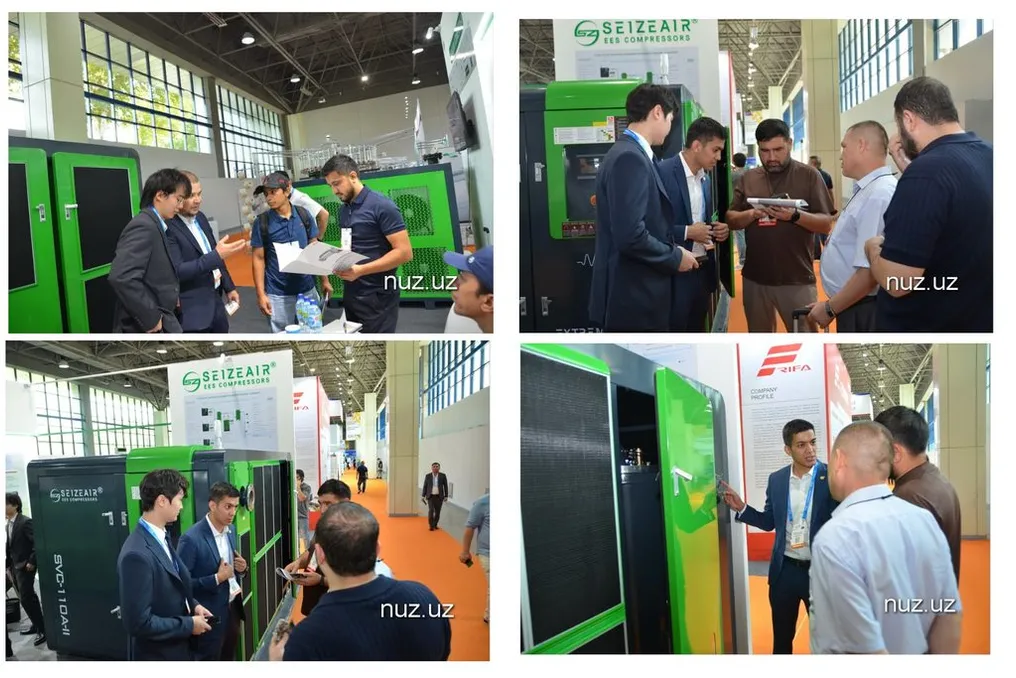
In conditions of continuously rising electricity costs, manufacturers are forced to pay close attention to increasing energy efficiency and reducing energy consumption. The company SEIZEAIR Air Compressor contributes in this direction by supplying compressor equipment for the textile industry.

Ilmurat Kasimov, Deputy Director of the International Department of SEIZEAIR Air Compressor, spoke about assisting textile workers in improving energy efficiency. He reported that the company's equipment features high energy efficiency, allowing consumers to save money on electricity. The company has already implemented numerous projects in Uzbekistan, particularly in the regions of Kashkadarya, Namangan, Andijan, and Tashkent region. Among their clients are Oltin ko‘l tekstil, Sho‘rlik tekstil, Muazzam tekstil, and other enterprises.

Given the significant rise in electricity prices in Uzbekistan over the last three years, especially for industrial facilities, timely replacement of outdated equipment with more energy-efficient models is becoming extremely relevant. Kasimov specified that instead of common single-stage compressors, they offer two-stage models, which possess maximum energy efficiency and greater productivity thanks to permanent magnet motors, ensuring substantial electricity savings. In addition to compressor equipment, the company also supplies dryers, filters, and consumables for air preparation. The company's service network covers the entire territory of the Republic of Uzbekistan, providing clients with favorable conditions.

It is important to note that the compressor is a critically important element in textile production and one of the main consumers of electricity. When calculating the cost of goods in weaving mills, choosing energy-efficient equipment is of paramount importance. Kasimov emphasized the company's philosophy: the goal is to maximally reduce the client's electricity costs. He added that despite potentially higher initial costs, the payback is achieved through energy efficiency, and based on factory visit experience, switching to their equipment allows clients to save 20 to 30% of electricity annually.

Another trend noted at recent textile equipment exhibitions is the concept of 'smart' recycling of textile waste at all stages of production—from the spinning department to turning used clothing back into yarn, fabrics, and garments, which contributes to achieving circularity in the textile industry.
Similar stories

The 17th International Exhibition of Textile Equipment CAITME 2026 has started in Tashkent
Read more
nuz.uz

The 17th International Exhibition of Textile Equipment CAITME 2026 has started in Tashkent

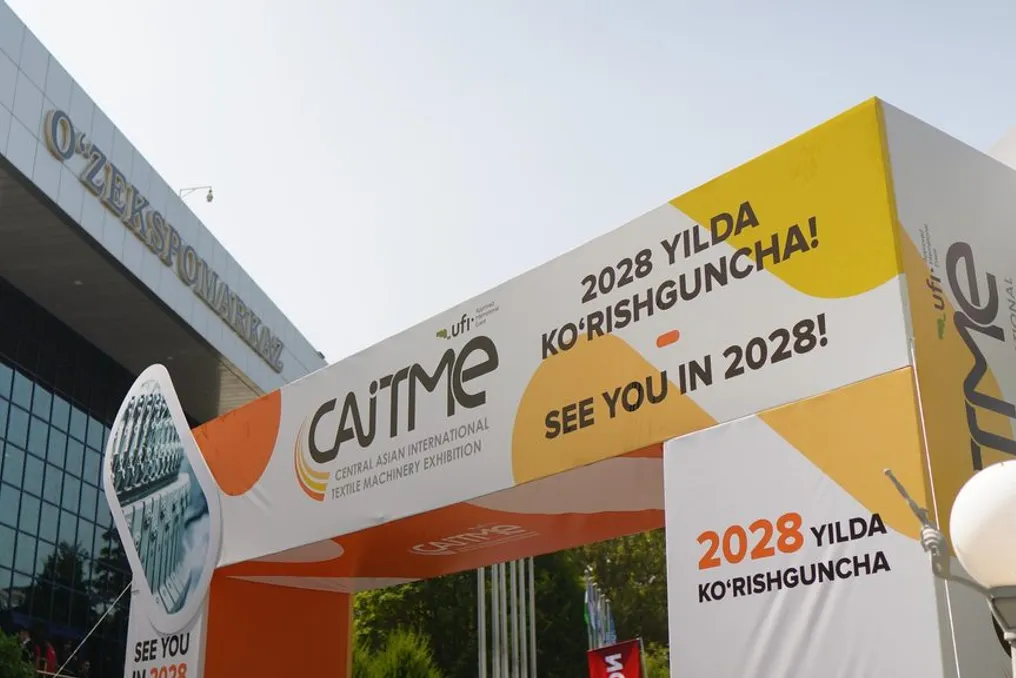
The 17th Central Asian International Exhibition 'Textile Equipment and Technologies – CAITME 2026' has begun in Tashkent, taking place at Uzexpo Center from September 8 to 10. Over its existence, CAITME has become a recognizable national brand of Uzbekistan in the field of textile industry exhibitions, becoming a unique project for Central Asia and the CIS.

The exhibition plays a critically important role in stimulating the progressive and innovative development of the textile and sewing industry across the entire region. CAITME supports local textile and sewing businesses by helping enterprises update production capacities, increase their competitiveness in global markets, and boost productivity.

The event provides domestic producers with the opportunity to maintain constant contact with suppliers of advanced technologies, quickly learn about the latest innovations, receive technical assistance with equipment operation, and participate in special promotions and receive offers directly from suppliers.

The significance of CAITME extends beyond the local market, as leading global manufacturers of equipment and technologies attend annually. Specialists and representatives of textile companies arrive in Tashkent in search of new business partners, modern solutions, and suppliers.

The relevance of the exhibition is increasing against the backdrop of a complex period of transformation in the global textile industry, characterized by increased competition in external markets, changes in logistics chains, revision of international tariff policies, and the emergence of new customer requirements for sustainability, efficiency, and production transparency.

In response to these challenges, Uzbekistan continues to develop the textile and knitwear industry by using measures such as tax reductions, providing benefits for entering export markets, modernizing production, implementing international standards, preferential lending, attracting investment, and supporting innovation. Only in 2025 were $2.1 billion in foreign investments attracted to this sector.

Despite difficulties in the industry, CAITME maintains its position. In 2026, over 250 companies and brands from 18 countries are expected to participate, viewing Uzbekistan and Central Asia as promising markets. These countries include Austria, Belgium, Great Britain, Germany, Greece, India, Spain, Italy, China, Netherlands, UAE, Russian Federation, USA, Turkey, Uzbekistan, Czech Republic, Switzerland, and Japan.

China, Turkey, Germany, Italy, and India are the leaders in terms of the number of foreign participants, with the share of foreign participants at the exhibition reaching 83%. Germany, as one of the world leaders in textile machinery, will once again present its National Stand. Companies such as Andritz Küsters, Brückner Textile Technologies, Carl Schmale, Sossna, Texpa, Thies, Groz-Beckert KG, Kaeser Kompressoren, Schott & Meissner Maschinen- und Anlagenbau, and Textima Export Import GmbH will demonstrate advanced solutions for dyeing, finishing, sewing production, as well as for the non-woven materials and auxiliary equipment industry.

Companies from Austria, Belgium, Great Britain, India, Italy, China, Turkey, USA, Switzerland, and other leading engineering nations also show broad representation. Among the exhibitors and represented brands are recognized leaders in textile machinery and suppliers of advanced technologies from Europe and Asia, including Rieter, Uster, Novibra, SSM, Spindelfabrik Sussen, Toyota, Muratec, Truetzschler, Saurer, Picanol, Santoni, Terrot, Groz-Beckert, Habasit, MHMS, Vandewiele, Mayer, IRO, Biancalani, Brazzoli, Ferraro, Epson, Mario Crosta, Itema, Lafer, Motex Di Modiano Guido, Salvade, Simet, Sclavos, Effe, Mahlo, Lonati, Shima Seiki, Tetas, Temsan, Staubli, Karl Mayer, Lakshmi Machine Works, Lakshmi Card Clothing, Precitex, Kansai, Eliar, Pai Lung, AB Carter, James Heal, Guven Celik, West Global, CTMTC, Hengyi, Leadsfon, Rifa, Yingyang, Baoyu, Hikari, Ricoma, and many others.

The CAITME 2026 exposition fully occupies the pavilions of the NVK 'Uzexpo Center' and is divided into key sections: Pavilion No. 1 is dedicated to finishing, dyeing, and printing technologies; Pavilion No. 2 is for spinning technologies; Atrium Hall 1 is for textile chemicals and dyes; Pavilion No. 3 is for sewing production equipment; Pavilion No. 4 is for weaving and knitting equipment. This spatial organization allows visitors to easily navigate and plan meetings.

This year, the exhibition will focus on several key and in-demand trends. One of them is the automation of production processes, which is a response to the shortage of skilled labor and the desire to increase efficiency. For example, Rieter (Switzerland) presents solutions for automating spinning mills, while Texpa (Germany) offers automated lines for home textile sewing.

Another important trend is ensuring sustainability through improved production methods, including rational use of dyes that minimizes environmental impact, wastewater treatment, and the use of 'green' energy. Eliar (Turkey) will showcase 'smart' dye dosing systems and software for creating sustainable dyeing operations.

Emphasis is also placed on increasing efficiency and optimizing production. Biancalani (Italy) will present fabric finishing solutions based on enzymatic technology, which allows for resource optimization using environmentally friendly processes.

Multifunctionality and multitasking are also part of the program: Ricoma Asia (Uzbekistan) will demonstrate an embroidery machine capable not only of embroidering but also of attaching beads, pearls, and crystals, as well as creating terry embroidery, chain stitch, and tambour stitch, characteristic of Uzbek 'popop kashta'. The main trend actively being implemented in Uzbekistan is the 'smart' recycling of textile waste at all stages, ensuring production cyclicity. Truetzschler (Germany) will present innovative methods that prevent fiber loss and produce high-quality yarn from shredded fabrics.

CAITME 2026 will take place within the framework of the Global Textile Days textile week. On September 9, B2B meetings are scheduled in Atrium Hall 2, where buyers, importers, distributors, brand owners, and e-commerce representatives can negotiate with producers from Uzbekistan and Central Asia.

Organizers emphasize that CAITME is not just an exhibition but a key business platform for the textile and sewing industry of Central Asia, opening opportunities for economic growth and investment. The high international status of the event is confirmed annually by an independent audit of the World Exhibition Federation UFI, which confirmed the holding of the exhibition in 2026, and CAITME holds a leading position among specialized textile machinery exhibitions in the CIS and is one of the largest industry venues in Asia.

Official support for the event was provided by the Committee of the Legislative Chamber of the Oliy Majlis of the Republic of Uzbekistan on Entrepreneurship, Competition, and Industry, the Ministry of Investment, Industry, and Trade of the Republic of Uzbekistan, the Agency for the Development of Light Industry under the Cabinet of Ministers of the Republic of Uzbekistan, the Chamber of Commerce and Industry of the Republic of Uzbekistan, the Association 'Uztextilprom', and the Tashkent City Mayor's Office. The event is organized by the International Exhibition Company Iteca Exhibitions together with its partner ICA Eurasia Group.

Center for Contemporary Art opened in Tashkent, combining exhibition spaces and educational venues
Read more
nuz.uz

Center for Contemporary Art opened in Tashkent, combining exhibition spaces and educational venues

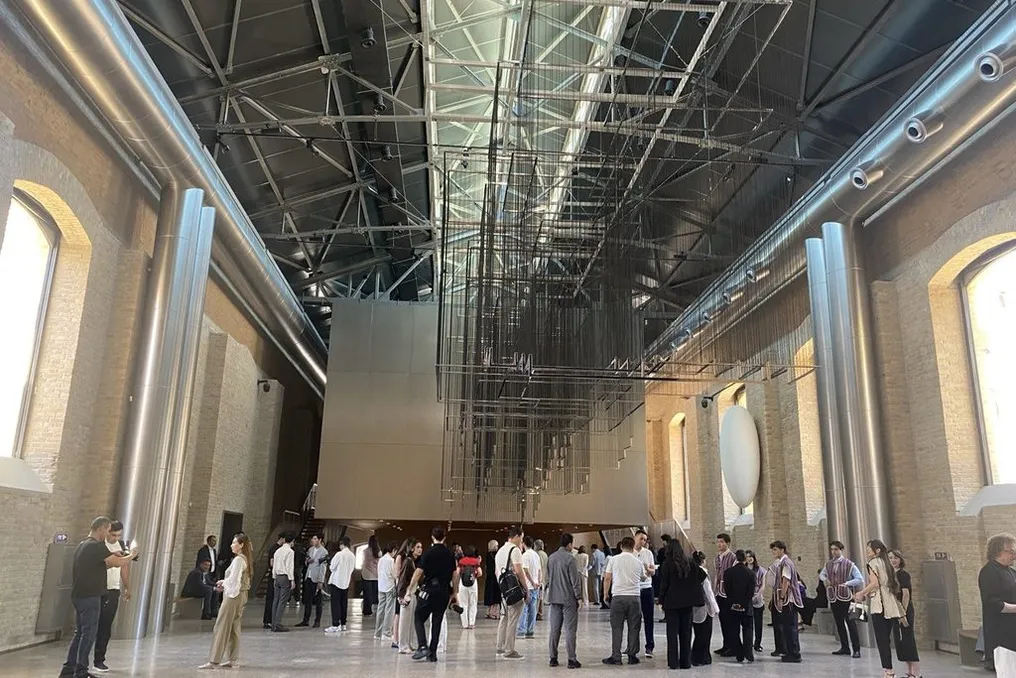
A new cultural center, the Center for Contemporary Art (CCA Tashkent), is operational in Tashkent. It is located in the building of a former diesel power plant, constructed in 1912, and is conceived as a multifunctional cultural institution. This center aims to be a gathering place for artists, creative industry specialists, curators, architects, and the general public, providing a platform for dialogue and the realization of new artistic concepts.

A distinctive feature of the project is the preservation of the historical building while integrating modern cultural functions into it. The choice of this location is due to the history of the area, where there has always been active public life, and it was important for the project creators to maintain this dynamic by transforming it into a sphere of creative experimentation.

The architects viewed the power plant as an independent participant in the process. Initially, the building was in a difficult condition: it was gloomy, abandoned, and smelled of diesel fuel. Nevertheless, despite its external decay, it possessed a distinct architectural character. The monumentality of the abandoned power plant defined the main task—to adapt it to new needs while minimizing damage to its original individuality.

The deeper the architectural studio Studio KO studied the features of the building during the architectural transformation, the more ideas emerged. The layout and distribution of various zones depended on existing elements, which can be interpreted as the building itself offering solutions that needed to be recognized. This method allowed for the harmonious combination of historical heritage with contemporary content.

The result is a space that combines the characteristics of a museum and an exhibition hall, but the concept of the Center foresees a much broader range of activities. Exhibitions, discussions, and meetings will be held here, all aimed at strengthening interaction between artists and viewers.

The chief curator of CCA Tashkent, Dr. Sara Raza, emphasized that the center should serve as a place where artists can not only display their work but also actively work and exchange experiences with the audience. She specified that the program should not be limited exclusively to exhibitions; the goal is to create a living, constantly evolving space that grows with artists, visitors, and the entire professional community.

Furthermore, the project aims to increase the recognition of contemporary art within the country and provide local artistic collectives with opportunities to interact with the international professional community.

The Center for Contemporary Art began its operations with an exhibition titled 'Hikmah'. This name comes from the Arabic word hikmah, meaning 'wisdom', and brings together works by contemporary artists. Participants in the exhibition include Mukhannad Shono, Nari Ward, Shohrukh Rakhimov, Tarik Kisvanson, Kimsuja, Ali Sherri, Nadia Kaabi-Linke, Vladimir Pan, Daribay, and Bakhtiyar Saipov. Their works explore the connection between local traditions, spiritual heritage, and modern artistic methods, presenting their vision to the viewer. The exhibition also includes a sound installation created by Sabina Inoyatova.

Dr. Sara Raza added that the 'Hikmah' exhibition is dedicated to studying new points of intersection between traditions, material culture, and contemporary artistic practices. By bringing together authors from different countries, she offers a new perspective on the concept of wisdom as a process of constant reflection on culture, art, and memory.

In conclusion, the activities of CCA Tashkent are focused on supporting artists from Uzbekistan, strengthening international cooperation, and introducing the local audience to the creativity of world masters. Concurrently, the center will promote Uzbek artists on the global stage, opening up prospects for them for research, collaboration, and participation in global art projects. For Tashkent, this marks the emergence of a new cultural attraction where art, architecture, social life, and international cultural exchange converge.

Forum of Writers from Uzbekistan and Kazakhstan on Turkic Heritage Held in Tashkent
Read more
podrobno.uz

Forum of Writers from Uzbekistan and Kazakhstan on Turkic Heritage Held in Tashkent

From September 2 to 3, a forum of writers from Uzbekistan and Kazakhstan titled 'Spiritual Heritage of the Turkic World: Literature – Dialogue of Eras and Generations' is taking place in Tashkent and the Tashkent region. The event is dedicated to several significant dates: the 35th anniversary of Uzbekistan's independence, the 100th anniversary of the First Turkology Congress, and the 585th anniversary of Alisher Navoi.

Day One Events

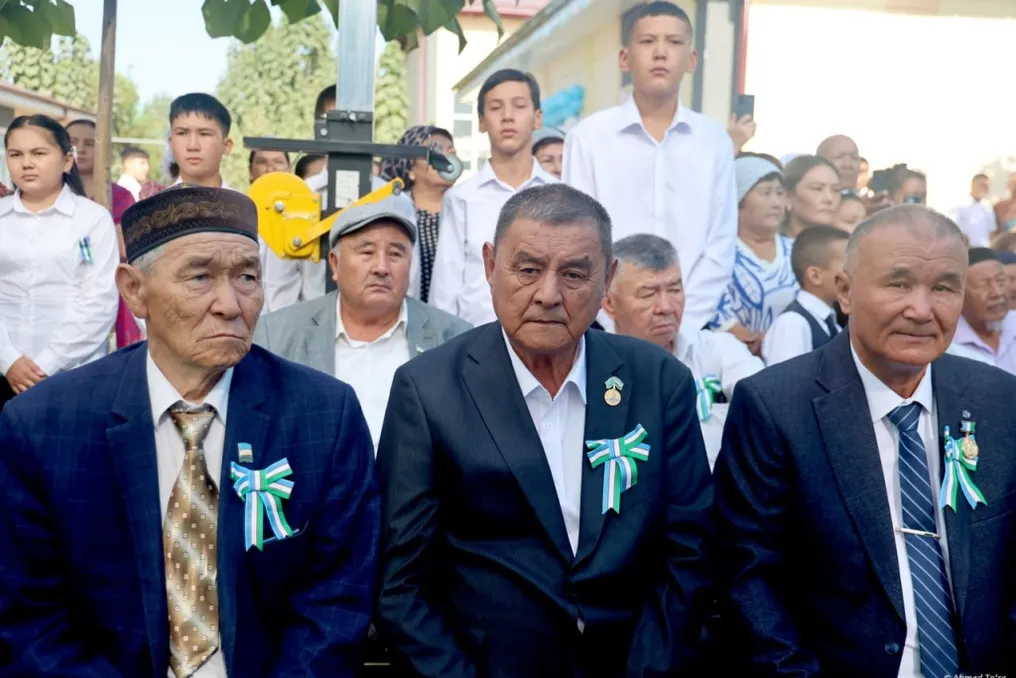
The first day of the forum began at School No. 34 named after Rakhmetolla Raimkulov, located in the village of Koramanas, Bostanlyk district. During this day, a first bell ceremony was held, and an updated library space and co-working center were opened. Additionally, the school received books from the Union of Writers of Uzbekistan, the Committee for Interethnic Relations, and the Turkic Culture and Heritage Fund.

Advisors to the Presidents of Uzbekistan and Kazakhstan—Khairiddin Sultanov and Malik Otarbayev—as well as the Minister of Preschool and School Education Ezozkhon Karimova and the Ambassador of Kazakhstan Yeraly Tugzhanov are participating in the forum. Among the guests are also heads of the writers' unions of both countries and representatives of the creative intelligentsia.

Forum participants are focused on discussing topics related to the development of literary ties, the common spiritual heritage of Turkic peoples, and the significance of literature in intergenerational dialogue. Furthermore, it was previously announced that on September 6 in Tashkent, the first permanent Center for Contemporary Art will open, which will also serve as a venue for events related to literature.

Popular