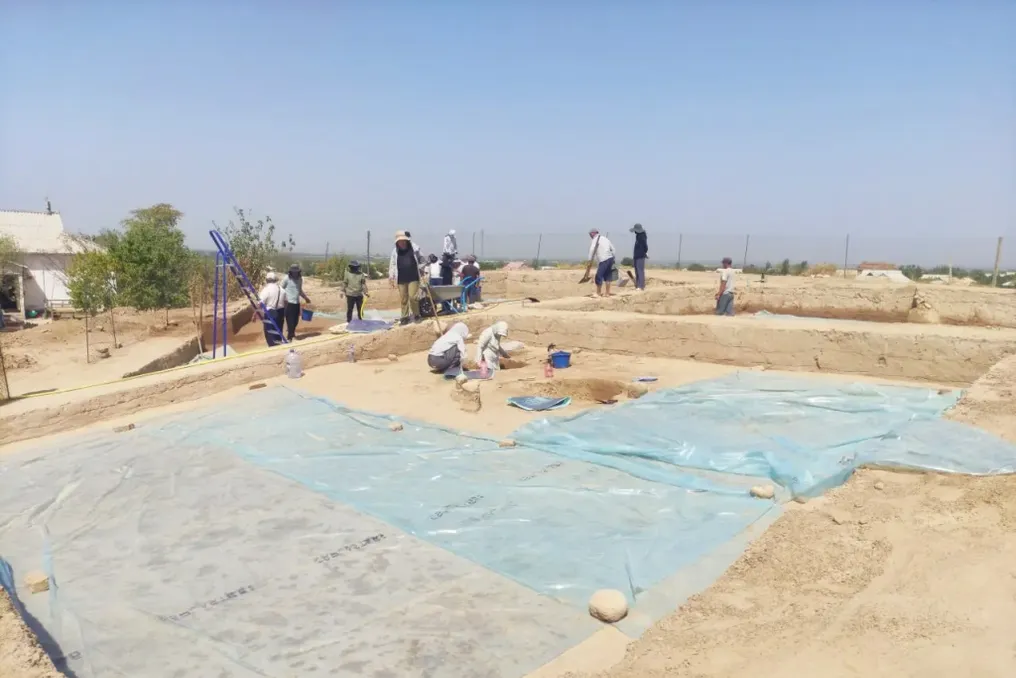
Archaeologists are exploring one of the region's oldest burial grounds, located at the Ozod monument, in the Shurchinsky district of the Surkhandarya region of Uzbekistan. During the work, approximately one hundred burials dating back 3,5 thousand years were discovered.
Excavations at this monument began on August 15, 2026. The research is being conducted through the joint efforts of specialists from the Gulomov Samarkand Archaeological Institute and the Silk Road Archaeology Research Center of Northwestern University of China.
The monument itself was first discovered in 2023 as a result of field reconnaissance work conducted in the eastern part of the Surkhandarya basin. It is located southeast of the village of Ozod, about six kilometers from another ancient monument—Dalverzintepa. The total area of the archaeological site is about 200 by 100 meters, and about one hundred burials have been identified so far.
In the current season, the specialists' attention was focused on more than ten graves located in the southwestern part of the monument. Preliminary results indicate that both the construction of the burials and the found artifacts exhibit characteristics of the Sapallin culture.
The age of the monument was determined through radiocarbon dating and comparative typological study of archaeological finds. According to preliminary estimates, the burials date to the period of 1700–1500 BCE, which corresponds to the age of the Ozod cemetery at 3.5 thousand years. For archaeologists, this site is of significant interest because it is one of the oldest cemeteries found in the Surkhandarya basin, and its study will help clarify the evolution of funerary traditions of the local ancient population.
Work at the site continues, and archaeologists expect new discoveries that will allow for a more detailed study of the history of this ancient monument. It should be noted that stone artifacts dating back 320 thousand years have previously been found in the Tashkent region.
