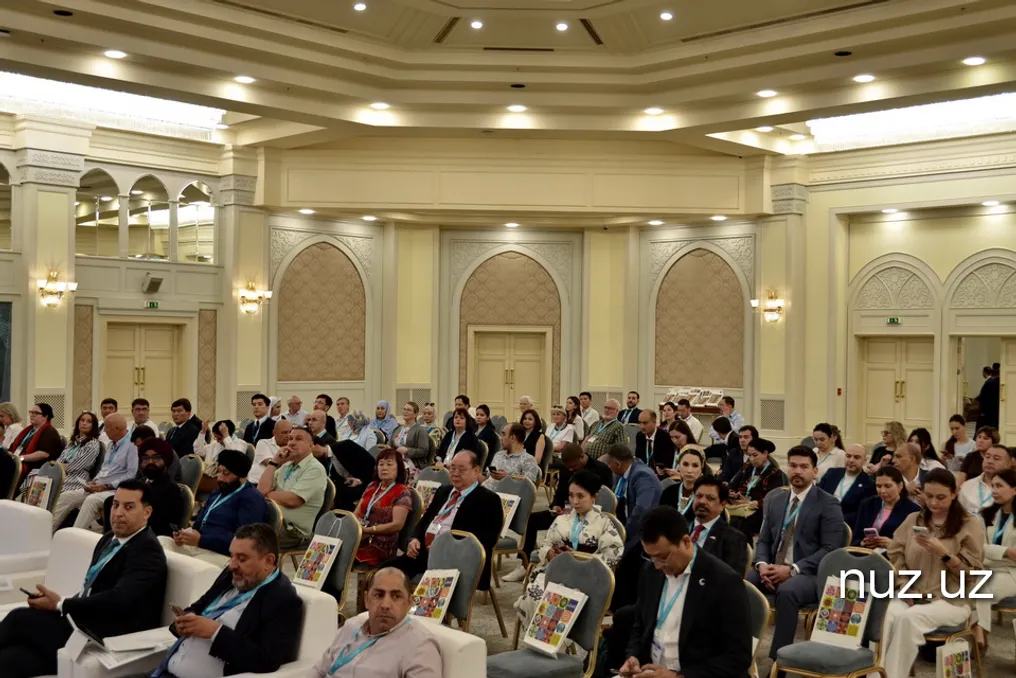
The International Summit on Ecotourism and Sustainable Tourism took place in Tashkent on August 26th. Uzbekistan hosted this international event for the first time, bringing together experts, representatives of the tourism industry, and foreign tour operators. The main objective was to showcase to the world not only the country's historical landmarks but also its natural diversity, culinary traditions, and life in various regions.
Delegations from over twenty countries attended the summit. For Uzbekistan, this provided an opportunity not only to present its tourism potential but also to hold direct discussions with foreign companies regarding the development of new routes and joint projects.
Sanjarbek Tadjiev, Deputy Chairman of the Committee on Tourism, reported that the country is actively working to expand its tourism offerings. In addition to well-known centers like Samarkand, Bukhara, and Khiva, attention is growing towards mountainous areas, lakes, deserts, and other natural zones. Simultaneously, infrastructure is being developed, and support measures for the tourism business are being implemented.
The central theme of the summit was ecological tourism. Abrohon Kadyrov, a representative of the National Committee on Ecology, presented the concept of 'From the Silk Road to the Green Silk Road.' Currently, protected natural areas cover 15.7% of Uzbekistan's territory, and plans include establishing three more national nature parks by 2026.
The country possesses all the conditions for developing a new type of tourism, including the Tian Shan mountains, Kyzylkum, the Ustyurt Plateau, the Aral Sea, Aidarkul, tuyaga territories, and other natural zones. Specific destinations are already being offered to foreign guests: bird watching in the Aidar-Arnasay area, ethnographic and nature trips to Nuratau, expeditions to Ustyurt, safaris in Kyzylkum, and trekking in Ugam-Chatkal.
Rare animal species such as the snow leopard, Bukhara deer, saiga, Northern argali, and various birds of prey may be of particular interest to tourists. The key principle of the new approach is that tourism must contribute to nature conservation and provide income to local residents. Local residents can act as guides, rangers, or guesthouse owners, with a portion of the revenue directed towards environmental protection.
A presentation by Italian gastronomic tourism specialist, Professor Roberta Garibaldi of the University of Bergamo, generated significant interest. According to her, the modern tourist is no longer satisfied with simply tasting local dishes; they want to know the origin of the products, the preparation process, and the history behind each dish.
For European travelers, gastronomic experiences rank second only to cultural experiences among the most desired. However, in the Chinese market, food has become the number one priority. This holds special significance for Uzbekistan, as pilaf, samsa, bread, fruits, tea, as well as regional markets and family recipes, can be integrated into comprehensive tourist routes. Guests can not only enjoy delicious food but also visit markets, meet producers, learn to cook, or stay in private households.
Garibaldi suggested developing not only the general brand of Uzbek cuisine but also the unique gastronomic stories of individual regions, including Khorezm, Bukhara, Samarkand, Fergana Valley, and Karakalpakstan. She emphasized that Uzbekistan does not need to invent its culinary identity, as it already exists, and what is required now is to transform it into modern tourist experiences.
Another important segment of the summit was dedicated to B2B meetings. Foreign tour operators held negotiations with Uzbek companies, hotels, and other players in the tourism market. Murtaza Kalender, Chairman of the Board of Directors of Travel Shop Booking, noted that such meetings are a mechanism for turning ideas into real tourism offerings. He pointed out that local businesses have ready products, while foreign operators have access to an international client base, which can lead to new contracts and an increase in tourist flow.
Kalender also characterized Uzbekistan as the 'heart of the Great Silk Road,' highlighting the country's enormous potential in eco-, gastronomic, and cultural tourism sectors.
Junjait Aldemir, a deputy of the Turkish Grand National Assembly, spoke about the development of tourism ties between Uzbekistan and Turkey. He stated that Uzbekistan has significant potential for cultural, religious, natural, and gastronomic tourism. Furthermore, it is important to increase not only the flow of Turkish tourists to Uzbekistan but also the number of Uzbek travelers to Turkey. Samarkand, Bukhara, Khiva, and Tashkent, as well as sites related to Islamic heritage, are of particular interest. Aldemir noted that 'Uzbekistan has truly become one of the rising stars of the modern Silk Road.'
Jakhongir Saidov, Head of the Tourism Diversification Department of the Committee on Tourism, emphasized that the main task of the industry today is not only to attract a larger number of tourists but also to ensure that guests stay in the country longer, visit more regions, and spend money on local goods and services. To achieve this goal, new directions, including ecotourism, are actively being developed, among which Aidarsay and Zomin are highlighted.
According to data presented by Roberta Garibaldi, Uzbekistan received 5.35 million foreign tourists between January and May 2026 alone, exceeding last year's figure by 27.3%. The summit demonstrated that Uzbekistan's tourism image extends beyond just the monuments of Samarkand, Bukhara, and Khiva. It includes the snow leopard in the mountains, the saiga in the desert, birds near Aidarkul, regional cuisine, local markets, crafts, and people preserving traditions. It is this combination of nature, culture, and gastronomy that can open new markets for the country, and international partners are invited not just to visit, but to jointly create and promote sustainable tourism products.