Modern Art Center in Tashkent is Preparing for Opening; First Day Program Announced
Read more
Gazeta.uz
gazeta.uz

Modern Art Center in Tashkent is Preparing for Opening; First Day Program Announced

The Modern Art Center in Tashkent (CCA Tashkent) is scheduled to open on September 6th. It is located in the historic building of a former diesel power plant, constructed in 1912, and will become the first cultural venue of its kind in the region. This center aims to unite local and international art communities by hosting exhibitions, educational programs, and scientific research.

Gayane Umerova, Chairman of the Uzbekistan Fund for Culture and Arts Development, emphasized the significance of the opening for the development of the country's cultural infrastructure and the realization of the fund's long-term plans to form a stable ecosystem for contemporary art. According to her, CCA Tashkent will be a meeting place for artists, curators, researchers, and representatives of various groups, allowing local art to enter into a full dialogue with the global cultural environment.

The reconstruction of the building, whose initial design was developed by Wilhelm Geinselman, head of the construction department of the Turkestan Region, was entrusted to the Parisian architectural bureau Studio KO. The architects' task was to demonstrate the interaction between the old building and the new structure that appeared on this site. The concept of the renovated center was presented at the international fair Art Basel in Paris in October 2025 as a model.

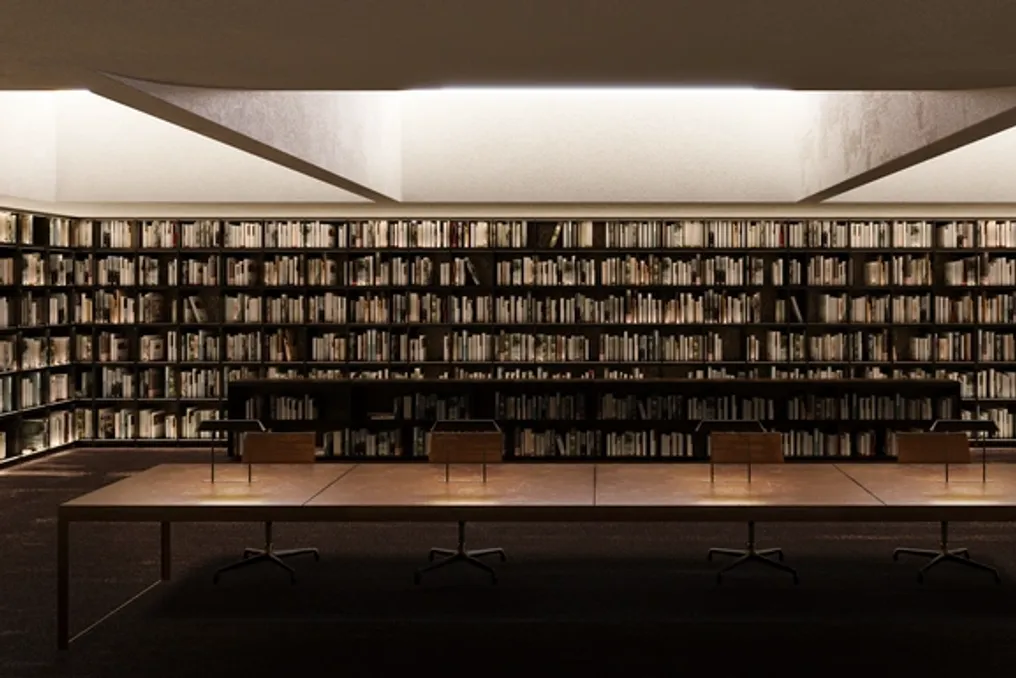
CCA Tashkent is designed as a multifunctional space that, in addition to exhibition halls, will include a library, educational zones, as well as a restaurant and a concept store.

Dr. Sara Raza has been appointed as the Artistic Director and Chief Curator of CCA Tashkent. Previously, she worked at the Tate Gallery in London and the Solomon R. Guggenheim Museum in New York. On September 6th, under her leadership, the center's first exhibition, titled Hikmah (which translates from Arabic as 'wisdom'), will open. This exhibition focuses on the intersection of traditions, material culture, and contemporary artistic methods.

The exhibition will feature works by artists from Uzbekistan, as well as from Saudi Arabia, France, Germany, the USA, and South Korea. Additionally, visitors can view works by Vladimir Pan, Daribay Saipov, and Bakhtiyar Saipov, which belong to the I. V. Savitsky State Museum of Arts. The sound design will be provided by CCA Tashkent's music curator, Sabina Inoyatova.

The program for September 6th includes a series of events: at 11:00, activities related to the Hikmah art works will take place for children; at 12:00, there will be a discussion with Dr. Sara Raza together with Nari Ward and Tarik Kisvanson; at 13:00, poetry readings for children and a sculpture master class inspired by Nadia Kaabi-Linke's installation 'Flying Carpets' are planned. From 14:00 to 16:00, screenings of the films 'Kimsuja: Thread Routes — Chapters I-VII | M+ Museum' and 'Ali Cherry — The Digger' will take place. The evening program includes performances by Avaaz at 16:00, Lilo at 18:00, and 'Shashmakom. Method' at 20:00.

The day before, on September 5th, an exhibition BENCHELLAL, MONUMENTAL | Sculpting Past Tomorrow will be held at the State Museum of History. It will showcase a collection by the Dutch designer and Moroccan-origin couturier Mohamed Benchellal, created during his stay at the art residency in Tashkent and inspired by Uzbek artisanal traditions and architectural heritage.

In September, besides two existing residencies, a new residency will launch in Samarkand in Tashkent. The program in Samarkand will focus on interdisciplinary exchange and research related to the city's rich history and culture. The center will also continue its cooperation with the Architectural Association's visiting school (AA Visiting School). From September 4th to 14th, the AA Visiting School: Climate Cartographies in Samarkand will take place at the Samarkand residency, featuring lectures, workshops, and research routes dedicated to the connection between climate, cultural heritage, and the cosmos in the context of Samarkand's history. Scientists, architects, artists, and historians will participate in the project.
Similar stories

School bazaars opened in Tashkent ahead of the new academic year
Read more
podrobno.uz

School bazaars opened in Tashkent ahead of the new academic year

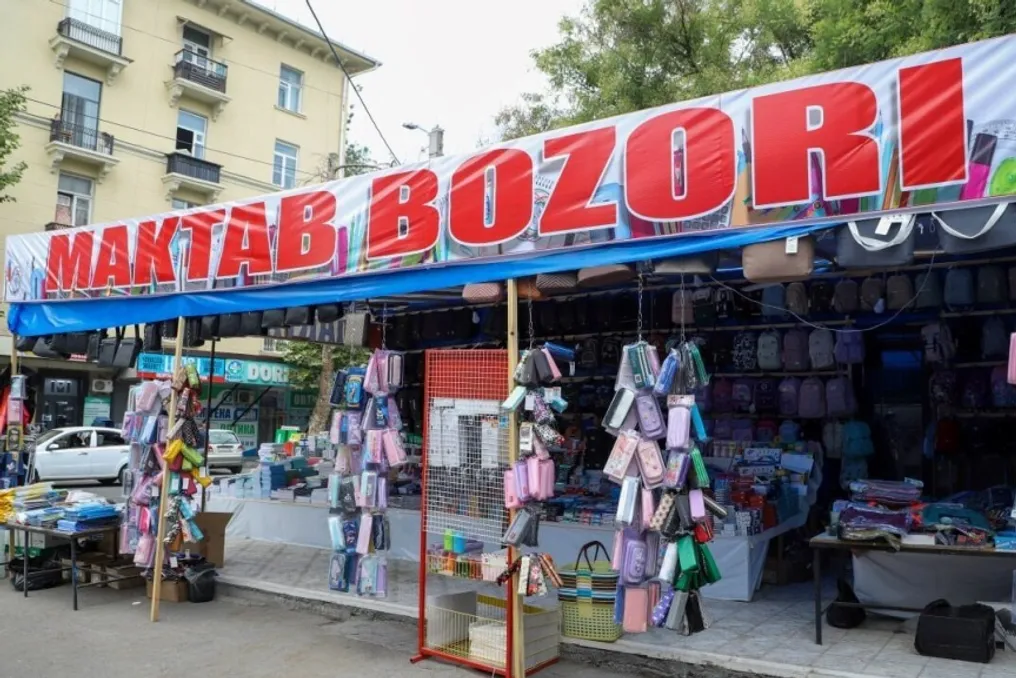
School bazaars have started operating in Tashkent as part of preparations for the beginning of the new academic year. These specialized trading zones have been established in various locations across the capital, including general education schools, dehqan markets, and large shopping complexes.

City residents and visitors can now purchase everything necessary for students, such as textbooks and stationery, at these fairs.

Fair Locations

The school goods fairs are set up in extensive areas of city shopping centers. Among them are the 'Aviasozlar', 'Askia', 'Mirabad', 'Navruz', 'Yunusabad' food markets, as well as the 'Chilanzar', 'Chorsu', and 'Urikzor' trade complexes.

At the 'Chilanzar' market, trading points are located at the intersection of Bunedkor and Farhad streets. Meanwhile, at the 'Eski Zhova' market, they are situated near the large octagonal staircase, in the TIM-1, TIM-2 zone, and near the open metro.

Furthermore, the school bazaars operate at the 'Sergeli' market, covering the territories of Sergeli-2, Sergeli-6, Sergeli-7, the underground passage area of the Sergeli-4 massif, the Sergeli-1 branch, and the vicinity of the Kuylyk-5 massif markets. At the 'Farhad' market, trading points operate on the opposite side of the fair and near the main entrances, while at the 'Karakamysh' market, the fair is located in the 'Tansikboyev' branch.

Technical opening of the Wine Museum at the 'Plov Museum' complex in Tashkent
Read more
nuz.uz

Technical opening of the Wine Museum at the 'Plov Museum' complex in Tashkent

The official opening of the cultural and gastronomic complex 'Plov Museum' took place in Tashkent, which has now fully accepted visitors after a year of operating in technical mode. The founders, representing the holding 'Caravan Group Restaurants,' stated that the project was implemented according to the original concept and are open to constructive criticism.

Over the past year, 'Plov Museum' has established itself as a significant element of Tashkent's gastronomic scene. Here, eighteen varieties of plov are prepared, sourced from different regions of Uzbekistan, including Tashkent, Samarkand, Bukhara, and Fergana regions, utilizing the skills of renowned chefs-oshpazes. The complex serves about a thousand guests daily, among whom are often foreign delegations and city officials for whom a visit is part of an educational program. Furthermore, to support and promote national culinary traditions, master classes and cultural events dedicated to plov preparation are regularly held at the complex.

On the occasion of the anniversary and full launch of the complex, a solemn ceremony was held during which new initiatives were presented. One of the key events was the technical launch of the Wine Museum, located on the territory of the 'Plov Museum.' This new facility will allow visitors to study exhibits related to the history of winemaking in Uzbekistan and to taste products from modern vintners.

Timur Musin, Senior Managing Partner of 'Caravan Group' and main founder of 'Plov Museum,' noted that wine culture in Uzbekistan is still underdeveloped due to low public awareness and previous restrictions on alcoholic beverages. In his opinion, the opening of the Wine Museum will help popularize wine culture among the residents of Uzbekistan, draw attention to local brands, and create conditions for healthy competition in this sector.

Numerous Uzbek wineries participated in the launch of the new project. Among them is the 'MSA Family Winery,' which produces premium wines and holds international awards. Anastasia Pogrebnyak, a sommelier with thirteen years of experience and brand ambassador for 'MSA Family Winery,' emphasized that the winemaking history of Uzbekistan is very ancient, as shards of pitchers with wine traces dating back two to two and a half thousand years have been found in the country. Despite long stagnation, winemaking is currently reviving in various regions of the country.

Anastasia added that she considers the current moment a new stage of development and spoke about their winery's work: they strive to combine technologies, importing French corks, yeast, and equipment from Europe, to unlock the potential of the Uzbek terroir in their beverages.

Parallel to the launch of the Wine Museum, 'Caravan Group' decided to resume the production of its own sparkling wine brand named 'Affresco.' This wine was first created fifteen years ago from six grape varieties, and according to Timur Musin, there are now grounds to bring it to the market so that it can be aged in cellars for decades.

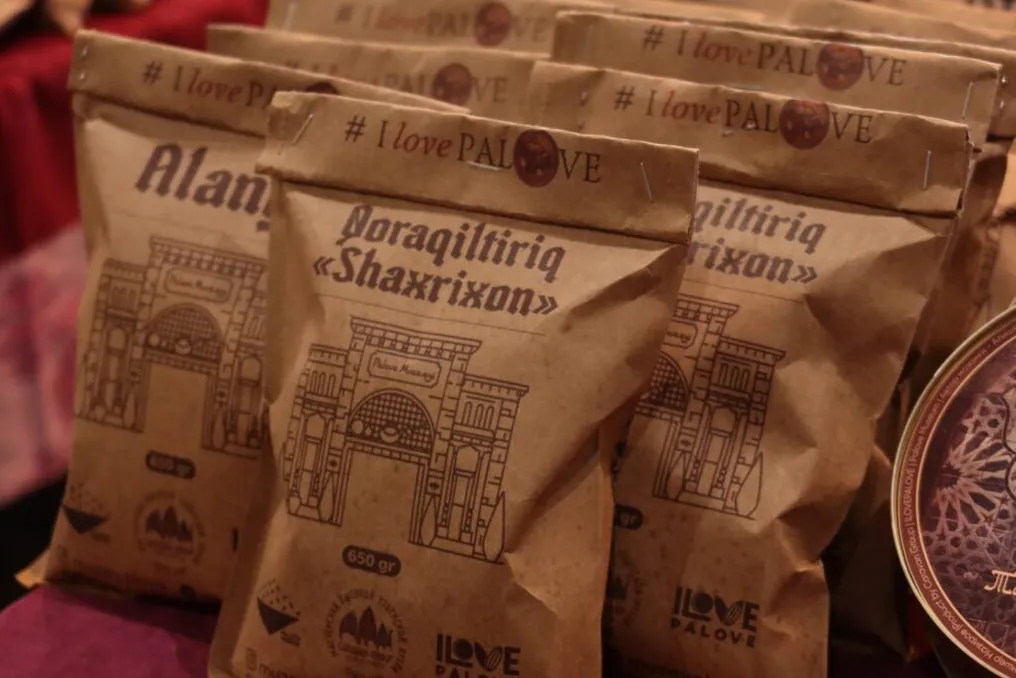
Another important area of 'Plov Museum's' activity is expanding the range of 'I Love Palov'—products for preparing plov, available directly at the complex. A new addition to this line is the sale of amukhta from leading oshpazes, which is a mixture of vegetable oils used in plov cooking. Timur Musin explained that each master-oshpaz prepares their unique amukhta by mixing up to ten different oils, reflecting their individual culinary style. He noted that this signature product could interest the public and support interest in the tradition of plov preparation.

Musin also reported that 'Plov Museum' will store oil from approximately eight oshpazes, with plans to increase this number, which he said is an unprecedented step in the history of plov, as amukhta was previously prepared at home but never formalized as an author's product from a renowned master.

The most ambitious project presented at the event was the plan to build an ethnographic kishlak. This complex, which will combine functions of a hotel, sports and wellness center, and entertainment venue, is envisioned by 'Caravan Group' as a place where guests can not only relax but also deeply immerse themselves in the national culture and traditions of Uzbekistan, including culinary ones. The kishlak is planned to be located in the Bostanlyk district of the Tashkent region on a fifteen-hectare plot. According to Timur Musin's estimates, the project will require another three to four years and hundreds of millions of dollars, but he considers this significant investment promising for domestic and international tourism.

Popular