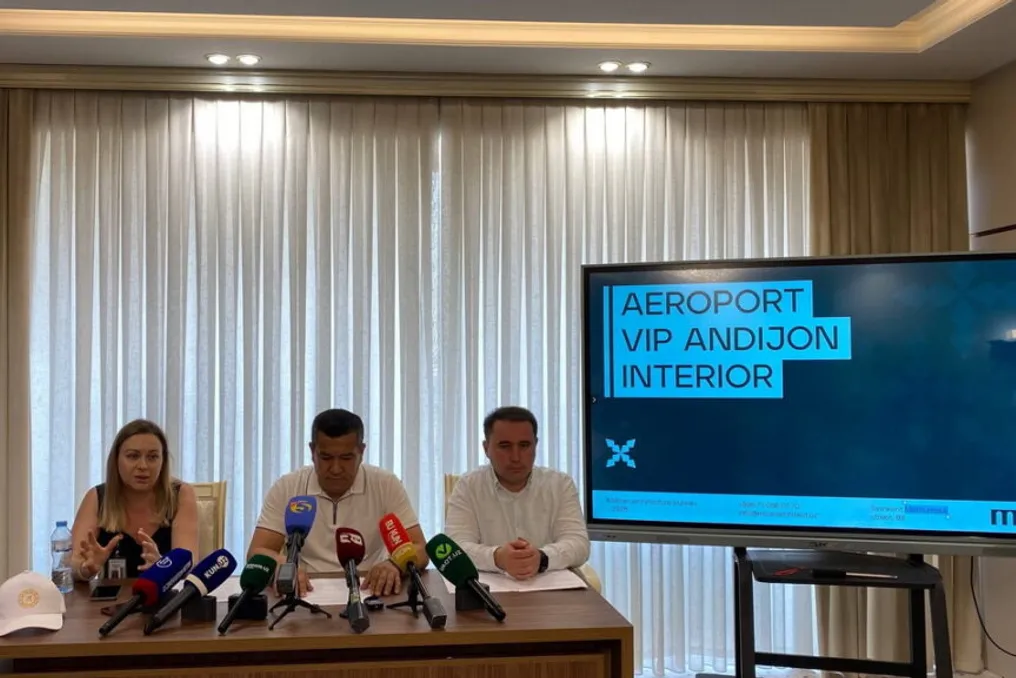
Andijan International Airport is undergoing a large-scale reconstruction process, which the airport director Sohibjon Kenjaev described as a 'de facto rebirth.' This project was presented to journalists on August 17th.
Previously, the airport reopened after two years of reconstruction of the airfield complex last year. Currently, a new passenger terminal is being built, designed with future expansion in mind. As noted earlier, the airport is intended to become a key backup point for the Fergana Valley to avoid diverting flights to Tashkent under unfavorable weather conditions.
A distinguishing feature of this project is that Uzbekistan Airports is carrying out the reconstruction independently, unlike projects in Samarkand, Urgench, Bukhara, and Namangan, where private investors were involved through the public-private partnership (PPP) mechanism.
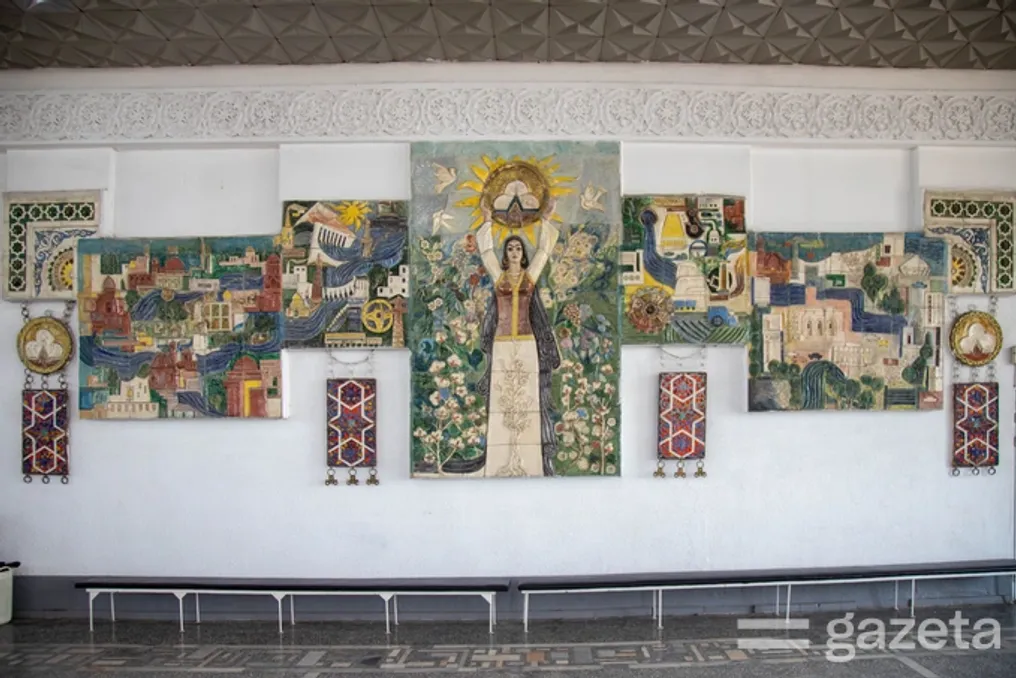
The 50-year-old building of the old terminal is being preserved, although it will eventually be demolished; however, its large panel featuring sunbursts shaped like airplanes on the facade is planned to be kept.
Project Implementation Details
Prime Tower Group is designing the terminal, having previously worked on the Samarkand airport project. The general contractor is the local construction company Marin Business Trade, which has experience building congress halls in Namangan and shopping centers. The parties signed a contract for construction and installation works on February 5th following a tender involving about six major companies. The preliminary cost estimate for the project is 335 billion soms, although the final amount may change due to ongoing design work running parallel to construction.
Sohibjon Kenjaev explained that under the PPP scheme, most of the profit goes to the partner for 15–20 years for payback, whereas in this case, the revenue remains with the company and is directed towards modernizing other regional airports, demonstrating the ability to build an airport with one's own resources.
Significance of the New Airport for Andijan
Andijan region is one of the most densely populated regions in Uzbekistan, home to over 3.5 million people. Located in the eastern part of the Fergana Valley and bordering Kyrgyzstan, the region has significant potential for developing aviation and international transport links.
The capabilities of the air terminal complex, operational since 1979, limited the growth of transport volumes. Initially, the old terminal covered 2402 sq. m, with a capacity of 200 passengers per hour; additional departure and arrival halls were added in 1995–1996. According to Sohibjon Kenjaev, an administrative building will be constructed on the site of the old terminal.
The fate of the panel inside the old building has not yet been determined, but the creation of a museum space in the new terminal is possible. Although the panel does not have the status of a cultural heritage object, the airport management, together with specialists from the Agency for Cultural Heritage, is working to include it in the national register.
New Terminal Characteristics
The new terminal will cover an area of 19,650 sq. m, approximately eight times larger than the existing building, and is designed to handle 1000 passengers per hour, five times more than the current capacity. The first floor will feature 14 check-in desks and 2 self-check-in and baggage drop counters, similar to Tashkent Airport. It will also house the domestic departure hall, a CIP lounge, and the international arrival hall.
On the second floor, where the international departure hall is located, two escalators and two elevators will be installed. The layout is designed so that passengers can navigate easily and not feel confined, as all areas will be open and equipped with glass curtain walls allowing views of the street even during security checks. Co-working spaces with free Wi-Fi will be organized in waiting areas, and outlets and USB ports will be available near the seats.
The terminal's design will incorporate references to Zakhariddin Muhammad Babur, a native of Andijan and founder of the Baburids dynasty. Kobiljon Abdunazarov, the first deputy director of the airport, emphasized that, unlike many closed airports, all zones here are open.
The project also includes the construction of a new control tower building for the