The Isfahan Department of Cultural Heritage, Tourism, and Crafts has started digitizing approximately 2000 documents and records stored at the province's cultural heritage documentation center, an official representative announced on Saturday.
The Isfahan Department of Cultural Heritage, Tourism, and Crafts has started digitizing approximately 2000 documents and records stored at the province's cultural heritage documentation center, an official representative announced on Saturday.
Seyed Ruhollah Seyyed al-Asghari, Deputy Head of the Department of Cultural Heritage, specified that the first batch of about 2000 documents and other materials was transferred to the branch of the National Library and Archives of Iran for the digitization process.
This initiative aims to protect the information contained in these records from potential damage and to expand access to them for researchers, according to a report by the Iranian news agency IRIB.
The Cultural Heritage Documentation Center and the Isfahan Library are considered major repositories of cultural heritage documentation because they contain extensive records of restoration projects, preservation measures, and research conducted over past decades, according to Seyed al-Asghari.
Some of the collected materials include studies and documentation prepared by international companies and groups that have worked in Iran during various periods, added the official.
He noted that in the initial phase, priority was given to records related to restoration, including documentation on conservation works, historical photographs, and architectural drawings. Some maps and documents date back to the 1970s and 1980s and provide information about restoration projects and interventions carried out in the historic buildings of Isfahan.
Many records concerning restoration projects are held at the center, and documentation of various stages of the restoration of sites such as Chehel Sotoun is available to contractors, supervisors, specialists, and researchers involved in preservation projects. These records can provide information on past restoration methods and the treatment of wooden structures, architectural decorations, and other elements of historic buildings, serving as reference material for future research and preservation interventions, explained Seyed al-Asghari.
Seyed al-Asghari also mentioned that the center's library contains about 7540 books, some of which are rare and were published in very limited quantities in Iran. Students and researchers regularly visit the library and documentation center to conduct specialized research.
Furthermore, Seyed al-Asghari referred to an earlier digitization project conducted in cooperation with the Isfahan Municipality organization for urban environment repair and improvement. Nearly 8000 photographic materials related to previous restoration projects were scanned and digitized over several months.
The current project will ultimately cover additional sets of documents, including studies and records created by international teams working in Isfahan. In later stages, efforts will focus specifically on documenting research conducted by Italian groups active in the city and transferring it to the National Library and Archives Organization for digital preservation.
One of the main goals of this collaboration is to expand researchers' access to documentary resources, stated Seyed al-Asghari. Currently, researchers often have to travel to Isfahan to review many records, whereas hosting the digitized materials on a national platform could allow researchers across Iran to access them.
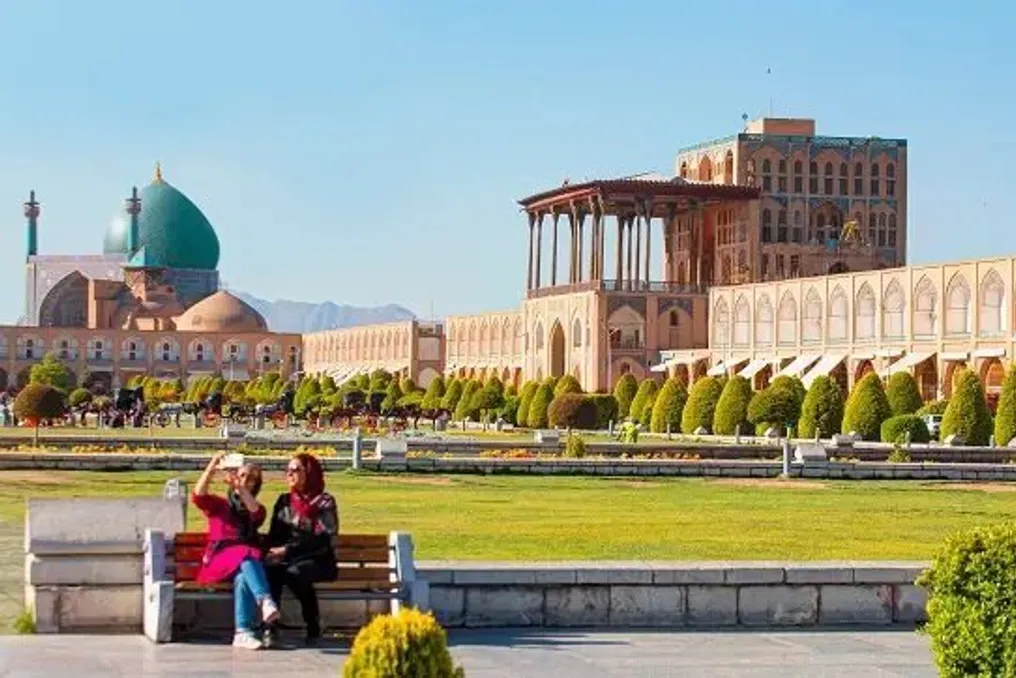
Isfahan, the capital of the central Iranian province of the same name, has long been a major center of Iranian cultural heritage. The city particularly flourished from the 9th to the 18th centuries and became the capital of Safavid Iran under Shah Abbas I in the late 16th century. Often associated with the Persian saying 'Isfahan nasf-e-jān' ('Isfahan is half the world'), the city is famous for its historic mosques, bazaars, gardens, bridges, and other architectural monuments.
Cassius Mailula returned to the 'Masandawana' squad and scored the winning goal in extra time, allowing 'Mamelodi Sundowns' to reach the MTN8 semi-finals at Lucas Moriphe Stadium on Saturday evening.
This quarter-final match between 'Mamelodi Sundowns' and 'Polokwane City' took place on August 8, 2026, at Lucas Moriphe Stadium in Pretoria. The final score of the match was 3:2 in favor of 'Mamelodi Sundowns.'
Mailula, who left 'Sundowns' after the 2022/23 season to join Major League Soccer team 'Toronto FC', and subsequently played on loan for 'Wydad Casablanca' and 'KV Kortrijk' in the last two seasons, scored the timely goal when 'Polokwane City' pushed the African champions to their limit.
It was interesting to watch how 'Sundowns' would cope after not taking the field in the first weekend of the Betway Premier League, as well as after the recent tragic death of their former teammate Jayden Adams.
The African champions were undoubtedly experiencing strong emotions throughout the season, especially on the night when Adams' parents were in the stands, and their thoughts seemed far away when they failed to effectively repel a corner kick in the sixth minute. This allowed Bonginkosi Dlamini, who perfectly controlled the ball among the cluster of players in that area, to shoot past Ronwen Williams into the far corner, opening the scoring for the visitors.
The early conceded goal seemed to be the shock that allowed 'Sundowns' to wake up from their state of mourning; the team quickly realized that the best way to honor Adams' memory was to return to the free-flowing style of play that 'Masandawana' is known for. Teboho Mokoena, the mascot, was the first to do so, equalizing the score in the 20th minute by controlling an assist from Antonio Van Wyk before unleashing a powerful shot on the 'Polokwane' goal.
The new player, Van Wyk, who transferred from 'Stellenbosch FC' to 'Chlurokop', demonstrated an impressive debut, becoming not only an assist provider but also a scorer, netting his goal for 'Sundowns' in the thirtieth minute. 'Sundowns' could have extended their 2:1 lead when Favaaz Basadien, who started in a rare lineup under coach Miguel Cardoso, showcased his skills down the left flank and delivered a beautifully placed cross to the advancing Mokoena, who was unnoticed in the six-yard box. However, Mokoena could not finish the attack, heading the shot over the crossbar.
Basadien clearly enjoyed returning to the pitch after minimal playing time last season, and the 'Bfana Bfana' wingback made a swift run forward shortly after the break, unleashing a shot that narrowly missed the 'Polokwane' crossbar. Nevertheless, it was 'Rise and Shine' that silenced Lucas Moriphe Stadium again when Tidimalo Molokwane leveled the score with an equalizer, despite the game flow suggesting 'Sundowns' had taken control of the match.
This prompted 'Sundowns' coach Cardoso to make changes, making an initial triple substitution, in which former 'Stellenbosch' players—Basadien, Van Wyk, and Ikraam Reyners—were replaced by Cassius Mailula, Kutlawano Lethaku, and Aubrey Modibe. The Portuguese tactician continued to change the lineup, bringing on Lebo Motibu for Bennett Mokoena seven minutes before the start of extra time. Ultimately, Mailula played the decisive role when 'Sundowns' needed it most during an emotional night for 'Masandawana.'
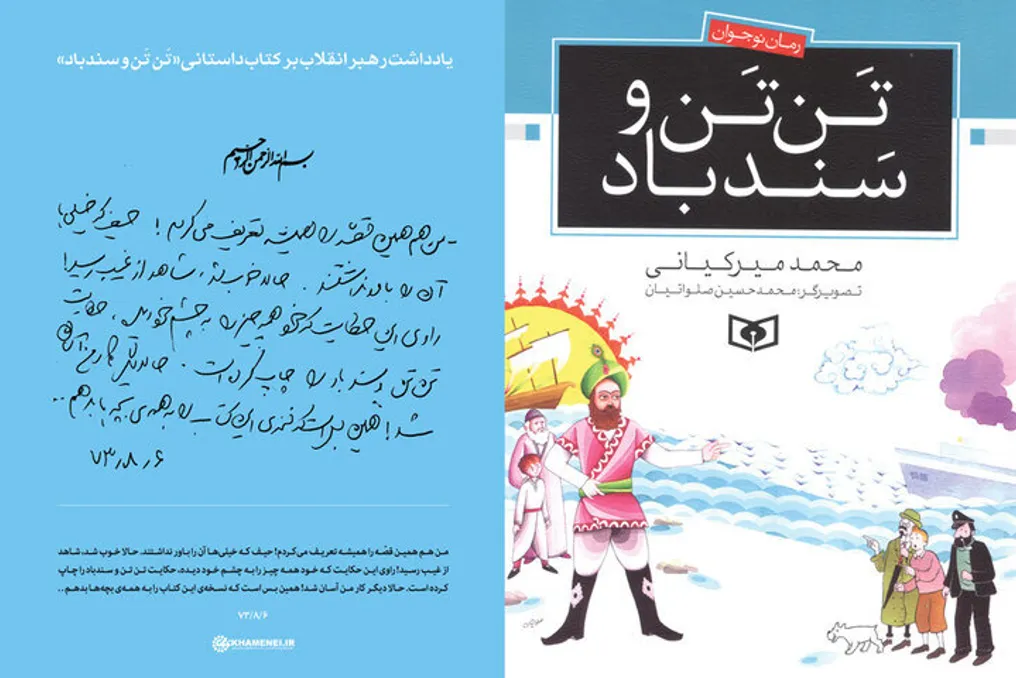
The popular youth novel 'Tintin and Sinbad,' written by Iranian author Mohammad Mirkhani, has been released in its 49th edition by Qadiani Publications.
This book, illustrated by Mohammad Hossein Salavatian, has remained an important part of Iranian children's and youth literature for over two decades. Since its first release in 2004, the book has shown stable demand, leading to numerous reprints and widespread popularity among teenagers.
'Tintin and Sinbad' is known for its exciting and adventurous plot, which combines characters from various cultural myths and comic traditions. The story follows the adventurous reporter Tintin as he travels to the East with a group of iconic Western heroes to challenge the legendary champions of the East. In response, the legendary sailor Sinbad leads the Eastern heroes, setting up an epic and fantastical confrontation between legendary figures from two different worlds.
The narrative features a rich cast of characters: Eastern heroes such as Rostam, Aladdin, Genie of the Lamp, Ali Baba, and Pahlavan Panbeh confront Western icons, including Superman, Tarzan, Captain Haddock, and Professor Turnbull. Through this adventurous and often humorous lens, Mirkhani introduces young readers to the rich mythological heritage of the East, exploring themes of cultural identity and the significance of local heroes.
The book's cultural importance was further emphasized by a note left by the late Leader of the Islamic Revolution, Ayatollah Seyyed Ali Khamenei. In his note, he highly praised the foundation of the story, noting its timeless nature. He mentioned that he had previously shared similar stories and expressed joy that the narrative was captured in print, advising that the book be distributed among all children.
Tashkent's 'Plov Museum' is preparing to celebrate its first anniversary. Over the past year, this unique project, which combines the functions of a museum and a restaurant, has transformed from a simple gastronomic venue into a large-scale initiative aimed at preserving and promoting the country's culinary and gastronomic heritage.
There are many museums worldwide dedicated to various food products and culinary traditions—from cheese and chocolate to wine and spices. However, the value of such a gastronomic museum lies not only in displaying the product itself. It must explain the origin of the dish, the reasons for the formation of a particular tradition, as well as the natural and agricultural factors that made it possible, and also tell about the people who preserve this knowledge and how it is passed on to future generations.
This is precisely why the Tashkent 'Plov Museum' is of particular interest, as it showcases diverse regional methods of preparing plov. It is important to understand that regional plov is not just a variation of one dish; it represents specific places, products, preparation methods, and people.
The oshpazes who prepare different types of plov are closely linked to the regions from which their recipes originate. Many of these masters are themselves custodians of the relevant tradition and cook plov for local residents. Consequently, behind every dish in the museum is not just a recipe, but a living human story.
The regional identity of plov is determined not only by the cooking technique but also by the choice of ingredients, including rice, oil, and spices. Among such traditional products are zigir oil and gurub. The main feature of the project is the desire to preserve authenticity not only at the level of the recipe but also at the level of the origin of the dish and its components.
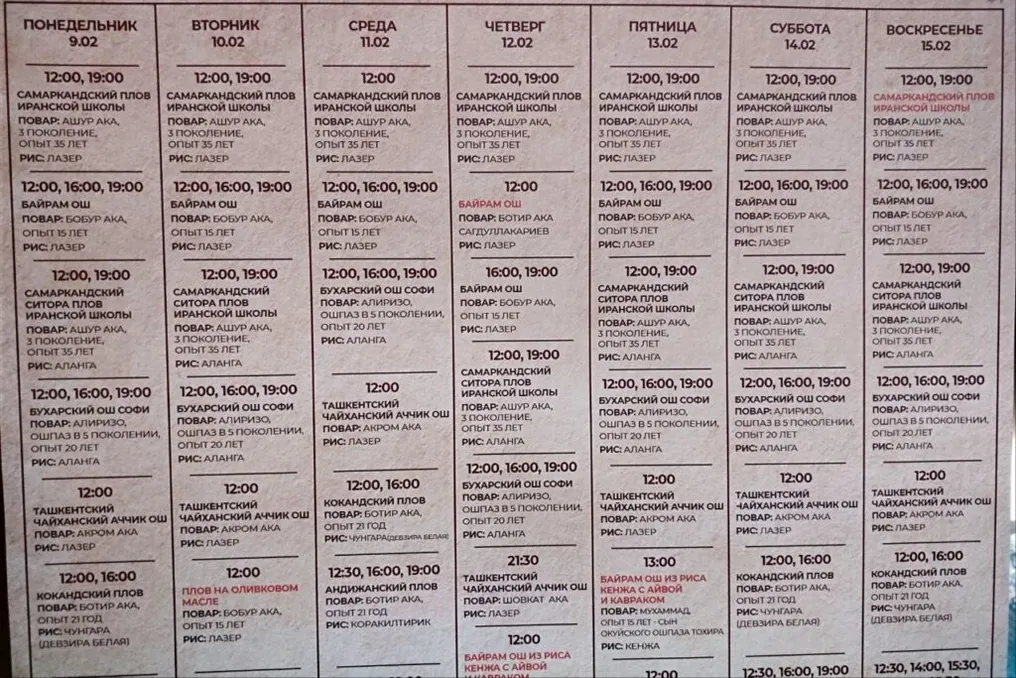
The museum uses a special form of presenting this tradition: there is a kind of 'schedule' of oshpazes' work, which allows guests to find out in advance which master and which regional variant of plov will be presented on a given day. Thus, an interesting fusion is created between museum exhibition, living gastronomic tradition, and tourist experience, which aligns with the concept of the 'experience economy'. The visitor receives not just a serving of plov, but also learns about who cooks it, finds out the history of the dish, studies the region's features, and connects taste with a specific culture and territory.
As part of the joint venture between the 'Plov Museum' and the 'Tasty Uzbekistan' project, gastronomic tastings have been organized, dedicated to combining various regional types of plov with Uzbek drinks and local delicacies. A concept of 'Plov Pairing' has been developed, involving the tasting of several regional plovs with selected gastronomic pairings. Furthermore, a significant part of these events involves telling the story of the dish, its regional characteristics, preparation traditions, and ingredients used.
The idea goes beyond simple tasting: traditional Uzbek products, such as gurub, shinni, or various types of vinegar, can serve as independent objects of cultural narrative, including specialties from grapes. Thus, food becomes a means of describing the territory. This is likely the main value of modern gastronomic museums—their ability to preserve not only artifacts and recipes but also the memory of people, places, production methods, and traditions.
For Uzbekistan, this is particularly important because national cuisine was formed not in an abstract space, but in specific oases, valleys, kishlaks, and cities where unique varieties of rice, vegetables, and fruits existed, as well as specific recipes and dietary habits. Therefore, the 'Plov Museum' should be seen not just as a museum of one dish, but as a space revealing the broader panorama of Uzbekistan's national gastronomic heritage.
It is planned that the next project, 'Ethnographic Kishlak,' which will be announced during the Museum's anniversary celebration in mid-August of this year, will be able to take the presentation to a new level—from the exhibition of one dish to a comprehensive depiction of the lifestyle, culture, and traditions of the region. In this case, the museum will cease to be merely a place to talk about the past; it will become a space where heritage can be perceived through sight, hearing, understanding, and taste.