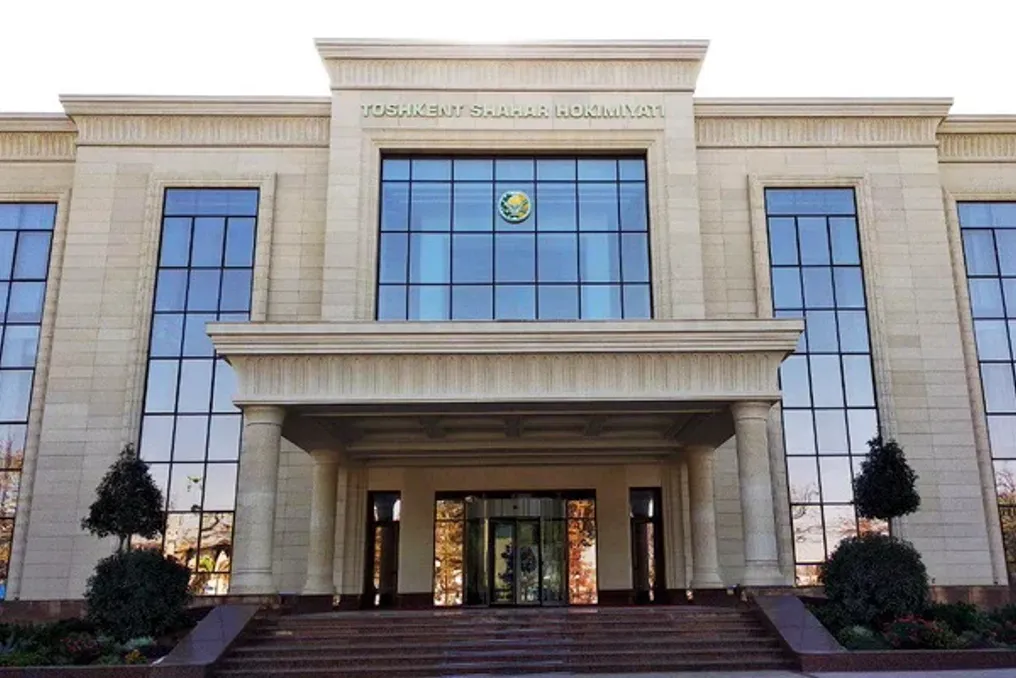
The State Center for Environmental Expertise of Uzbekistan, under the National Committee on Ecology and Climate Change, held a press conference at the Media Content Center of the Presidential Administration to clarify the practical application of Cabinet of Ministers Resolution No. 234 of May 11, 2026, 'On Measures to Implement New Environmental Impact Assessment Mechanisms.'
The event gathered representatives from state agencies, media organizations, bloggers, ecologists, project organizations, the business community, and experts.
The Ecological System Enters a New Phase
Representatives of the National Committee emphasized that ensuring environmental safety, promoting sustainable use of natural resources, and reducing negative environmental impact have become key tasks of state policy in recent years under the leadership of the President of Uzbekistan.
The establishment of the National Committee on Ecology and Climate Change and the adoption of the Law 'On Environmental Expertise, Environmental Impact Assessment, and Strategic Environmental Assessment' marked important steps in the country's environmental reforms. Resolution No. 234 was adopted to implement this law and form a modern regulatory system based on international standards.
It was mentioned that the new structure was developed after studying the experience of countries such as Japan, Germany, South Korea, the European Union, Canada, the USA, Turkey, Georgia, Singapore, Russia, and Kazakhstan. Experts from the World Bank, the UN Economic Commission for Europe, the Organization for Security and Co-operation in Europe (OSCE), and the Korea Institute of Environmental Sciences also participated in developing the new mechanisms.
What Will Change
The resolution provides for a comprehensive modernization of the state system of environmental expertise and environmental impact assessment (EIA). Projects will now be evaluated based on their potential impact on the environment. For the first time, the national system introduces procedures for international screening and defining the scope of work at an early stage to determine the necessity of conducting EIA and the volume of necessary environmental studies.
The reform also includes:
- assessment of carbon footprint and greenhouse gas emissions;
- accounting for the cumulative impact of multiple facilities;
- application of best available environmental technologies;
- expansion of public participation in making environmentally significant decisions;
- introduction of public environmental reviews;
- implementation of strategic environmental assessments for state programs, development concepts, and territorial development plans.
Furthermore, the resolution strengthens the responsibility of both project developers and organizations preparing environmental documentation.
Full Digitalization of Procedures
One of the most important changes is the transition of the state environmental expertise process to a fully electronic format. Documents are now submitted through the Unified Portal of Interactive Public Services, which allows for reduced review times, minimization of human error, and increased transparency throughout the process.
The classification of projects by the degree of environmental impact has also been simplified: the number of categories has been reduced from four to three, which facilitates understanding and use of the system for businesses.
New Opportunities for Business
The resolution pays special attention to creating more favorable conditions for entrepreneurs and investors. The updated system provides the following opportunities:
- electronic submission of all documentation;
- requirements adapted to the level of environmental impact of individual projects;
- reduction of administrative procedures;
- lowering of administrative costs and reduction of processing times;
- a public rating system for organizations preparing environmental documentation;
- increased transparency of public services.
According to officials, the main goal of the reform is not to create additional barriers for business, but to implement modern mechanisms for preventing environmental risks and improving the quality of investment decisions.
Comments from the Center Director
Addressing the participants, Gairat Mukhamedov, Director General of the State Center for Environmental Expertise, stated that the adoption of Resolution No. 234 marks a new stage in the development of Uzbekistan's environmental expertise system.
Mukhamedov noted: 'Today, environmental expertise has ceased to be merely a permitting procedure. We are building a modern system for managing environmental risks, based on international standards, digital technologies, and principles of transparency. The new mechanisms allow for identifying potential environmental consequences at the project planning stage, which is critically important both for protecting the environment and ensuring the country's sustainable economic development.'
He added that the reform introduces screening and scope definition procedures for the first time, improves the public hearing process, establishes a mechanism for public environmental expertise, introduces qualification requirements for experts and organizations preparing environmental documentation, and creates a rating system to evaluate their work.
'All of this will significantly improve the quality of environmental documentation, ensure the objectivity of expert conclusions, reduce administrative procedures, and create maximum transparency for both investors and society,' he concluded.
Balancing Economic Growth and Environmental Protection
Officials reported that the new mechanisms are designed to strike a balance between economic development, investment attractiveness, and environmental protection. According to the organizers of the press conference, the reform will strengthen the implementation of environmental policy, improve the quality of public services, enhance control over compliance with environmental expertise requirements, and bring Uzbekistan's EIA system in line with best international practices.
It was noted that the environmental expertise system is transforming from a regulatory tool into a modern mechanism for managing environmental risks that supports sustainable development, protects public interests, and contributes to forming a favorable investment climate.