The private sales market in Uzbekistan is undergoing a transformation thanks to digital technologies, and the emergence of the 'Listee' platform aims to completely replace the concept of second-hand goods.
The private sales market in Uzbekistan is undergoing a transformation thanks to digital technologies, and the emergence of the 'Listee' platform aims to completely replace the concept of second-hand goods.
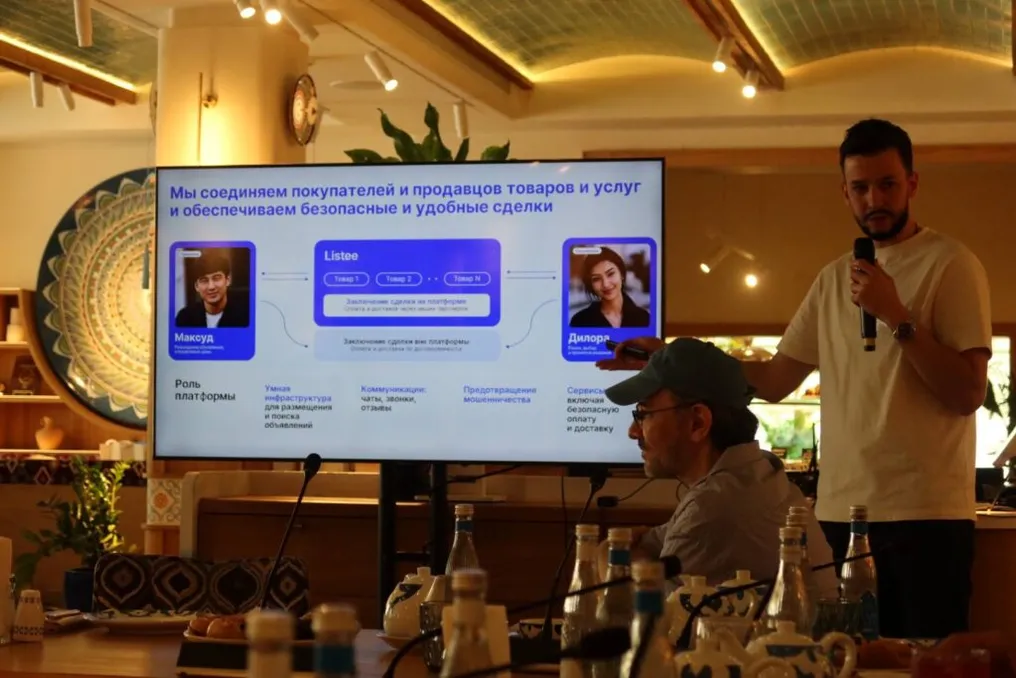
Although e-commerce has long been familiar to over 10 million residents in the republic who use marketplaces such as Ozon, Alibaba, and Uzum, on July 31st in Tashkent, the international resale platform 'Listee' was presented. This platform was launched in test mode in August.
The project, developed by IT entrepreneur Vitaliy Tumanov, is a digital trading platform operating on a C2C (consumer-to-consumer) model. It utilizes advanced technologies and modern security services.
According to Tumanov, who presented the project with partners, its goal was to create a progressive trading ecosystem that would stand out in the market due to a high level of convenience, transaction efficiency, and reliability.
A key feature of 'Listee' is the ability for individuals to buy and sell not only new but also used items, including clothing, furniture, and household appliances.
Tumanov intends not just to raise the standards of electronic C2C trade but also to attract users who currently most often use 'Telegram' and other social networks for personal transactions. He noted that while 'Telegram' is an excellent messenger, it is completely unsuitable for trading as it provides no assistance or protection to users.
Vitaliy Tumanov believes that the main obstacle to the development of C2C trade is the factor of trust. Therefore, a high degree of security is presented as a fundamental element of trustworthy e-commerce on 'Listee'. To ensure this, he and his team plan to use tools for protecting business communication, a system for monitoring all transactions on the platform, and a rating system for sellers and buyers.
Another important advantage is the integration of a built-in payment system and the involvement of payment and logistics partners, which serves as an additional guarantee against fraud. Tumanov explained that the buyer's money passes through the payment partner, and the seller receives funds only after the item is delivered and the buyer confirms that it matches the order, eliminating the need to transfer funds via suspicious links.
The platform will also use artificial intelligence technologies. This will allow for fast and efficient content moderation, personalization of product offers, and significant simplification of the listing process.
The creation of 'Listee' was carried out by a team of experts with experience working in large international companies and deep knowledge in online platform development. Vitaliy Tumanov himself previously held management positions at 'Google', 'Avito', and 'Yandex', and the team included specialists from 'Wildberries', 'X5 Group', and 'Coca-Cola', as well as local experts familiar with the specifics of the Uzbek online market.
'Listee' is planned to be scaled internationally in the future, but the current test launch in Uzbekistan will allow the team to study user needs and form a further development strategy. The choice of Uzbekistan as a starting point is due to the fact that, according to Tumanov, there is active growth in the number of internet users in the country, predominantly youth, and rapid development of digital technologies.
Tumanov emphasized that despite the fact that the internet is already widely available in Uzbekistan and e-commerce has boomed, the actual volume of online purchases remains relatively small. With a population of about 40 million people and a high level of digitalization (according to Tumanov, about 9 out of 10 residents of Uzbekistan use the internet), less than 10 million people make online purchases. Nevertheless, he is confident that thanks to technological development, the growing popularity of marketplaces, and the predominance of youth among users, the e-commerce market will expand rapidly, achieving results in 3–5 years that would take other countries 10–20 years.
The Ministry of Justice of Uzbekistan has introduced amendments to the procedure for operating a special legal regime designed for testing crypto technologies under regulatory supervision. These changes concern the rules for issuing stablecoins.
Previously, participants in the experimental regime were only allowed to issue stablecoins provided they had backing in the form of national or foreign currency. Now, issuers have access to using government securities owned by the issuer itself as collateral for digital assets.
According to the updated regulations, funds must be placed in a dedicated account at the Central Bank. Simultaneously, government securities are blocked through the Central Depository on behalf of the regulator, following established depository procedures. It is important to note that the issuer retains the right to receive income and interest from these securities.
An mandatory condition has been introduced to ensure the security of holders of digital assets: the total value of funds held in the Central Bank's account, along with the nominal value of the blocked government securities, must equal or exceed the total nominal value of all stablecoins in circulation. Furthermore, forming this collateral using borrowed funds, loans, or pledged property is prohibited.
It should be recalled that an organized criminal group engaged in illegal trading of crypto assets was previously liquidated in Tashkent. According to investigative bodies, the volume of turnover of this criminal scheme reached $1.5 million.