The author visited the restaurant Al Firenzi, a long-time favorite for Italian cuisine, along with Poet, Vivek, and their new neighbors. Trevor, who always prefers veal, was also present in the company.
The author visited the restaurant Al Firenzi, a long-time favorite for Italian cuisine, along with Poet, Vivek, and their new neighbors. Trevor, who always prefers veal, was also present in the company.
On Saturday evening, the restaurant was completely full of visitors. Children played on the trampoline outside while families gathered and had fun, creating the characteristic Italian hospitality. The guests were seated at the farthest table in the corner, which was slightly uncomfortable, but on the cold night, they enjoyed the warmth of the pizza oven from which fresh pizzas constantly emerged.
The menu features traditional dishes such as Margherita, pepperoni, ham with mushrooms, or 'four seasons,' as well as exotic options like 'Natal,' which includes ham, shrimp, banana, and chili. The Bolognese version includes pineapple and capers, which the author called an unusual combination. More modern items include bacon, avocado, and feta, or Parma ham with arugula. The vegetarian selection looks very hearty.
As appetizers, there is an assortment of antipasti for two, snails in garlic-butter sauce or with gorgonzola. They also offer chicken wings with chili, calamari in lemon oil, octopus baked with olive oil, garlic, olives, fresh herbs, and pepper. Fresh mussels are steamed with garlic, herbs, white wine, red onion, and cherry tomatoes, and slices of wild white mushrooms are fried with olive oil, garlic, and parsley.
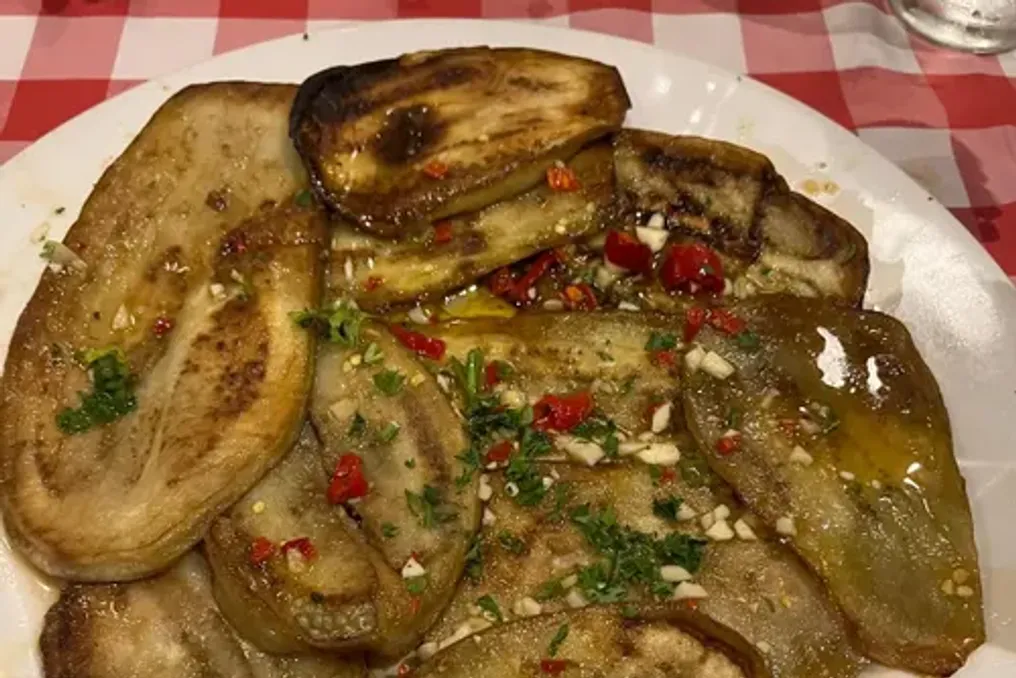
The author and companions tried focaccia with garlic and rosemary, as well as incredibly appetizing shrimp cooked in the pizza oven with gorgonzola. They eagerly devoured all the delicious, bubbly, cheesy juices using bread. Another successful dish was melanzani rosti—fried eggplant slices marinated in olive oil, vinegar, garlic, and chili. Although this dish may not look the most appealing, it has a wonderful depth of flavor; the only complaint was that it could have been served hot.
Artichokes baked in the wood-fired oven with Parmesan and garlic, and deeply fried baby calamari were also evaluated, although the author noted that a dipping sauce would be useful. In salads, one can choose traditional Caprese, with Roquefort, or with fried calamari rings. Main courses include all traditional pastas, such as bolognese, carbonara, meatballs, puttanesca, and seafood. For those without a budget limit, a lobster tail version is available.
The menu includes risotto with porcini mushrooms and seafood, gnocchi, lasagna, and cannelloni. Regarding the grill, Al Firenzi is famous for whole fish cooked in the pizza oven and served on a platter with vegetables and potatoes, suitable for two to four people. Additionally, fried shrimp, lobsters, seafood assortment, and calamari are offered. Two members of the group ordered fish in a simple lemon-butter sauce with french fries.
The author chose the main course as a seafood soup in a rich tomato base. He hoped the soup would be more Sicilian style with a hint of chili, but found it was more aligned with mainland cuisine. Nevertheless, the soup was tasty and contained mussels, calamari, shrimp, and fresh fish. He also felt the soup could have been hotter, and he would prefer the bread slices not to be dipped in the soup.
The meat section features lamb, fillet steaks, and veal. The rest of the group ordered lemon veal, which the author found overcooked. The veal lacked a true lemon flavor over the crispy crust. The dish was accompanied by three small potatoes and a large selection of vegetables, which, in the author's opinion, did not look overly exciting but were pleasant for the guests.
To conclude, the author ordered a delightful tiramisu and a strong double espresso, while neighbors and Vivek drank the remaining wine and several glasses of grappa. Poet finally tried affogato, although, in the author's opinion, she still wonders what the fuss is about this dessert. It was a pleasant evening in good company.
UAE Lottery has published the results of its latest Lucky Day Draw. As a result of this event, one participant won the third prize of 100,000 dirhams, and three other players received 50,000 dirhams each in the Lucky Chance lottery.
The winning numbers for draw number 260801, which took place on Saturday, were 1, 6, 14, 20, 22, and 25, and the lucky monthly number was determined to be 1. According to data published by UAE Lottery itself, the winner of the third prize of 100,000 dirhams matched five numbers and the lucky number.
Additionally, 41 participants received 1,000 dirhams each in the fourth prize category, and 4,035 players won prizes in the fifth category, receiving 100 dirhams each. Furthermore, three Lucky Chance participants took home 50,000 dirhams each, with their identification numbers listed as BV4662400, DL8812832, and CP6677185.
In total, 4,080 winners across various categories received prizes in the last draw. UAE Lottery is regulated by the General Commission for Commerce and Gaming (GCGRA), whose organizers emphasized that all games are conducted in accordance with responsible gaming principles to ensure a safe, reliable, and transparent experience for participants.
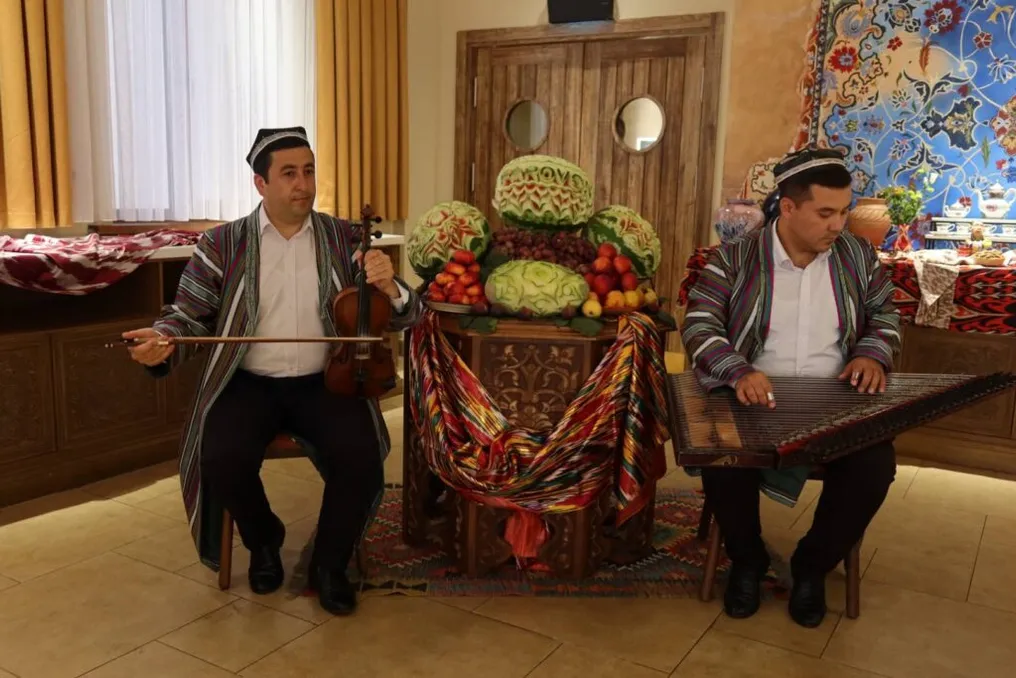
On July 30th, a vegan cuisine festival took place in Tashkent at the 'Farovon' hotel. The event was organized by the Committee for Tourism of the Republic of Uzbekistan with the support of the Embassy of India in the Republic of Uzbekistan. The goal of the festival was to strengthen international tourism cooperation, promote gastronomic tourism in Uzbekistan, and popularize plant-based nutrition as the basis for a healthy lifestyle and as a new, promising direction in Uzbek culinary arts.
The main participant in the festival was Dr. Nikhila Hirewat—an international specialist in healthy eating with a PhD in Ayurveda, which is a traditional Indian science and philosophy about a healthy lifestyle. She presented guests with the fundamentals of Ayurvedic gastronomy, noting that this field is rapidly gaining popularity worldwide, especially in the areas of wellness tourism and healthy eating.
According to Hirewat, the principles of Ayurveda can be successfully integrated into Uzbek cuisine, which could potentially increase tourist interest in the country. She also recalled that a fundamental principle of Ayurveda—the concept of six tastes (sweet, sour, spicy, bitter, salty, and astringent)—which helps maintain balance in the body through daily nutrition, was described as early as the works of Avicenna (Ibn Sina).
To practically demonstrate the possibility of applying Ayurvedic principles in Uzbek gastronomy, a tasting session was held for the festival visitors. Uzbek dishes were presented that were prepared exclusively on a plant-based diet instead of animal products. These dishes, created under the direct supervision of Nikhila Hirewat, fully met the requirements of a vegan diet while retaining the richness of the original flavor.
Hirewat suggested gradually including such dishes in the menus of Uzbek public catering establishments, as she estimates this will significantly increase demand among health-conscious tourists.
Sanjar Tadjiev, Deputy Chairman of the Committee for Tourism of the Republic of Uzbekistan, also emphasized the importance of developing gastronomic tourism in Uzbekistan. In his welcoming speech, he stated that expanding the culinary diversity of Uzbek cuisine would help improve the stay conditions for foreign guests during their trips to Uzbekistan and increase the overall tourist flow.
Furthermore, it should be noted that the issue of healthy eating is relevant to Uzbekistan not only in the tourism context but also in healthcare. According to data from the World Health Organization, Uzbekistan ranks 59th in the global ranking of countries with a high rate of overweight, leading among Central Asian states, where about 64% of the population suffers from obesity.
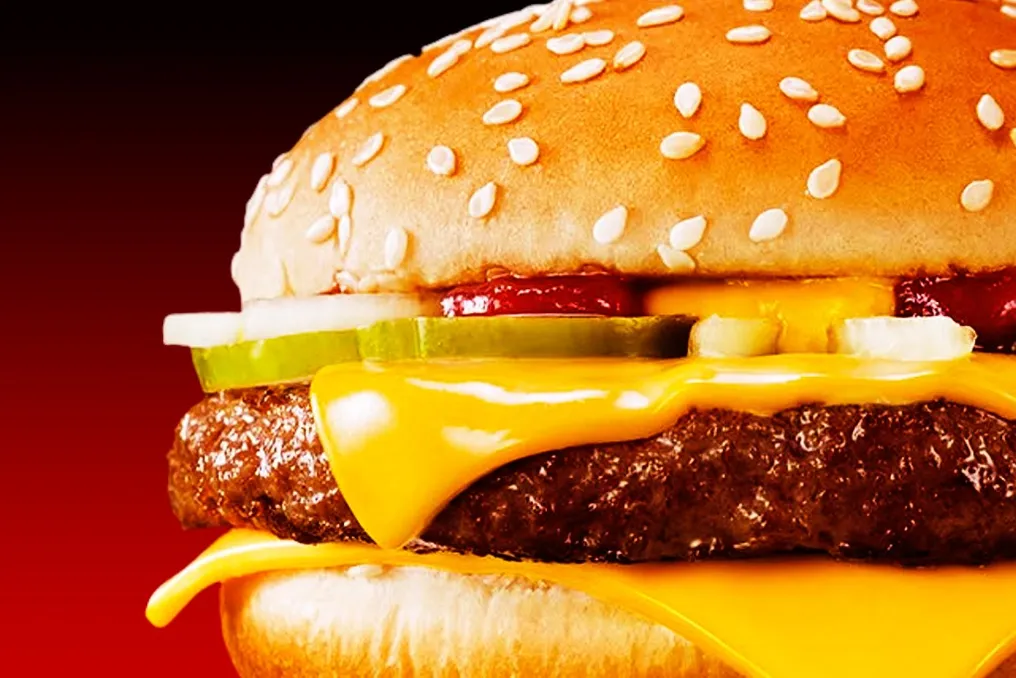
>The name of the McDonald's Quarter Pounder sandwich derives from a unit of measurement, written as 'Quarter Pounder,' without the letter 'i'. This very popular item on the McDonald's menu appeared in 1971.
Al Bernardin, an entrepreneur who owned two franchises of the restaurant in Fremont, California, identified a gap in the menu: the need for a sandwich with a higher proportion of meat to bread. To meet this demand, he created a new snack containing a quarter pound of meat.
The pound (lb in English) is a mass unit used in the United States, equivalent to 453.6 grams. A quarter of this measure corresponds to approximately 113 grams, which was the weight of the raw hamburger in the sandwich. The sandwich's name functioned as a marketing strategy because the term Quarter Pounder immediately communicated that it was a more substantial meat option compared to other items on the menu. At that time, a quarter-pound hamburger was considered quite voluminous compared to market offerings, although today there are options with even larger meats.
The Quarter Pounder was implemented nationwide in the US in 1973. When it arrived in Brazil, the chain opted to adjust the name to 'Quarterão com Queijo,' omitting the 'i' from 'quarteirão' (which means a city block). This translation is peculiar, since 'quarteirão' in Portuguese usually refers to an urban block, and not a fraction of weight, but the name was ultimately accepted by the public.
Although Brazil managed to adapt a name based on a foreign unit of measurement, other countries adopted different solutions. In France, the snack is called Royal Cheese; in Portugal, it received the name McRoyal Cheese. In Germany, the designation is Hamburger Royal TS, where TS stands for 'Tomate und Salat' (tomato and salad), due to the inclusion of these ingredients in the snack. In Sweden, QP Cheese is used, while in Spain the company maintained a more literal translation: Cuarto de Libra con Queso.
Hong Kong presents a notable case. There, the snack was called 足三兩 (zú sān liǎng), which translates to 'three full taels.' The tael is a traditional unit of mass in the country. Since one tael equals 37.8 g, three taels total 113.4 g, corresponding to the original weight of the sandwich. Thus, the inhabitants of Hong Kong sought to preserve the concept of the original name, but using a unit of measurement familiar to the local population. However, this sandwich is no longer offered in Hong Kong.