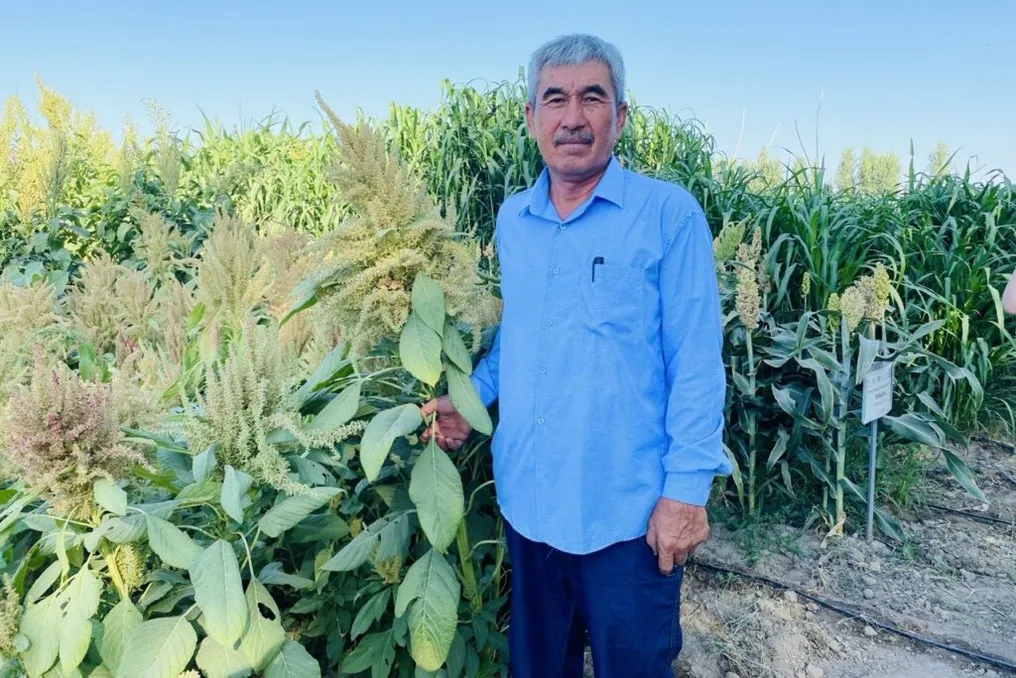
A seminar was held at the experimental field of the Tashkent Scientific Experimental Station of the Research Institute of Cereal and Legume Crops in the Tashkent region. The event was dedicated to selecting and testing fodder crops capable of withstanding climate change, as well as improving the seed production system.
German-Uzbek Cooperation
The practicum was organized as part of the German-Uzbek expert dialogue program aimed at developing climate-resilient agriculture. Since 2024, under the grant project 'Climate-Adapted Fodder Production,' special demonstration experimental plots have been established at the Research Institute and farms in Uzbekistan. Advanced agricultural technologies are being implemented on these sites, scientific research is being conducted, and practical training for students from relevant universities is being carried out.
Overview of Tests at the Experimental Station
The experimental field of the Tashkent Scientific Experimental Station serves as a place to test fodder, legume, and non-traditional agricultural crops for their ability to withstand climatic fluctuations. The delegation, which included representatives from the Ministry of Agriculture of the Republic of Uzbekistan, research institutes, universities, farms, the Agency for Livestock and Pasture Development, regional specialists from AKIS, and agricultural sector experts, inspected the field. Participants studied the planted crops, discussed the results obtained, and exchanged views.
Adaptation of Crops to Local Climate
Agronomist Said Ahmad Sherimbetov of the Uzbek-German Expert Dialogue Program reported that over 70 types and varieties of plants are presented at the demonstration plot, many of which are being tested in Uzbekistan for the first time. The goal is to demonstrate to farmers and scientific specialists which crops best suit the country's climatic conditions. He noted that a visual comparison shows which plants are well adapted to the local climate and which are unsuitable for cultivation, and that many of them can serve as feed for cattle and poultry.
Scale and Seed Sources
Field trials have been underway for three years, and the project itself has been running for four years. Checks are conducted not only in the Tashkent region but also in Karakalpakstan, where the climate is much harsher. This comparison allows for an objective assessment of the resilience of various crops in different natural zones. Sherimbetov emphasized that the seeds used at the site were sourced from various countries, including the Netherlands, Germany, Afghanistan, and African countries, and were selected taking into account the climatic characteristics of Uzbekistan.
Prospects for Agricultural Sector Development
Holding such seminars is critically important so that farmers realize the potential of new crops and are ready to integrate them into production processes. The crops demonstrated at the event might have been little known just a year ago, but current tests show positive trends. Partners from seed companies, specialists, and other participants are joining forces to expand the range of cultivated crops, improve soil conditions, and provide farmers with effective solutions, which will lead to increased sustainability and productivity in agriculture.