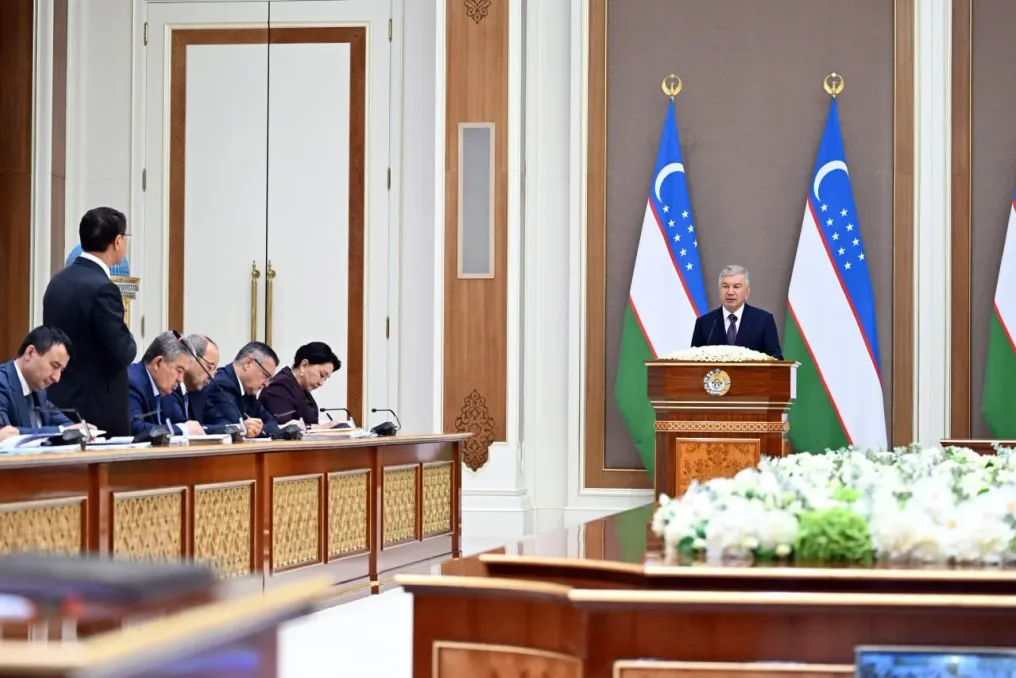
President of Uzbekistan Shavkat Mirziyoyev held a video conference dedicated to priority tasks in the fuel and energy sector.
President of Uzbekistan Shavkat Mirziyoyev held a video conference dedicated to priority tasks in the fuel and energy sector.
The head of state noted that large-scale transformations have been implemented in the energy sphere over the past decade. Adopted laws and decisions have facilitated the expansion of private sector participation and the attraction of foreign investors.
Mirziyoyev emphasized that he personally met with investors to review their proposals. He added that the state has created the necessary conditions and provided appropriate guarantees for every major project.
Thanks to these efforts, $23 billion in foreign investment has been attracted to the energy sector. Furthermore, power plants with a total capacity of 9.5 GW have been commissioned in various regions of the country, which, according to the President, has allowed for the formation of generation capacity fully covering Uzbekistan's domestic electricity demand.
In recent years, 30 trillion soums have been directed towards the modernization of electrical and gas networks, substations, transformers, and gas distribution facilities. This amount is six times greater than the total funds allocated for these needs over the previous 25 years.
Shavkat Mirziyoyev openly stated that the problem in the energy sector is not financing, as the necessary funding exists and is being allocated. Instead, he focused on the fact that the main problem is system management.
It has become simpler and more accessible to monitor homes or businesses thanks to the security camera deals available on Amazon. A variety of promotional models have been selected for those who wish to invest in security without major complications, allowing consumers to choose the option that best meets their needs.
Among the highlighted options is the Full HD 1080p WiFi IP Security Camera. This model is quite versatile, featuring Full HD 1080p resolution, night vision capability via infrared, and motion detection functionality. Furthermore, it has two-way audio, enabling real-time conversations with those being monitored. Its rotating design expands the field of view, and its water resistance ensures its use both indoors and outdoors, while being compatible with bivolt.
For outdoor environments, the IP Outdoor Wi-Fi Security Camera A8 was presented. It is equipped with infrared night vision to capture images even in low light. The ease of installation provided by Wi-Fi connectivity eliminates the need for extensive cables, and real-time monitoring allows you to track everything from your smartphone, regardless of location. Its water-resistant body makes it ideal for outdoor use.
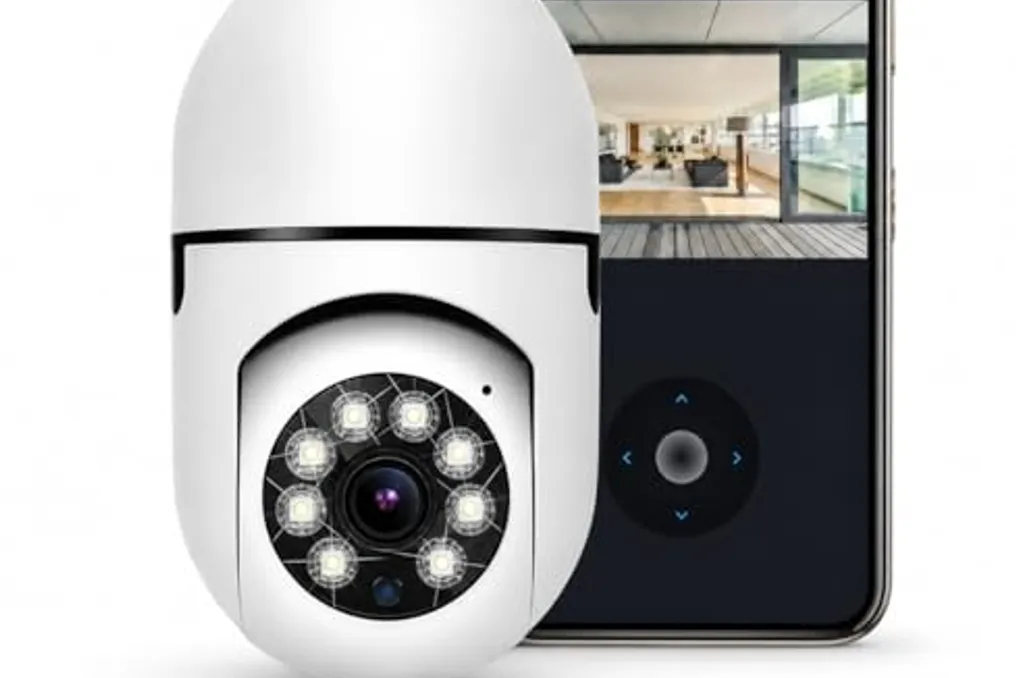
Another creative alternative is the Yoosee Full HD 1080p WiFi IP Bulb Camera. This solution allows a location to be monitored discreetly because the camera is integrated into a light bulb and can be installed directly into a standard socket. Like the other models, it offers Full HD 1080p resolution, infrared night vision, motion detection, and two-way audio. This unusual format delivers all the features of a complete camera, is compatible with the Yoosee app, is rotatable, waterproof, and operates on bivolt.
Due to the quick depletion of promotional stock, it is recommended to access the links immediately to secure the equipment before prices change. It is an opportunity to reinforce the protection of your home or business with quality technology.
Binance Wallet has announced the launch of a new competition dedicated to NES perpetuals trading, offering a prize pool of $50,000. Participants have ten days to earn their share of this fund.
The participation window opens on July 28 at 13:00 UTC and closes on August 7 at the same time.
Nesa is a Layer-1 blockchain. Its core concept involves decentralized artificial intelligence inference that maintains privacy. Models operate on distributed computing nodes instead of using a central server, and results undergo cryptographic verification throughout the process, preventing any single operator from reading the data.
The NES system manages three key aspects: inference request fees, node operator staking, and governance voting.
The Mainnet was launched on May 9, 2026, with a hard limit of one billion tokens. Binance Alpha listed NES on June 24 while simultaneously running a Wallet enhancement campaign.
To participate, users must open the Binance application and navigate to the Binance Wallet section. Then, they need to find the NES Perpetuals Trading Competition event page and click the 'Join' button to register. Participants must trade NESUSDT perpetual contracts, opening both long and short positions, while adhering to a minimum trade volume of 1,000 USDT.
Users who start trading earlier can take advantage of the Day 1 Early Bird Multiplier of 2.0x.
The NES Perpetuals Trading Competition offers Binance Wallet users the opportunity to participate in trading NESUSDT perpetual contracts for a share of the $50,000 prize pool until August 7. Since some conditions have not yet been disclosed, participants are advised to review the official event page before starting to trade. It should be remembered that perpetual futures are associated with leverage and carry significant risks, so users must conduct their own research before participating.
The development of the master plan and macro-model of Tashkent's transport system is scheduled for completion by the end of September 2026. This deadline was set in a resolution of the Tashkent City Kengash dated July 22, which was based on a report by Abdurakhmon Bakhtiev, Deputy Hokim of Tashkent for Transport and Road Infrastructure.
The international firm STEP City was selected as the winner of the tender, in which over 90 companies from countries such as the USA, Great Britain, Germany, Italy, Canada, Russia, Sweden, and France participated. STEP City was tasked with completing the preparation of the necessary documents by the end of September.
The transport master plan is intended to describe the development of the capital's transport system until 2045. The Tashkent City Hokimiyat announced a call for applications in February, and document submission was accepted through the Traffic Management Center until March 9.
STEP City specializes in transport planning, urban mobility, and digital traffic management. According to the company, its portfolio includes over 500 projects in 30 cities across Russia, Kazakhstan, Uzbekistan, Azerbaijan, and Kyrgyzstan. Previously, the company had developed an urban mobility strategy for Tashkent, which included an analysis of the transport system, proposals for road safety and infrastructure, the architecture of an intelligent transport system, a prototype of the Mobility-as-a-Service (MaaS) application, and a digital platform for the Situational Awareness Center.
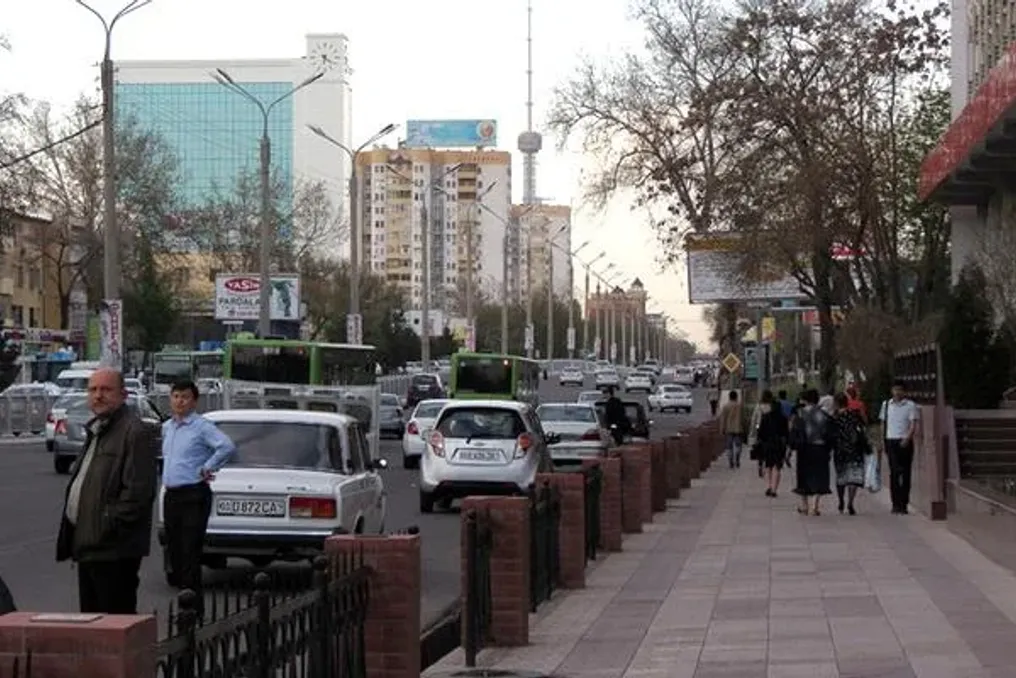
In parallel, municipal authorities continue to modernize the capital's transport infrastructure. Technical requirements for implementing an intelligent transport system were prepared with the participation of German specialists. Furthermore, the authorities held negotiations with twelve companies experienced in adaptive traffic light management and AI-based traffic flow analysis.
As part of 'quick win' initiatives, streets totaling 260 kilometers were surveyed. Solutions were developed using topographic maps, drone data, and intensity measurements at 271 intersections. 3946 traffic lights were installed at these intersections, which, according to the Kengash resolution, automatically extend green signals on heavily congested routes to create continuous 'green corridors.'
In addition, municipal crews installed 1349 new road signs, replaced 2909 existing signs, and marked roads over an area of 176 kilometers in Tashkent. Scheduled repairs were carried out on nearly 720,000 square meters of asphalt pavement. To reduce congestion, construction work was performed at 61 intersections. Additionally, 2889 street lighting poles and 902 advertising structures that posed potential distractions to drivers were dismantled.
The Kengash resolution also addressed the project for constructing a two-tiered ring road around Tashkent, spanning 100 kilometers, with an estimated cost of 1 billion US dollars. The implementation of this project is planned for discussion with the China Railway Construction Corporation. Moreover, municipal bodies are negotiating with Chinese firms regarding the construction of tunnels, overpasses, and Bus Rapid Transit (BRT) lines.