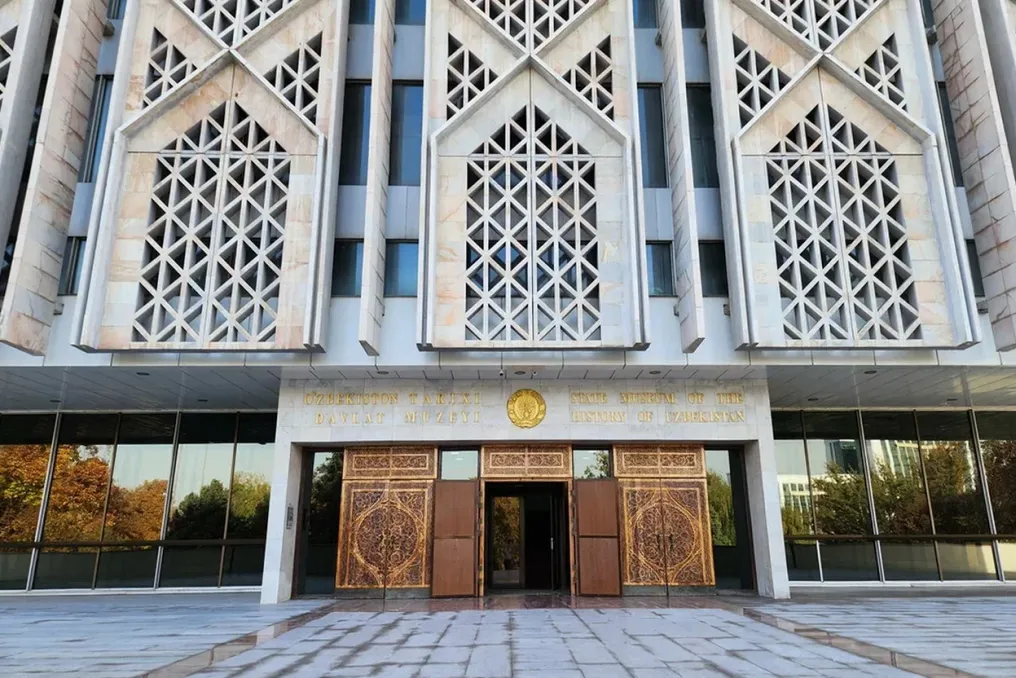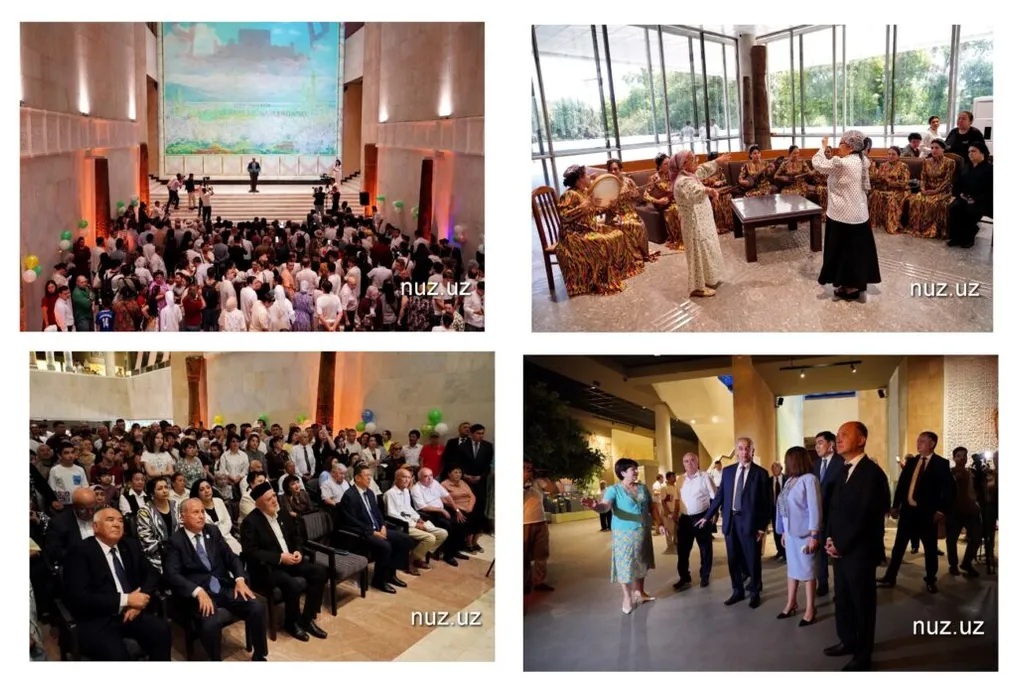
The State Museum of the History of Uzbekistan has once again welcomed visitors after the completion of a reconstruction that lasted almost two years. In honor of the country's 35th anniversary of independence and the museum's 150th anniversary, updated exhibitions, modern multimedia solutions, and unique artifacts covering the history of Uzbekistan from the Stone Age to the present day were presented.
Scale and History of the Museum
The museum is the first institution of its kind in Central Asia and the only multidisciplinary museum in Uzbekistan that consistently demonstrates the culture and history of the Uzbek people throughout all eras. Following the work, the number of exhibition departments increased from nine to twenty.
The museum's director, Jannat Ismoilova, reported that over 150 years, the museum has changed its name and location, but its main task has always been to collect, research, and preserve the historical heritage of the Uzbek people. The museum's collections now contain approximately 370 thousand exhibits, including about 100 thousand numismatic items, over 70 thousand archaeological finds, as well as extensive collections on ethnography and archival documents.
Update and Infrastructure
According to the director, the period of independence provided new opportunities for an objective study of the country's history, allowing the museum to widely highlight the heritage of prominent scientists, thinkers, and statesmen of Uzbekistan who contributed to world science and culture. International cooperation has gained particular importance in recent years, enabling exhibits from Uzbek museums to be shown to foreign audiences.
The current building of the museum was constructed in 1970, and the museum has been located here since 1992. Since the building's engineering systems were more than half a century old and did not meet modern standards, the reconstruction affected not only the exhibition areas but also all communications, including fire safety, video surveillance, and electrical supply systems. Initially, the repair was planned for one year, but the need for complete system modernization required more time. Throughout the entire period of work, all exhibits were under constant guard within the museum premises.
Content of the New Exhibition
The updated exhibition introduces visitors to the history of the modern Uzbekistan region, starting from the Stone Age and ending with the contemporary stage of development. It features materials dedicated to the early states of Central Asia, the Great Silk Road, the era of the Timurids and Amir Timur, the Uzbek khanates, the Jadid movement, the period of political repression, and the years of gaining independence.
Among the outstanding exhibits are the Dalverzintepin hoard, found in 1972 in the Surkhandarya region, which consists of gold ingots and jewelry totaling about 36 kilograms. Also displayed are the 'black sedan' car used to transport victims of repression, a model of the Shamakhmudov family home that raised fourteen orphans during World War II, and portraits of the Khans of Bukhara, Kokand, and Khiva.
Scientific Activities and Feedback
The museum's senior researcher, Otabek Arifjanov, emphasized that it is impossible to assess the value of a single item, as every exhibit has its own scientific and historical significance. He particularly highlighted the numismatic collection, which includes over 100 thousand coins, as well as ancient stone tools, bronze and ceramic artifacts from Sopolityepa, and archaeological finds from Old Termez, including sculptures of Buddha and Bodhisattvas.
The museum actively participates in scientific research in the fields of archaeology, numismatics, and ethnography. International and republican scientific conferences are held annually, and joint projects are implemented with foreign scientific centers, including seminars with scholars from the University of Chicago. Currently, work is underway on a catalog that should include more than one hundred of the most valuable items from the national museums of Central Asia.
Bakhtiyor Khojaev, head of the branch, noted that the new exhibition is suitable for visitors of all ages. He stressed that the museum fulfills not only a scientific but also an educational function, making acquaintance with the country's history more engaging thanks to modern interactive technologies. Early visitors, such as Farhod Ismatullaev, highly praised the organization of the space, the model of Tashkent gates, and the exhibitions dedicated to the education of the 19th–20th centuries. Aziza Raoufova agreed that multimedia solutions make studying history more accessible and considers the opening an important step for the country's scientific and educational life.