Thousands of patients are in danger, and hundreds already have cancelled procedures due to specialists' objections to the order regarding medical actions outside regular working hours.
Thousands of patients are in danger, and hundreds already have cancelled procedures due to specialists' objections to the order regarding medical actions outside regular working hours.
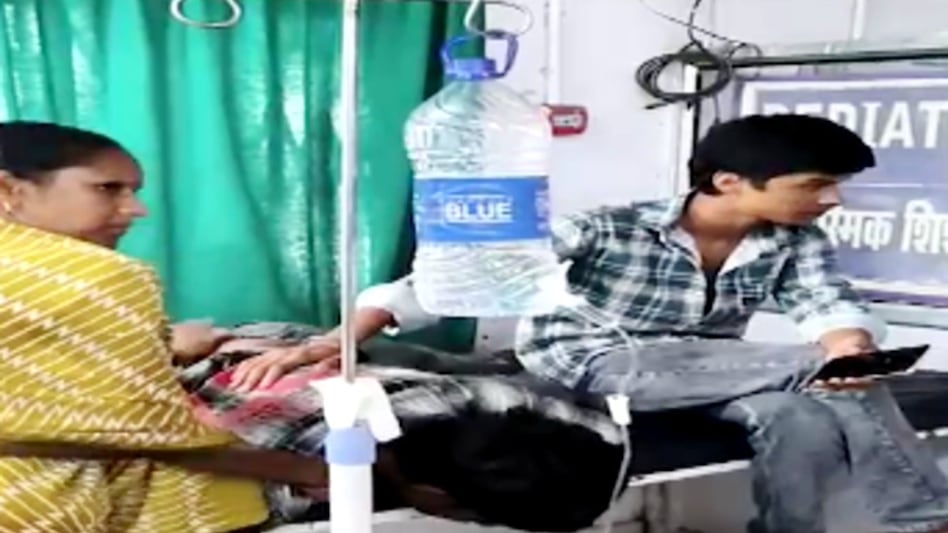
A doctor at a government hospital in the Dindori district of Madhya Pradesh was summoned for an explanation. He was accused of using bottled drinking water for a 'stomach pumping' procedure while treating a young man who had ingested rodenticide.
Gastric lavage, often referred to as 'stomach washing,' is performed in emergency situations. During this procedure, a tube is inserted into the stomach through the mouth, and the stomach is cleansed with sterile water or saline solution. Video footage of this case went viral and caused public outcry.
The Chief Medical and Health Officer, Dr. Manoj Pandey, stated that the doctor was summoned for an explanation, but he denied reports that the patient was administered bottled water intravenously. CMHO Manoj Pandey told a news agency: 'No medicines or water were administered intravenously.'
Dr. Pandey clarified that the junior doctor asked the patient's family to bring a bottle of bottled drinking water. Furthermore, the hospital has its own equipment for gastric lavage, and the water is supplied to the patient through a special 'Ryle' tube.
The patient, Satyam Yadav (18 years old), was admitted to the hospital's emergency department on Wednesday afternoon. It is alleged that he consumed rat poison. Sources report that the doctor asked a nurse to use a bottle of bottled drinking water during the procedure. When the nurse objected, the doctor performed the procedure himself.
The opposition leader in the Madhya Pradesh Legislative Assembly, Umang Singhare, criticized the Bharatiya Janata Party (BJP) government over this incident. He accused the government of deteriorating the public healthcare system and demanded that those responsible be held accountable.
A team of researchers, including Julia Steinberg from the University of Maryland in College Park and colleagues from Denmark, conducted a large population cohort study. They found that both medical and instrumental abortion do not lead to an increased chance of being prescribed any psychotropic medication for the first time in subsequent years.
The study utilized data from 67,390 women aged 12 to 38 (with an average age of 21.8 years), obtained from Danish health registries. These women underwent planned medical or instrumental abortion during the first trimester of pregnancy between January 2000 and December 2018. Regression models were used to assess possible changes in the probability of first psychotropic drug prescription after the procedure, taking into account various confounding factors. Bonferroni correction was applied to ensure accuracy when accounting for multiple tests.
Out of the total participants, 33,793 women had their first medical abortion, and 33,597 had their first instrumental abortion. Among them, 4,575 had a previously diagnosed psychiatric condition, and 19,979 received their first psychotropic medication during the observation period. Using the standard p-value cutoff of 0.05, a slight increase in the probability of psychotropic drug prescription was observed in the first year after both types of abortion (odds ratios of 1.10 and 1.09; p = 0.01 and 0.02, respectively). However, such associations were not recorded between the first and fifth years, and after the fifth year, a decrease in the probability of prescription was observed (0.85 and 0.83; p < 0.001 for both indicators).
After applying Bonferroni-corrected p-values (0.002), the statistical significance of the increased probability in the first year disappeared, while the trend toward decreased probability after five years remained statistically significant.
In another field, German, British, and Peruvian scientists conducted a series of experiments. They discovered that the sounds of local forest animals contribute to improving mental state more noticeably than the sounds of animals from other regions. Furthermore, this positive effect was enhanced with a higher level of perceived animal species diversity. This article was published in the Journal of Environmental Psychology.
A bill allowing women to purchase pepper spray for personal self-defense purposes in Brazil was approved by the National Congress last month. The proposal received the endorsement of the Brazilian President, Lula da Silva, who sanctioned the measure, introducing some changes to the version published in the Official Gazette of the Union.
To purchase the aerosol, the woman must present an official photo ID, proof of fixed residence, and a Criminal Record Certificate, which must attest to the absence of conviction for a willful crime. The legislation restricts the purchase to sprays with a maximum capacity of 50 milliliters for women, while larger containers are reserved exclusively for public security agents and members of the armed forces.
Retail establishments authorized to sell the device are required to archive purchase and sale records for a period of five years, and must also maintain data on both the buyer and the person who will possess the aerosol. Furthermore, selling companies must provide basic guidance on the correct use of pepper spray. The law establishes that these devices are for individual and non-transferable use, and prohibits them from containing lethal or permanently toxic substances.
The use of pepper spray will be considered legal in situations of self-defense, aiming to ward off an aggressor when facing an unjust aggression that is occurring or about to occur. Lula validated the law but vetoed specific sections, such as the requirement for explicit authorization from legal guardians for adolescents between 16 and 18 years old, thus maintaining the possibility of automatic purchase for adult women. The Brazilian President also vetoed the application of penalties, such as fines, against women who used the spray outside legal guidelines, arguing that this section 'contradicts the public interest.'
The approval of this project occurs in a scenario where Brazil has registered an increase in femicides for the fourth consecutive year. According to the 20th Brazilian Yearbook of Public Security 2026, in 2025, 1,571 victims of femicide were recorded, totaling four daily deaths in the country. The report from the Brazilian Forum of Public Security points out that, besides fatal cases, there were 4,189 attempted femicides in the previous year, representing a 5.9% growth compared to 2025. The non-governmental organization emphasizes that for every completed femicide, there were almost three attempts.
Additionally, the Violence Atlas 2026, produced by the Institute of Applied Economic Research and the Brazilian Forum of Public Security, indicates that sexual violence in Brazil is often underreported, potentially reaching around 822,000 incidents of violation annually.