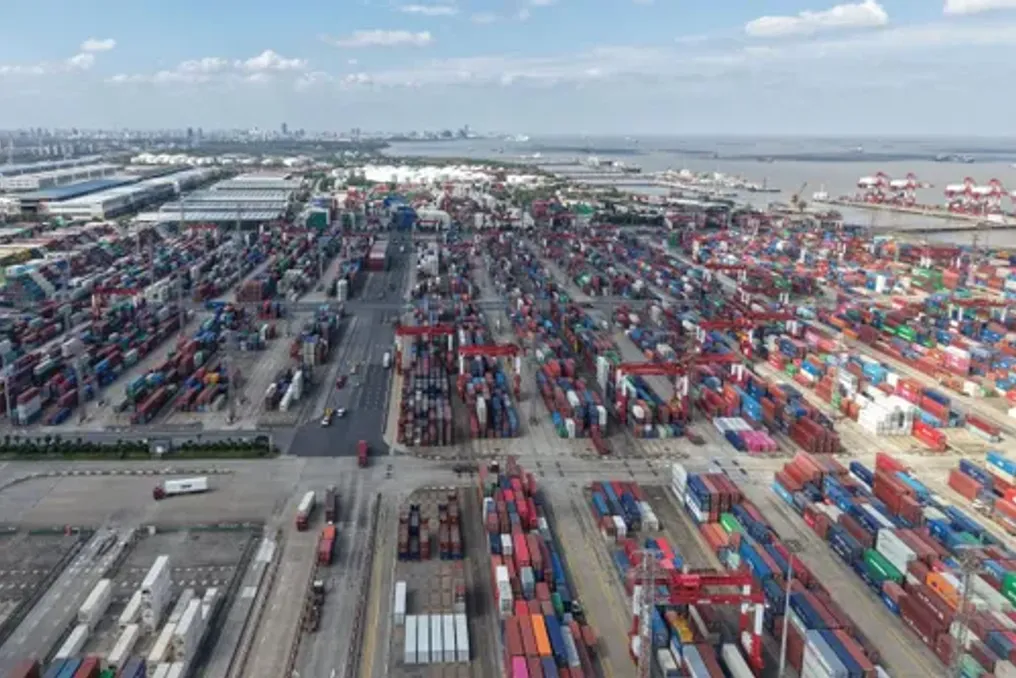
In the first half of 2026, China's gross domestic product increased by 4.7% year-on-year. Furthermore, grain production exceeded 150 million tons in the summer for the first time, and total import and export operations reached a record 25 trillion yuan ($3.69 trillion).
Resilience Amid Global Uncertainty
Despite growing external uncertainty, the Chinese economy has maintained overall stability and continues its transition towards more innovative and high-quality growth, demonstrating significant resilience and vitality.
While global economic growth is slowing down overall this year, the International Monetary Fund (IMF) recently lowered its forecast for global growth in 2026 to 3.0%, but raised its forecast for China's economic growth for the entire year by 0.2 percentage points.
Key Factors Driving Economic Success
China's success in a complex global environment is explained by four main concepts: stability, innovation, vitality, and integration.
Stability and Competitiveness
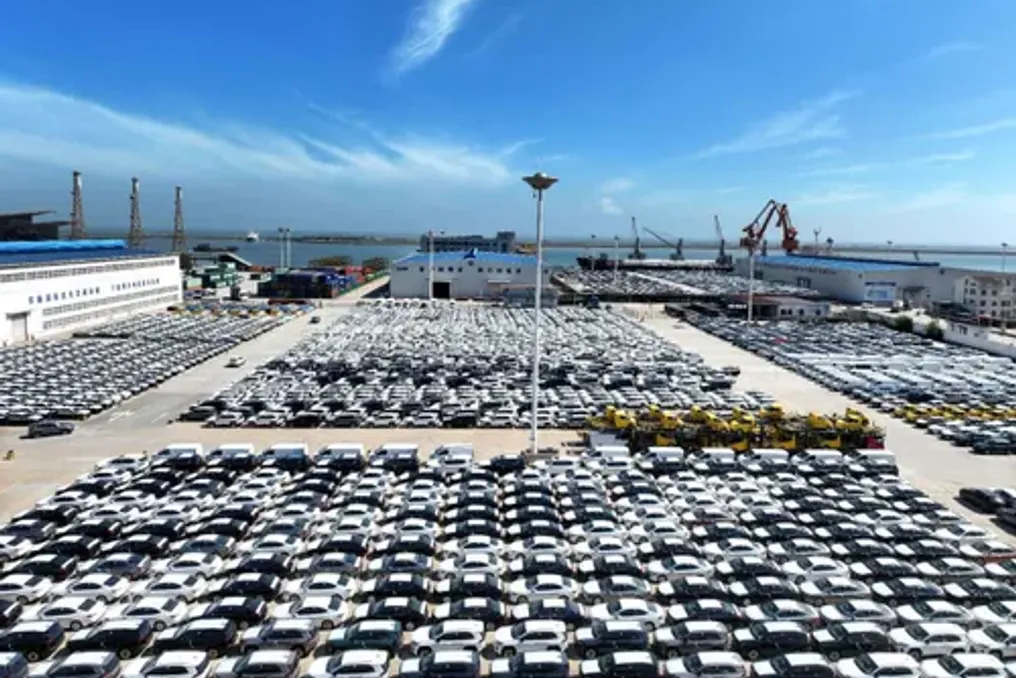
In the first five months of the current year, China exported 187 high value-added liquid cargo vessels worth over 64.3 billion yuan, representing an 188.8% increase compared to last year. In the first half of the year, China's car exports exceeded 5 million units for the first time, with electric vehicle deliveries growing by 68.7%.
The strong performance of China's shipbuilding and automotive industries reflects the stability and competitiveness of the entire Chinese economy. China's economic expansion in the first half of 2026 was the largest in the same period over the past five years. China's ability to quickly respond to changing demand, compete in advanced industries, and enter new markets is supported by its complete industrial system, as seen in the growth of microchip exports and the expansion of the digital small goods trading network in Yuyue city, Zhejiang province.
Some economic indicators have experienced short-term fluctuations caused by both external difficulties and internal structural adjustments, but such fluctuations do not change the long-term direction of China's economic development.
Innovation as the Engine of Growth
Two recent breakthroughs illustrate this momentum. The victory of the motorcycle manufacturer ZXMOTO from Chongqing in the international superbike championship marked the end of the dominance of European and Japanese brands, highlighting the modernization of the motorcycle supply chain in Chongqing and the upgrading of China's traditional manufacturing industries.
Attention was also drawn to the adoption of the 'Tao Law' by tech giant Huawei, which promotes 'temporal scaling' instead of traditional geometric scaling in chip design. The company has already brought 381 chip models into mass production, indicating the rapid development of China's new industries.
Major scientific and technological achievements also occurred this year: China's supercomputer LineShine became the fastest in the world, and the 'Deep March-10B' rocket carrier achieved the world's first sea lift using a marine mesh system.
As technological innovations continue to drive industrial modernization, new productive forces are forming faster. Preliminary estimates show that new growth drivers, including high-tech manufacturing, the digital economy, and modern services, contributed more than 40% to China's economic growth in the first half of the year, underscoring the increasingly innovation-oriented and high-quality development of the economy.
Vitality and Consumer Market
As of June 20, consumer goods trade programs this year generated over 1 trillion yuan in sales, covering 136 million consumers. The demand from over 1.4 billion people for an improved quality of life continues to unlock the enormous potential of China's vast consumer market.
Artificial intelligence is strengthening industries across all sectors, while grassroots cultural events, such as village football leagues and rural galas, revitalize rural communities. New demand generates new supply, and new supply creates new demand, generating a cycle that sustains economic dynamism.
Some international business leaders refer to China as the 'world's weight room,' where successful companies become more competitive globally. Others call China the 'most reliable partner.' In May, China provided zero-tariff processing on all commodity items to 53 African countries with which it has diplomatic relations. As a result, imports of aquatic products and textile raw materials from Africa showed double-digit year-on-year growth in May and June.
Integration of Technology and Development
This year, several Chinese hard-tech companies, including Unitree Robotics, successfully completed internal listing reviews, while other technology enterprises with core innovations accelerated their entry into the stock market. Investments in physical assets and investments in people are becoming more closely linked, and innovation, industry, capital, and talent chains are increasingly integrated.
China has also launched the Xiangshan open processor system and the Ruyi native operating system, which are jointly supported and continuously improved by developers worldwide. Since the start of pilot operation, the High-Energy Photon Source has received over 1700 experiment applications from research groups both domestically and abroad. China is steadily transforming from a technological follower to a global source of innovation.
The country's reform agenda continues to emphasize deeper integration across multiple areas: promoting closer cooperation between enterprises, universities, research institutes, and end-users; advancing the comprehensive development of culture, trade, tourism, sports, and exhibitions; encouraging integrated urban and rural development; and accelerating the creation of a unified national market. This focus on integration serves not only as a key to deeper reforms and innovation but also opens broader prospects for high-quality development. Based on its development goals and leveraging existing momentum, China's economy is confidently moving towards long-term, high-quality development with a promising future.