The CODU Norte system experienced a two-hour outage, which led to a number of inconveniences.
The CODU Norte system experienced a two-hour outage, which led to a number of inconveniences.
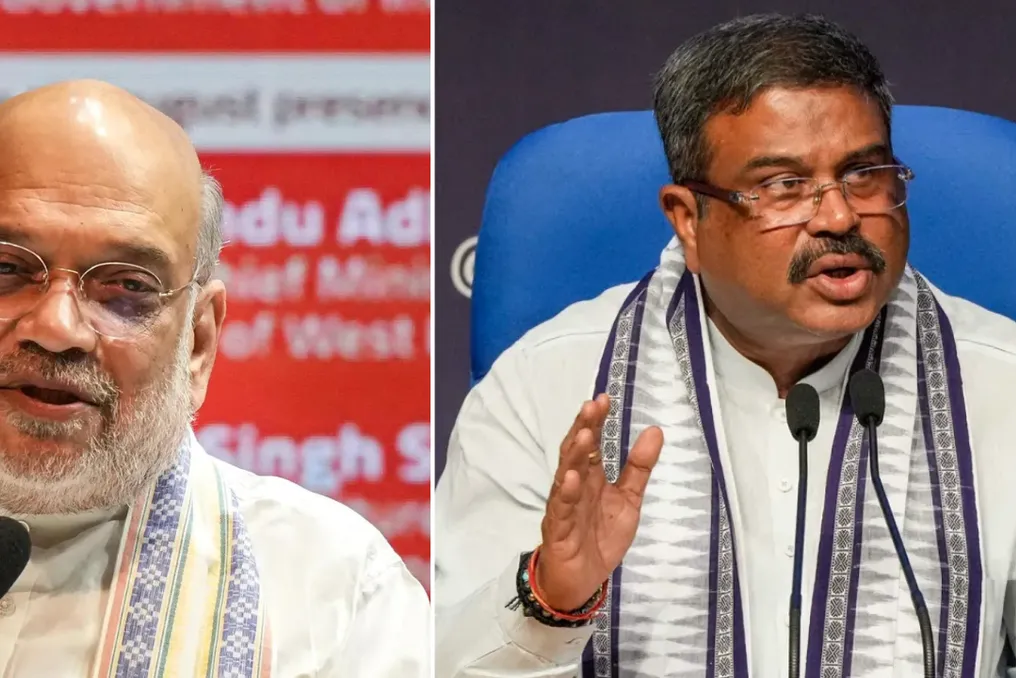
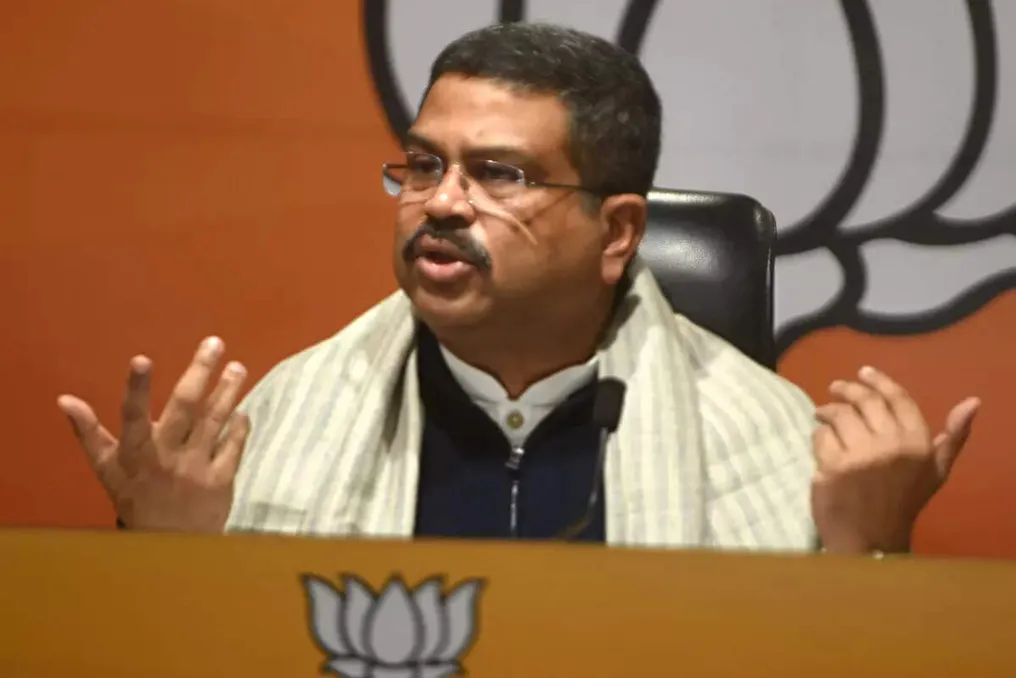
Union Home Minister Amit Shah reacted to the resignation of Dharmendra Pradhan on Saturday, stating that the Bharatiya Janata Party (BJP) considers the country, its youth, and students more significant than any position held. He also affirmed the Modi government's commitment to implementing reforms aimed at combating the leakage of examination materials.
In his post on social media platform X, Shah noted: 'For BJP workers, the country, our youth, and students are far more important than any position. Today, the resignation of Union Minister of Education Shri Dharmendra Pradhan from his post illustrates exactly this principle.' He added that the government respects the feelings of students and remains focused on introducing measures to prevent test leaks, expressing confidence that those responsible will be punished and justice restored for NEET aspirants.
Shah also highlighted Pradhan's tenure as Education Minister, noting his contribution to advancing several important educational initiatives. These include the implementation of the National Education Policy (NEP), expanding examinations in regional languages, developing PM SHRI schools, digitalizing education, enhancing qualifications, and fostering collaboration between industry and academia.
He stated that during his time in office, Shri Dharmendra Pradhan achieved substantial transformations in the effective implementation of the National Education Policy (NEP), the organization of examinations in regional languages, the expansion of PM SHRI schools, the promotion of digital education, skill development, and strengthening interaction between industry and academia. His efforts to create a more inclusive and student-centric examination system were also noted. His tenure is a testament to his dedication to transforming India into a developed nation.
Pradhan resigned on Saturday amid nationwide protests related to the alleged leak of NEET-UG examination materials. A few hours later, senior BJP leader Pralad Joshi received an additional assignment in the Ministry of Education. Furthermore, the Centre reached an agreement with the Cockroach Janta Party (CJP), leading to the cessation of their 36-day protests outside the Jantral Mantar in Delhi.
Dhandendra Pradhan, who left his post as Union Minister of Education on Saturday after five years in office, left behind an education system that became more standardized, digitized, and centrally regulated compared to before. However, this system also raised questions regarding the reliability of exams, institutional autonomy, data privacy, and the Central government's ability to implement reforms of such a large scale.
Pradhan, who held the position of Education Minister longer than anyone else in Prime Minister Narendra Modi's cabinet, oversaw this portfolio from July 7, 2021, to July 25, 2026. Before 2024, he was also responsible for skill development and entrepreneurship. His work was aimed not so much at announcing a new education policy—since the National Education Policy was approved in 2020—as it was at creating the necessary infrastructure for its practical application.
A central theme of his tenure was the standardization and portability of educational materials: the introduction of common entrance exams, the possibility of transferring academic credits, permanent student identification numbers, comparable assessment standards, and attempts to create a unified higher education regulator.
The Common University Entrance Test, introduced in 2022, was intended to replace various XII-grade cutoff scores with a single platform for admission to central universities. It also significantly expanded the powers of the National Testing Agency, whose work and reliability later became one of the most serious problems during Pradhan's leadership.
The National Credit System, Academic Bank of Credits, and four-year undergraduate programs were designed so that students could accumulate and transfer credits, take interdisciplinary courses, and enter or leave programs without losing their academic history. The APAAR system, conceived as a permanent academic identification for every student, aimed to link school, university, and professional qualifications through DigiLocker and the credit bank. Although the goal was to facilitate mobility, it raised concerns about consent and child data protection.
In school education, the ministry released curriculum frameworks for the foundational stage and general education, implementing the NEP 5+3+3+4 structure. The PM SHRI project was launched to modernize over 14,500 existing government schools as models for NEP implementation, and PARAKH was established to develop common assessment standards and improve comparability between school boards.
Other major measures included the National Research Fund Anusandhan, the 'One Nation—One Subscription' subscription for access to scientific journals, funding PM-USHA for state universities, allowing foreign universities to open campuses in India, and establishing IIT branches abroad. Pradhan also promoted textbooks in Indian languages, interdisciplinary education, integration of vocational training, and apprenticeship programs by leveraging the intersection of his portfolios in education and skill development.
The proposed replacement of UGC, AICTE, and NCTE with a single regulatory architecture was never completed. Furthermore, implementation faced resistance from some states regarding language, curriculum, and centrally sponsored programs.
Ultimately, the most obvious contradiction of the Pradhan era lay in national assessment. While common exams were supposed to ensure fairness and uniformity, leaks of examination materials, cancellations, and administrative glitches cast doubt on whether centralization had outpaced institutional capacity.
The State Department of Traffic of São Paulo (Detran-SP) has implemented changes to the route of the practical exam for obtaining the National Driver's License (CNH) in category A, intended for motorcycles. This modification began in 2026 and gained visibility on social media due to demonstrations of the new test standard by instructors and candidates.
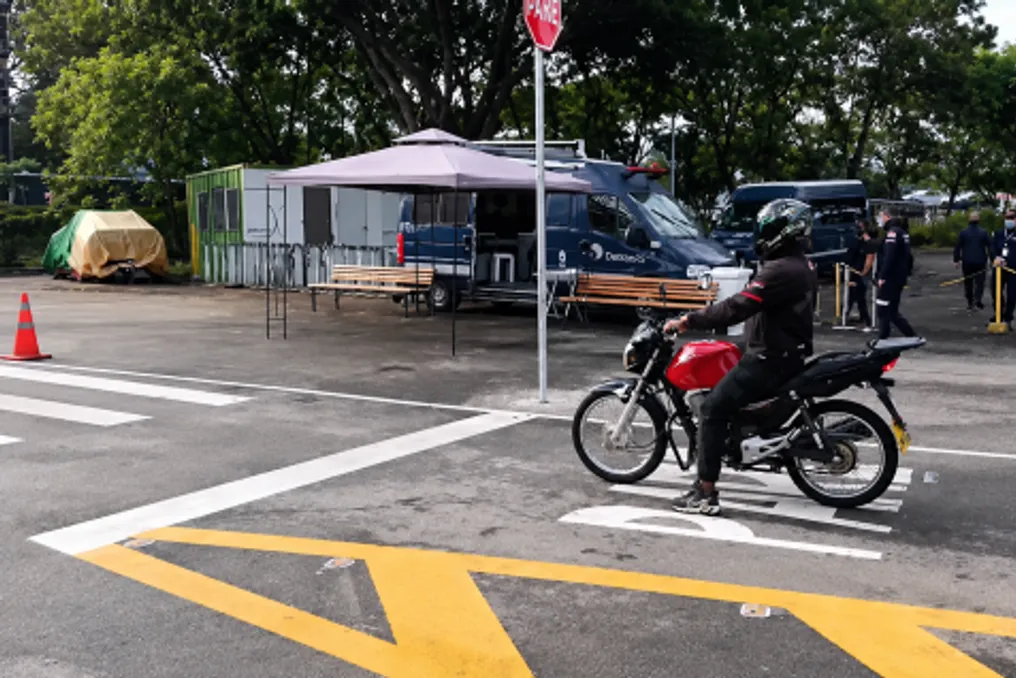
The evaluation route no longer includes conventional obstacles, such as cones, ramps, and planks, which were used in motorcycle exams for many decades. Currently, the assessment takes place on a route that mirrors the conditions found in urban traffic.
According to reports from traffic instructors, the assessment process begins with the candidate starting with the motorcycle and turning right. Next, they must proceed to a 'Stop' sign, execute a U-turn in a roundabout, repeat this sequence in the opposite direction, and conclude by parking the motorcycle.
Detran-SP justified the change by stating that it aims to comply with CONTRAN Resolution No. 1,020/2025, which established new guidelines for driving tests throughout Brazil. This transition has generated discussions among industry professionals.
For instructor Lucas Borba, the new model represents a significant advance compared to the previous format because it focuses on evaluating situations more aligned with effective driving on public roads. Considering that São Paulo has the largest fleet of motorcycles in the country and also records one of the highest rates of fatal accidents involving motorcycles, it is expected that the exam will prioritize competencies related to traffic circulation, such as correct observation of signage, motorcycle positioning, and execution of turning and reversing maneuvers. The new route is already in use in the practical evaluations conducted by the São Paulo Detran.